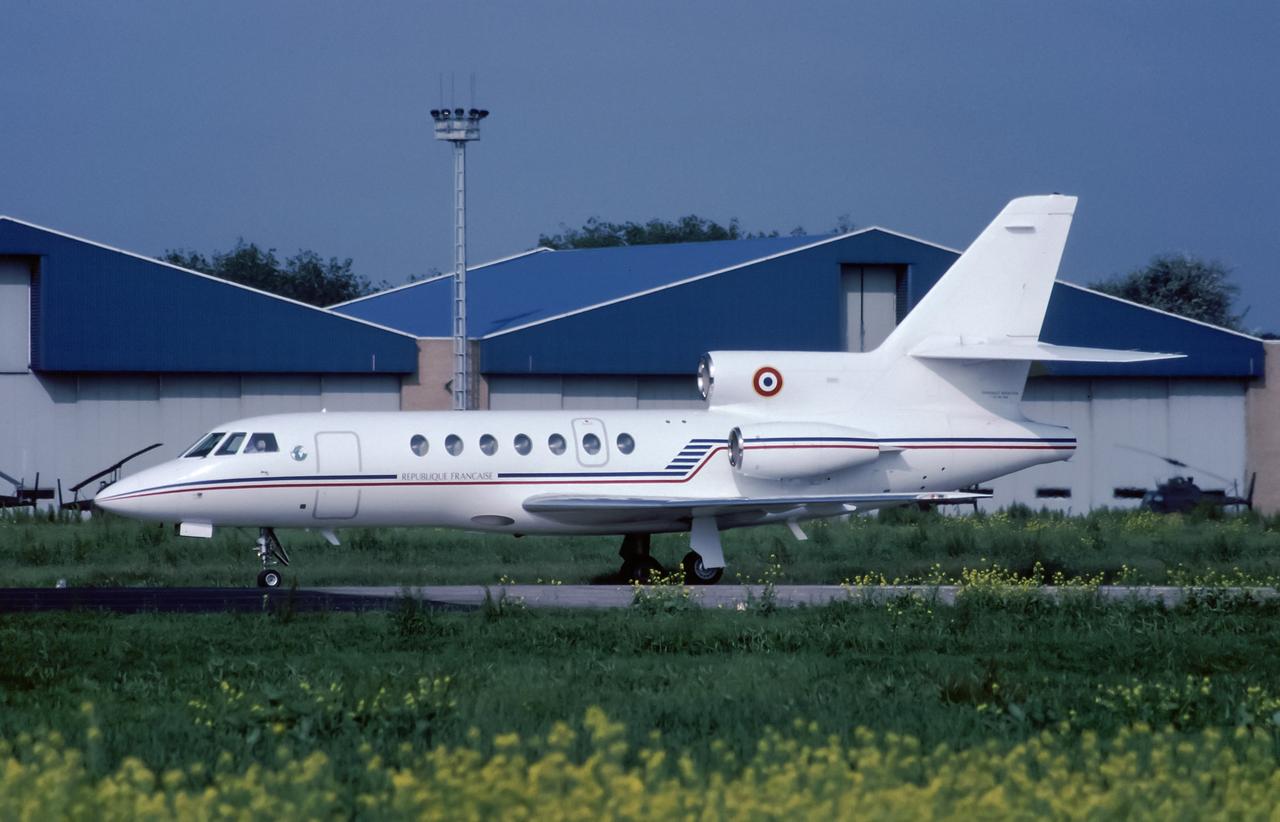
This article was automatically translated from the original Turkish version.
+1 More
Producer(s) | Dassault | ||||||||
|---|---|---|---|---|---|---|---|---|---|
Aircraft Type(s) | Business jet | ||||||||
Class | Super mid-size | ||||||||
Engine Configuration | Trijet | ||||||||
Engine Type | Honeywell (Garrett) TFE 731-3-1C | ||||||||
First Flight(s) | 7 November 1976 | ||||||||
Passenger Capacity | 8–9 | ||||||||
Range(s) | 3 057 nautical miles | ||||||||
Maximum Altitude | 41,000 feet | ||||||||
Variants | Falcon 50EX, Guardian 50 | ||||||||
Dassault Falcon 50 is a trijet aircraft developed by Dassault and positioned within the Falcon family as a long-range civil business jet. The design process was initiated in the 1970s to address the growing demand for longer range capabilities, particularly in the United States market. In this context, the Falcon 50 became one of the first business jets capable of transatlantic flights within the framework of commercial aviation regulations. The aircraft’s development was shaped by Dassault’s engineering expertise rooted in military aviation.
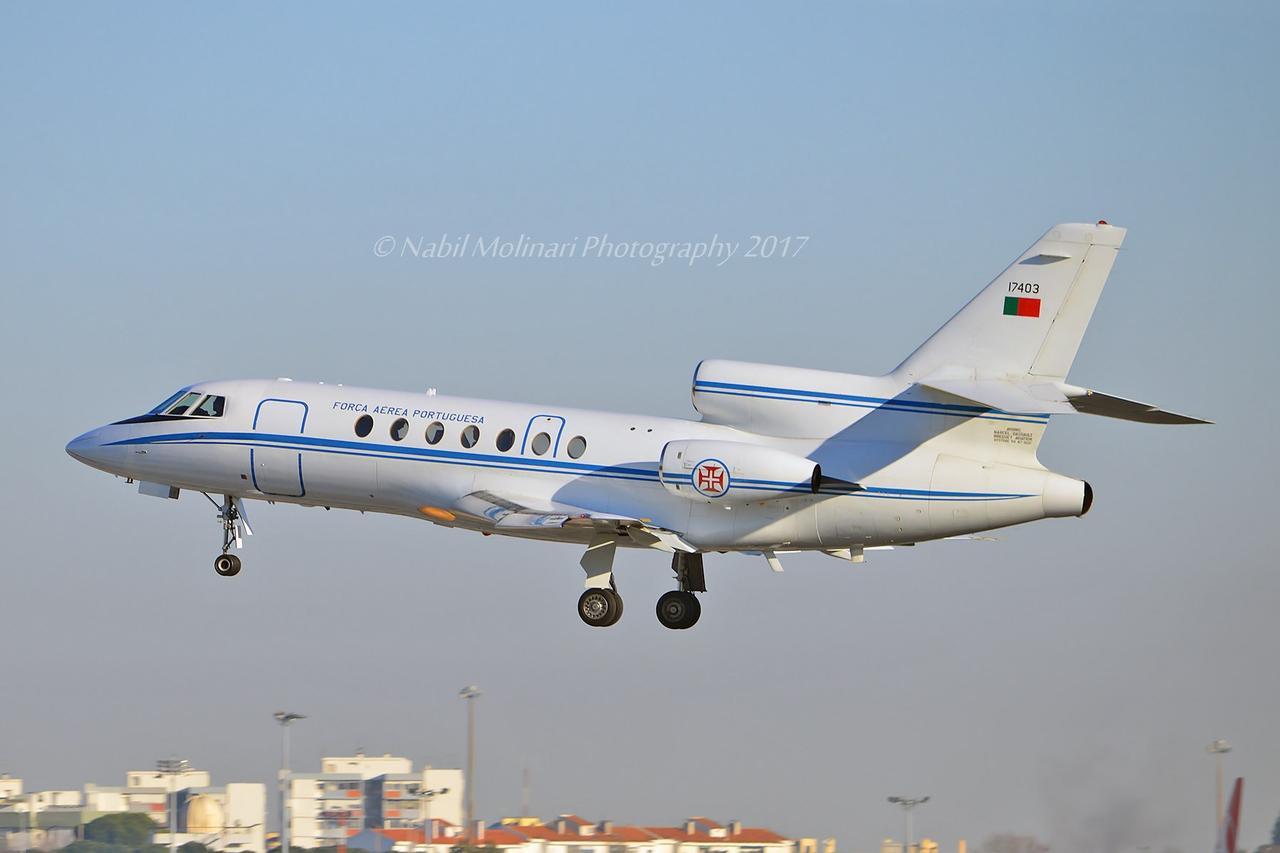
Dassault Falcon 50 (Flickr)
Design work on the Falcon 50 began in 1974. The primary objective was to develop a business jet capable of exceeding the range limitations of the earlier Falcon 30 and Falcon 40 projects and flying nonstop across the North Atlantic. The prototype aircraft made its first flight on 7 November 1976 from Bordeaux-Mérignac Airport, piloted by Hervé Leprince-Ringuet and Gérard Joyeuse. Following this flight, a comprehensive revision of the wing design was undertaken in December 1976. The modified wing structure enabled the aircraft to fly again on 6 May 1977.
As a result of this revision, the Falcon 50 became the first civil aircraft to feature a supercritical wing. Certification was completed on 27 February 1979, and the aircraft received approval from both French authorities and the U.S. Federal Aviation Administration in the same year. Production activities were carried out under an agreement between the French state, Aerospatiale, and Dassault. The majority of the fuselage production took place in Saint-Nazaire, wing manufacturing occurred in Colomiers, and final assembly and test flights were conducted in Mérignac.
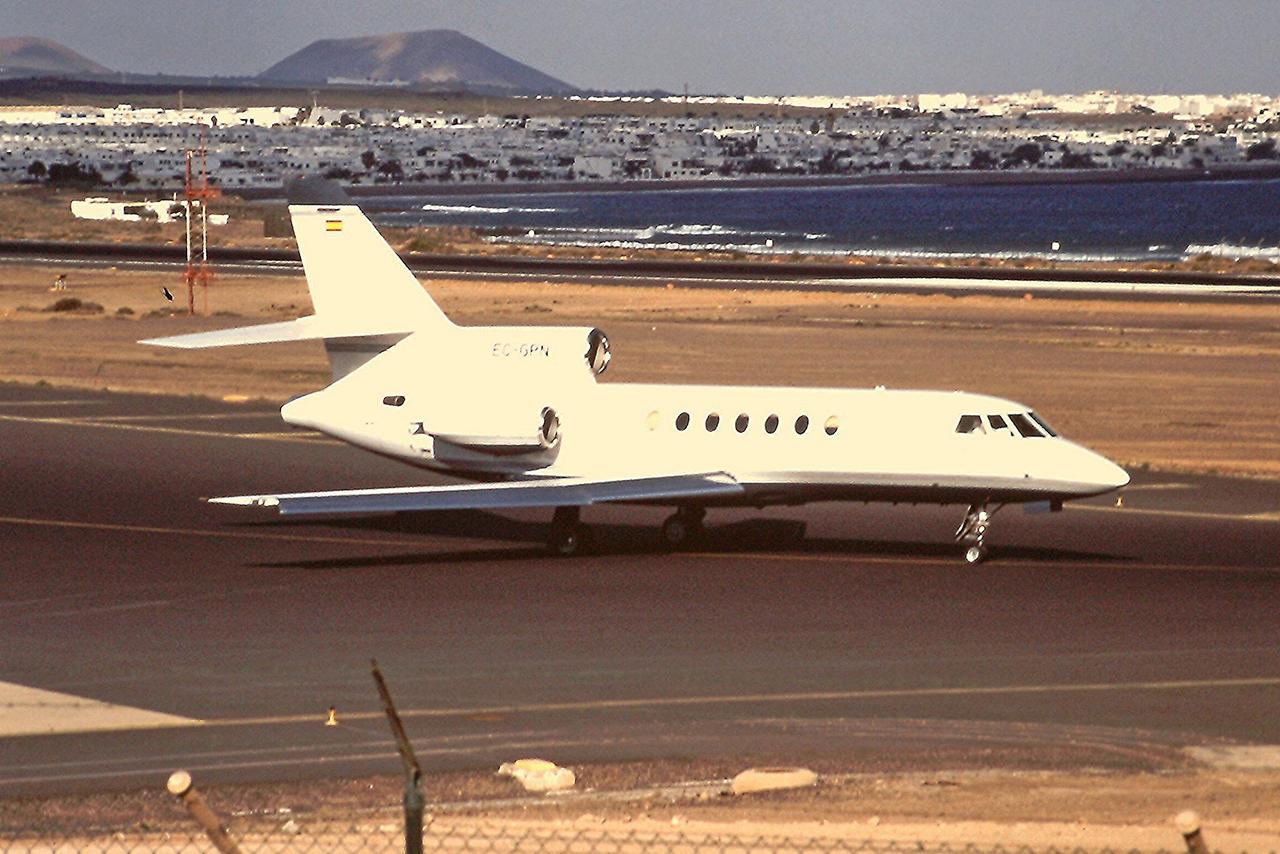
Dassault Falcon 50 (Flickr)
Series production of the Falcon 50 commenced in 1980 and continued until 1996. During this period, the aircraft was classified in the super-midsize business jet segment. Throughout its production run, the Falcon 50 was particularly favored for transoceanic missions due to its long-range capability and trijet configuration. At the time of its introduction, the new aircraft’s list price was approximately 15 million U.S. dollars. After production ended, Falcon 50s continued to operate in the second-hand market.
The Falcon 50 is equipped with three turbofan engines mounted at the rear of the fuselage. The standard variant used Honeywell (Garrett) TFE 731-3-1C engines, each producing approximately 1,678 kilograms of thrust. The trijet configuration was preferred for its redundancy and operational continuity, especially on long-range flights. The aircraft’s maximum takeoff weight was set at approximately 17,600 kilograms.
The Falcon 50’s maximum cruise speed was measured at approximately 480 knots. In long-range cruise configuration, its range reached 3,057 nautical miles. The maximum operational altitude was set at 41,000 feet. The balanced field length was approximately 4,950 feet. These figures enabled the aircraft to operate effectively from both long runways and relatively short airfields.
The Falcon 50 offered a typical seating capacity of 8 to 9 passengers. The cabin height measured approximately 1.77 meters, the width 1.86 meters, and the length 7.16 meters. The total cabin volume was approximately 16 cubic meters. A rear lavatory and a separate baggage compartment provided operational convenience for long-duration flights. The baggage capacity was calculated at approximately 3.26 cubic meters.
The upgraded variant of the Falcon 50, the Falcon 50EX, was announced in 1995 and made its first flight on 10 April 1996. This variant was powered by AlliedSignal TFE 731-40 engines, which improved fuel consumption by approximately 7 percent. The Falcon 50EX could reach 41,000 feet in a shorter time and extended its range to 3,260 nautical miles. Its avionics were upgraded to the Collins Pro Line 4 system.
In addition to civil use, the Falcon 50 was employed for military and government missions. A variant designated the Guardian 50 was developed for maritime patrol and surveillance roles and was primarily operated by the French Navy. Additionally, a single modified aircraft, known by the code name “Suzanne,” was reconfigured with specialized equipment for military missions. This variant demonstrated the potential for adapting the civil Falcon 50 platform for military purposes.
Since its introduction, the Falcon 50 has been operated by both civil operators and public institutions. It has been used by various air forces and government fleets for VIP transport, maritime surveillance, and special missions. In the civil market, it was valued for corporate and private flights requiring long-range capability. The aircraft’s operational history has demonstrated its ability to perform reliably across diverse geographical regions and climatic conditions.
Avio Space. "Meet Falcon 50: Falcon’s First Transoceanic Business Jet." Avio Space, August 13, 2025. Accessed December 23, 2025. https://aviospace.org/falcon-50-transoceanic-jet-detail/
Business Jet Traveler. "Dassault Falcon 50." Business Jet Traveler. Accessed December 23, 2025. https://bjtonline.com/aircraft/dassault-falcon-50
Dassault Aviation. "Falcon 50: Origins, Characteristics and Performance Data." Dassault Aviation. Accessed December 23, 2025. https://www.dassault-aviation.com/en/passion/aircraft/civil-dassault-aircraft/falcon-50/
Flickr. "EC-GPN Falcon 50 Arrecife Feb. 99" Rob Hodkgins, Accessed December 23, 2025. https://www.flickr.com/photos/131806380@N05/49801168712/in/pool-99706155@N00
Flickr. "FAP Forca Aerea Portuguesa 17403 Dassault Falcon 50 cn/221 @ LPPT / LIS 09-01-2017" Nabil Molinari, Accessed December 23, 2025. https://www.flickr.com/photos/nabil_plane_spotter/50228994051
MIRA Aviation. "Dassault Falcon 50 Aircraft Database." MIRA Aviation. Accessed December 23, 2025. https://aircraft.mira-aviation.com/en/aircraft-database/dassault-falcon-50/

Producer(s) | Dassault | ||||||||
|---|---|---|---|---|---|---|---|---|---|
Aircraft Type(s) | Business jet | ||||||||
Class | Super mid-size | ||||||||
Engine Configuration | Trijet | ||||||||
Engine Type | Honeywell (Garrett) TFE 731-3-1C | ||||||||
First Flight(s) | 7 November 1976 | ||||||||
Passenger Capacity | 8–9 | ||||||||
Range(s) | 3 057 nautical miles | ||||||||
Maximum Altitude | 41,000 feet | ||||||||
Variants | Falcon 50EX, Guardian 50 | ||||||||
Development Process and Historical Background
Production Period and Market Positioning
Technical Structure and Engine Configuration
Performance Characteristics
Cabin and Interior Layout
Falcon 50EX Variant
Military and Special Purpose Derivatives
Service History and Operational Use