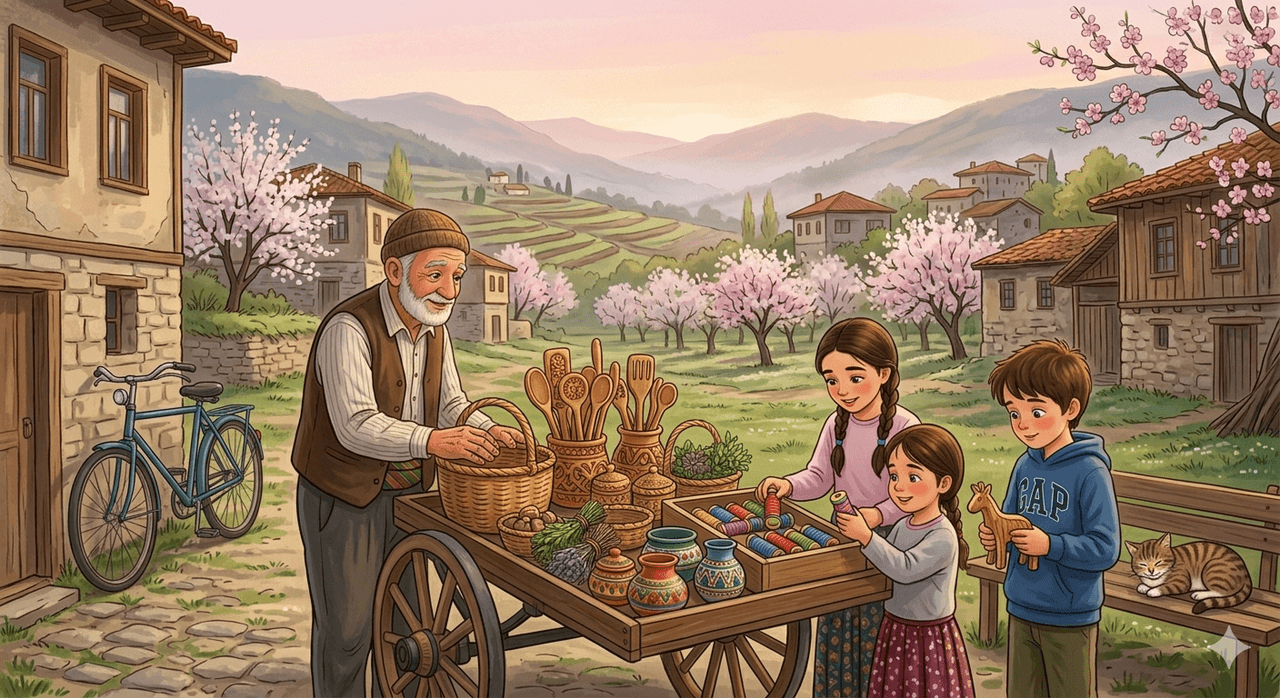


Craftsmen: The Footed Markets of Villages
In the past, when there were no modern shopping malls or the possibility of ordering online, how do you think people living in villages met their needs?
Çerçi is the term given to traveling vendors who moved from village to village, bringing a wide range of goods—from needles and thread to sugar and toys—directly to people’s doorsteps. They were not merely sellers but also messengers who connected villages to one another.
Whatever Comes Out of the Heybe!
Çerçiler carried their goods sometimes in a heybe slung over their backs, sometimes on the back of a donkey, and sometimes in horse-drawn covered wagons. One compartment of the heybe contained needles, thread, beads, and cloth for mothers; the other held colorful candies, whistles, and balloons for children. These heybes were like small magical boxes, always revealing something that sparked curiosity. Some çerçiler even enriched children’s imaginations by selling only perfumes or books.
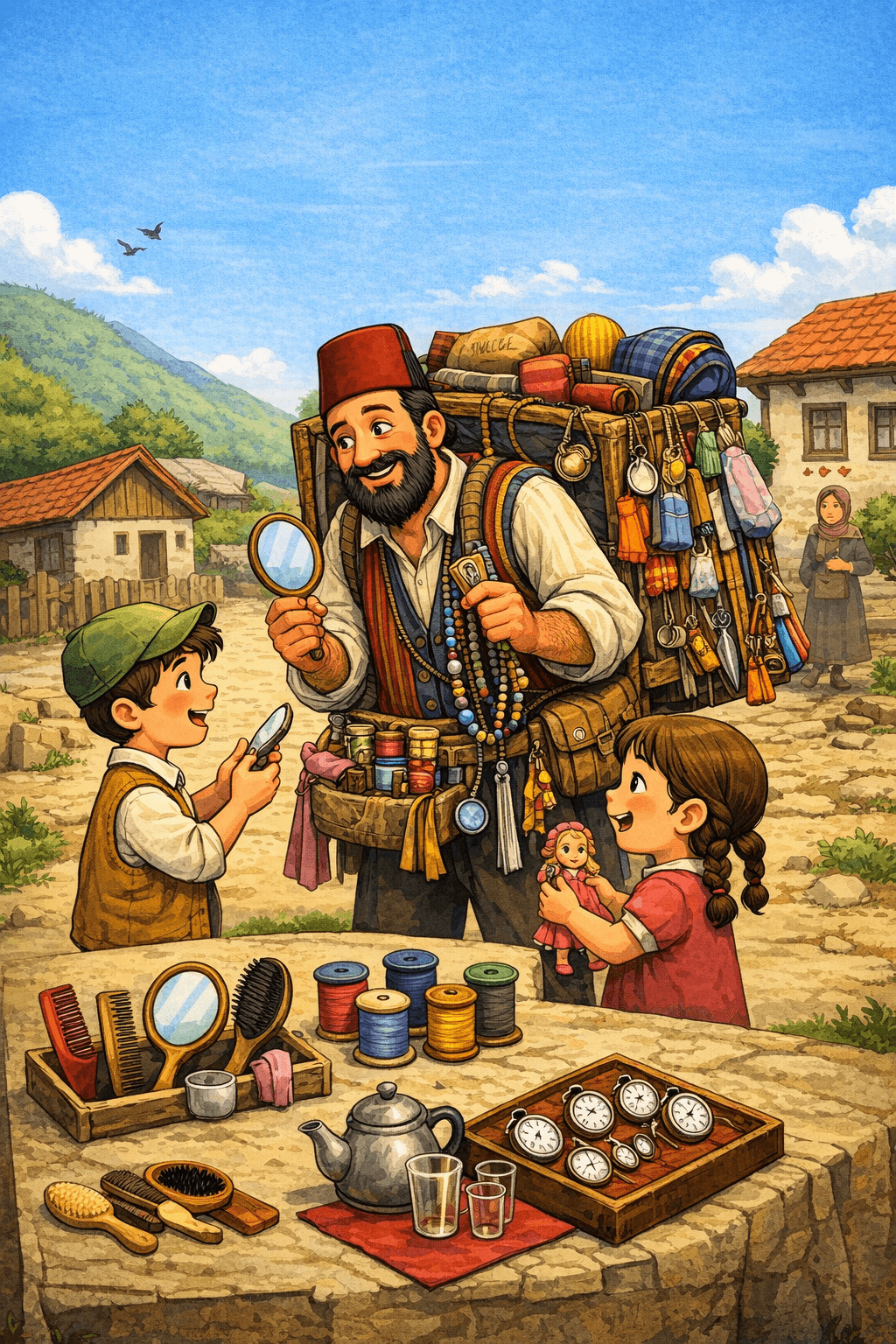
A visual of a cheerful çerçi in traditional clothing displaying various goods and toys to village children (Generated by artificial intelligence)
Eggs Instead of Money: Barter Trade
Did villagers always have money in their pockets? Actually, no. One of the most interesting features of çerçiler was that they did not sell their goods only for money but also through barter—exchange. When a child wanted a whistle from a çerçi, they could bring fresh eggs from their chickens. Çerçiler also accepted wool, wheat, or beans in exchange. In this way, everyone could easily obtain what they needed.
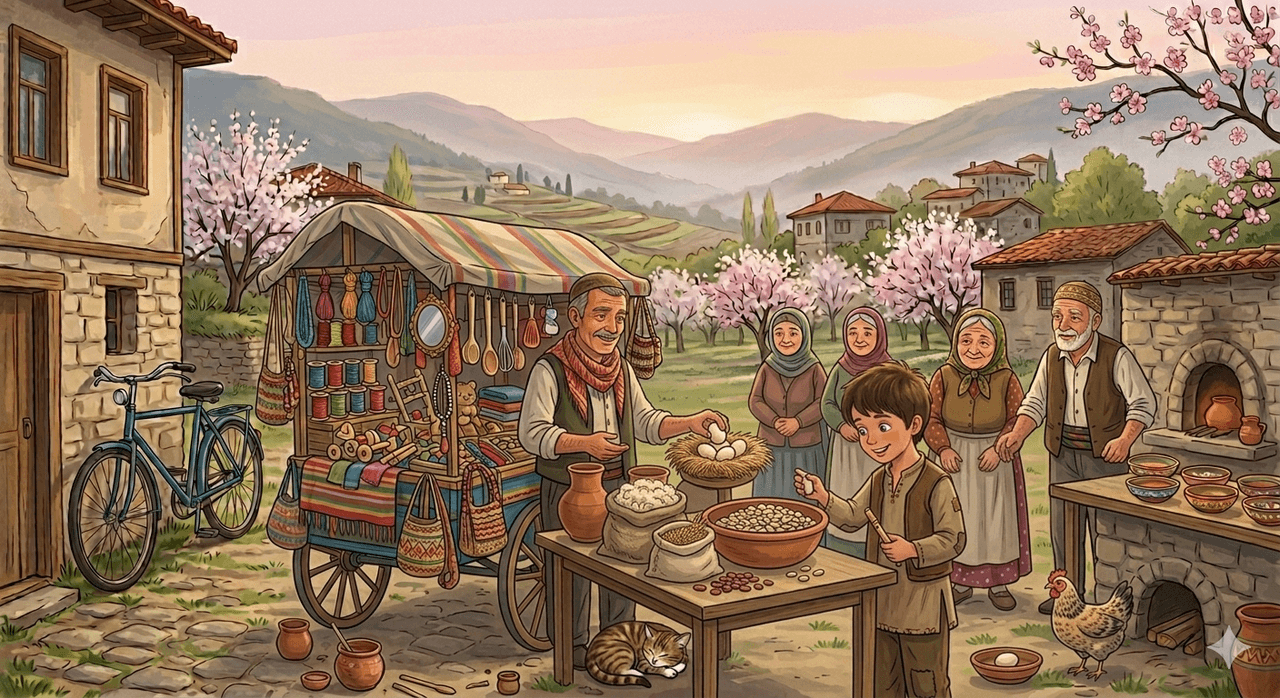
Villagers making purchases from a traveling çerçi, with a child in the scene (Generated by artificial intelligence)
More Than Goods, They Carried News Too
In an era without television or telephones, how did people living in remote villages learn about what was happening in the world? This is where çerçiler stepped in. As they traveled from one village to another, they shared news—such as who had gotten married, what festivals were taking place in which village, or the latest updates from the city. When they arrived in a village, everyone gathered around them, not only to shop but also to listen eagerly to their stories. For this reason, çerçiler were the most beloved and eagerly awaited guests of the villagers.
Modern-Day Çerçiler
Today, it is very rare to encounter horse-drawn çerçiler. However, this tradition has not disappeared entirely. Pickup trucks that travel between villages and make sales through loudspeakers are in fact modern successors of the old çerçiler.
In fact, it can be said that today’s beloved large supermarkets and online shopping platforms drew their inspiration from those old çerçiler who brought everything right to people’s doorsteps.