


This article was automatically translated from the original Turkish version.
Condition monitoring in transformer oils refers to the continuous surveillance of the physical and chemical properties of the insulating oil used in power transformers. Transformer oil serves both as an electrical insulator and aids in preventing overheating by facilitating heat transfer. Therefore, transformer oil is a fundamental component for the safety and long-term operation of the transformer.
Power transformers are critical components that enable the transmission of electrical energy at high voltage levels. The uninterrupted operation of transformers depends on the performance of their internal insulation systems. Transformer oil supports the core functions of the transformer through its insulating properties and cooling capacity.
Transformer oil condition monitoring is a maintenance practice aimed at assessing the overall health of the transformer and detecting potential faults in advance. In transformers operating at high voltage levels, degradation of the oil can increase the risk of failure. Therefore, monitoring activities are a vital element for system security and continuity.
This process is significant not only from a safety perspective but also in terms of economic and environmental benefits. Regular monitoring and early diagnosis help prevent failures and reduce maintenance costs. Additionally, it contributes to preventing potential environmental damage.
Transformer oil monitoring is regarded as a continuous maintenance and data collection process within the energy sector. This practice enables transformers to operate reliably and safely over extended periods.
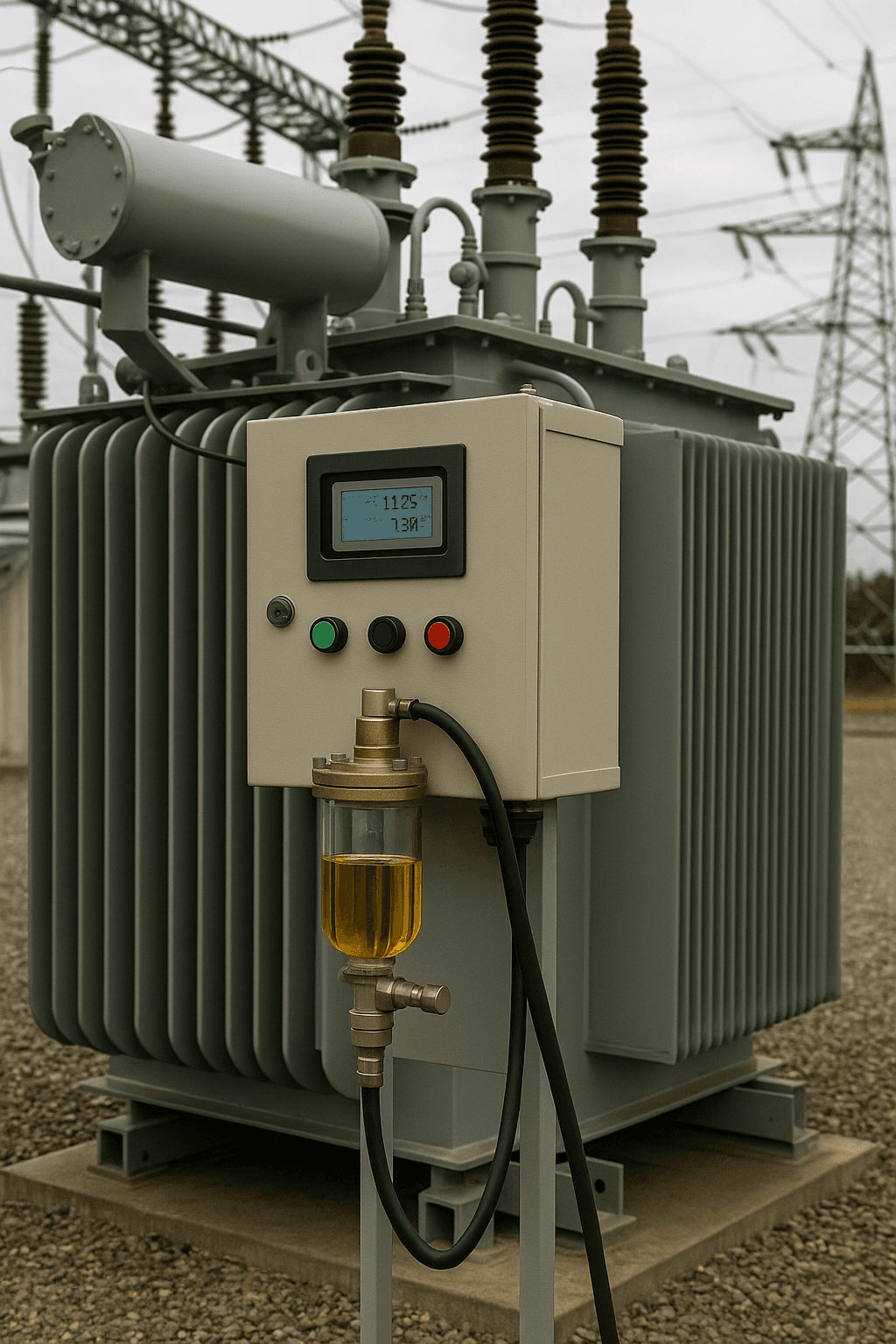
Bir Güç Transformatörünün Yağ İzleme Sistemi (Yapay Zeka Tarafından Oluşturulmuştur.)
Transformer oil is exposed over time to high temperature, electrical stress, and environmental factors. These conditions lead to degradation of the oil’s physical and chemical properties. Physical degradation includes changes in viscosity and darkening of color. Chemical degradation involves the formation of acidic compounds and alterations in gas solubility.
Thermal stress causes changes in the molecular structure of the oil due to high temperatures. These changes result in the formation of acidic compounds and reduced cooling capacity. The oxidation process occurs when oxygen reacts with the oil, producing acidic compounds and sludge-like deposits. These deposits can accumulate within the transformer’s internal structure and restrict heat transfer.
Electrical stress leads to the formation of microscopic discharges due to high-voltage surges. This reduces the oil’s dielectric strength. All these forms of degradation shorten the transformer’s lifespan and increase the risk of failure. Consequently, transformer oil monitoring is considered a key indicator for evaluating the overall performance of the transformer.
Traditional transformer oil monitoring methods involve laboratory analysis of oil samples for physical and chemical properties. The sampling process is carefully conducted to ensure the accuracy of analytical results. Key tests include color, viscosity, water content, acid number, and dissolved gas analysis.
The color test indicates the extent of oxidation and chemical changes in the oil. Viscosity measurements determine the oil’s fluidity and cooling capacity. Water content is a critical parameter because it directly affects the oil’s dielectric strength. The acid number reflects the concentration of acidic compounds formed during oxidative reactions.
Dissolved gas analysis identifies the type and concentration of gases generated in the oil due to electrical stress. These analyses provide insights into the type and severity of potential faults within the transformer. However, these laboratory-based methods are performed periodically and do not offer real-time monitoring capabilities.
Technological advancements have brought online monitoring systems to the forefront of transformer oil monitoring. Online monitoring systems provide continuous real-time data on the physical and chemical properties of the oil. This data assists operators in planning rapid and accurate interventions.
In online systems, parameters such as moisture content, temperature, and dissolved gas levels are continuously tracked. Monitoring these parameters provides critical insights into the overall condition of the equipment. For example, a rise in temperature may indicate overheating, while moisture content plays a decisive role in dielectric strength.
These systems help prevent unplanned outages and reduce maintenance costs. The collected data can also be used to develop long-term maintenance strategies, enabling more efficient planning of maintenance activities.
Fiber optic sensors offer advantages in transformer oil monitoring applications, including immunity to electromagnetic interference and high sensitivity. These sensors provide reliable data by minimizing measurement errors in high-voltage environments.
Fiber optic sensors can detect small changes in parameters such as temperature and moisture. Their compact design allows for easy installation under field conditions. Their resistance to electromagnetic interference enhances the accuracy of measurement results.
These sensors transmit data in real time, contributing to the continuous monitoring of electric power transmission lines. Fiber optic sensors support the reliability and efficiency of transformer oil monitoring processes within modern energy infrastructure.
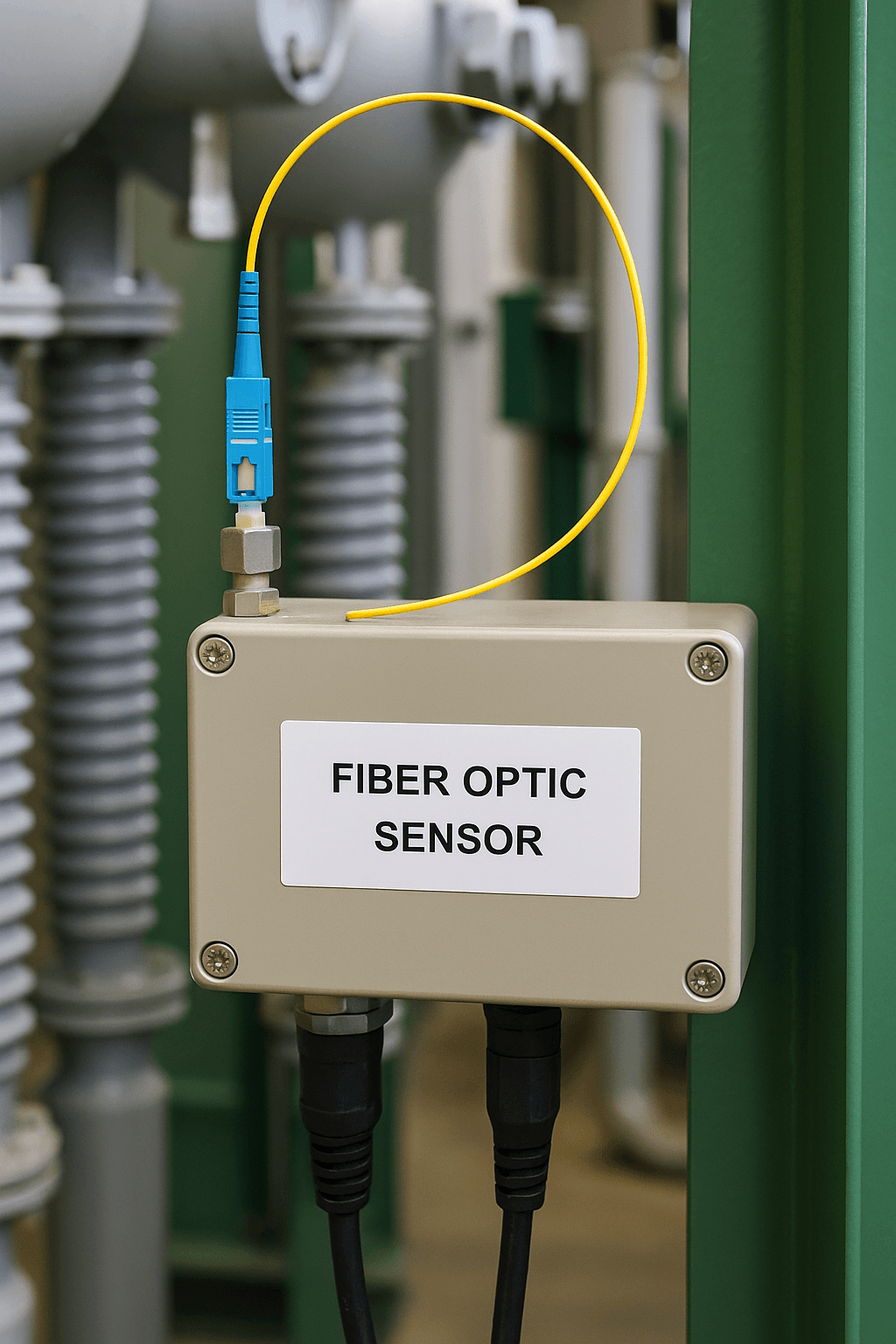
Trafo Yağı İzleme Sistemine Entegre Edilmiş Fiber Pptik Sensör Modülü (Yapay Zeka Tarafından Oluşturulmuştur.)
Transformer oil monitoring systems are not merely maintenance procedures; they are considered essential elements for the sustainability of electric power transmission and distribution systems. Continuous monitoring of the oil condition in transformers provides critical information about the overall health of this equipment. This enables system operators and maintenance teams to detect potential faults early and significantly enhance system reliability. Especially within modern energy infrastructure, the importance of such monitoring practices is growing as uninterrupted service becomes increasingly critical.
Continuous monitoring systems reduce fault risks, lower maintenance costs, and prevent unplanned outages. This not only delivers economic advantages but also makes significant contributions to operational efficiency and environmental sustainability. Through online monitoring technologies, maintenance activities are no longer reactive or ad hoc but are instead data-driven, preventive, and strategic. This approach provides energy companies with substantial savings in time and resources.
In recent years, the integration of fiber optic sensors into monitoring systems has made data collection on transformer oil more precise and reliable. These highly sensitive sensors, which are immune to electromagnetic interference, have expanded opportunities for preventive interventions and enhanced the effectiveness of monitoring systems. As a result, not only is the service life of transformers extended, but the overall resilience and flexibility of electric power transmission systems are also strengthened. The flexibility and portability offered by fiber optic sensors ensure the continuity of monitoring activities even under harsh field conditions.
Transformer oil monitoring applications also support long-term data collection and analysis processes. Data obtained from continuous monitoring systems serve as a foundation for historical fault analysis and statistical modeling, enabling the optimization of maintenance strategies for the future. Thus, energy companies can not only assess current conditions but also anticipate potential fault trends and develop more effective maintenance plans. This data-driven approach is regarded as a significant step in the digital transformation of energy infrastructure.
Durmaz, Ahmet. *Trafo Yağında Bozulma Tespiti için Fiber Optik Sensör Tasarımı*. Master's thesis, Bursa Uludağ University, Institute of Natural and Applied Sciences, Department of Optical and Photonic Engineering, 2023.https://tez.yok.gov.tr/UlusalTezMerkezi/TezGoster?key=UjlM15wKZGQW6TLC0pvCt7hFNkmB9whOvd7PPnfcYP2blxgL9Bp_DgpAlcIYovKG
Jiang, Jun, and Guoming Ma. *Optical Sensing in Power Transformers*. Hoboken, NJ: John Wiley & Sons, 2021.https://onlinelibrary.wiley.com/doi/book/10.1002/9781119765325
Karthik, R., and T. Sree Renga Raja. "Investigations of Transformer Oil Characteristics." IEEJ Transactions on Electrical and Electronic Engineering 7, no. 4 (2012): 369–374.https://doi.org/10.1002/tee.21742
Koike, Y., and K. Koike. "Optical Fibers." In *Polymer Science: A Comprehensive Reference*, vol. 8, 283–304. Amsterdam: Elsevier, 2012.https://keio.elsevierpure.com/ja/publications/optical-fibers
Polynkin, Pavel, Alexander Polynkin, N. Peyghambarian, and Masud Mansuripur. "Evanescent Field-Based Optical Fiber Sensing Device for Measuring the Refractive Index of Liquids in Microfluidic Channels." *Optics Letters* 30, no. 11 (2005): 1273–1275.https://opg.optica.org/ol/abstract.cfm?uri=ol-30-11-1273
İlkkahraman, Murat. Güç Transformatör Arızalarının İncelenmesi. Master's thesis, Gazi Üniversitesi, 2008.https://tez.yok.gov.tr/UlusalTezMerkezi/TezGoster?key=wBmNpkQC9Nhi90NLW7E7-WZRskGuK4Q3FaLVKpY4PThWXbVb6N0dq-1nu2ZswcRZ

No Discussion Added Yet
Start discussion for "Condition Monitoring in Transformer Oils" article
Causes and Effects of Degradation
Traditional Monitoring Methods
Modern Monitoring Methods: Continuous Monitoring Systems
New Technologies: The Role of Fiber Optic Sensors