


This article was automatically translated from the original Turkish version.
+2 More
Electrical energy plays a major role in every aspect of modern life. However, efficient use of electrical energy is not limited to the supply of active power. Another important parameter in electrical systems is reactive energy. Although often overlooked, reactive energy has a significant impact on energy efficiency. The management and control of reactive energy are achieved through compensation methods.
Reactive energy is a type of energy required for the operation of devices connected to the grid but is not directly consumed. In electrical systems, devices that generate magnetic fields such as motors generators and transformers require reactive energy. Reactive energy is the energy drawn by electrical loads to create magnetic fields and is returned to the grid. Although this energy does not perform direct work it is essential for the proper functioning of electrical systems.
Reactive energy is typically needed only to sustain the “rotation” of the electrical system and differs from active energy energy that performs work. Many devices draw reactive energy when connected to the grid and return it back. This type of energy is drawn from the grid together with active energy but is ultimately returned and not directly consumed.
Excessive draw of reactive energy can cause imbalances and inefficiencies in the electrical grid. This is where compensation comes into play. Compensation is a method used to balance reactive power in electrical systems. Through this method excess reactive energy is balanced without being returned to the grid. This process is typically carried out using capacitors or shunt reactors.
To explain with a simple analogy reactive energy can be compared to the sediment in a cup of coffee. Coffee cannot be consumed without its sediment. The sediment remains in the cup and is left behind after the coffee is drunk. This sediment corresponds to reactive energy. The grid does not want this “sediment” but devices connected to the grid produce it. Compensation is the process of balancing this sediment without harming the grid.
The primary purpose of compensation is to improve the power factor. Power factor is the ratio of active power to reactive power. A low power factor can lead to reduced energy efficiency voltage fluctuations and excessive heating. Compensation reduces energy losses in the grid improves efficiency and extends the lifespan of equipment by preventing these issues.
The main advantages of compensation are:
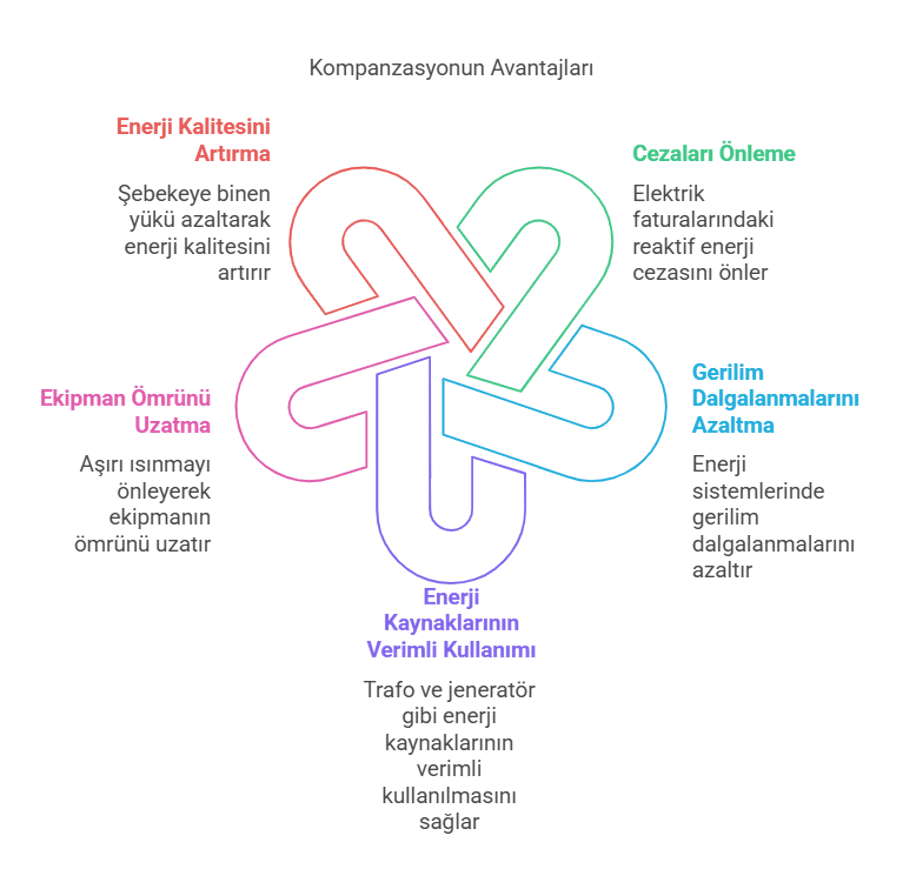
Kompanzasyonun Avantajları (Entes)
Compensation can be implemented through various methods each tailored to a specific electrical system. The main types of compensation are:
The compensation process is an adjustment made according to the reactive power demand. Reactive power control relays continuously monitor the ratio of sediment to coffee in all three phases and ensure that the required sediment is compensated by capacitors. These relays monitor the grid voltage and activate the necessary capacitors to meet instantaneous reactive power demands.
During the installation of a compensation system proper meters must be used. These meters measure reactive energy and prevent it from exceeding a specified limit. In addition regular maintenance of capacitors is essential to ensure their proper operation.
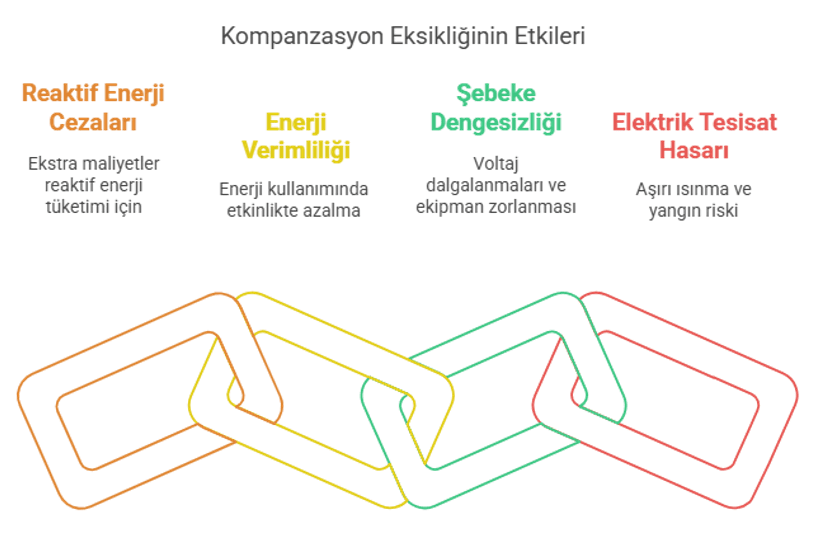
Kompanzasyon Eksikliği Sonuçları (Entes)
Without compensation significant efficiency losses occur in electrical systems. Reactive power consumption creates imbalances in electrical systems and causes equipment on the grid to become overloaded. As a result:
Büyük, Şener. "Reaktif Enerji ve Kompanzasyon." Elektrik Mühendisliği Dergisi 15, no. 2 (2023): 145–160. Accessed May 20, 2025.https://www.elektrikmuhendisligi.com/reaktif-enerji-ve-kompanzasyon
Karakaya, Serkan. "Elektrik Şebekelerinde Reaktif Güç Yönetimi ve Kompanzasyon Yöntemleri." Uluslararası Elektrik Enerjisi Konferansı Bildirileri (2020): 254–265. Accessed May 20, 2025.https://www.ulkelerarasi-elektrik-konferansi.com/reaktif-guc-ve-kompanzasyon.
Kıral, Mehmet. "Enerji Verimliliği ve Reaktif Güç Yönetimi." Enerji Teknolojileri 10, no. 1 (2022): 89–101. Accessed May 20, 2025.https://www.enerjiteknolojileri.com/enerji-verimliligi-ve-reaktif-guc.
Türkiye Elektrik İletim A.Ş. "Reaktif Enerji ve Kompanzasyon Uygulamaları." TEİAŞ Yayınları, 2019. Accessed May 20, 2025.https://www.teias.gov.tr/reaktif-enerji-ve-kompanzasyon.
Yılmaz, Fatma, and Ahmet Güler. "Kompanzasyon Sistemlerinin Enerji Verimliliği Üzerindeki Etkileri." *Enerji Sistemleri Dergisi* 12, no. 3 (2021): 32–46. Accessed May 20, 2025.https://www.enerjisistemleri.org/kompanzasyon-sistemlerinin-etkileri
Çelik, Hakan. "Enerji Verimliliği ve Kompanzasyon Sistemlerinin İyileştirilmesi." *Elektrik ve Enerji Dergisi* 8, no. 4 (2020): 210–222. Accessed May 20, 2025.https://www.elektrikenerji.com/kompanzasyon-sistemleri

Reactive Energy
What Is Compensation?
Purpose of Compensation
Types of Compensation
How Is Compensation Carried Out?
What Happens Without Compensation?