This article was automatically translated from the original Turkish version.
Common Poyraz Bird
Realm | Animalia | ||||||||
|---|---|---|---|---|---|---|---|---|---|
Class | Aves | ||||||||
Order | Chordata | ||||||||
Family | Haematopodidae | ||||||||
Genus | 39–47.5 cm | ||||||||
Weight | Male: Average 430 g Female: Average 650 g | ||||||||
Egg Count | 2–5 individuals | ||||||||
Incubation Period | 24–35 days | ||||||||
Wingspan | 72–86 cm | ||||||||
Conservation Status | (IUCN) Near Threatened (NT) | ||||||||
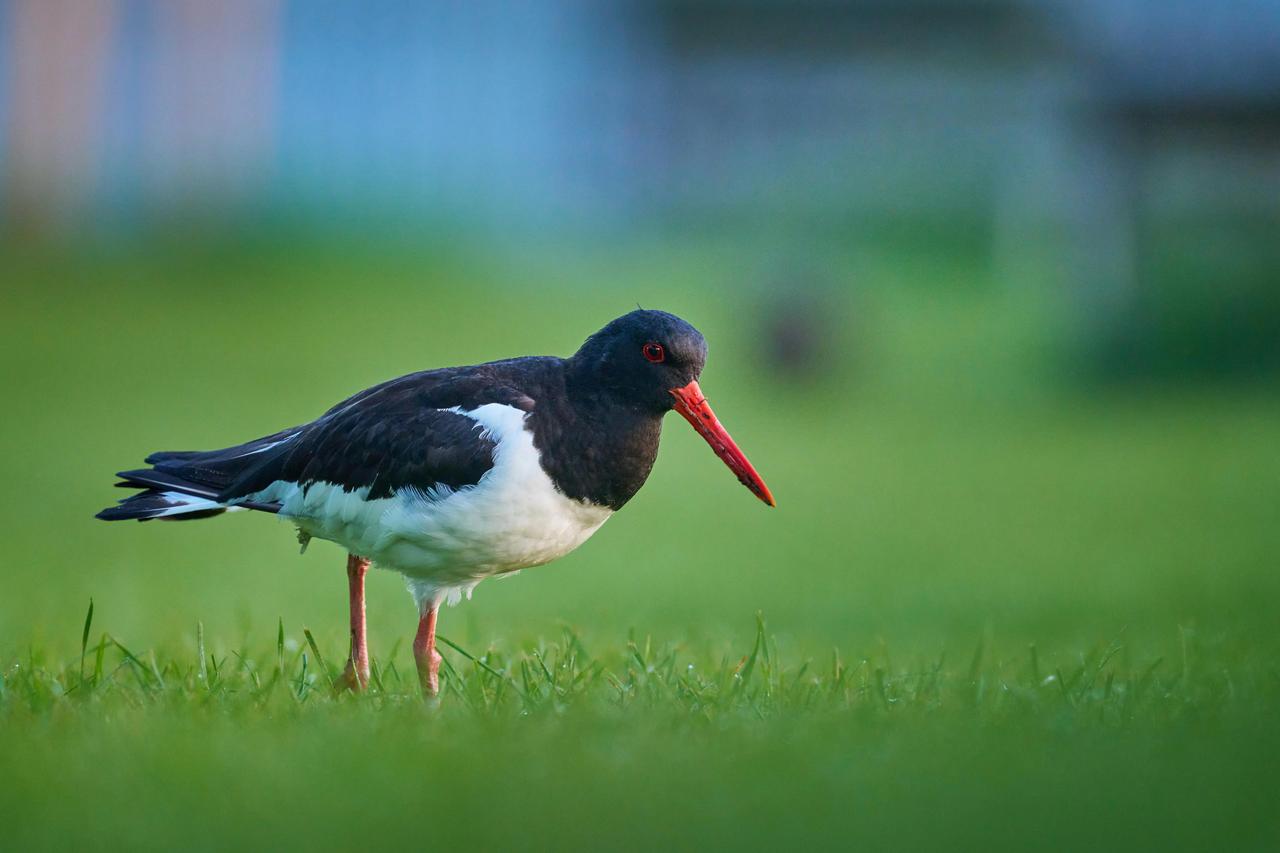
Eurasian Oystercatcher (Haematopus ostralegus), a coastal bird observable year-round in Türkiye. Its distinctive features include a long, straight, orange-red bill and a black-and-white plumage pattern. The bird is easily identifiable in flight by its broad white wing bar.
The Eurasian Oystercatcher (Haematopus ostralegus) is a coastal bird species belonging to the family Haematopodidae and the genus Haematopus. Current classifications recognize four subspecies. The Palearctic subspecies include H. o. ostralegus, H. o. longipes and H. o. osculans. H. o. ostralegus ranges from Iceland and Scandinavia through the British Isles and northwestern France to Türkiye along the Mediterranean coast. H. o. longipes is distributed from western and northern-central Russia to the Black Sea, Caspian Sea and Aral Sea regions and winters along the coasts of India via the Arabian Peninsula and eastern Africa. H. o. osculans is found in northeastern Russia, Manchuria and northern Korea.
The Eurasian Oystercatcher is a large coastal bird measuring 39–47.5 cm in length with a wingspan of 72–86 cm. It has a robust body, a long straight orange-red bill and a striking appearance. Adults have entirely black heads, necks and upper breasts; the scapulars, upper wing coverts and tail are also black. In contrast, the central and lower back, uppertail coverts, lower breast and abdomen are white. A broad white wing band extending to the middle of the wing is clearly visible in flight. The eyes and eye ring are red, and the legs are pinkish-red. Females are generally slightly larger than males and have longer, more slender bills; males typically have shorter, thicker bills. Outside the breeding season, a white collar develops on the front of the neck and the bill color becomes slightly duller. Juveniles have a dull dark brownish-black upperparts, duller eyes and eye rings, and a portion of the bill tip is black. In first-year birds, the tail band is narrower and the legs appear dull flesh-colored or grayish.
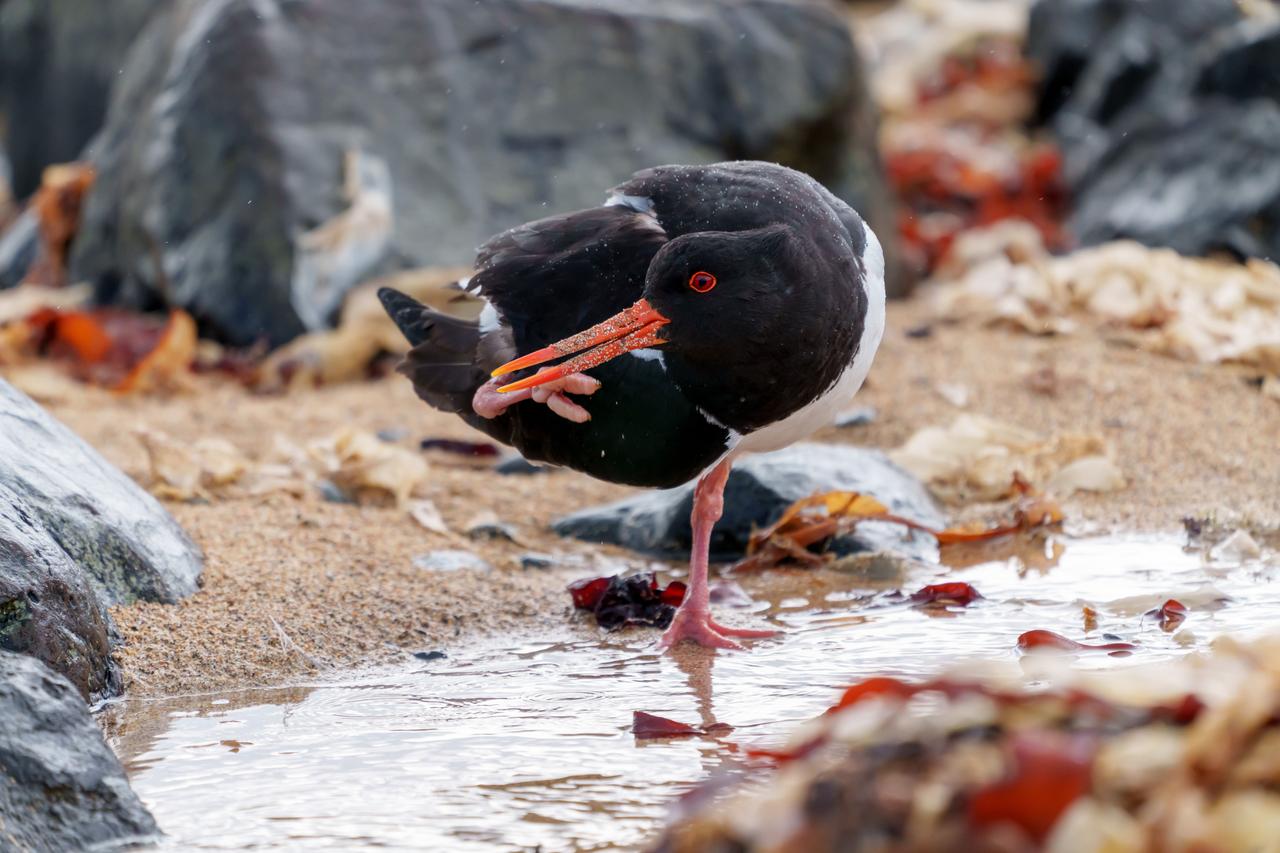
Eurasian Oystercatcher (pexels)
The Eurasian Oystercatcher (Haematopus ostralegus) is a coastal bird distributed across the coastal regions of Europe, Asia and Africa. During the breeding season, it inhabits salt marshes, sandy and shingly beaches, rocky coasts, estuaries and shallow coastal areas. Coastal wetlands are its primary habitats. Some populations also occur inland along lake shores, riverbeds, stony riverbanks and agricultural fields. Outside the breeding season, it gathers in large flocks in estuarine mudflats, coastal plains, rocky shores and lagoons. The species avoids areas with severe cold, heavy snow and ice cover, and migrates toward milder coastal regions during winter. Seasonal movements and migration behavior play a significant role in its distribution. Individuals breeding inland typically move to coasts during winter, while some coastal populations remain in the same areas year-round. In Türkiye, records exist from all regions except Southeastern Anatolia. The species is particularly observed in wetlands along the Aegean, Mediterranean and Black Sea coasts, and in the Tuz Gölü Basin.
The Eurasian Oystercatcher is a social coastal bird that typically moves in groups. It may be seen alone or in small groups during daily routines or feeding, but quickly forms large organized flocks when disturbed or when tidal currents submerge feeding areas. These birds prefer open areas for foraging and move easily on land and in shallow water, landing on both water and land and taking off directly from either. Their flight is characterized by rapid wingbeats and resembles that of ducks. Ecologically, they exhibit a monogamous breeding strategy and generally form lifelong pair bonds. The most common vocalization within social groups is a repeated, piping "peep" or "kleep" call; during threats, they emit a short, sharp "wit!" alarm call. Generally, populations living along marine coasts are resident, while those inhabiting inland wetlands exhibit migratory behavior.
The diet of the Eurasian Oystercatcher varies depending on whether it inhabits marine or inland areas. Along shorelines, it feeds primarily on mussels, oysters, marine snails, barnacles and other hard-shelled mollusks, occasionally consuming small fish. To consume these hard-shelled prey, it employs specialized foraging techniques such as hammering, prying, stabbing and probing. In inland areas and along riverbanks, its diet shifts largely to earthworms, soft invertebrates, insect larvae and caterpillars. Food preferences vary significantly with season, location, tidal cycles and individual age. Due to morphological differences in bill structure, feeding techniques and diet composition differ between adults and juveniles. Prey is sometimes stolen by gulls and crows.
Eurasian Oystercatchers begin breeding activities typically in April and May. Both males and females reach sexual maturity only at age four. Nest construction is a shared effort: both partners build the nest together. The nest is a shallow depression about 20 cm wide and 5–7 cm deep, dug into the ground in open areas or beneath low vegetation. The interior of the nest is sometimes lined with debris, shell fragments or stones, but may also be left unlined. Breeding pairs tend to reuse the same nest site annually. The female lays two to five oval eggs, the number varying by subspecies. Incubation is primarily carried out by the female, but both sexes participate, and the incubation period lasts 24 to 35 days. Chicks are fed jointly by both parents, who teach them essential feeding skills such as cracking shells and foraging. Juveniles remain with their parents for an extended period to master these techniques. Only one brood is produced per season, although replacement clutches may occur if the initial eggs are lost.
The Eurasian Oystercatcher (Haematopus ostralegus) is classified as "Near Threatened" (NT) on the IUCN Red List of Threatened Species. The global population is estimated at approximately 925,000 to 1,030,000 individuals. The overall global population trend is declining. Major threats contributing to this decline include urban expansion, intensive agricultural activities and loss of coastal wetland habitats. Additionally, overexploitation of mussel and oyster beds due to commercial shellfish harvesting directly exposes populations to food shortages.
BirdLife International. “*Haematopus ostralegus*.” *The IUCN Red List of Threatened Species 2019*: e.T22693613A154998347. Accessed May 27, 2026. https://www.iucnredlist.org/species/22693613/154998347.
Frites, Tommes. "Eurasian Oystercatcher (Haematopus ostralegus) foraging on lush green grass." Pexels. Accessed May 27, 2026. https://www.pexels.com/photo/close-up-of-a-eurasian-oystercatcher-on-grass-33427491/
Julien, Marc. "Close-up of an Eurasian Oystercatcher on a coastal beach in Iceland during autumn." Pexels. Accessed May 27, 2026. https://www.pexels.com/photo/eurasian-oystercatcher-on-icelandic-beach-shore-36653199/
Nilsen, S., and J. A. Harrison. “Eurasian Oystercatcher (Haematopus ostralegus).” Birds of the World. Edited by S. M. Billerman, B. K. Keeney, P. G. Rodewald, and T. S. Schulenberg. Ithaca, NY: Cornell Lab of Ornithology, 2020. Accessed May 27, 2026. https://birdsoftheworld.org/bow/species/euroys1/cur/introduction
Ornito. "Poyrazkuşu (Haematopus ostralegus)." Ornito. Accessed May 27, 2026. https://ornito.org/Bird/Detail/389
TRAKUS. “Poyrazkuşu (Haematopus ostralegus).” TRAKUS. Accessed May 27, 2026. https://www.trakus.org/kods_bird/uye/?fsx=2fsdl17@d&tur=Poyrazku%FEu

Common Poyraz Bird
Realm | Animalia | ||||||||
|---|---|---|---|---|---|---|---|---|---|
Class | Aves | ||||||||
Order | Chordata | ||||||||
Family | Haematopodidae | ||||||||
Genus | 39–47.5 cm | ||||||||
Weight | Male: Average 430 g Female: Average 650 g | ||||||||
Egg Count | 2–5 individuals | ||||||||
Incubation Period | 24–35 days | ||||||||
Wingspan | 72–86 cm | ||||||||
Conservation Status | (IUCN) Near Threatened (NT) | ||||||||
No Discussion Added Yet
Start discussion for "Common Oystercatcher (Haematopus ostralegus)" article
Taxonomy
Morphological Characteristics
Distribution and Habitat
Behavior and Ecology
Feeding
Breeding
Conservation Status