


This article was automatically translated from the original Turkish version.
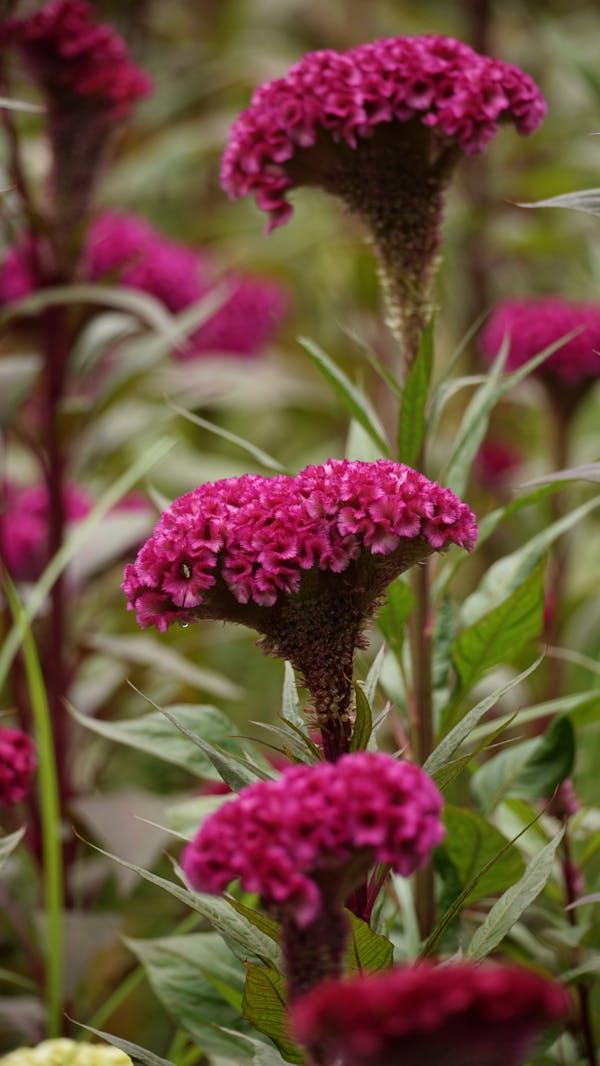
(Celosia sp.)
Turkish Name | Rooster Comb | ||||||||
|---|---|---|---|---|---|---|---|---|---|
Latin Name | Celosia sp. | ||||||||
Family | Amaranthaceae (Spinach Family) | ||||||||
Plant Group | Annual Flowers | ||||||||
Origin | Tropical Regions of Asia | ||||||||
Use Area | Pot Balcony Decorations Dried Flower Garden | ||||||||
Leaves | Oval or ribbon-like; broad-leaved | ||||||||
Stem Color | Reddish upright growth | ||||||||
Flower Colors | Red, Yellow, White | ||||||||
Flower Shape | Ostrich feather or rooster comb shape | ||||||||
Soil Preference | Organically rich, loose-textured soil | ||||||||
Light Preference | Full Sun | ||||||||
Watering | Regular and moderate amount | ||||||||
Production Method | By seed | ||||||||
Germination Temperature | 20–30 °C | ||||||||
Diseases | Powdery mildew, Leaf spot | ||||||||
Pests | Aphid, Red spider mite, Nematode | ||||||||
Cockscomb (Celosia species) is an annual ornamental plant belonging to the Amaranthaceae (Amaranth family), recognized for its striking and distinctive flower structure. Native to the tropical regions of the Asian continent, this species is particularly notable during the summer months for its showy blooms. It derives its common name, cockscomb, from the resemblance of its flowers to the comb on a rooster’s head. Its use as an ornamental plant is very widespread.
Cockscomb has broad strap-shaped or oval leaves. Its stem is reddish in color and grows upright. The flowers that bloom in summer have a dense structure resembling the feathers of a camel bird. Flower colors include red, yellow, and white. The shape and color intensity of the flowers make it an ideal plant for garden and container decorations.
Light: It thrives in full sun and warm environments. Although it can grow in partial shade, flowering performance declines.
Soil: A loose, well-drained garden soil rich in organic matter is preferred.
Watering: Regular but not excessive watering is required. Overwatering can lead to root rot.
Cockscomb is primarily propagated by seed. The seeds are small and can be sown directly into the soil or grown via the seedling method. The optimal temperature range for germination is 20–30°C. High temperatures increase both the rate and speed of germination. Adequate moisture and air circulation must be maintained in the germination environment.
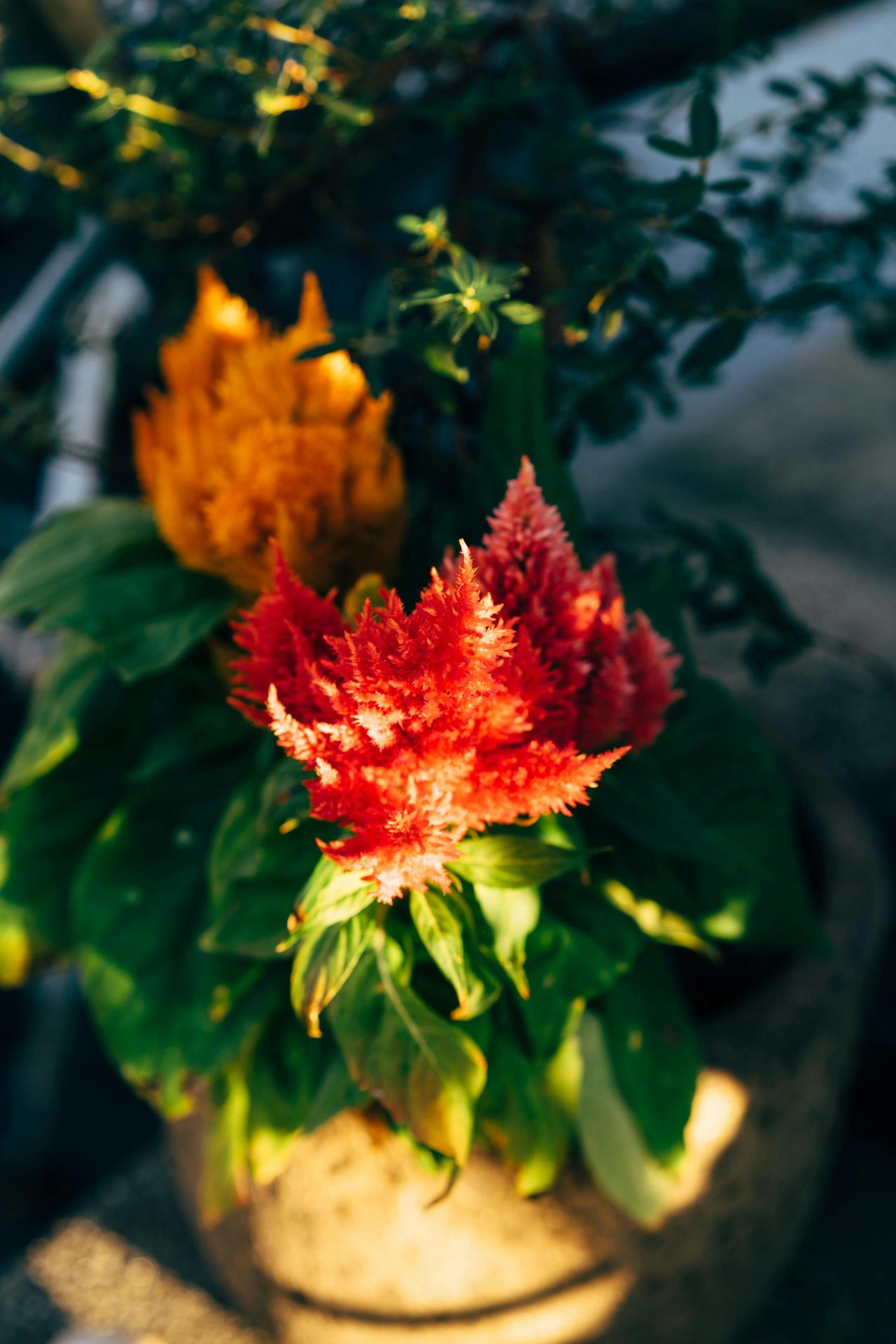
Example of container decoration
During cultivation, it may be affected by certain diseases and pests.
Diseases: Powdery mildew, leaf spot (fungal)
Pests: Spider mites, aphids, nematodes
These pests can cause leaf deformation, discoloration, and stunted growth. The risk of disease increases particularly in hot and humid conditions.
The term cockscomb encompasses several different species. Celosia argentea and its subspecies are the most common ornamental varieties. Celosia cristata (crested form) is recognized by its layered, brain-like flower heads, while Celosia plumosa species have feathery and more loosely arranged flowers.
Atatürk Orman Çiftliği Müdürlüğü. "Horozibiği." Accessed April 17, 2025.https://www.aoc.gov.tr/Portal/BitkiselUretimler/horozibigi/114
Karadağ, Tuba, and Şahin İlker Saygı. “Bazı Horozibiği (Amaranthus spp.) Tohumlarının Çimlenme Sıcaklıklarının Araştırılması.” Turkish Journal of Weed Science 24, no. 2 (2023): 70–77.https://dergipark.org.tr/tr/pub/tjws/issue/78871/1301880

(Celosia sp.)
Turkish Name | Rooster Comb | ||||||||
|---|---|---|---|---|---|---|---|---|---|
Latin Name | Celosia sp. | ||||||||
Family | Amaranthaceae (Spinach Family) | ||||||||
Plant Group | Annual Flowers | ||||||||
Origin | Tropical Regions of Asia | ||||||||
Use Area | Pot Balcony Decorations Dried Flower Garden | ||||||||
Leaves | Oval or ribbon-like; broad-leaved | ||||||||
Stem Color | Reddish upright growth | ||||||||
Flower Colors | Red, Yellow, White | ||||||||
Flower Shape | Ostrich feather or rooster comb shape | ||||||||
Soil Preference | Organically rich, loose-textured soil | ||||||||
Light Preference | Full Sun | ||||||||
Watering | Regular and moderate amount | ||||||||
Production Method | By seed | ||||||||
Germination Temperature | 20–30 °C | ||||||||
Diseases | Powdery mildew, Leaf spot | ||||||||
Pests | Aphid, Red spider mite, Nematode | ||||||||
No Discussion Added Yet
Start discussion for "Cockscomb (Celosia sp.)" article
Definition and General Information
Morphological Characteristics
Ecological Requirements
Propagation and Cultivation
Uses
Diseases and Pests
Variety and Taxonomic Notes