


This article was automatically translated from the original Turkish version.
Area(s) | Traditional music | ||||||||
|---|---|---|---|---|---|---|---|---|---|
Type(s) | Intangible cultural heritage | ||||||||
Distinguishing Features | Improvisation-based use of regional melodies and rhythms | ||||||||
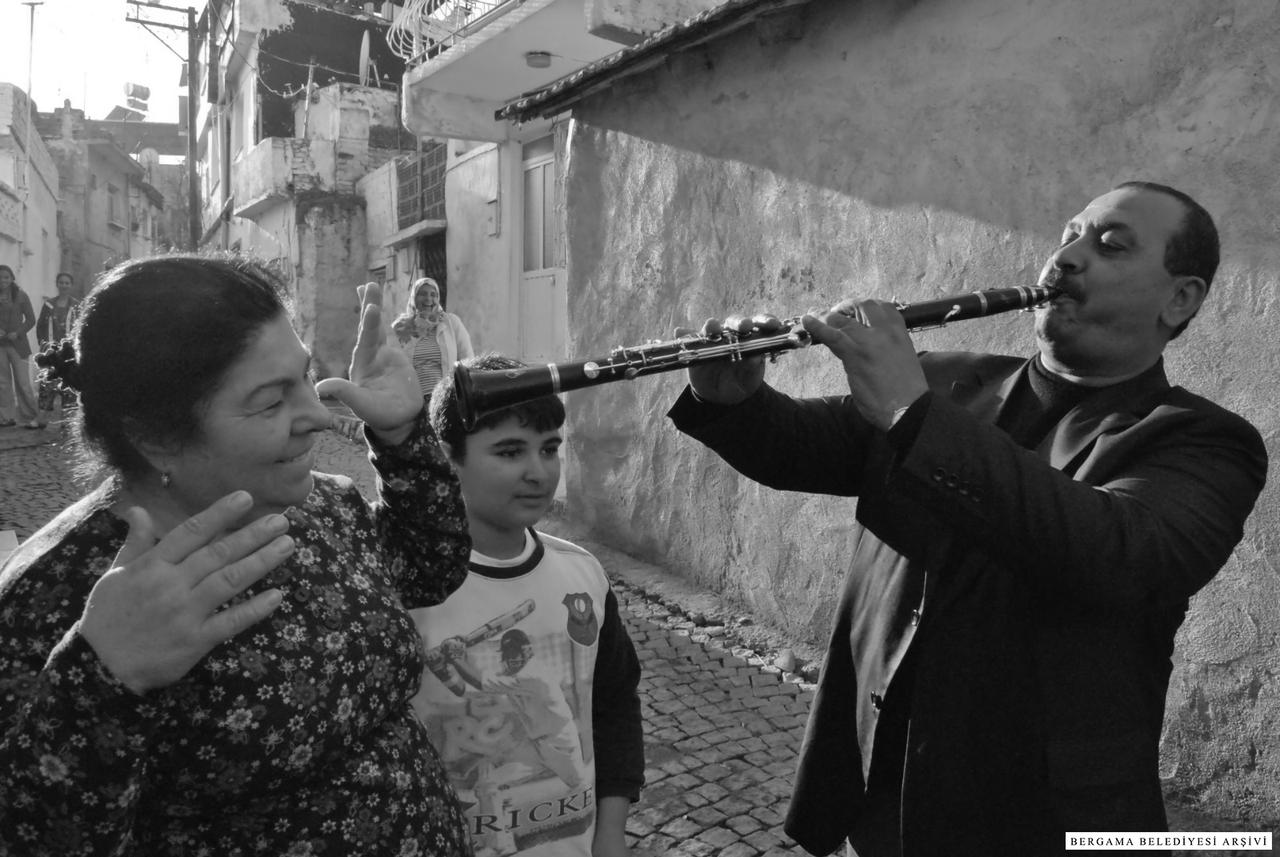
Clarinet Playing is a performance practice shaped within the local musical tradition and widely practiced in Bergama and its surrounding areas in Türkiye. This musical tradition, developed during weddings, festivities, and social ceremonies in the region, has been passed down from generation to generation until the present day.
Clarinet Playing(Bergama Regional Presidency)
The tradition of clarinet playing in Bergama is said to have gained prominence through the cultural exchange between the Balkans and Anatolia during the Ottoman period. Upon its introduction to the region, the clarinet quickly became one of the fundamental instruments in the local musical repertoire and was adopted across various social groups.
The clarinet is performed in Bergama primarily at weddings, circumcision ceremonies, holiday celebrations, and other social events. In this context, the instrument serves not only as a musical element but also as a means of communication that strengthens social cohesion.
In Bergama clarinet performance, regional melodies and rhythmic structures are prominent. Improvisation plays a significant role during performances, with the musician’s technical proficiency and musical interpretation determining the quality of the performance. The clarinet’s timbre and expressive capabilities are employed in a manner that reflects the distinctive features of regional music.
The tradition of clarinet playing is regarded as an integral part of the shared cultural memory of the communities living in Bergama. This practice, transmitted through master-apprentice relationships, is recognized as intangible cultural heritage and plays a vital role in sustaining local identity.
Today, the clarinet playing tradition is kept alive both within traditional contexts and through cultural events. Organized by local authorities and cultural institutions, these activities enhance the visibility of the tradition and contribute to its transmission to future generations.
Bergama Alan Directorate. "Klarnet Çalma." UNESCO Bergama. Accessed March 4, 2026.
Tunç, Yüksel. “Türk Müzik Kültüründe Klarnet.” *Artistic View Journal* 1, no. 1 (2025). Accessed March 4, 2026. https://artisticview.org/index.php/pub/article/view/5.
https://unesco.bergama.bel.tr/kulturel-miraslar/klarnet-calma/

Area(s) | Traditional music | ||||||||
|---|---|---|---|---|---|---|---|---|---|
Type(s) | Intangible cultural heritage | ||||||||
Distinguishing Features | Improvisation-based use of regional melodies and rhythms | ||||||||
Historical Background
Performance Contexts and Function
Musical Characteristics
Cultural Heritage Status
The Clarinet Playing Tradition Today