


This article was automatically translated from the original Turkish version.
+1 More
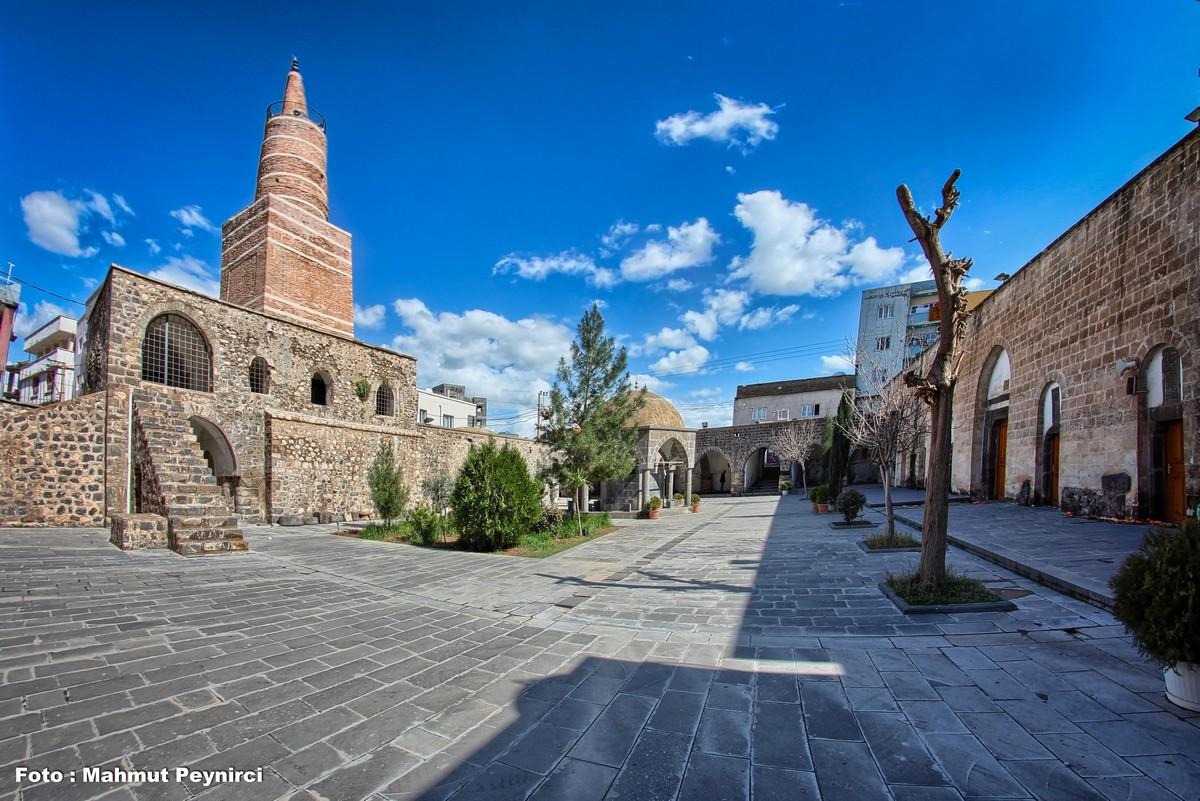
Cizre Ulu Camii
Location | Türkiye - Dağ Kapı Mahallesi Şırnak Cizre | ||||||||
|---|---|---|---|---|---|---|---|---|---|
Original Construction | 639 (Converted from church to mosque) | ||||||||
Reconstruction | 1160 (By Emir Ali Sencer, son of Cizre Bey Baz Shah) | ||||||||
Minaret | 1156 (Built in a four-cornered shape) | ||||||||
Cizre Ulu Camii is a historic mosque located in the center of Cizre district, Şırnak Province, Türkiye, in the Kapı Neighborhood. This structure, surrounded by roads on all four sides, has survived to the present day through various additions and repairs carried out over different periods. The mosque’s origins date back to 639, when it was converted from a church following Cizre’s acceptance of Islam. Throughout history, it was destroyed and restored during the Abbasid period, and in 1160 it was completely rebuilt by Emir Ali Sencer, son of Cizre Bey Baz Şah.
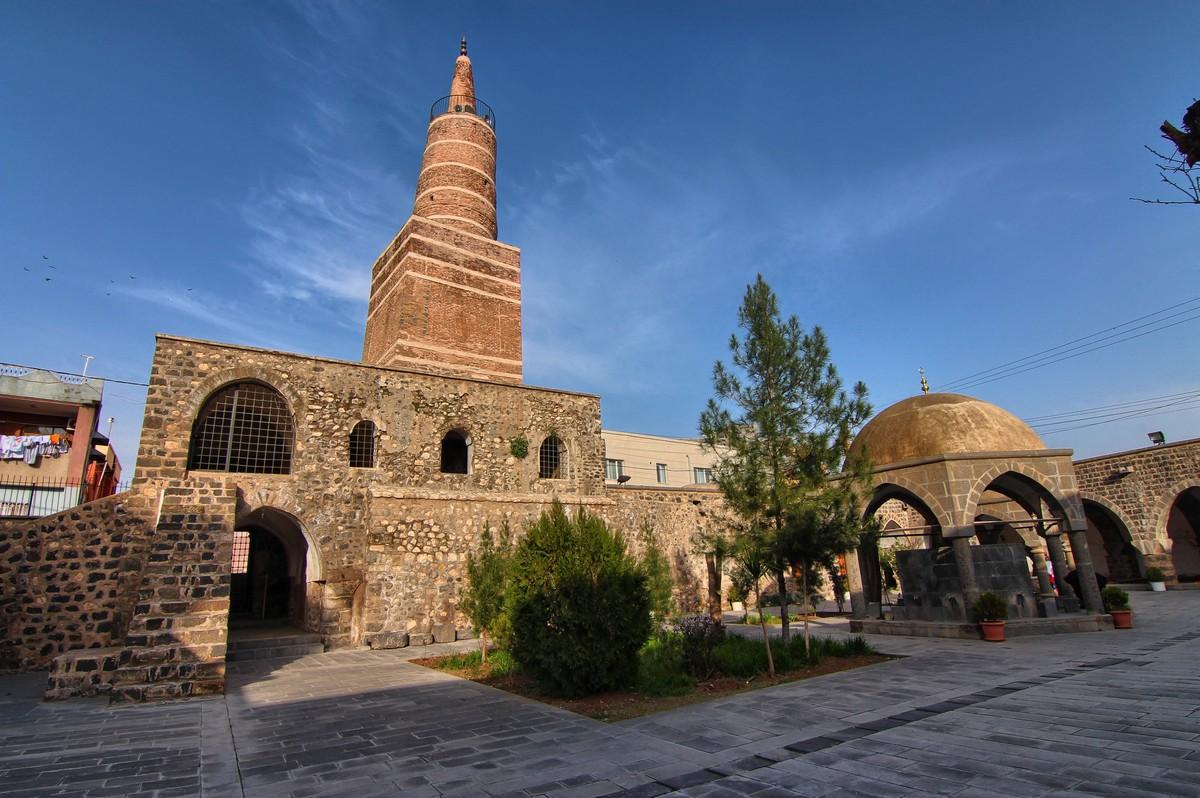
Cizre Ulu Camii (Cizre Ticaret ve Sanayi Odası)
The mosque’s origins extend to the year 639, when, following Cizre’s adoption of Islam, a church was converted into a mosque. However, definitive information about its original structure is lacking. During the Abbasid period, the mosque was destroyed and subsequently restored. In 1160, it was comprehensively rebuilt by Emir Ali Sencer, son of Cizre Bey Baz Şah. Inscriptions indicate that the foundation stones were laid between 1155 and 1156 by Cizre Zengid Atabeg Abu’l-Kasım Mahmud Sencer Şah. Further inscriptions note that in 1284, Ali, another son of Baz Şah, carried out repairs. The minaret was constructed in 1156 in a four-cornered form.
Over time, the mosque underwent numerous restorations. In 1945, it was restored by master craftsman Mahmut under the efforts of Sheikh Seyda; in the 1970s, it was repaired by the General Directorate of Foundations; and most recently, in 2007, it was renovated to reopen for worship.
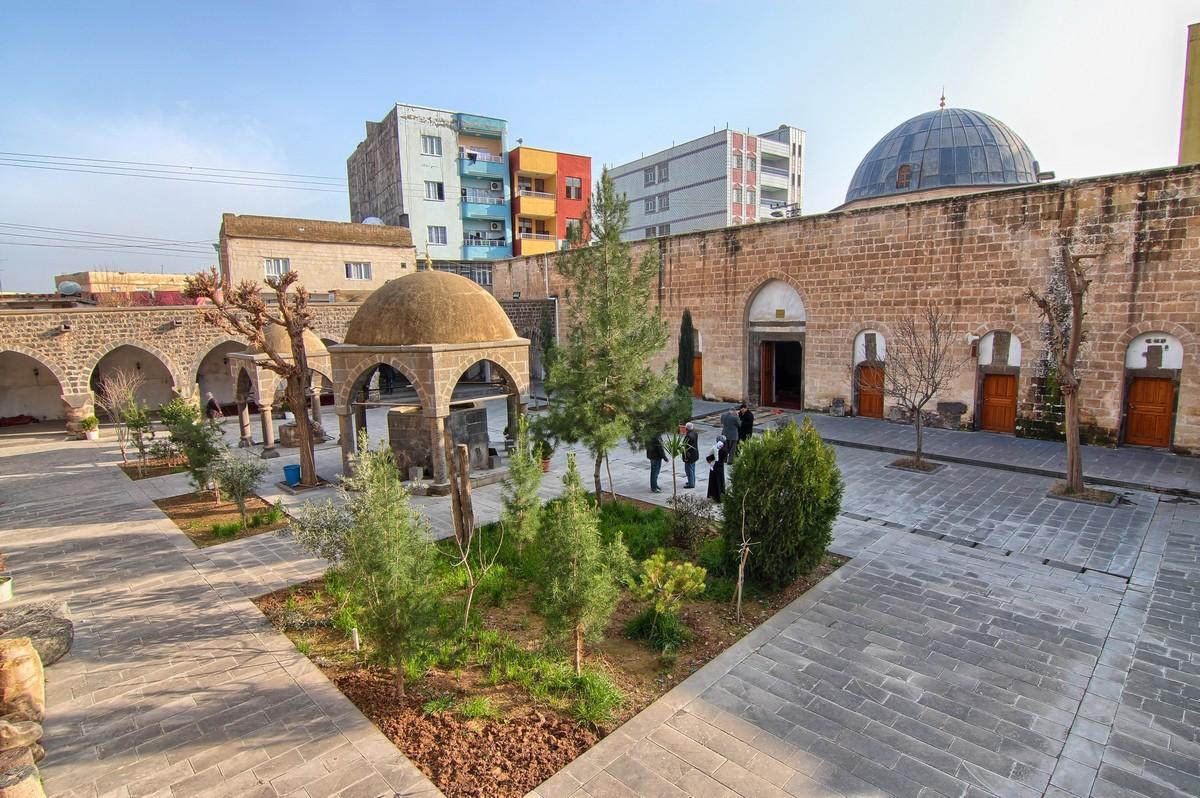
Cizre Ulu Camii (Cizre Ticaret ve Sanayi Odası)
Cizre Ulu Camii stands out for its unique architecture. The structure was built upon columns formed by stacking large stone millstones with perforated centers. These columns were reinforced with iron angle brackets to support the domes. The mosque’s minaret, constructed in 1156 in a four-cornered form, was restored twice: once between 1945 and 1946 and again in 1971.
The mosque’s doors hold significant artistic value. Each door features verses and chapters from the Qur’an inscribed in Kufic script. The large iron door is adorned with silver motifs, copper designs, and Kufic calligraphy and has been preserved at the Topkapı Palace Museum since 1983. Particularly notable is the bronze door knocker of the wooden door, dated to the 13th century, which is a world-renowned masterpiece of carving. This knocker, designed by the physicist and artist Ismail Abu’l-Iz al-Jazari, depicts winged dragon figures with pointed ears, almond-shaped eyes, and a stylized lion’s head at the center. The dragons’ bodies are covered in scale-like patterns resembling snake scales, while their tails are intertwined in the shape of eagle heads. One of these artifacts has been exhibited at the Museum of Turkish and Islamic Arts since 1976, while the other was stolen in 1969 and taken to the David Samling Museum in Copenhagen.
Cizre Ulu Camii (Cizre Ticaret ve Sanayi Odası)
Cizre Ulu Camii holds great religious and cultural importance. Its conversion from a church to a mosque in 639 is regarded as a symbol of the region’s Islamization. The mosque bears traces of architectural and artistic influences from major Islamic states such as the Abbasids, Zengids, and the Beylik of Cizre, reflecting the evolving aesthetic sensibilities of different eras. Artifacts such as the door knocker draw attention through figurative details rare in Islamic art and reveal the genius of Abu’l-Iz al-Jazari. Moreover, Kufic inscriptions and Qur’anic verses reinforce the mosque’s religious identity. Cizre’s historical role as a center of civilization further elevates the mosque’s status as a cultural heritage.
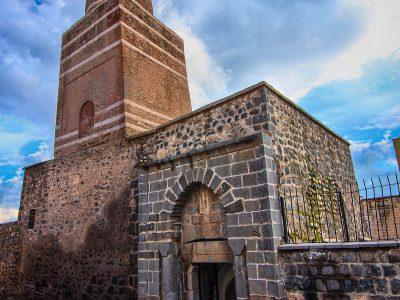
Cizre Ulu Camii (Cizre Ticaret ve Sanayi Odası)
Cizre Ulu Camii has endured various damages throughout history but has survived due to successive restoration efforts. Restoration initiatives began during the Abbasid period and continued with repairs carried out by Ali, son of Baz Şah, in 1284. In the 20th century, it was restored in 1945–1946 under the initiative of Sheikh Seyda, again in 1971, and most recently in 2007 by the General Directorate of Foundations. Although the prayer hall has been preserved through these efforts, the western, eastern, and northern sections of the complex still require restoration. The removal of one door knocker and the transfer of the large iron door to a museum were protective measures taken to safeguard the artifacts. Today, the mosque remains open for worship, but further efforts are needed to fully restore the entire complex.
One of the mosque’s most remarkable features is its artistic treasures. The door knocker by Abu’l-Iz al-Jazari is one of the rare examples of figurative motifs in Islamic art and is internationally recognized. Kufic-inscribed inscriptions demonstrate the mosque’s place within 12th and 13th century Islamic artistic traditions. Furthermore, repairs conducted in different periods serve as a historical record reflecting Cizre’s changing political and cultural landscape.
Cizre Kaymakamlığı. "Ulu Camii." Accessed April 1, 2025.http://www.cizre.gov.tr/ulu-camii.
Cizre Ticaret of Commerce and Industry. "Cizre Ulu Camii." Accessed April 1, 2025.https://cizretso.org/fotogaleriler/cizre-ulu-camii/
Culture Portal. "Cizre Ulu Camii." Accessed April 1, 2025.https://www.kulturportali.gov.tr/turkiye/sirnak/gezilecekyer/czre-ulucam
Ertekin, M. Zahir. “Cizre Ulu Camii.” Atatürk Üniversitesi Güzel Sanatlar Enstitüsü Dergisi, 2011.Accessed Adresi.
Şırnak Kültür and Tourism Ministry. "Cizre Ulu Camii." Accessed April 1, 2025.https://sirnak.ktb.gov.tr/TR-372112/cizre-ulu-camii.html

Cizre Ulu Camii
Location | Türkiye - Dağ Kapı Mahallesi Şırnak Cizre | ||||||||
|---|---|---|---|---|---|---|---|---|---|
Original Construction | 639 (Converted from church to mosque) | ||||||||
Reconstruction | 1160 (By Emir Ali Sencer, son of Cizre Bey Baz Shah) | ||||||||
Minaret | 1156 (Built in a four-cornered shape) | ||||||||
History
Architectural Features
Cultural and Religious Significance
Conservation Status and Restorations
Artistic and Historical Heritage