
This article was automatically translated from the original Turkish version.
The beautiful country of Uzbekistan greets us with its blue hues. Before speaking of the beauty of its cities and structures, I would like to share a few facts about this remarkable nation. Looking at its history, Uzbekistan declared its independence in 1991 and separated from the Soviet Union. Its capital is Tashkent, and it has a population of approximately 36 million. Samarkand and Bukhara are its other major cities. The national currency is the Uzbek som. While the people speak Uzbek Turkish, a significant portion of the population also speaks Russian, so you will encounter Russian in many places. The history of the Turkic Republics is an important and essential subject for us.
Tashkent is a city that harmoniously blends history and modernity, with its wide boulevards, modern buildings, green spaces, as well as madrasas and caravanserais. An Uzbek proverb says: There are two great roads in the universe; the Milky Way in the sky and the Silk Road on earth. Let us see what awaits us in Tashkent along this Silk Road.
Amir Timur, the founder of the Timurid dynasty, was born in Samarkand in 1336. Amir Timur, whose life was marked by numerous military campaigns and victories, is a significant figure for the Uzbek people. A great soldier and statesman, Timur never faced defeat on the battlefield. He also placed great importance on scholars, scientists, and artisans, hosting the leading intellectuals of his time in his court and organizing scholarly debates. Furthermore, he relocated scholars, scientists, and artisans from the territories he conquered to his capital, Samarkand, making a major contribution to the cultural and social development of Samarkand specifically and the Mawarannahr region generally. A statue of Amir Timur stands at the center of the city.
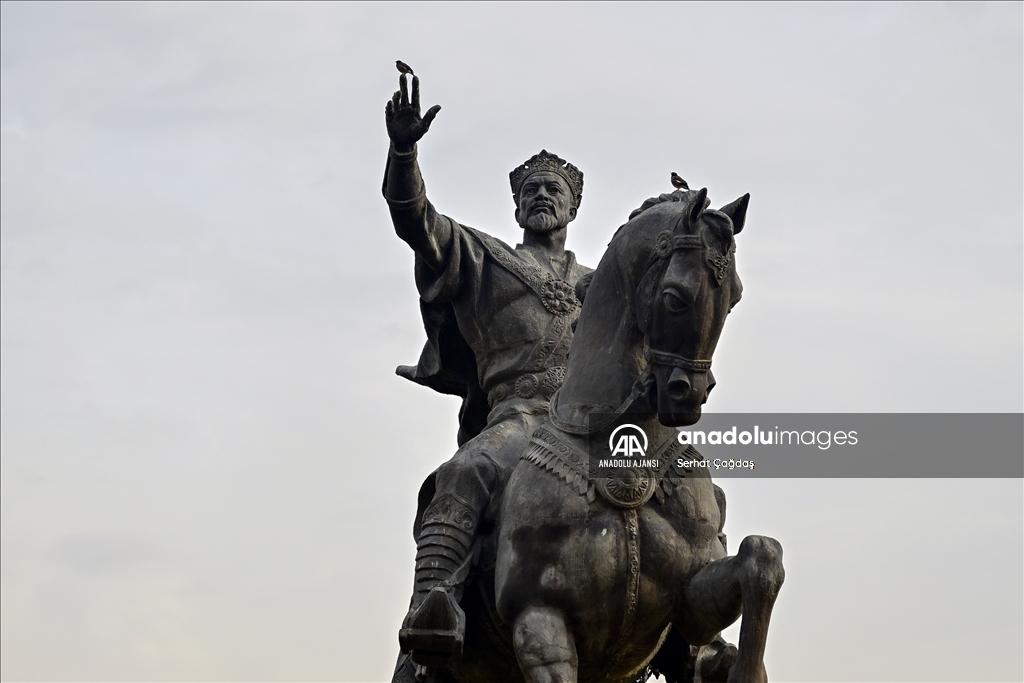
Statue of Amir Timur (Anadolu Agency)
One of the madrasas that captivate with its blue tones and intricate decorations is the Barak Khan Madrasa. Its name means “lucky” in Uzbek. We consider ourselves among the lucky ones who have seen this madrasa. This institution, built as an Islamic school, is home to one of the two largest copies of the Quran in the world and has become a symbol of Tashkent due to its magnificent blue dome. It is undoubtedly one of the madrasas that must be seen, thanks to its fine stonework and striking blue dome. After witnessing its blue beauty both day and night, I believe you will agree with me.
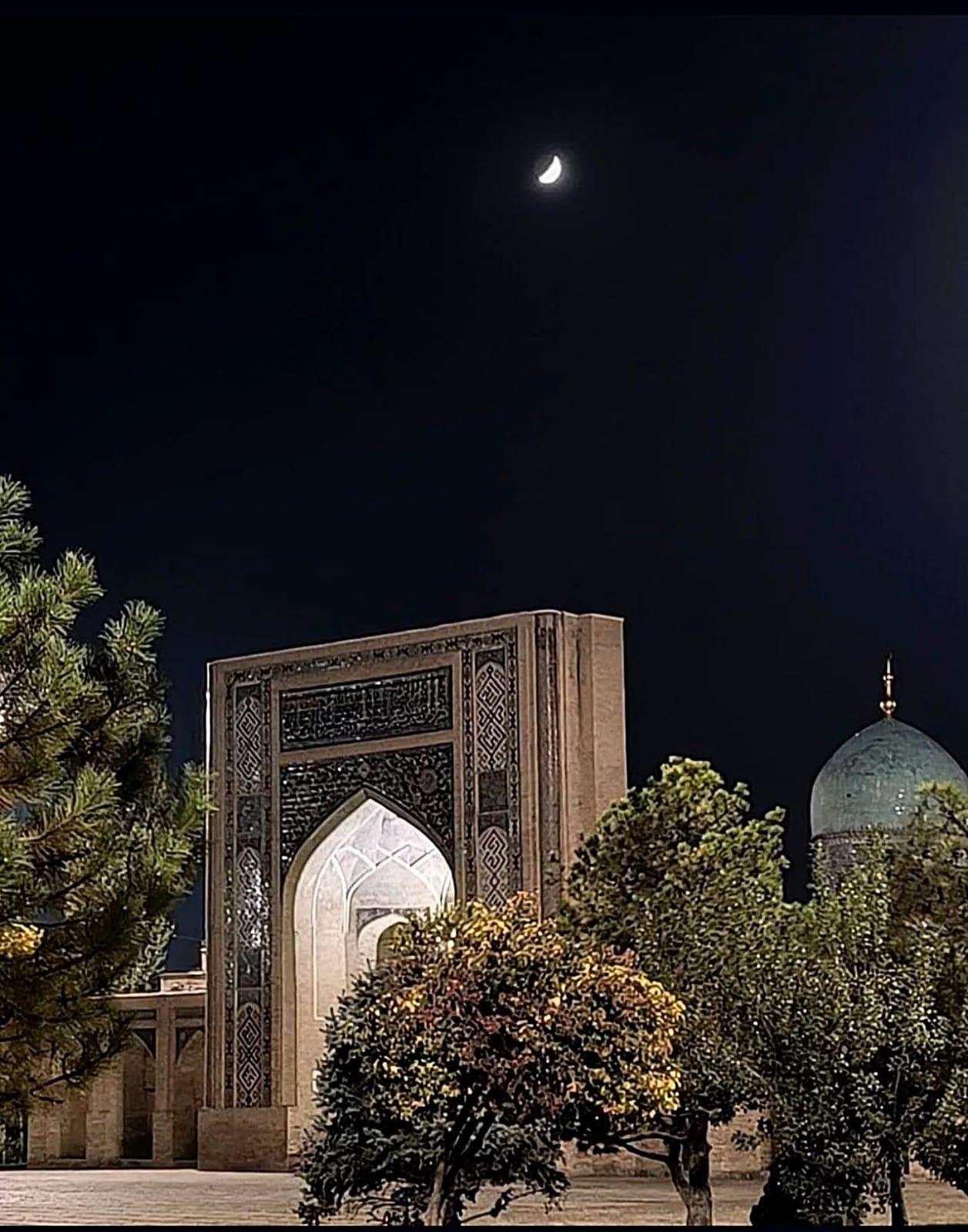
Barak Khan Madrasa (Photo: Merve Keskin)
We could not decide whether to call it a metro or an art museum infused with blue hues. Traveling on this underground train, whose stations are each more beautiful than the last, will undoubtedly enhance your sense of wonder. The design of each station reflects the era in which it was built. Some stations incorporate the dome techniques characteristic of Central Asian mosques, giving them a unique appearance. Others feature columns adorned with national patterns and decorations, creating distinctive aesthetic textures. The names of the Tashkent Metro stations, many of which honor important historical figures, add another layer of beauty to this system. You must make time to ride this metro, for it is a wealth worth seeing.
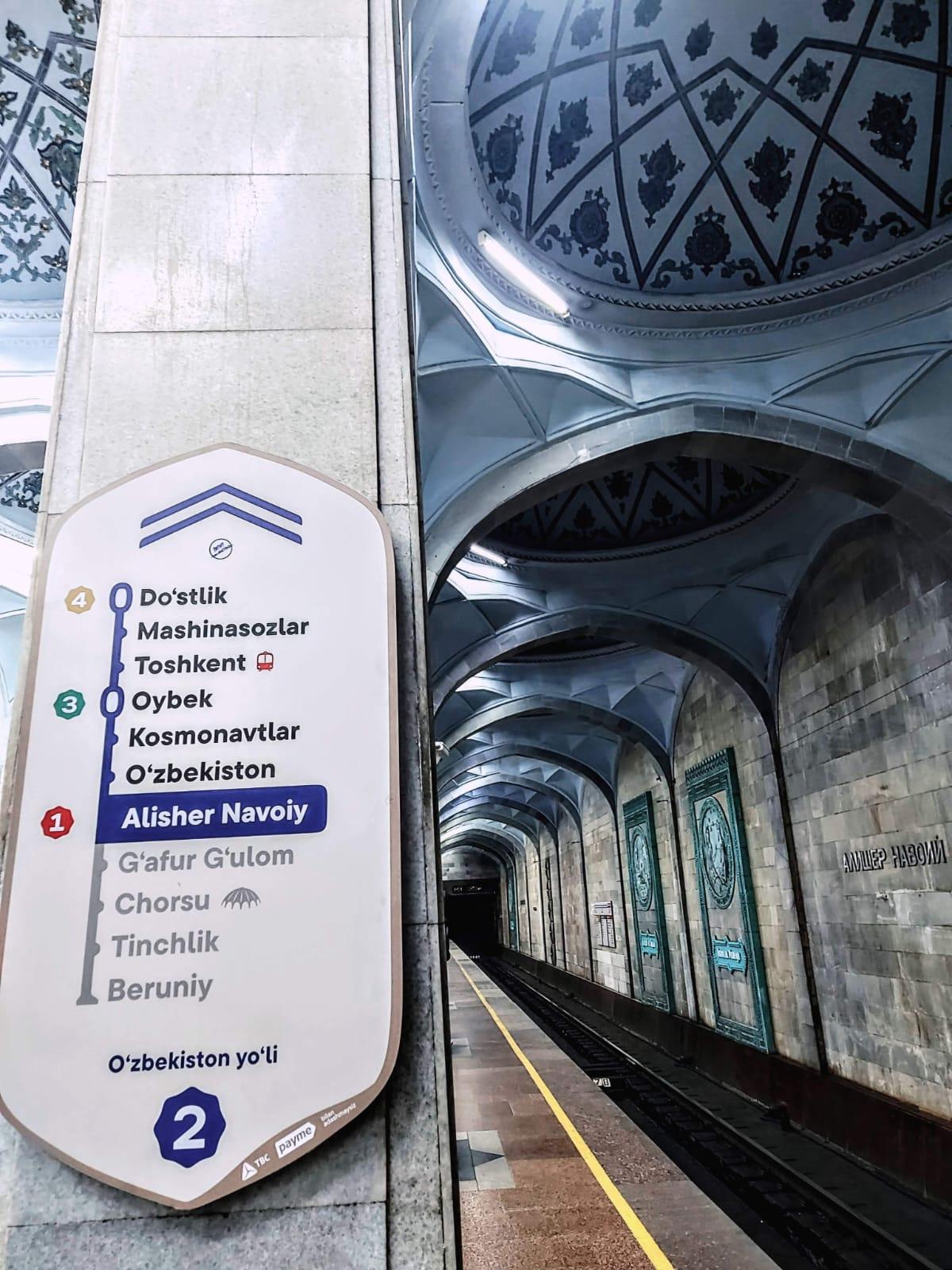
Tashkent Metro (Photo: Merve Keskin)
This country, which satisfies our souls with its spaces, also delights our stomachs with its cuisine. No visit to Uzbekistan would be complete without tasting its pilaf and bread. Uzbek pilaf, an indispensable part of family celebrations, is a national dish that must be present on the table during important occasions. The hospitality of the Uzbek people and their generous spirit of offering food deserve special mention. To truly understand this country, rich in historical and cultural heritage, it is not enough to read about it—you must see it for yourself.
For me, Uzbekistan is the land of blue, because as someone who admires madrasas, I felt my eyes and heart open wide. May I have the fortune to visit Samarkand and Bukhara. May your journeys be conscious ones, enriching your spirituality, uplifting your soul and heart, and bringing you abundant blessings.
Anadolu Ajansı. "Özbekistan'da Günlük Yaşam." Accessed May 17, 2025. https://www.aa.com.tr/tr/pg/foto-galeri/ozbekistanda-gunluk-yasam
Anadolu Ajansı. “Orta Asya’nın En Büyük Şehri Taşkent, Tarihi Cami ve Medreseleriyle Öne Çıkıyor.” Accessed May 17, 2025. https://www.aa.com.tr/tr/kultur/orta-asya-nin-en-buyuk-sehri-taskent-tarihi-cami-ve-medreseleriyle-one-cikiyor/3449561.
Amir Timur Square
Barak Khan Madrasa
Tashkent Metro