


This article was automatically translated from the original Turkish version.
+1 More
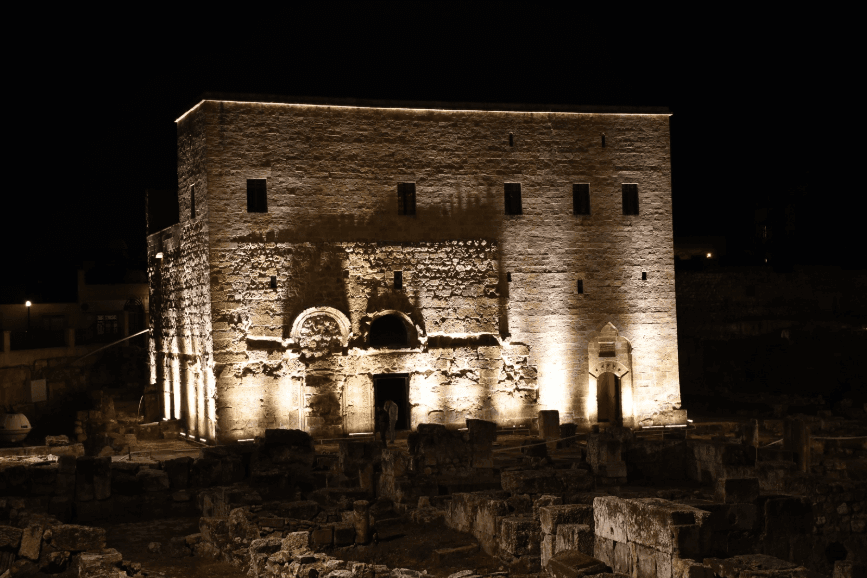
Church of Saint Jacob the Blue
Location | Nusaybin Türkiye Mardin | ||||||||
|---|---|---|---|---|---|---|---|---|---|
Coordinate(s) | Approximately 37.071°N 41.212°E | ||||||||
Construction Date(s) | repairs and additions in subsequent centuries 4th century (initial construction) | ||||||||
Founder(s) | Mor Yakup (Saint Yakup) Bishop of Nusaybin | ||||||||
The Mor Yakup Monastery is a historically and religiously significant structure located within the boundaries of the Nusaybin district in Mardin province in southeastern Türkiye. This monastery, associated with Syriac Christianity, was constructed during the early Christian period and provides comprehensive data on the region’s religious, cultural and social structure. The building is particularly linked to the religious activities of Mor Yakup (Yakup el-Nusaybini) and thus holds meaning within both local and regional historical contexts.
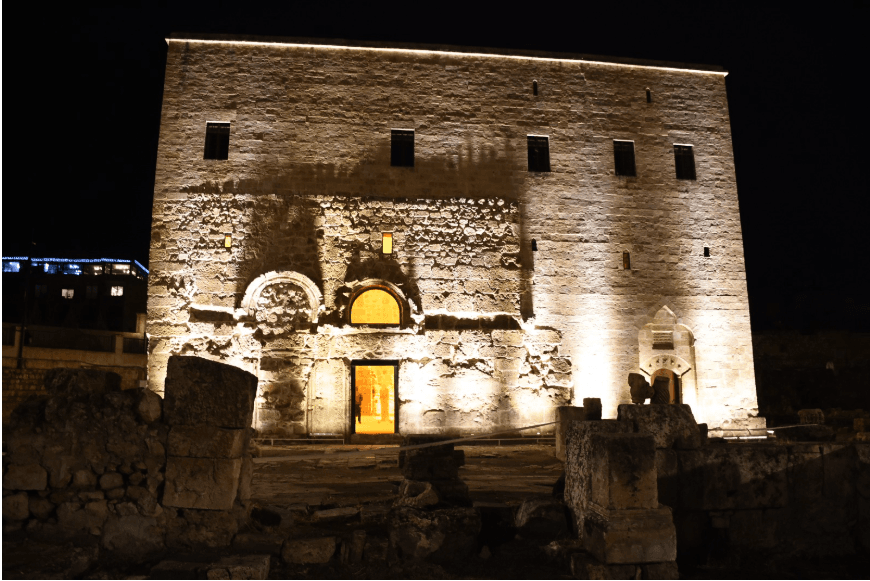
Mor Yakup Church (Ministry of Culture and Tourism of the Republic of Türkiye)
The monastery derives its name from Mor Yakup, who lived in the 4th century AD and served as Bishop of Nusaybin. During this period, Nusaybin occupied a strategic position between the Eastern Roman and Sasanian Empires. Mor Yakup’s theological activities, especially his opposition to Arianism and his efforts in education, enhanced the historical significance of the monastery. Over time, the structure became a religious center and underwent various transformations during the Byzantine, Abbasid and early Islamic periods. Its architecture bears traces of transitions between eras and reflects the influence of different belief groups on the space.
Excavations conducted in the 2020s uncovered skeletal remains of 44 individuals in the cemetery area associated with Mor Yakup Church. These individuals spanned infant, child, adolescent and adult age groups, indicating prolonged active use of the site as a burial ground. Burial practices followed an east-west orientation, with simple earthen graves, stone graves and chest graves identified. No distinction based on gender or age was found among the burials, and multiple interments were common. The practice of “in situ” placement, in which the bones of earlier deceased were gathered to one corner of the grave to make room for a new burial, was frequently observed.
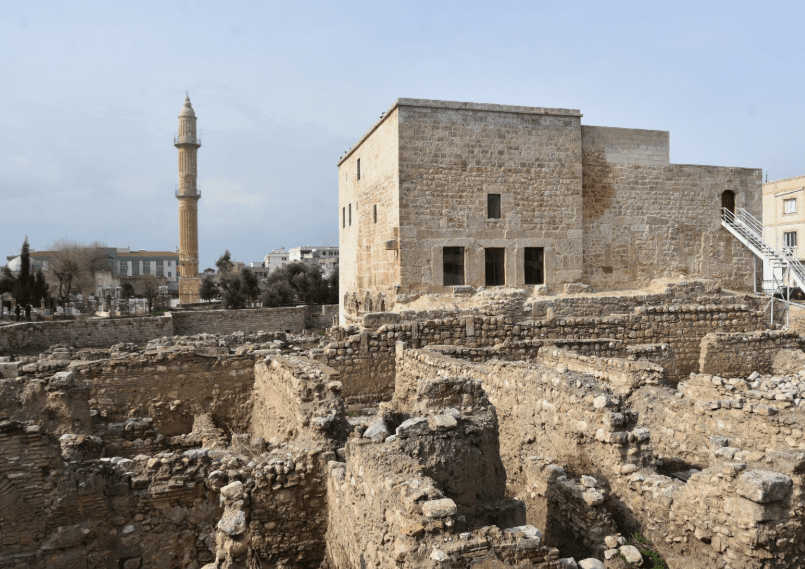
Mor Yakup Church(Ministry of Culture and Tourism of the Republic of Türkiye)
The skeletal material recovered from the excavation site was analyzed anthropologically. The average height of adult males was calculated at 169.20 ± 3.27 cm, while that of adult females was 158.46 ± 3.72 cm. The absence of pathological conditions in adult individuals suggests that deaths were largely due to natural causes. Osteophyte formation in the vertebrae of middle and older adults may have resulted from repeated physical activity. In children’s skeletons, deformities linked to high fever and nutritional deficiencies were observed.
According to life expectancy analysis, individuals in the 0–4.9 years age group had an average life expectancy of 19.38 years. However, in the 10–14.9 years age group, life expectancy exceeded 20 years. A marked decline in lifespan was detected from age 30 onward. The highest mortality rates were recorded in the 5–9.9 years age group (29.17%) and the 0–4.9 years age group (18.75%).
Graves of children contained funerary offerings, including items such as bells, buttons, beads, crosses, shoes, earrings and rings. No such objects were found in adult graves. However, in a single stone chest grave, a transparent glass seal in the shape of a pawn, fragments of an iron staff and two coins dating to the early Islamic period were discovered. The seal bears a cross motif and the Syriac inscription “Bassima.” These findings indicate that this grave likely belonged to a religious leader, probably the priest Eeiskopos who lived in the 12th century. The presence of the seal and staff fragments demonstrates that religious status differences were evident only among specific individuals, while general burial practices showed no widespread social stratification.
The cemetery area reflects burial traditions within the Christian faith. However, the practice of multiple interments and the absence of distinctions based on age or gender suggest that certain Muslim burial customs also influenced this site. This transitional character is interpreted as a consequence of the region’s multicultural makeup and the long-term coexistence of Syriac and Muslim communities. Furthermore, the fact that only one grave in the cemetery is associated with a religious leader indicates that religious hierarchy had only limited reflection in burial typology.
Anthropometric and cultural data from individuals associated with Mor Yakup Monastery show similarities with other settlements in the same region, such as the ancient city of Dara. Particularly in terms of stature and skeletal health, comparable results were obtained. The Mor Yakup individuals were members of a community engaged in agriculture and animal husbandry, which influenced their physical structure and health status.
Acar, Ayşe and Çağdaş Erdem. “Nusaybin Mor Yakup Kilisesi İskelet Popülasyonunun Antropolojik Açıdan Değerlendirilmesi.” In Nusaybin: Siyaset–Kültür–Ekonomi, 2023. Accessed May 11, 2025. https://scholar.google.com/citations?view_op=view_citation&hl=tr&user=34edJ5oAAAAJ&citation_for_view=34edJ5oAAAAJ:W7OEmFMy1HYC
“Mardin Mor Yakup Kilisesi.” T.C. Kültür ve Turizm Bakanlığı – Mardin İl Kültür ve Turizm Müdürlüğü. Accessed May 11, 2025. https://mardin.ktb.gov.tr/TR-311950/mor-yakup-kilisesi.html.
“Mor Yakup Manastırı.” *Kültür Portalı – Türkiye Kültür Portalı*. Accessed May 11, 2025. https://www.kulturportali.gov.tr/turkiye/mardin/gezilecekyer/mor-yakup-manastiri.
Church of Saint Jacob the Blue
Location | Nusaybin Türkiye Mardin | ||||||||
|---|---|---|---|---|---|---|---|---|---|
Coordinate(s) | Approximately 37.071°N 41.212°E | ||||||||
Construction Date(s) | repairs and additions in subsequent centuries 4th century (initial construction) | ||||||||
Founder(s) | Mor Yakup (Saint Yakup) Bishop of Nusaybin | ||||||||
No Discussion Added Yet
Start discussion for "Church of Saint James the Greater" article
Historical Process
Archaeological Findings
Anthropological Assessment
Burial Goods and Status Indicators
Cultural and Religious Structure
Comparative Assessment