


This article was automatically translated from the original Turkish version.
Stefan Zweig’s Chess is his final work, written during his exile and completed shortly before his suicide. This short novel masterfully explores the depths of human psychology and the destructive impact of totalitarian regimes on the individual. Zweig uses the game of chess as a framework to conduct a profound analysis of the limits of the human mind and the effects of isolation.
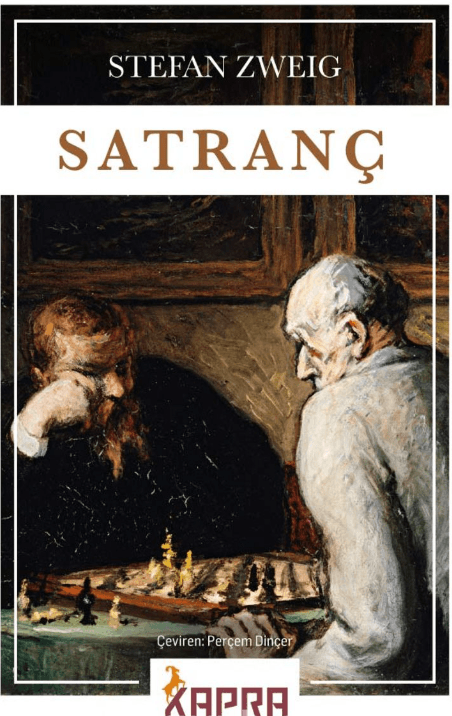
Chess
The story begins aboard a passenger ship traveling from New York to Buenos Aires. The narrator learns that Mirko Czentovic, the world chess champion, is also on board. Czentovic is portrayed as a withdrawn and arrogant personality with few talents beyond chess. The narrator attempts to attract Czentovic’s attention and challenge him to a game of chess. This section introduces Czentovic’s personality and his reputation in the chess world.
The narrator and the wealthy businessman McConnor successfully arrange a chess match with Czentovic by offering him money. In the first game, Czentovic easily gains the upper hand. However, Dr. B., one of the spectators, intervenes by suggesting strategic moves, leading the game to end in a draw. This outcome captures Czentovic’s attention and prompts him to accept a one-on-one match against Dr. B. This section reveals Dr. B.’s exceptional knowledge and skill in chess.
Dr. B. is an Austrian lawyer who was arrested by the Gestapo during the Nazi regime. He was held in solitary confinement for months in a single hotel room. During this time, he occupied his mind with chess moves he learned from a book stolen during interrogation. By playing chess against himself, he tried to preserve his mental health, but over time this practice turned into an obsession. This section provides a deep analysis of the psychological pressure exerted by totalitarian regimes and the destructive effects of isolation.
The match between Dr. B. and Czentovic attracts great attention on the ship. Initially, Dr. B. gains the upper hand with rapid and aggressive moves. However, due to past traumas and his chess obsession, he begins to lose control. Faced with Czentovic’s cold and patient strategy, Dr. B. confronts his inner conflicts and abandons the game midway. This section emphasizes the fragility of the human mind and the lasting impact of past trauma.
Zweig uses the game of chess as a metaphor to reveal the complexity of the human mind and the destructive consequences of isolation. Dr. B.’s experience of confinement and obsession symbolizes the pressure exerted by totalitarian regimes, while Czentovic’s emotionless and mechanical playing style represents the mechanization of human beings. This section offers a profound reflection on human nature and freedom beyond the game of chess.
Stefan Zweig. Satranç. Çevirmen: Perçem Dinçer, Kapra Yayıncılık, 2020.

Content of the Book
Encounter on the Passenger Ship
The Chess Match and Dr. B.’s Intervention
Dr. B.’s Story
The Match Between Dr. B. and Czentovic
Chess and the Human Mind