


This article was automatically translated from the original Turkish version.
+1 More
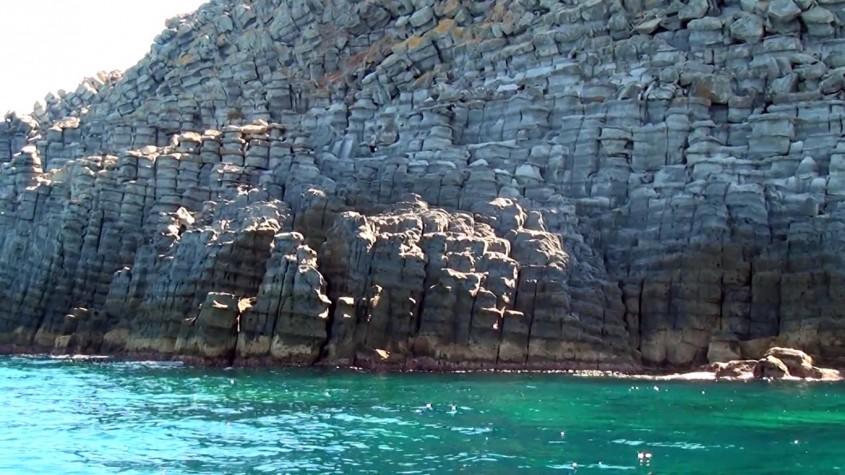
Cheese Cliffs (Kashkaval Cape)
Location | Gökçeada Çanakkale | ||||||||
|---|---|---|---|---|---|---|---|---|---|
View | Stacked cheese mold appearance | ||||||||
Structure | Layered rock formation | ||||||||
Access | By sea only | ||||||||
Cheese Cliffs are located in the northeast of Gökçeada, which belongs to the province of Çanakkale, east of Kuzu Harbour. Locally, they are also known as "Kaşkaval Cape". These formations are situated in a location inaccessible by land and can only be viewed by sea. They are approximately 15 minutes by boat from Kaleköy Harbour and about 5 minutes from Kuzu Harbour. Access to the area is provided by fishing boats and tour boats departing from Kaleköy or Kuzu Harbour.
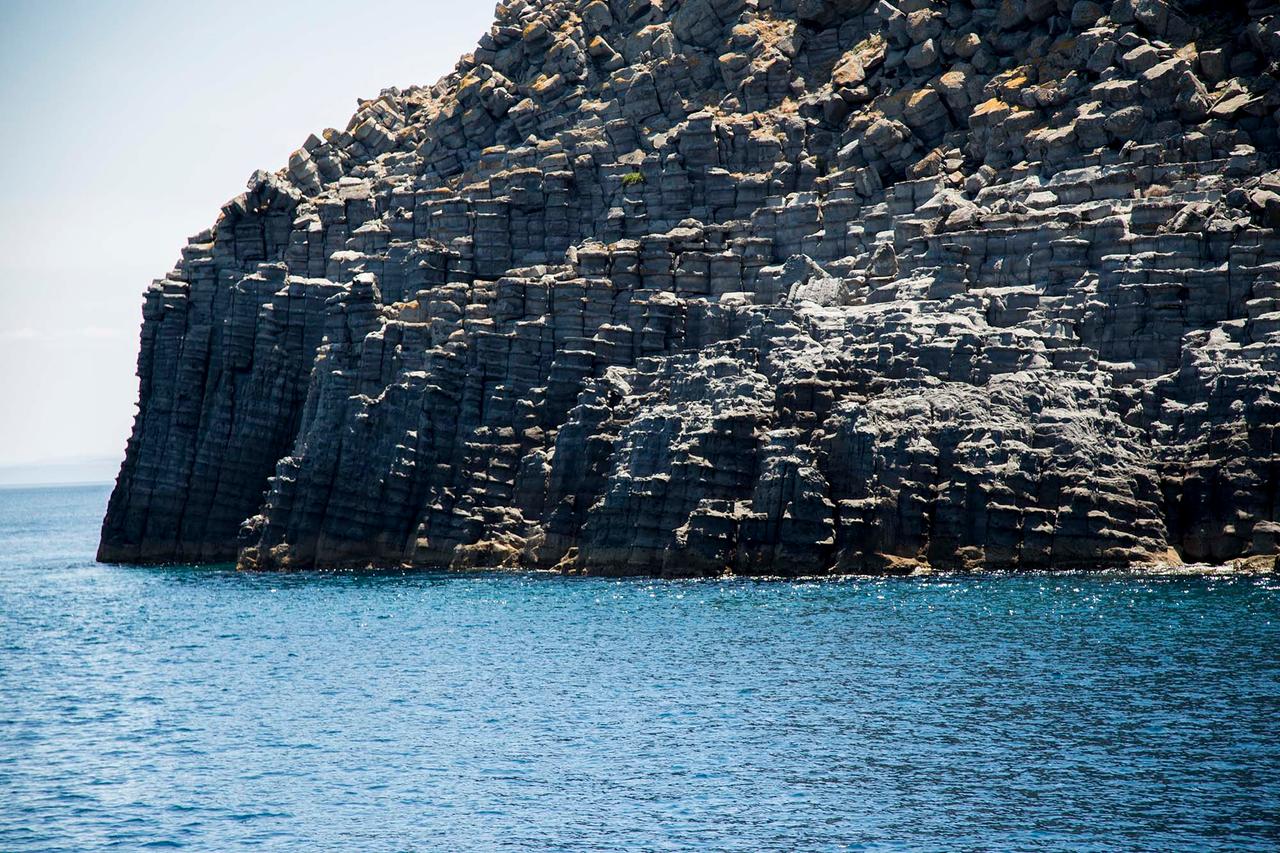
Peynir Kayalıkları (Gökçeada Kaymakamlığı)
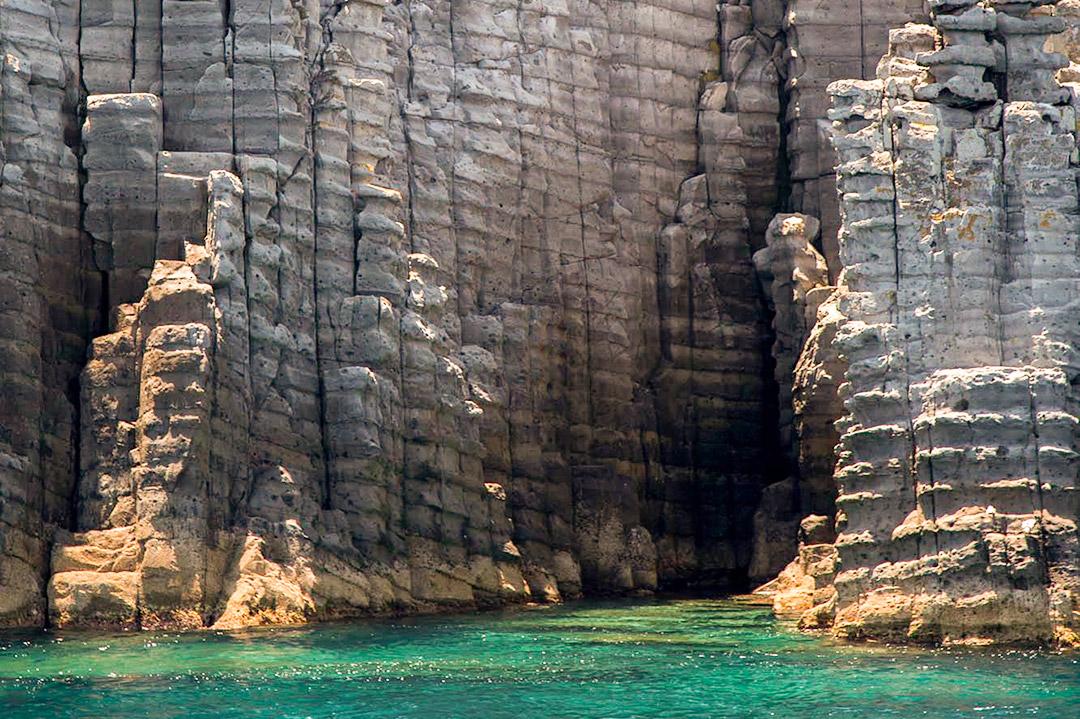
Cheese Cliffs are natural rock formations recognized for their appearance resembling stacked cheese molds. Due to this distinctive morphological structure, the area has been named "Cheese Cliffs". The rocks are characterized by their shape, which evokes the image of large blocks of cheese stacked one upon another.
Peynir Kayalıkları (Gökçeada Kaymakamlığı)
The local name "Kaşkaval Cape" derives from a type of cheese widely known and consumed in the Balkans and Anatolia. The rocks’ resemblance to this cheese gives rise to the name. The term "Cheese Cliffs" is the commonly used name among the local population.
Among the oral traditions of Gökçeada, there is a legend associated with the Cheese Cliffs. According to the tale, a wealthy, elderly, and miserly woman on the island, who owned many goats and sheep, made numerous blocks of Kaşkaval cheese in an attempt to reach heaven. She stacked them one on top of another to reach the gods. One day, a hungry young girl asked the woman for some cheese for herself and her sibling, but the woman refused and drove the child away. In response, the gods punished the woman for her greed. A heavy snowstorm and freezing cold turned the woman and her stacked cheese blocks into stone. This folk narrative is interpreted as an explanation for the cliffs’ present appearance.
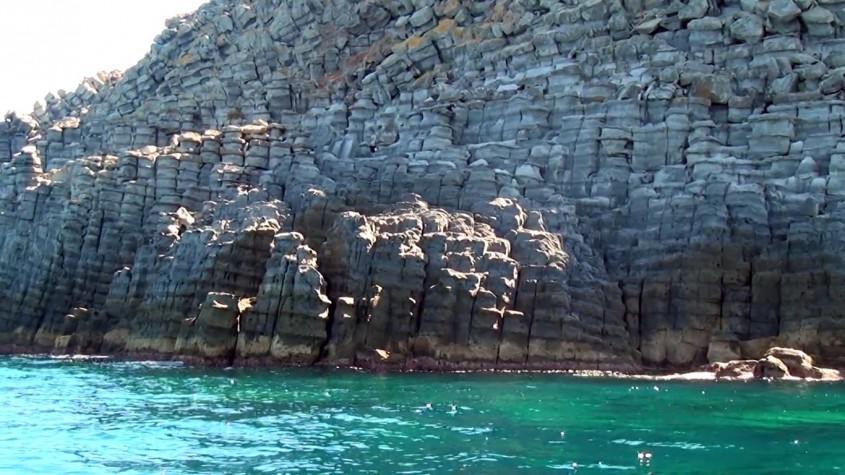
The cliffs present a striking visual element within the region’s natural landscape. These rock formations, defined by their layered structure and appearance as if stacked one upon another, are characteristic of the island’s unique geological features. The area cannot be observed from land, as it is visible only from the sea.
Peynir Kayalıkları (Gökçeada Kaymakamlığı)
Cheese Cliffs are one of Gökçeada’s most notable natural attractions. Accessible only by boat tours, the site is promoted as one of the island’s natural treasures. The Cheese Cliffs, with their distinctive visual appearance and mythological significance, are an integral part of local tourism.
Gökçeada Kaymakamlığı. "Kaşkaval Burnu (Peynir Kayalıkları)." Gökçeada Kaymakamlığı Resmi Web Sitesi. Accessed May 22, 2025.https://www.gokceada.gov.tr/kaskaval-burnu-peynir-kayaliklari
Gökçeada Kaymakamlığı. "Peynir Kayalıkları." Gökçeada Kaymakamlığı Resmi Web Sitesi. Accessed May 22, 2025.https://www.gokceada.gov.tr/peynirkayaliklari

Cheese Cliffs (Kashkaval Cape)
Location | Gökçeada Çanakkale | ||||||||
|---|---|---|---|---|---|---|---|---|---|
View | Stacked cheese mold appearance | ||||||||
Structure | Layered rock formation | ||||||||
Access | By sea only | ||||||||
No Discussion Added Yet
Start discussion for "Cheese Cliffs (Kashkaval Cape)" article
Geological Features
Local Nomenclature and Meaning
Mythological Dimension
Visual Characteristics and Natural Structure
Tourism Potential