


This article was automatically translated from the original Turkish version.
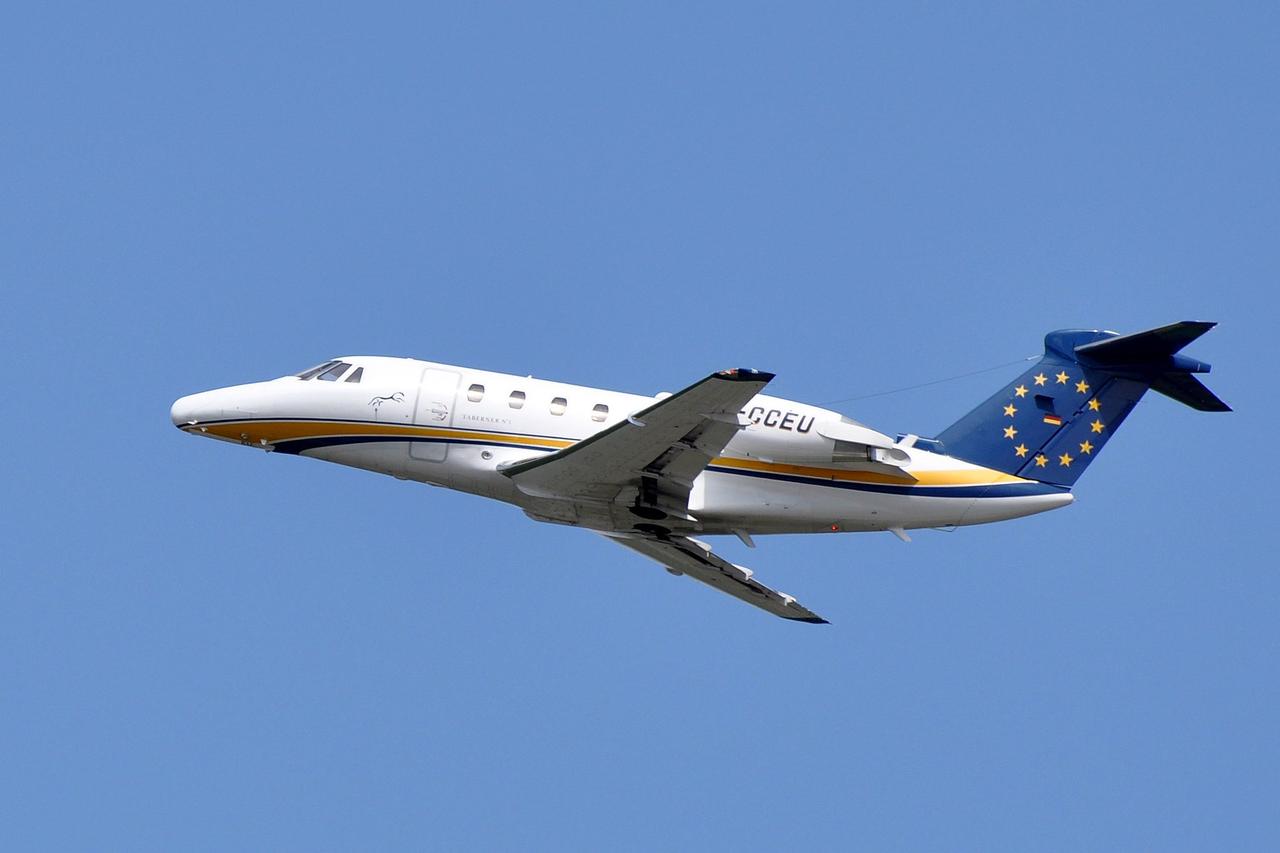
Cessna Citation III Mode 650
Model | Citation III (Model 650) | ||||||||
|---|---|---|---|---|---|---|---|---|---|
Manufacturer | Cessna Aircraft Company (Textron Aviation) | ||||||||
Production Years | 1983 – 1992 | ||||||||
First Flight | May 1979 | ||||||||
Certification Category | FAA Part 25 (Transport Category) | ||||||||
Engine Manufacturer | Honeywell (formerly Garrett) | ||||||||
Type Certificate (TCDS) | FAA No. A9NM | ||||||||
Class | Mid-size Business Jet | ||||||||
Total Thrust | 7,300 lbf (32.4 kN) | ||||||||
Engine Model | 2 x TFE731-3B-100S | ||||||||
Service Ceiling (Maximum Altitude) | 51,000 ft (15,545 m) | ||||||||
Crew | 2 (Pilot + Co-pilot) | ||||||||
Passenger Capacity | Standard: 6-9 | ||||||||
Cessna Citation III (Model 650) is a mid-size, twin turbofan business jet developed by the American aircraft manufacturer Cessna Aircraft Company. This aircraft is certified under the Federal Aviation Administration's (FAA) "transport category" standards and is characterized by high speed, long range and a pressurized cabin. The Citation III marked Cessna's first entirely new airframe design aimed at the high-performance business jet market, departing from its earlier "slow and economical" jet models. The Citation III served as the foundational platform for later variants including the Citation VI and Citation VII.
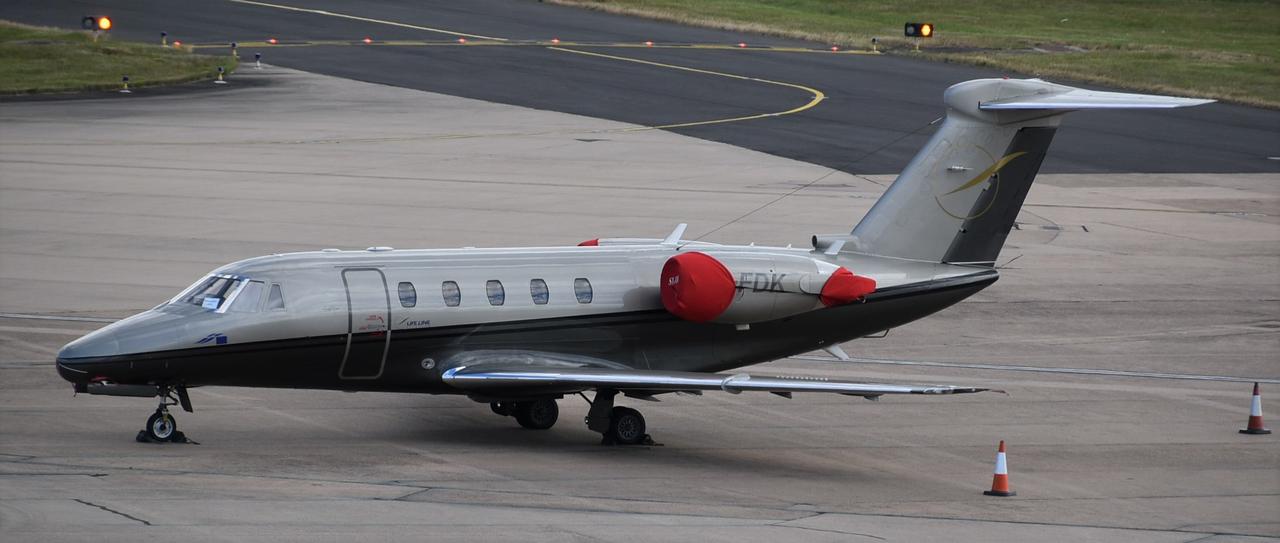
Cessna Citation III (Model 650) (Alec Wilson)
Cessna initiated the Model 650 project in the late 1970s to meet market demand for higher altitude and speed performance. The prototype made its first flight on May 1979. After comprehensive testing, the aircraft received its Type Certificate No. A9NM from the FAA on April 30, 1982.
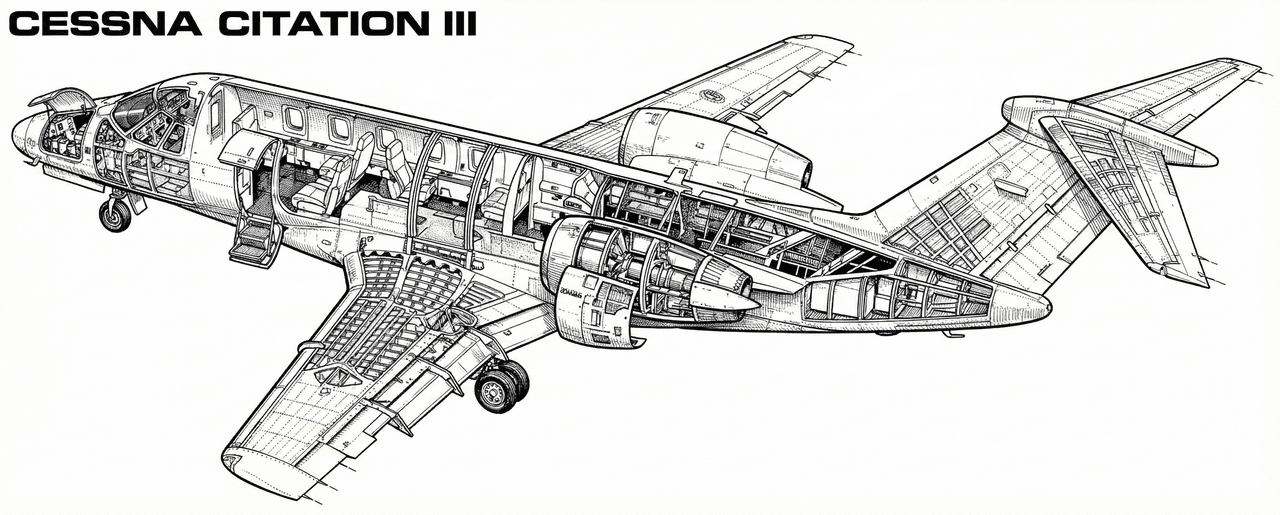
Cessna Citation III (Model 650) (Generated by Artificial Intelligence)
The Citation III was designed with a supercritical airfoil to reduce drag and enhance efficiency at transonic speeds (near the speed of sound).
Cessna Citation III TakeOff (Airborne Thrust)
The aircraft's propulsion system consists of two turbofan engines mounted in pods on the rear fuselage. System details based on Honeywell technical documentation are as follows:
Honeywell (Garrett) TFE731-3B-100S (Honeywell Aerospace Technologies)
Cessna Citation III meets the following performance parameters as defined by its technical design goals and certification limits:
The Citation III is operated by a two-person flight crew consisting of a pilot and a co-pilot. FAA certification does not authorize single-pilot operation.
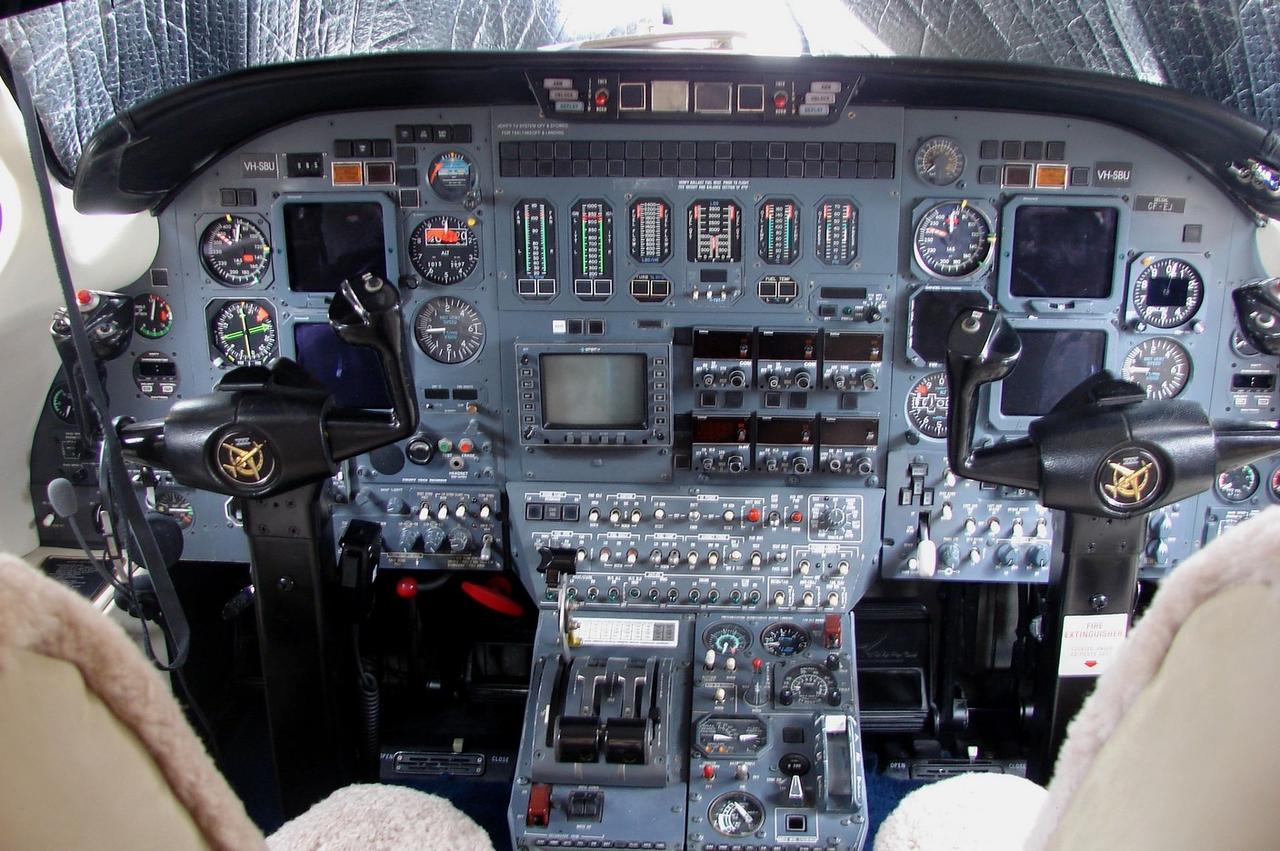
Cessna Citation III Model 650 (Tatters ✾)
The aircraft complies with the dimensions and equipment standards of the "mid-size" category.
The Model 650 family, including the Cessna Citation III and its derivatives, has been involved in various accidents during operational service due to technical and operational causes. These incidents are documented in aviation safety databases for technical investigation.

Istanbul Atatürk Airport Accident - (Anadolu Ajansı)
AirborneThrust. "CESSNA CITATION CJ3 POWERFUL TAKEOFF!" YouTube. Accessed December 17, 2025.https://www.youtube.com/watch?v=AQlERnghx4I
Anadolu Ajansı. "Atatürk Havalimanı'nda özel jet pistten çıktı." Accessed December 17, 2025.https://www.aa.com.tr/tr/gunun-basliklari/ataturk-havalimaninda-ozel-jet-pistten-cikti/916320
Aviomar. "Cessna Citation III Model 650." Aviomar. Accessed December 17, 2025.https://www.aviomarscuoladivolo.com/cessna-citation-iii-vii-en.html?gad_source=1&gad_campaignid=11852345645&gclid=Cj0KCQiAxonKBhC1ARIsAIHq_luOsCfMdkwZSvYzbPdTBU-3QWsUI62zEwqGSMRMrkpbC_A53Lm1BNMaArk_EALw_wcB
Bureau of Aircraft Accidents Archives. "Crash of a Cessna 650 Citation VII in Istanbul." Accessed December 17, 2025.https://www.baaa-acro.com/crash/crash-cessna-650-citation-vii-istanbul
CessnaTxTav. "Citation CJ3 Gen3." Accessed December 17, 2025.https://cessna.txtav.com/en/citation/cj3-gen3
Federal Aviation Administration (FAA). *Type Certificate Data Sheet No. A9NM: Cessna Model 650 (Citation III and Citation VI).* Washington, DC: U.S. Department of Transportation, October 30, 2000. Accessed December 16, 2025.https://hub.easa.europa.eu/crt/docs/viewcrdattachment/cid_70920/aid_665/fmd_faa4245eab02ce24aa7e58b3f3df481a
Federal Aviation Administration (FAA). “Special Conditions: Cessna Aircraft Company Model 650 Citation III Airplanes; High Intensity Radiated Fields (HIRF).” *Federal Register* 70, no. 89 (May 10, 2005): 24478–24480. Accessed December 16, 2025.https://www.federalregister.gov/documents/2005/05/10/05-9306/special-conditions-cessna-aircraft-company-model-650-citation-iii-airplanes-high-intensity-radiated
Honeywell. "TFE731 Turbofan Engine." Accessed December 17, 2025.https://aerospace.honeywell.com/us/en/products-and-services/products/power-and-propulsion/engines/turbofan-engines/tfe731-turbofan-engine
JetServiceNl. "Cessna 650 Series: Citation III, VI, and VII - Advanced midsize business jets." Accessed December 17, 2025.https://jetservicenl.com/aircraft/Cessna-Citation-650/
Jetcraft. “Cessna Citation III Overview (1983–1991).” Jetstream, July 2018. Accessed December 16, 2025.https://www.jetcraft.com/jetstream/2018/07/cessna-citation-iii-overview-1983-1991/
Karakoç, Edanur. "San Mateo Atenco Uçak Kazası (2025)." KÜRE Ansiklopedi. Accessed December 17, 2025.https://kureansiklopedi.com/tr/detay/san-mateo-atenco-ucak-kazasi-2025-d4321
RocketRoute. "Cessna Citation III Mode 650." RocketRoute. Accessed December 17, 2025.https://www.rocketroute.com/aircraft/cessna-650-citation-iii
Salard, Eric. "Cessna 650." Flickr. Accessed December 17, 2025.https://www.flickr.com/photos/airlines470/15423243150/in/photolist-puU9Rm-dWbUbp-tRkqfE-uDhLDu-2mjD2wU-CDvXJx-rQLfJZ-JHJvzs-7RxynF-RFZymk-tq9pLr-HtTncu-2kUAmNh-Rxh2vq-nsTwrX-JSWpCT-2n1QvA1-UwEzSN-S9XxAo-pyC6Qe-4GfMTc-2kSoKwx-czbaN1-2n2eeKM-had4w7-C7R33v-UwEA4E-LyCrBf-EJDuiS-a1sbiA-5ZJ2gV-5ZNeL5-ytXeZt-97CPQe-fD158v-bpAwTG-2hn6sWZ-7mfRcZ-M2whmy-c24JsL-cqaUm1-7tNpsA-aPAEcz-Xkgmvh-eevjid-a1s9NQ-2owFUEM-2ox3aL8-8hgVXG-eevje9
Sitompul, Daniel, and Dan Rutherford. *Air and Greenhouse Gas Pollution from Private Jets, 2023.* Washington, DC: International Council on Clean Transportation, June 2025. Accessed December 16, 2025.https://theicct.org/wp-content/uploads/2025/06/ID-349-%E2%80%93-Private-jets_report_final.pdf
Skybary. "Cessna 650 Citation 3." Accessed December 17, 2025.https://skybrary.aero/aircraft/c650
Taters. "Cockpit of the 9th Cessna Citation 650." Flickr. Accessed December 17, 2025.https://www.flickr.com/photos/tgerus/2456089375/in/photolist-4K36Nx-2mEjK1u-29iijbM-2i6brKJ-MGC2Xw-qMTFMi-2j4sFPQ-daibKB-2gNdfjz-24sCXqf-2oegemo-zFriPH-2ko48jC-S3qosH-L3vgFy-iwRNv7-kNGQ4x-hWwcrb-2ngWMz5-mYvTUH-nbFDNQ-VrYU2V-fzemSn-6DcPBw-QhfdTF-hWvTei-9BvyYt-bv19zQ-9Bvx84-rKBJzH-hWwi3E-ZxN1cW-4DQU3F-vRHtbs-rhiquM-2mmVhwk-jMvwdP-oPJUfo-qDfoe2-2j4wU9v-puU9Rm-dWbUbp-tRkqfE-uDhLDu-2mjD2wU-CDvXJx-rQLfJZ-JHJvzs-RFZymk-tq9pLr
Tomás Del Coro. "N333AH C650 Cessna 650 Citation VI s/n 650-0222." Flickr. Accessed December 17, 2025.https://www.flickr.com/photos/tomasdelcoro/51941476218/in/photolist-nDWLYF-wa2enC-2mp3nq7-2mxBo1X-pc2bdn-te4Q6-2jw4voh-KVitHA-2i1nAd9-2hCgkUx-FWU3my-2n8TDgq-XCzgZA-zRZkqj-8DZWYn-2hCceVP-276pjE-2nXcXej-xhBQc-244mJMF-2aP9Drw-2nt8NMv-2nJP8UL-9tqiCE-FEo5J7-2edEwC1-2nGrNng-2nNB4tn-AigY7H-2oLf7TC-4K36Nx-2mEjK1u-29iijbM-2i6brKJ-2j4sFPQ-daibKB-2gNdfjz-24sCXqf-2oegemo-zFriPH-2ko48jC-S3qosH-L3vgFy-iwRNv7-2gNd8QY-28mbwVu-kNGQ4x
Victor. "Solid Air / Cessna 650 Citation VII / PH-MYX." Flickr. Accessed December 17, 2025.https://www.flickr.com/photos/vic_206/43515305201/in/photolist-29iijbM-2i6brKJ-2j4sFPQ-daibKB-2gNdfjz-24sCXqf-2oegemo-zFriPH-2ko48jC-S3qosH-L3vgFy-iwRNv7-2gNd8QY-28mbwVu-kNGQ4x-hWwcrb-2ngWMz5-mYvTUH-nbFDNQ-VrYU2V-fzemSn-6DcPBw-QhfdTF-hWvTei-hWwi3E-9BvyYt-bv19zQ-9Bvx84-rKBJzH-ZxN1cW-4DQU3F-vRHtbs-rhiquM-2mmVhwk-jMvwdP-oPJUfo-qDfoe2-2j4wU9v-puU9Rm-dWbUbp-tRkqfE-uDhLDu-2mjD2wU-CDvXJx-rQLfJZ-tq9pLr-JHJvzs-7RxynF-RFZymk-HtTncu

Cessna Citation III Mode 650
Model | Citation III (Model 650) | ||||||||
|---|---|---|---|---|---|---|---|---|---|
Manufacturer | Cessna Aircraft Company (Textron Aviation) | ||||||||
Production Years | 1983 – 1992 | ||||||||
First Flight | May 1979 | ||||||||
Certification Category | FAA Part 25 (Transport Category) | ||||||||
Engine Manufacturer | Honeywell (formerly Garrett) | ||||||||
Type Certificate (TCDS) | FAA No. A9NM | ||||||||
Class | Mid-size Business Jet | ||||||||
Total Thrust | 7,300 lbf (32.4 kN) | ||||||||
Engine Model | 2 x TFE731-3B-100S | ||||||||
Service Ceiling (Maximum Altitude) | 51,000 ft (15,545 m) | ||||||||
Crew | 2 (Pilot + Co-pilot) | ||||||||
Passenger Capacity | Standard: 6-9 | ||||||||
No Discussion Added Yet
Start discussion for "Cessna Citation III" article
Development and Certification Process
Airframe Design and Aerodynamic Structure
Engine and Powerplant
Operational Performance Data
Avionics Systems
Cabin Features
Accident Records