This article was automatically translated from the original Turkish version.
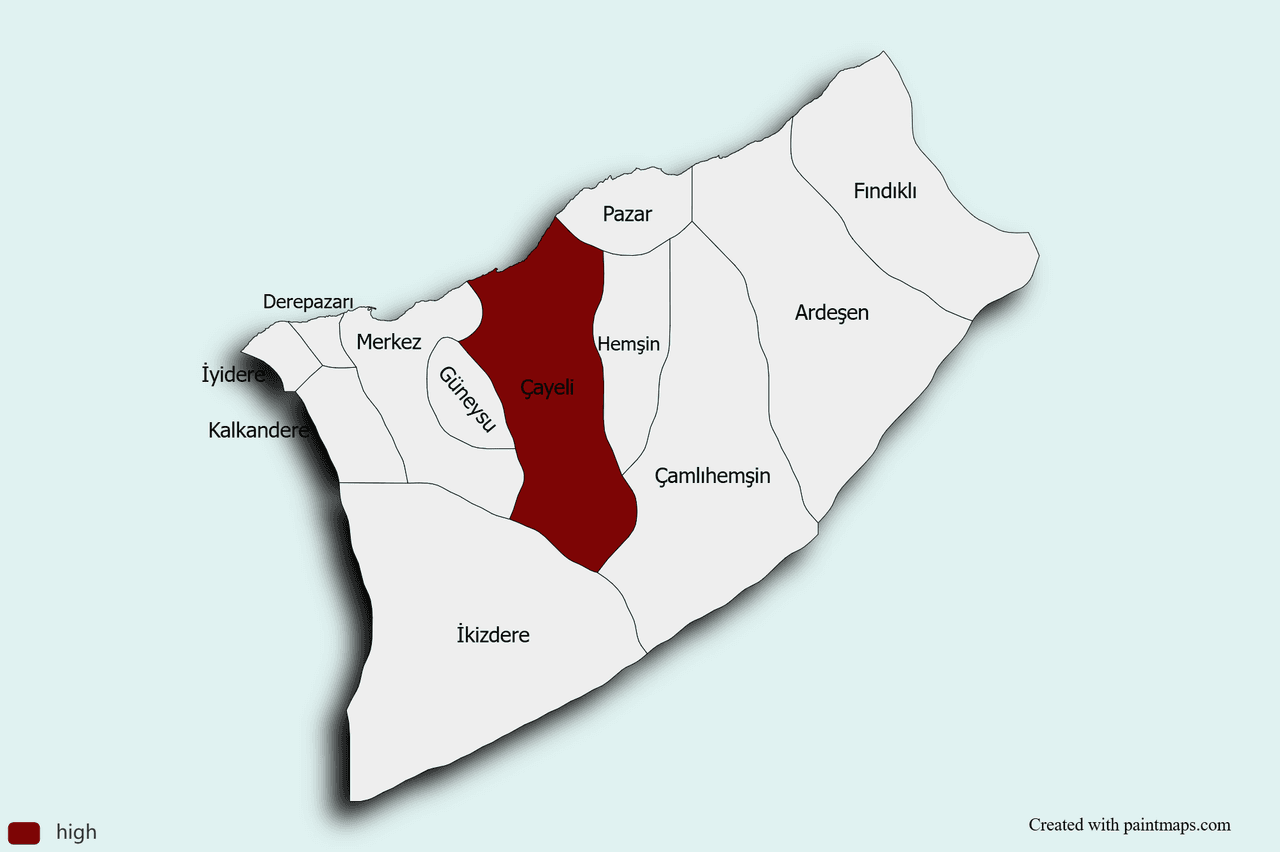
Çayeli (District)
Çayeli (District)
Province | Rize | ||||||||
|---|---|---|---|---|---|---|---|---|---|
Region | Black Sea | ||||||||
Area | 473 km² | ||||||||
Elevation | 10 m | ||||||||
Population | 42.208 (TÜİK, 2024) | ||||||||
Administrative Structure | 2 towns, 53 villages, 33 neighborhoods | ||||||||
Economy | Tea cultivation Fishing | ||||||||
Climate | Black Sea climate | ||||||||
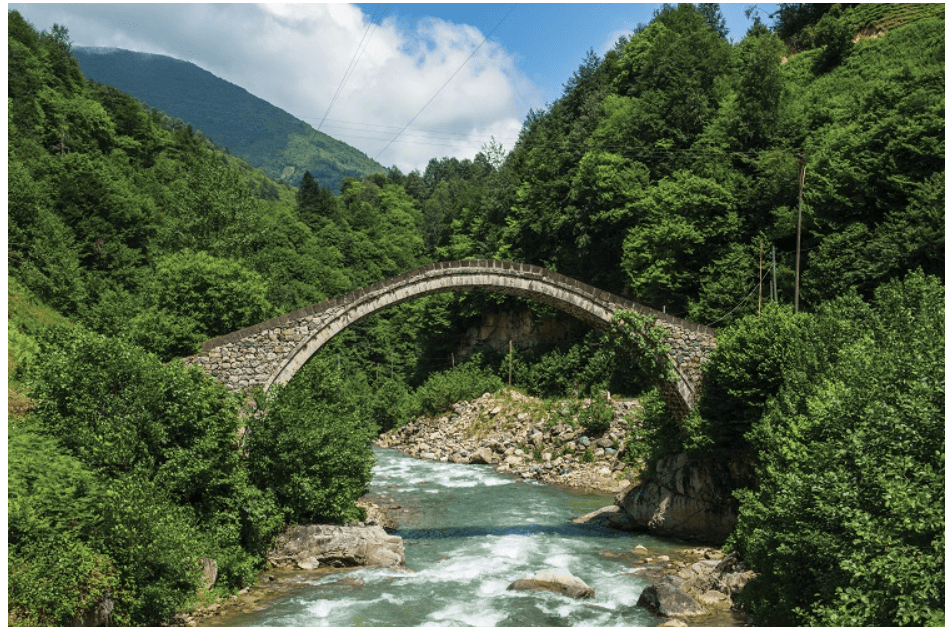
Tourism Sites | Senoz Valley, Ağaran Waterfall, Highlands, Historical bridges | ||||||||
Local Products | Çayeli dried beans, Hamsili rice, Corn bread | ||||||||
Mayor | İsmail Hakkı Çiftçi | ||||||||
District Governor | Muhammet Fatih Demirel | ||||||||
Çayeli is a district of Rize province in Türkiye’s Black Sea Region. It is located 18 km east of the city center of Rize along the Black Sea coast. yer The district is known for its natural beauty and cultural richness and is an important center particularly for tea cultivation and highland tourism.
The history of Çayeli extends back to the 7th century BC. It is known that the region was successively ruled by the Romans, the Byzantines and the Empire of Trebizond. The district’s former name was Mapavri; it became a district in 1944 under the name Çaybaşı and was later renamed Çayeli.
Çayeli features a narrow coastal strip with mountain ranges rising immediately behind it and running parallel to the sea. The district covers an area of 473 km². The region has a typical Black Sea climate with abundant rainfall throughout the year and high humidity levels. This climate provides favorable conditions for tea cultivation and forest products.
According to 2024 data, the population of Çayeli is 42,208. The district includes two towns, 53 villages and 33 neighborhoods. The population resides both in rural areas and in the district center, and the traditional way of life continues to exert influence.
Çayeli’s economy is primarily based on agriculture, animal husbandry and fishing. Tea cultivation is the most important economic activity in the district and supports other sectors as well. Additionally, industries based on beekeeping and forest products also hold significant importance in the district.
Çayeli is significant for tourism due to its natural beauty and cultural richness. The Senoz Valley, Ağaran Waterfall and its highland areas attract attention with their historical structures. The district offers favorable opportunities for various alternative tourism activities such as hiking, camping and mountaineering.
Çayeli cuisine features the typical flavors of the Black Sea region; local dishes such as Çayeli dried beans, hamsili pilaf and karalahana sarma stand out.
https://rize.ktb.gov.tr/TR-256713/cayeli.html
T.C. Kültür ve Turizm Bakanlığı. "Çayeli." Rize İl Kültür ve Turizm Müdürlüğü, 2025.
T.C. Çayeli Belediyesi. T.C. Çayeli Belediyesi Resmî Web Sitesi. Accessed April 17, 2025. https://www.cayeli.bel.tr/.
Tandoğan, Alâeddin. “Çayeli ve Pazar İlçelerinin Ekonomik Yapısı.” Ankara Üniversitesi Dil ve Tarih-Coğrafya Fakültesi Dergisi 29, no. 1-4 (1978): 82–152. https://dergipark.org.tr/tr/pub/dtcfdergisi/issue/66750/1043781
Turkish Statistical Institute (TÜİK). Address-Based Population Registration System (ADNKS) Results, 2023 –Rize İli,Çayeli İlçesi. Ankara: TÜİK, 2024. https://www.tuik.gov.tr.
Çayeli Vakfı. "Ekonomi ve Turizm." Çayeli Vakfı, 2025. https://www.cayelivakfi.com.tr/ekonomi-turizm

Çayeli (District)
Çayeli (District)
Province | Rize | ||||||||
|---|---|---|---|---|---|---|---|---|---|
Region | Black Sea | ||||||||
Area | 473 km² | ||||||||
Elevation | 10 m | ||||||||
Population | 42.208 (TÜİK, 2024) | ||||||||
Administrative Structure | 2 towns, 53 villages, 33 neighborhoods | ||||||||
Economy | Tea cultivation Fishing | ||||||||
Climate | Black Sea climate | ||||||||
Tourism Sites | Senoz Valley, Ağaran Waterfall, Highlands, Historical bridges | ||||||||
Local Products | Çayeli dried beans, Hamsili rice, Corn bread | ||||||||
Mayor | İsmail Hakkı Çiftçi | ||||||||
District Governor | Muhammet Fatih Demirel | ||||||||
History
Geography and Climate
Population and Demographics
Economy
Tourism, Culture and Cuisine