


This article was automatically translated from the original Turkish version.
Mıhlama, in terms of meaning, refers to the processes of “placement,” “fixing,” and “setting.” In the field of jewelry and ornaments, the art of setting precious and semi-precious stones into mounts made of gold, silver, and other precious metals is known as mıhlama. The craftsmen who practice this art are called “mıhlayıcı.”
Mıhlayıcılık is one of the foundational pillars of the jewelry sector and holds great importance in jewelry production. The primary objective of this craft is to place gemstones into metal mounts with aesthetic harmony, ensuring both secure fixation of the stone and maximum enhancement of its brilliance and aesthetic value through light reflection. Mıhlayıcılık is a specialized branch of craftsmanship requiring skill and patience, encompassing not only the placement of stones but also the process of enhancing their visual appeal.
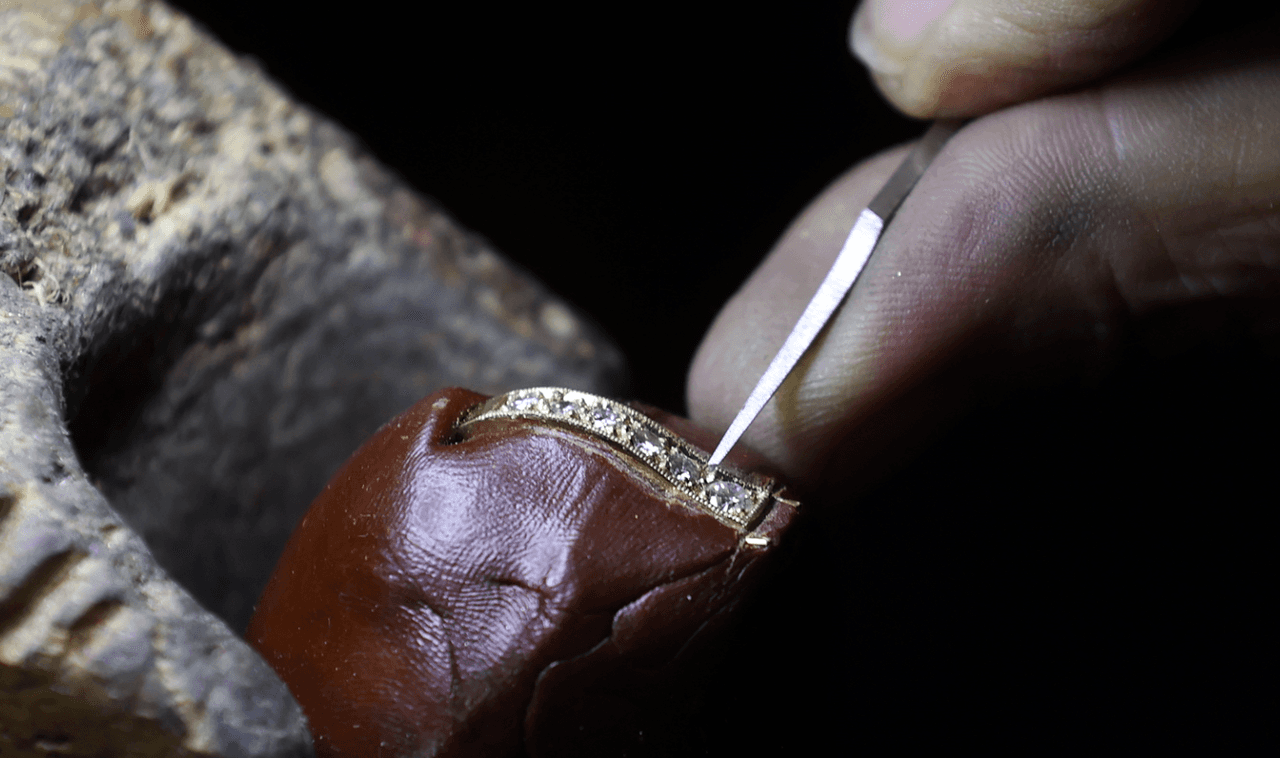
Mıhlama Process (Source: Star News)
The art of mıhlama encompasses various techniques depending on the shape, size of the stones, and the design of the mounting. Among the most commonly used mıhlama methods are alaturka mıhlama, alafranga mıhlama, and mikro mıhlama. Each technique offers distinct advantages in terms of stone security and aesthetics.
Mıhlayıcılar use a range of specialized tools and materials to perform their work, enabling the secure setting of stones, shaping of metal, and final adjustments. Basic tools include steel styluses, polishing stones, burrs, pliers, hand vises, and magnifying glasses (loupes). With advances in technology, precision micro-motors and specially designed equipment are also now employed in this process.
Mıhlayıcılık is one of the oldest and most established branches of the jewelry trade. It was supported and reached its aesthetic peak during the Ottoman Empire period. Particularly in the 16th century, during the reign of Kanuni Suleiman, significant advancements occurred in jewelry production. The elegant designs created by combining precious stones during this era reflect the artistic sensibilities of Ottoman art.
Despite rapid technological advances, mıhlayıcılık remains one of the rare fields in the jewelry industry where manual craftsmanship continues to play a major role. This art, transmitted from generation to generation through the master-apprentice relationship, is still preserved in traditional centers such as the Grand Bazaar in Istanbul. Today, with the support of technological tools, this craft continues to enable the realization of both traditional and modern designs.
Mahrec Sanat Evi. "Mücevher ve Takıda Mihlayıcı Eğitimi." Accessed January 14, 2025.
Star. "Yarım Asırdır Aynı Dükkanda Yüzlerce Yıllık Mihlayıcılık Mesleğini Yaşatıyor." Accessed January 14, 2025.
T.C. Ticaret Bakanlığı. "Geleneksel Meslekler Ansiklopedisi." Accessed January 14, 2025.

Mıhlama Techniques
Materials and Tools Used in Mıhlayıcılık
History and Importance of Mıhlayıcılık
Mıhlayıcılık Today