


This article was automatically translated from the original Turkish version.
+1 More
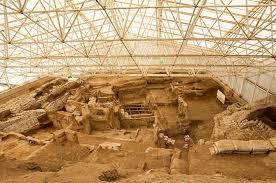
Çatalhöyük
Geographical Location | It is located near Küçükköy in the Çumra district of Konya Province. | ||||||||
|---|---|---|---|---|---|---|---|---|---|
Time Period | 7100–6000 BCE | ||||||||
Date of Inclusion in the UNESCO World Heritage List | 2012 | ||||||||
Date of Discovery | 1958 | ||||||||
Discoverer | James Mellaart | ||||||||
Date Commencement of Excavation | It was begun in the 1960s. | ||||||||
Çatalhöyük is one of the most important settlements of the Neolithic period and is located within the boundaries of Konya province, near the village of Küçükköy in the Çumra district. Dating from approximately 7100 to 6000 BCE, this höyük is a settlement that exhibits some of the earliest examples of agriculture, shows evidence of the transition to a sedentary lifestyle, and possesses a rich cultural and social structure. Çatalhöyük was inscribed on the UNESCO World Heritage List in 2012 and today offers an exceptionally valuable site for archaeological and anthropological research worldwide.
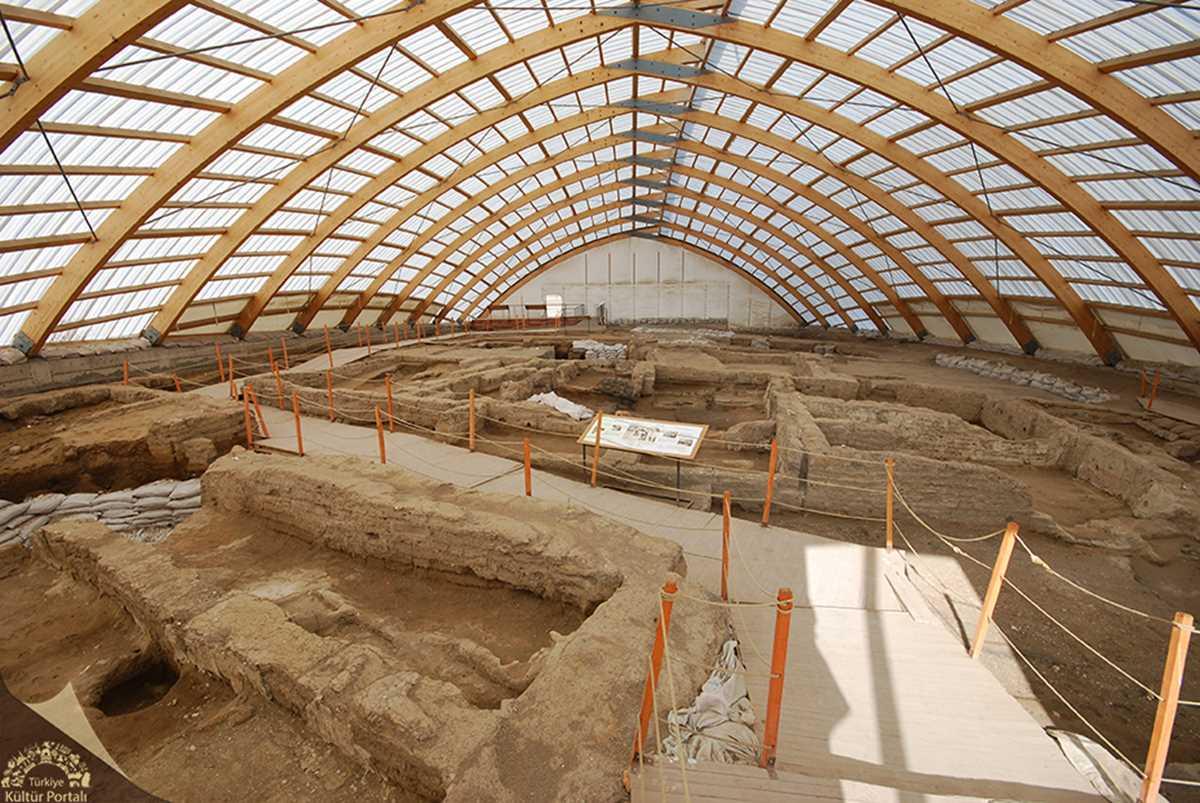
Çatalhöyük Neolithic Ancient Town - Culture Portal
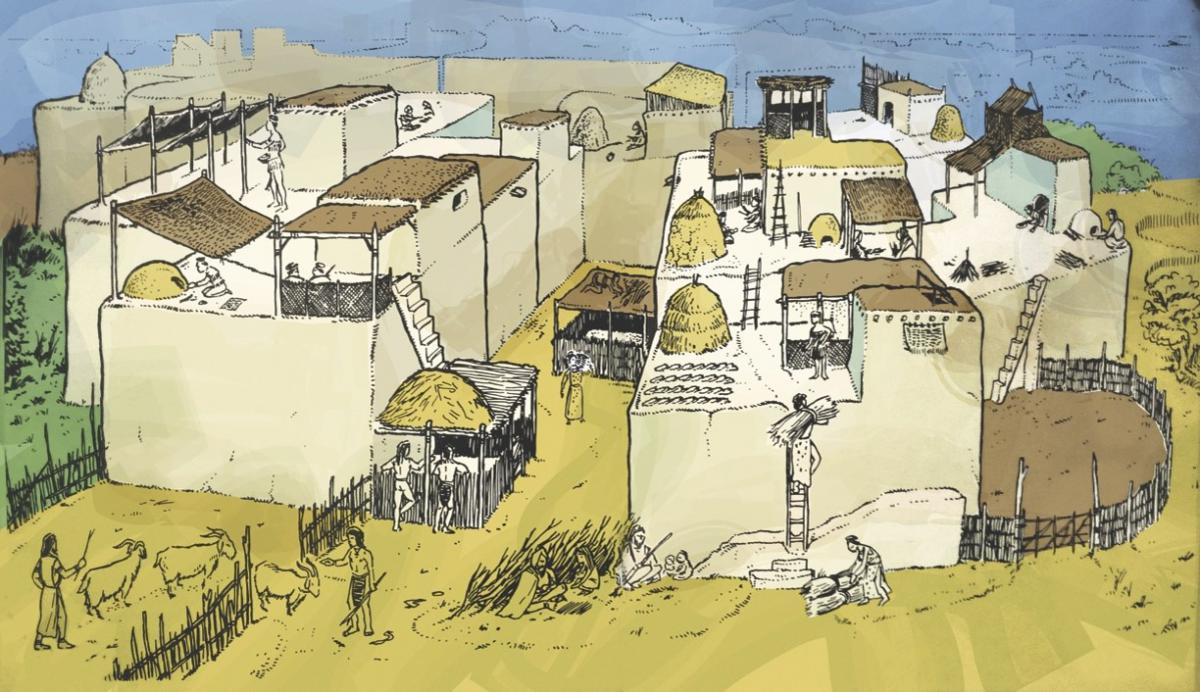
Çatalhöyük was discovered in 1958 by James Mellaart, and excavations since the 1960s have provided significant insights into the settlement’s layout and architecture. Çatalhöyük is a settlement composed of tightly packed houses with no streets between them; access to homes was gained via openings in the roofs. These houses consist of several rooms and feature wall paintings depicting animal figures, geometric patterns, and symbolic imagery. This architectural arrangement offers important clues about how social life functioned and is also considered an advantageous design from a defensive standpoint.
The houses at Çatalhöyük are among the earliest symbols of the transition to sedentary life. They are regarded as reflections of social organization and cultural values. The homes served as spaces that organized social relationships and daily life. The rooftops functioned as shared communal areas, symbolizing a mechanism that enhanced social cohesion and security.
Çatalhöyük -
Çatalhöyük is a significant settlement that provides some of the earliest evidence of agriculture during the Neolithic period. Excavations at Çatalhöyük have revealed that its inhabitants practiced farming and animal husbandry. Plant and animal remains indicate the cultivation of cereals, legumes, and fruits, as well as the domestication of sheep and goats. This represents one of the fundamental elements of the transition to sedentary life and marks a shift in human behavior related to production.
During this period, agriculture and animal husbandry formed the economic foundation of the society and enabled a more sustainable sedentary lifestyle. These economic changes at Çatalhöyük help us understand the transformation of social structures and the evolution of social relationships tied to production.
Çatalhöyük also possesses a rich artistic and cultural heritage. Wall paintings, reliefs, and sculptures uncovered during excavations allow us to understand the artistic expressions, religious beliefs, and symbolic thought patterns of the people of this era. Particularly, hunting scenes, geometric patterns, animal figures, and anthropomorphic symbols depicted on walls represent social values and religious rituals. These artistic works provide vital data about the belief system, social structure, and daily life of the Çatalhöyük community.
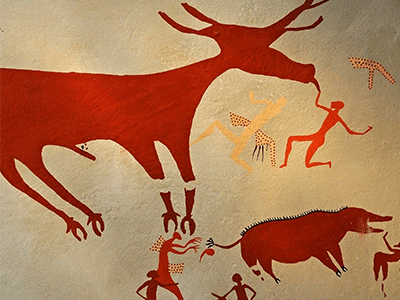
Çatalhöyük Wall Paintings - Culture Portal
The art of Çatalhöyük is not merely an aesthetic expression but also a reflection of social and cultural values. These works provide important insights into how early Neolithic societies functioned. These artistic artifacts are of great importance for understanding social hierarchy and the roles of individuals within the community.
The social structure at Çatalhöyük indicates a more egalitarian system rather than a hierarchical one. The layout of houses and structures suggests a social order in which individuals were closely interconnected. This reflects an understanding of social equality and cooperation. It is believed that the social organization at Çatalhöyük was characterized by a more egalitarian and collective structure rather than a rigid hierarchy.
Symbolic finds within the homes demonstrate that this social structure operated in a more organic manner, with community members maintaining closer interpersonal relationships. These structures symbolize how roles within the community were based on social security and cooperation.
Çatalhöyük has yielded numerous significant archaeological finds that reveal the settlement’s religious beliefs, social structure, and cultural understanding.
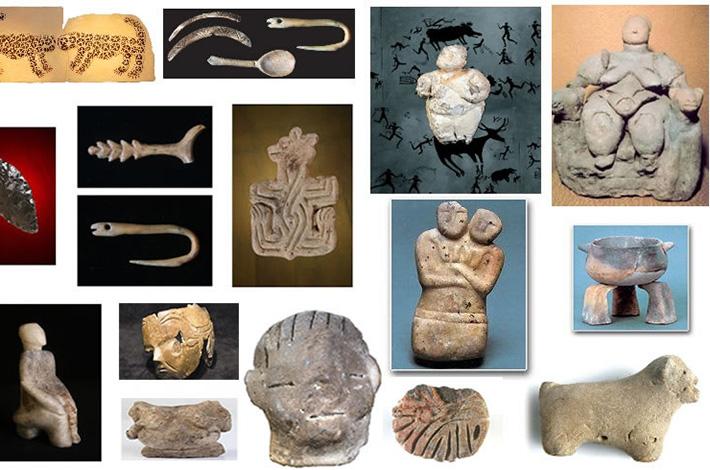
Çatalhöyük Discoveries - Museum Card
The Mother Goddess figurines found at Çatalhöyük are among its most important discoveries. These figures typically represent women associated with fertility, abundance, and vital force. Most of these figurines at Çatalhöyük are made of stone or ceramic, and some display pronounced fertility symbols such as large breasts and hips.
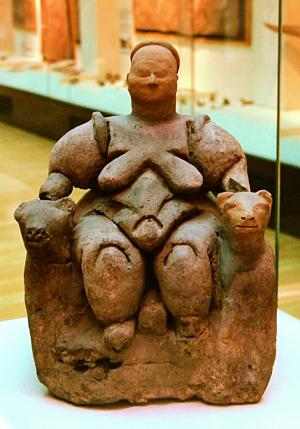
Mother Goddess Cult - Anatolian Civilizations
Another significant discovery consists of bull heads and vulture figures. Bull heads, typically carved from stone or clay, are regarded as symbols of agricultural fertility. Vulture figures are associated with death and the afterlife, reflecting the community’s deep connection with nature.
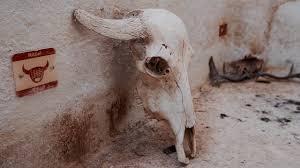
Bull Head - Turkish Museums
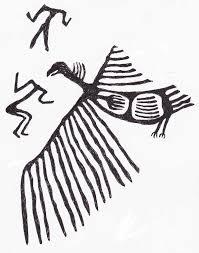
Vulture Figure - Arkeofili
Baird, Douglas. "Reconsidering the Role of Art in Neolithic Social Systems: A Case Study from Çatalhöyük." *Journal of Anthropological Archaeology* 12, no. 4 (1993): 315-346.https://doi.org/10.1006/jaar.1993.1017.
Hodder, Ian. *The Leopard's Tale: Revealing the Mysteries of Çatalhöyük.* London: Thames & Hudson, 2006.https://www.worldcat.org/title/leopards-tale-revealing-the-mysteries-of-catalhoyuk/oclc/76836155
Mellaart, James. *Çatalhöyük: A Neolithic Town in Anatolia.* New York: McGraw-Hill, 1967.https://www.worldcat.org/title/catal-huyuk-a-neolithic-town-in-anatolia/oclc/146411
Meskell, Lynn. *The Archaeology of Social Life: Civilisation and Cultural Revolution in Çatalhöyük.* Berkeley: University of California Press, 2005.https://www.ucpress.edu/book/9780520236751/the-archaeology-of-social-life

Çatalhöyük
Geographical Location | It is located near Küçükköy in the Çumra district of Konya Province. | ||||||||
|---|---|---|---|---|---|---|---|---|---|
Time Period | 7100–6000 BCE | ||||||||
Date of Inclusion in the UNESCO World Heritage List | 2012 | ||||||||
Date of Discovery | 1958 | ||||||||
Discoverer | James Mellaart | ||||||||
Date Commencement of Excavation | It was begun in the 1960s. | ||||||||
Definition and Structure of Çatalhöyük
Agriculture and Economic Life
Art and Culture at Çatalhöyük
Social Structure and Organization
Most Important Discoveries at Çatalhöyük
Mother Goddess Figurines
Bull Heads and Vulture Figures