


This article was automatically translated from the original Turkish version.
+2 More
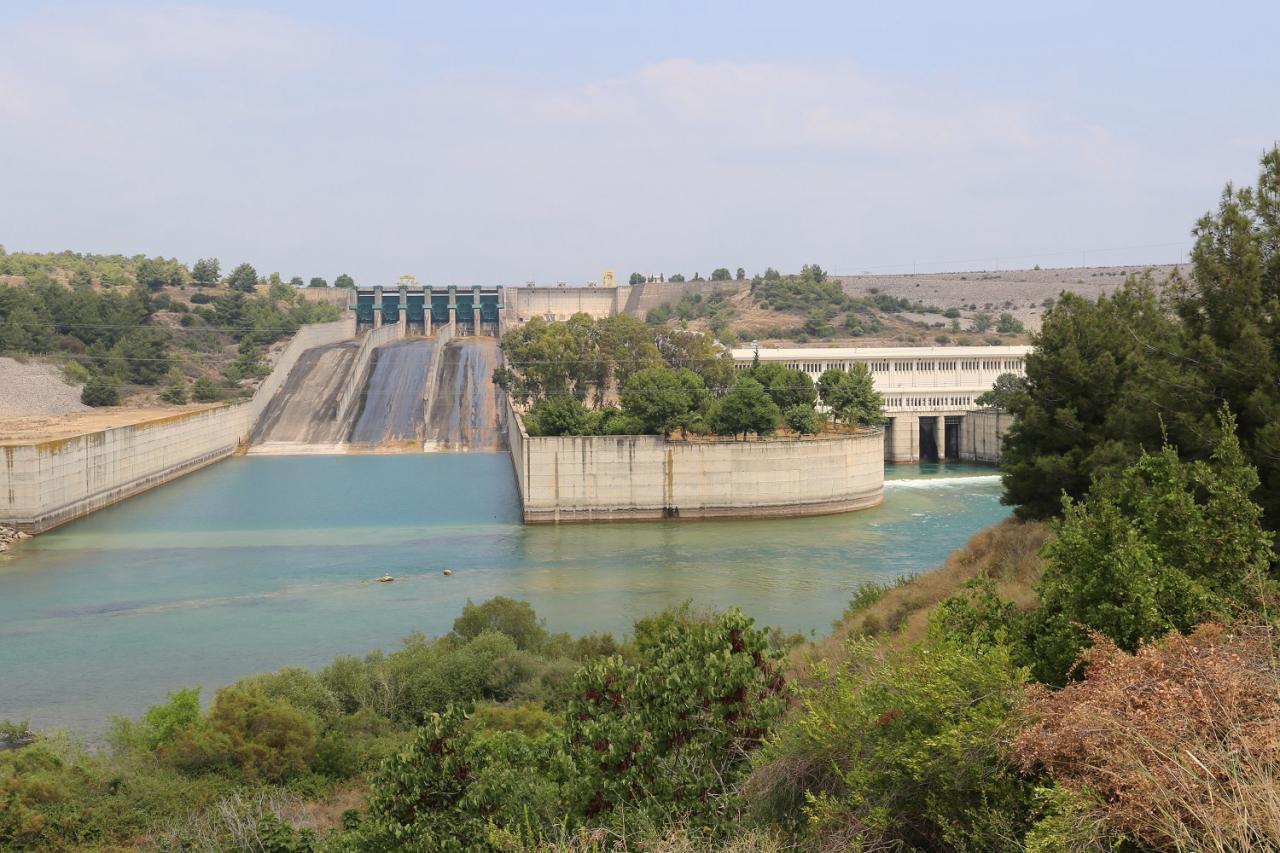
Çatalan Dam and Hydroelectric Power Plant
Location | Adana Türkiye | ||||||||
|---|---|---|---|---|---|---|---|---|---|
Status | In use | ||||||||
River | Seyhan River | ||||||||
Dam Type | Zoned earthfill | ||||||||
Height from Foundation | 82.5 | ||||||||
Primary Purposes | Energy production, flood control, drinking water supply | ||||||||
Construction Start Year | 1982 | ||||||||
Completion Year | 1996 | ||||||||
Catchment Area | 15,303 km² | ||||||||
Average Annual Precipitation | 539 mm | ||||||||
Average Inflow to Dam | 126.61 m³/s | ||||||||
Climate Type | Mixture of Mediterranean and continental climate | ||||||||
Çatalan Dam is a multipurpose dam located on the Seyhan River in Adana province of Türkiye. It is situated 13 km upstream from Seyhan Dam and was constructed for the purposes of energy generation flood control and water supply. The dam is a zoned earth-fill type with a height of 82.5 metres from foundation to crest a fill volume of 17 hm³ and a reservoir capacity of 2.1 km³. The dam’s hydroelectric power station has an installed capacity of 169 MW and generates 596 GWh of electricity annually.
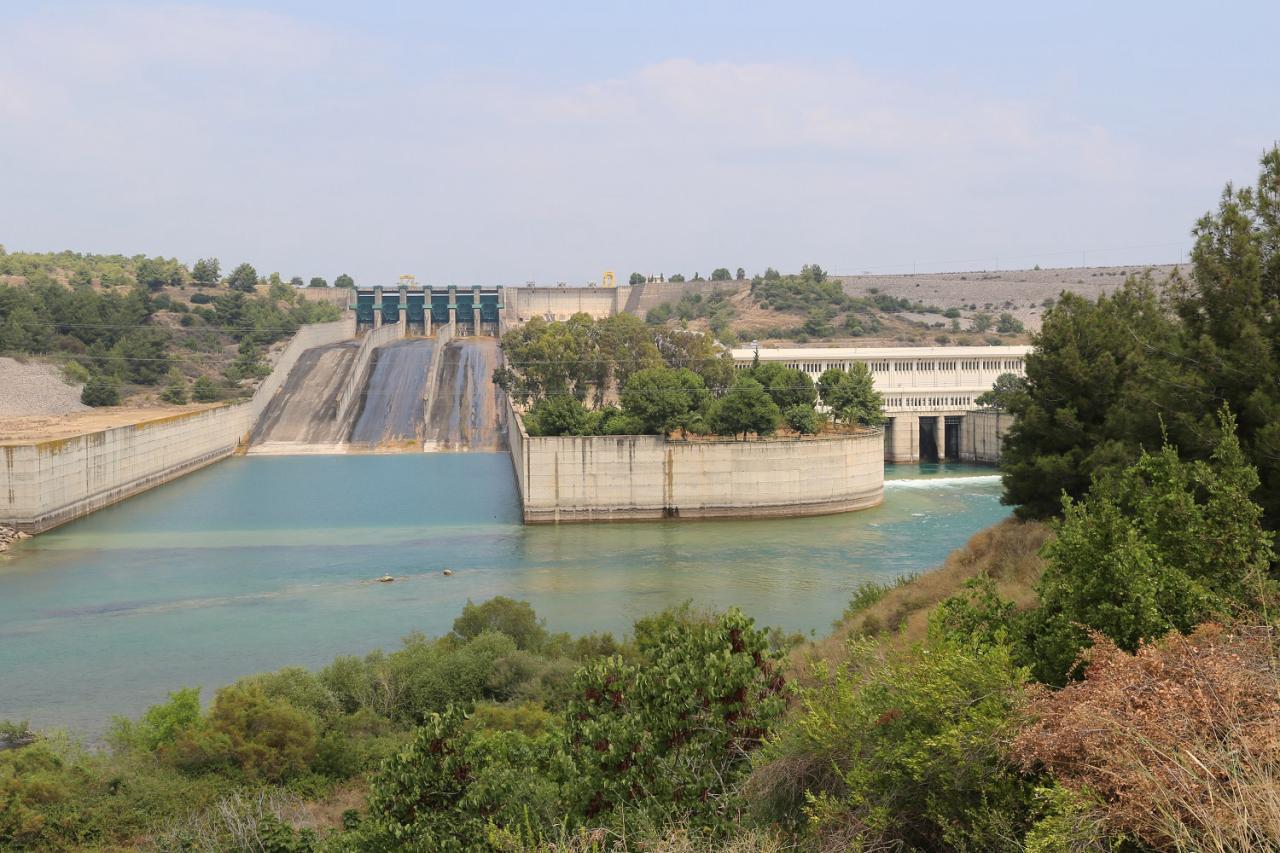
Çatalan Dam Hydroelectric Power Plant - Electricity Production A.Ş.
The Çatalan Dam catchment area is one of the lower sub-basins of the Seyhan River and has a drainage area of approximately 15 303 km². The northern part of the catchment lies within the Inner Anatolia Region while the southern part is in the Mediterranean Region. The climate exhibits characteristics of both Mediterranean and continental climates. The average annual precipitation is 539 mm with the highest rainfall occurring during winter and spring months. The average monthly flow entering the dam reservoir is 126.61 m³/s with a maximum recorded value of 491.90 m³/s and a minimum of 3.00 m³/s.
The area where the Çatalan Dam is constructed consists of sedimentary rocks common composed of Miocene mudstone-sandstone sequences and Pleistocene conglomerates. The mudstone and sandstone units on the left abutment of the dam have poor engineering properties and particularly the mudstones can cause stability issues when saturated with water. Stability analyses conducted after the 1998 Adana Earthquake and possible major earthquakes revealed that the risk of sliding significantly increases in certain weak geological zones.
Due to its location in a semi-arid region the Çatalan Dam catchment area faces a hydrological and agricultural drought risk. Studies have analyzed the impacts of precipitation deficits on river flows reservoir storage and soil moisture. Analyses using the Standardized Precipitation Index (SPI) method determined:
For hydrological drought the most critical time scales are 4 months (for river flows) and 15 months (for reservoir storage).
For agricultural drought the most sensitive time scale is the 1-month time frame as precipitation deficits directly affect soil moisture levels.
The most severe drought events in the last 50 years occurred during the periods 1970–1973 1984–1986 1989–1990 2004–2006 and 2011–2013.
The year 2013 was recorded as one of the most severe drought periods in the dam catchment area.
Considering the seismic characteristics of the region the engineering design of the Çatalan Dam places great importance on earthquakes that may occur in Adana and its vicinity. Stability analyses based on the 1998 Adana Earthquake identified a sliding risk in areas of the left abutment containing mudstone-sandstone sequences. In particular under conditions of water saturation and sudden drawdown safety factors were found to approach critical thresholds. This situation has demonstrated the necessity of shotcrete and wire mesh support systems.
The Çatalan Dam meets a large portion of Adana province’s drinking water demand and provides significant contributions to agricultural irrigation activities in the Çukurova region. However associated with this the dam’s ecosystem has experienced habitat changes due to water level fluctuations. Particularly during drought periods declining water levels have generated negative impacts on fish populations and wetland ecosystems.
The Çatalan Dam is one of Türkiye’s key hydroelectric power generation facilities and is a critical project for flood control water supply and energy production. At the same time geological and seismic risks the threat of hydrological drought and potential negative ecological impacts require careful consideration to ensure the long-term sustainable operation of the dam.
Aktürk, Gaye, and Osman Yıldız. "Çatalan Baraj Havzasında Yağış Eksikliğinin Çeşitli Hidrolojik Sistemler Üzerine Etkileri." Uluslararası Mühendislik Araştırma ve Geliştirme Dergisi 10, no. 2 (2018): 1-28.
Elektrik Üretim A.Ş. "Çatalan HES." Accessed March 13, 2025. https://www.euas.gov.tr/santraller/catalan-hes.
Tosun, Hasan. "Adana-Çatalan Barajı Rezervuar Alanı Kayaçlarının Yamaç Stabilitesi." Osmangazi Üniversitesi Mühendislik-Mimarlık Fakültesi Dergisi 11, no. 2 (1998): 90-105.

Çatalan Dam and Hydroelectric Power Plant
Location | Adana Türkiye | ||||||||
|---|---|---|---|---|---|---|---|---|---|
Status | In use | ||||||||
River | Seyhan River | ||||||||
Dam Type | Zoned earthfill | ||||||||
Height from Foundation | 82.5 | ||||||||
Primary Purposes | Energy production, flood control, drinking water supply | ||||||||
Construction Start Year | 1982 | ||||||||
Completion Year | 1996 | ||||||||
Catchment Area | 15,303 km² | ||||||||
Average Annual Precipitation | 539 mm | ||||||||
Average Inflow to Dam | 126.61 m³/s | ||||||||
Climate Type | Mixture of Mediterranean and continental climate | ||||||||
No Discussion Added Yet
Start discussion for "Çatalan Dam and Hydroelectric Power Plant" article
Hydrology and Climate
Geology and Soil Properties
Hydrological and Agricultural Drought Analyses
Seismicity and Stability Analyses
Environmental and Socioeconomic Impacts