


This article was automatically translated from the original Turkish version.
+2 More
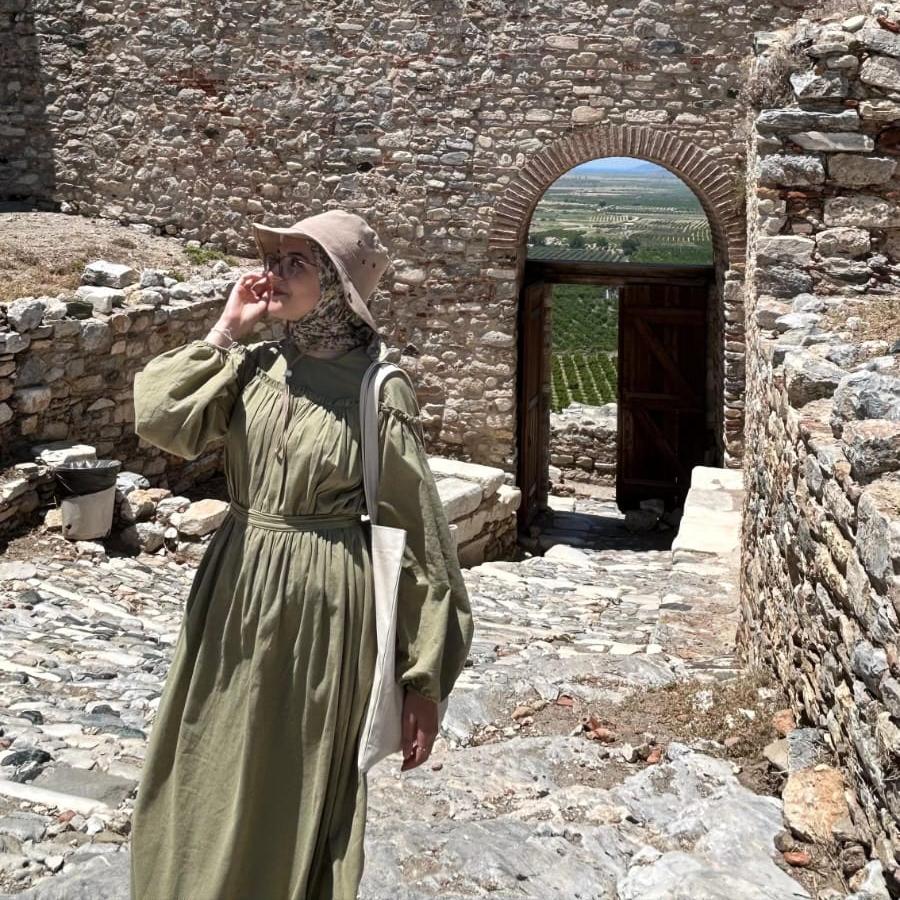
![6a5fec7d-1370-433e-9281-70fde9a8a1da[1].jpg](/_next/image?url=https%3A%2F%2Fcdn.t3pedia.org%2Fmedia%2Fuploads%2F2025%2F05%2F16%2Fp2YQI3f0Veg1MP9OkPxxQsDN29yAbfA7.jpg&w=1280&q=75)
Adatepe Village
Location | Ayvacık District Türkiye Çanakkale Province It is located on the southern slopes of Kazdağları. 4 km north of Küçükkuyu Village | ||||||||
|---|---|---|---|---|---|---|---|---|---|
Important Buildings and Spaces | Zeus Altar Taşmektep Adatepe Square Traditional stone houses | ||||||||
Architectural Structure | Houses are typically two-story stone structures. Roofs are tiled; some older buildings have earthen roofs. Houses have internal courtyards and gardens. | ||||||||
Conservation Status | It was declared an urban SIT area in 1989. In 1992, the entire area was placed under protection by the Ministry of Culture and Tourism of the Republic of Türkiye. | ||||||||
Adatepe Köyü is located within the boundaries of the Ayvacık district of Çanakkale province in Türkiye. It is situated on the southern slopes of the Kazdağları, approximately four kilometers north of the settlement of Küçükkuyu. The village, which has hosted diverse religions and cultures since antiquity, is built on a high plateau above sea level. Historically linked to Küçükkuyu, which once served as a harbor, Adatepe features stone architecture and a traditional village fabric.
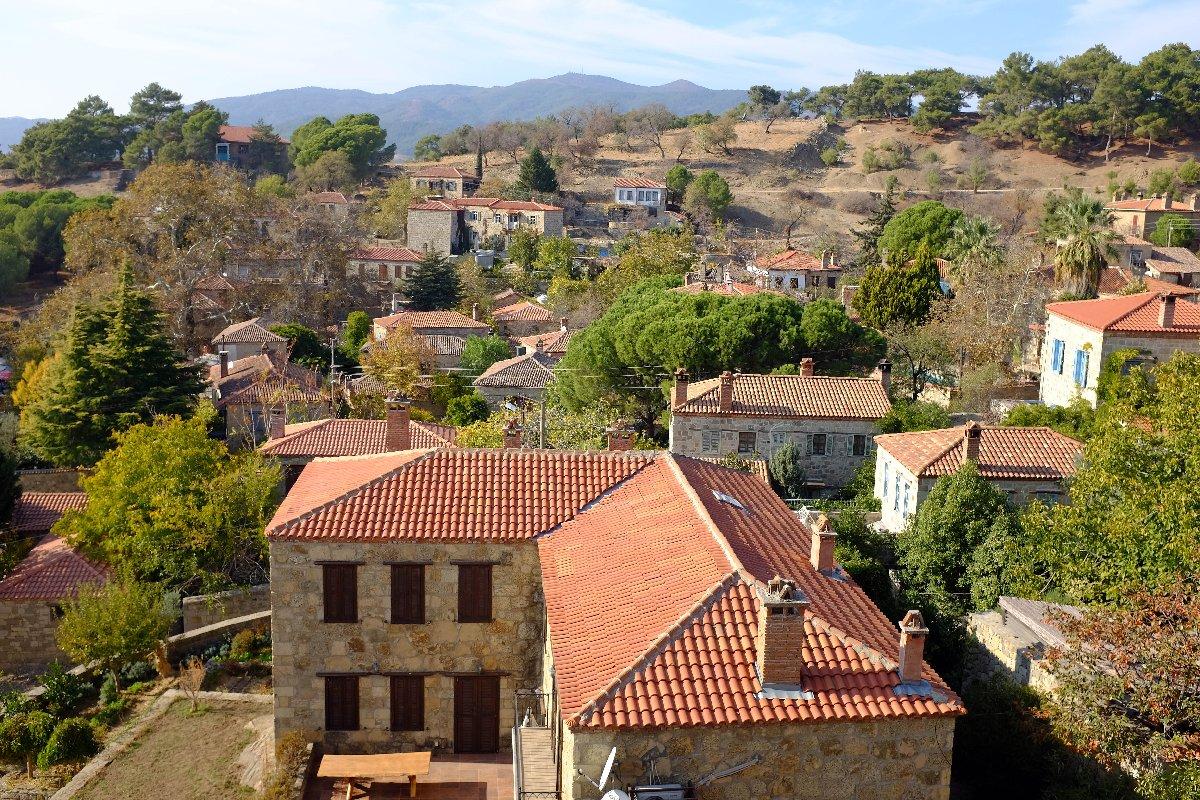
Çanakkale - Adatepe Köyü (T.C. Ayvalık Belediyesi)
Before the Republic, Adatepe was home to both Turkish and Greek populations. Following the 1924 population exchange between Türkiye and Greece, the Greek community migrated to Greece and was replaced by Muslim Turkish settlers from Crete. Subsequently, due to migration and demographic shifts, the village gradually emptied and was nearly abandoned by the 1950s.
In the 1980s, Adatepe experienced revitalization when a group of people from major cities purchased the village’s stone houses and undertook restoration efforts. Today, the local population and new settlers from outside live together in the village.
The buildings in the village are generally two-story structures with stone walls, internal courtyards, and gardens. The ground floor serves as living space while the upper floor is used for sleeping. Roofs are either tiled or made of earth. Earth roofs were traditionally used during summer months to dry winter food supplies. Houses were constructed using stones quarried from nearby small stone quarries. Stonemasonry remains a living craft in the village.
In 1989, Adatepe Köyü was declared an urban conservation area, and in 1992 it was fully placed under protection by the Ministry of Culture and Tourism of the Republic of Türkiye. Restoration efforts have increased over time, and some houses have been repurposed as boutique hotels, cafés, or shops.
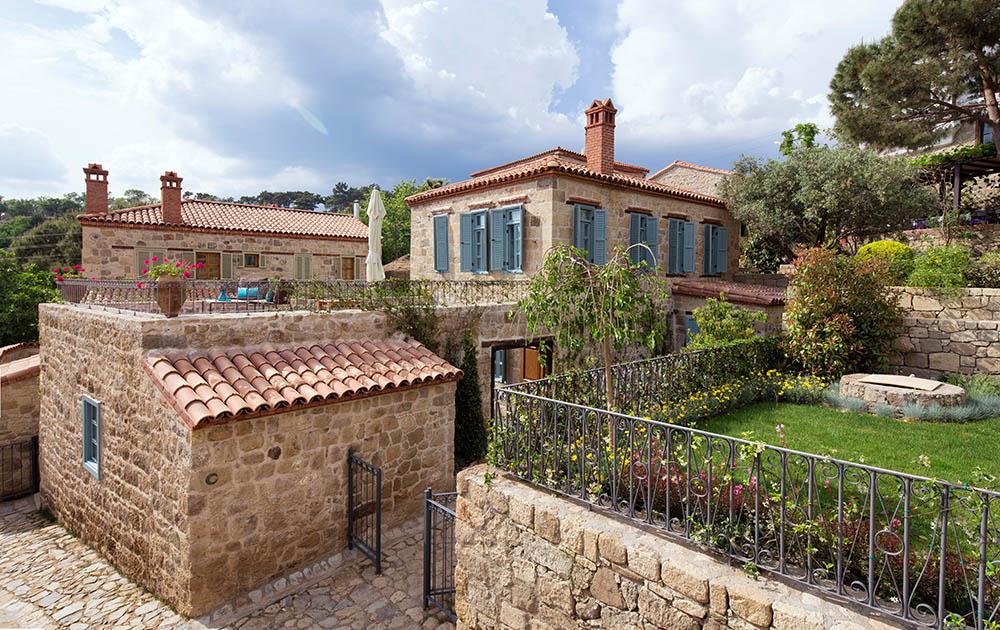
Çanakkale Adatepe Köyü Bina Yapısı (T.C. Ayvalık Belediyesi)
Near Adatepe Köyü, on a commanding position overlooking the surrounding landscape, lies the Altar of Zeus. This sanctuary, comprising a stone chamber and a water-filled cistern, is associated with Mount Gargaros mentioned in Homer’s Iliad. According to legend, during the Trojan War, the supreme god Zeus observed the battles from this site. The altar offers views of the Edremit Gulf, the islands of Ayvalık, and the island of Lesbos.
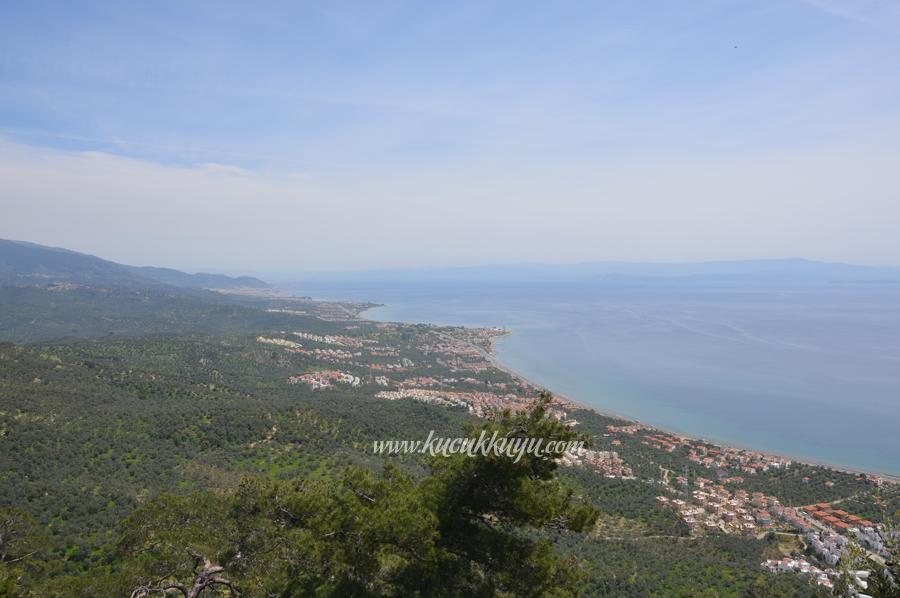
Zeus Altarı (T.C. Küçükkuyu Belediyesi)
The primary school in Adatepe Köyü operated between 1947 and 1985 but closed due to insufficient student numbers. In 1997, it reopened under the name “Taş Mektep” and was transformed into a center offering seminars in philosophy, literature, art, and art history for adults. Additionally, artists conduct independent workshop activities here.
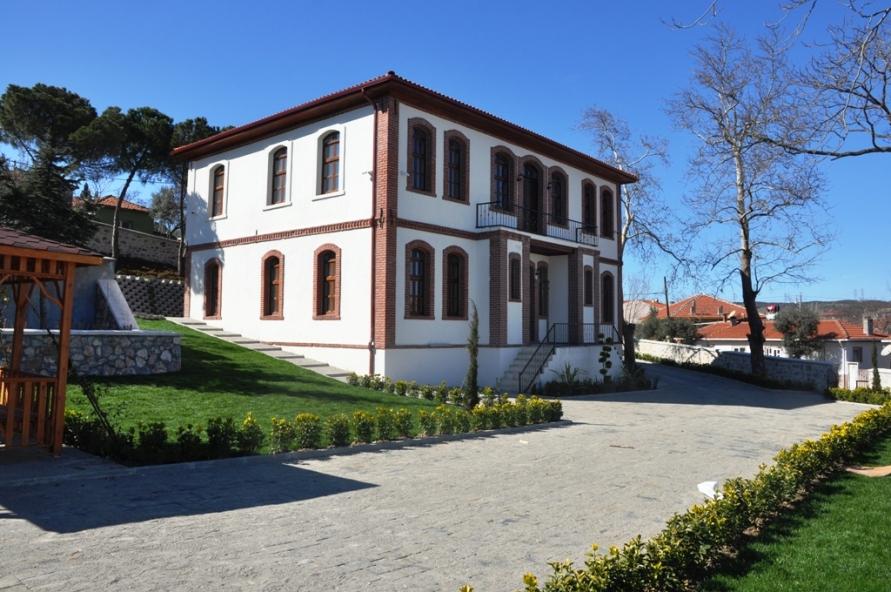
Biga Taş Mektep (T.C. Çanakkale İl Özel Dairesi)
Olive cultivation is one of the main economic activities in the village. Products such as olive oil and soap are produced based on local resources and sold in village shops. A natural cleaning product known as “sabun suyu,” sold at establishments like Elvan Kafe, is used for both household cleaning and laundry.
The area surrounding two ancient plane trees in the village square serves as the center of social life. Cafés and coffeehouses in the square operate year-round.
Visitors are also offered ice creams made with local flavors such as hawthorn, oregano, and pomegranate blossom.
Ayvacık Belediyesi. "Adatepe Köyü." Çanakkale Ayvacık Belediyesi. Accessed May 16, 2025.https://www.canakkaleayvacik.bel.tr/Turizm/TurizmDetay/4
Ayvacık Kaymakamlığı. "Adatepe Köyü." Çanakkale Ayvacık Kaymakamlığı. Accessed May 16, 2025.http://www.canakkale-ayvacik.gov.tr/adatepe-koyu
Gazi University. "Toplumsal Değişimin Kırsal Mekândaki Etkisi: Çanakkale Adatepe Köyü ve Evleri." AVESİS Gazi Üniversitesi. Accessed May 16, 2025.https://avesis.gazi.edu.tr/yayin/ddf6564d-92b6-4cd0-a627-9fdf8c54f2e7/toplumsal-degisimin-kirsal-mekandaki-etkisi-canakkale-adatepe-koyu-ve-evleri
Küçükkuyu Belediyesi. "Zeus Altarı Görseli." Accessed May 16, 2025.https://www.kucukkuyu.bel.tr/wp-content/uploads/2014/03/zeus-altari-6.jpg
Küçükkuyu Belediyesi. "Zeus Altarı." Accessed May 16, 2025.https://www.kucukkuyu.bel.tr/gezilecek-yerler/zeus-altari/
T.C.Ayvacık Belediyesi. “Adatepe Köyü Visual 1.” Çanakkale Ayvacık Municipality. Accessed May 16, 2025.https://admin.canakkaleayvacik.bel.tr/Upload/Turizm/6a32effb-a8a9-406f-b9e7-4aa90190c451.jpg
T.C.Ayvacık Belediyesi. “Adatepe Köyü Visual 2.” Çanakkale Ayvacık Municipality. Accessed May 16, 2025.https://admin.canakkaleayvacik.bel.tr/Upload/Turizm/a77fd0b2-cfb4-4440-80c9-f82f07b0bc95.jpg
Çanakkale İl Özel İdaresi. "Karabiga Taş Mektep Çalışmaları Tamamlandı." Accessed May 16, 2025.http://www.canakkaleilozelidaresi.gov.tr/karabiga-tas-mektep-calismalari-tamamlandi
Çanakkale İl Özel İdaresi. “Karabiga Taş Mektep 3.” Çanakkale İl Özel İdaresi. Accessed May 16, 2025.http://www.canakkaleilozelidaresi.gov.tr/kurumlar/canakkaleilozelidaresi.gov.tr/haberler/2020/260220_tasmektep/karabiga_tasmektep_3.JPG
Adatepe Village
Location | Ayvacık District Türkiye Çanakkale Province It is located on the southern slopes of Kazdağları. 4 km north of Küçükkuyu Village | ||||||||
|---|---|---|---|---|---|---|---|---|---|
Important Buildings and Spaces | Zeus Altar Taşmektep Adatepe Square Traditional stone houses | ||||||||
Architectural Structure | Houses are typically two-story stone structures. Roofs are tiled; some older buildings have earthen roofs. Houses have internal courtyards and gardens. | ||||||||
Conservation Status | It was declared an urban SIT area in 1989. In 1992, the entire area was placed under protection by the Ministry of Culture and Tourism of the Republic of Türkiye. | ||||||||
Historical Development and Population Structure
Architectural Structure and Housing Features
Altar of Zeus
Stone School
Economic Activities
Social and Cultural Spaces