


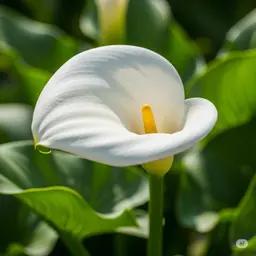
Calla Lily
Scientific Name(s) | Zantedeschia Aethiopica (L.) Spreng. | ||||||||
|---|---|---|---|---|---|---|---|---|---|
Common Name | Arum Lily Calla Lily | ||||||||
Family | Araceae | ||||||||
Distribution(s) | Humid Regions of South Africa | ||||||||
Growth Pattern | Herbaceous Plant Perennial | ||||||||
Height(s) | 60-100 cm | ||||||||
Flower Colors | White | ||||||||
Area(s) of Use | Phytoremediation Ornamental Plant Traditional Medicine | ||||||||
Active Components | Alkaloids Phenolic Compounds Flavonoids | ||||||||
Pharmacological Effects | Antioxidant Antifungal Antibacterial | ||||||||
Zantedeschia aethiopica, commonly known as the "calla lily" or "arum lily," is a perennial herbaceous plant belonging to the Araceae family, native to South Africa. Due to its aesthetic appearance, it is widely cultivated worldwide as an ornamental plant and is also utilized in traditional medicine and environmental applications. This species is notable for its morphological features, phytochemical constituents, and ecological adaptations.
The calla lily is an evergreen plant with thick, short rhizomes and an erect growth habit. Its leaves are broad, glossy green, and arrow-shaped. The inflorescence consists of a large, showy white spathe (bract) surrounding a yellow spadix. The flowering period typically occurs during spring and summer months.
Kingdom: Plantae
Phylum: Angiospermae
Class: Monocotyledonae
Order: Alismatales
Family: Araceae
Genus: Zantedeschia
Species: Zantedeschia aethiopica (L.) Spreng.
This species exhibits the characteristic features of the Araceae family, particularly distinguished by its floral structure and rhizomatous root system.
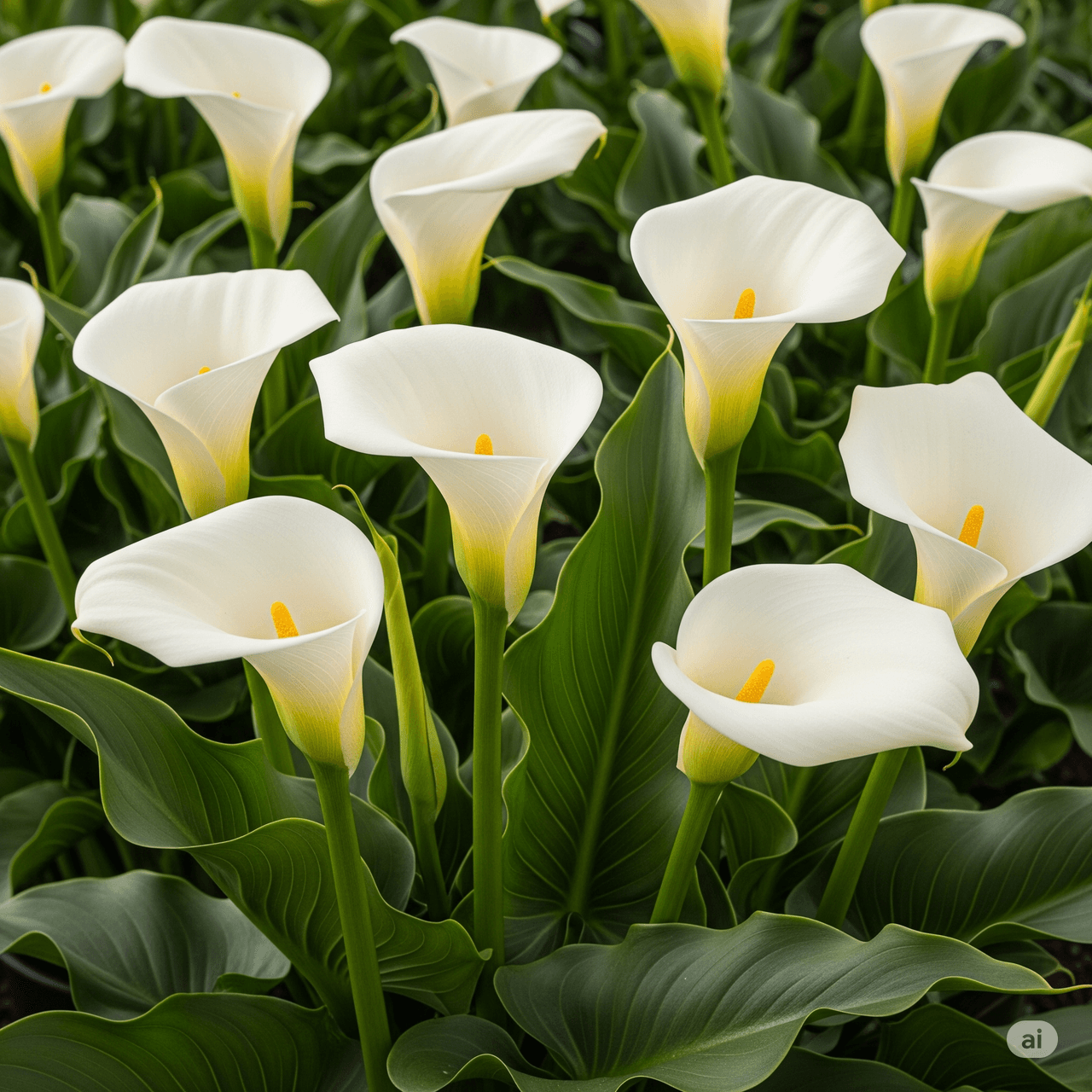
Calla Lily (Created with Artificial Intelligence)
Zantedeschia aethiopica naturally occurs in the wetlands, riverbanks, and moist grasslands of South Africa. This species grows at altitudes ranging from 20 to 2250 meters, thriving on sandy or rocky soils in seasonally wet areas. Additionally, it has become naturalized in many regions worldwide where it is cultivated as an ornamental plant.
This plant thrives in environments with high humidity and water-saturated soils. Moreover, its ability to grow in soils contaminated with heavy metals and pollutants makes it suitable for use in phytoremediation applications. These characteristics have led to the preference for the calla lily in environmental rehabilitation projects.
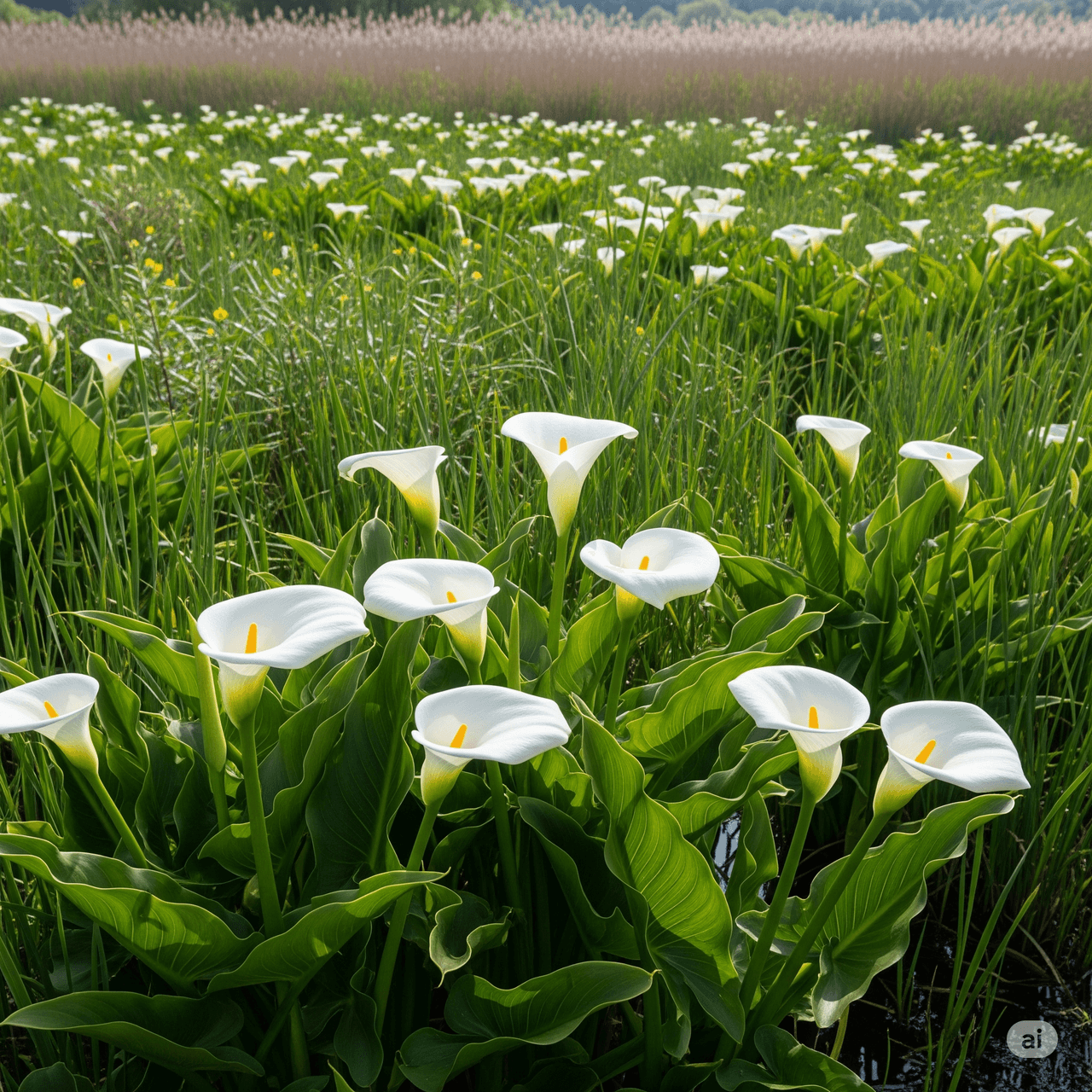
Calla Lilies (Created with Artificial Intelligence)
Zantedeschia aethiopica contains various biologically active compounds, including flavonoids, phenolic compounds, alkaloids, and saponins. Additionally, some parts of the plant contain calcium oxalate crystals (raphides), which can cause mechanical irritation.
In South Africa, Zantedeschia aethiopica has been used in traditional medicine to treat various ailments. Its leaves and rhizomes have been externally applied for wounds, burns, rheumatism, and inflammations. In some regions, the rhizomes have been boiled for extended periods and consumed as food.
Current research on calla lilies focuses on investigating the plant’s potential pharmacological effects and biologically active compounds. Additionally, its use in phytoremediation plays a significant role in the removal of environmental pollutants. Widely cultivated as an ornamental plant, Zantedeschia aethiopica is preferred in landscaping for its aesthetic value.
Bergamo, R. H. S., B. V. Daquila, and H. Conte. "Phytoremediation Technique on the Rehabilitation of Contaminated Areas: A Narrative Review." Research, Society and Development 10, no. 10 (2021): 1–10. Accessed May 19, 2025. https://rsdjournal.org/index.php/rsd/article/download/36959/31124/410968
Lall, Namrita. Underexplored Medicinal Plants from Sub-Saharan Africa. Briza Publications, 2009. Accessed May 19, 2025. https://www.sciencedirect.com/science/article/pii/B9780128168141000466
Maroyi, Alfred. "Zantedeschia aethiopica (L.) Spreng.: A Review of Its Medicinal Uses, Phytochemistry, and Biological Activities." Asian Journal of Pharmaceutical Sciences and Clinical Research 12, no. 8 (2019): 1–10. Accessed May 19, 2025. https://www.researchgate.net/publication/337958605_ZANTEDESCHIA_AETHIOPICA_L_SPRENG_A_REVIEW_OF_ITS_MEDICINAL_USES_PHYTOCHEMISTRY_AND_BIOLOGICAL_ACTIVITIES/fulltext/5df838d7299bf10bc3611c0c/ZANTEDESCHIA-AETHIOPICA-L-SPRENG-A-REVIEW-OF-ITS-MEDICINAL-USES-PHYTOCHEMISTRY-AND-BIOLOGICAL-ACTIVITIES.pdf
Singh, Y., A. E. van Wyk, and H. Baijnath. "Floral Biology of Zantedeschia aethiopica (L.) Spreng. (Araceae)." South African Journal of Botany 62, no. 3 (1996): 1–10. Accessed May 19, 2025. https://www.sciencedirect.com/science/article/pii/S0254629915306141

Calla Lily
Scientific Name(s) | Zantedeschia Aethiopica (L.) Spreng. | ||||||||
|---|---|---|---|---|---|---|---|---|---|
Common Name | Arum Lily Calla Lily | ||||||||
Family | Araceae | ||||||||
Distribution(s) | Humid Regions of South Africa | ||||||||
Growth Pattern | Herbaceous Plant Perennial | ||||||||
Height(s) | 60-100 cm | ||||||||
Flower Colors | White | ||||||||
Area(s) of Use | Phytoremediation Ornamental Plant Traditional Medicine | ||||||||
Active Components | Alkaloids Phenolic Compounds Flavonoids | ||||||||
Pharmacological Effects | Antioxidant Antifungal Antibacterial | ||||||||
Plant Morphology
Taxonomic Classification
Natural Distribution and Habitat
Ecological Adaptations
Phytochemical Components
Pharmacological Properties
Traditional Uses
Modern Applications
This article was created with the support of artificial intelligence.