

This article was automatically translated from the original Turkish version.
+2 More
Architect(s) | Mimar Sinan | ||||||||
|---|---|---|---|---|---|---|---|---|---|
Construction Date(Number) | 1559 | ||||||||
Patron | Babüssaade Ağası Cafer Ağa | ||||||||
Current Use | Traditional Turkish Arts Education and Application Center | ||||||||
Building Type | Medrese | ||||||||
Caferağa Medresesi, located in the Fatih district of İstanbul, is one of the city’s most culturally significant landmarks.
The medrese is an important component of the Ottoman education system established after the conquest of Istanbul and was commissioned in 1559 by Cafer Ağa during the reign of Kanuni Sultan Süleyman, under the design of Mimar Sinan.
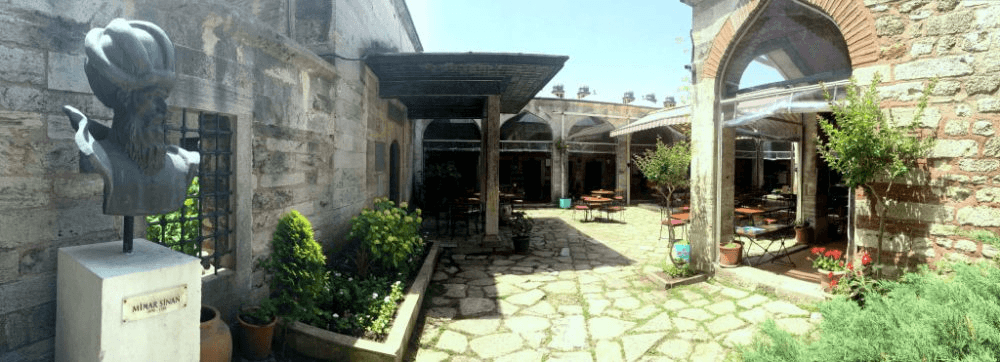
A view of Caferağa Medresesi from the outsideel (Turkish Culture Service Foundation)
Built in 1559 by Cafer Ağa, one of the Babüssaade aghas during the reign of Kanuni Sultan Süleyman—one of the most brilliant periods of the Ottoman State—the medrese is a work of Mimar Sinan, the chief architect of the era. Its location on a steep and challenging terrain gives it both aesthetic distinction and a serene atmosphere, securing its important place among Ottoman educational structures.
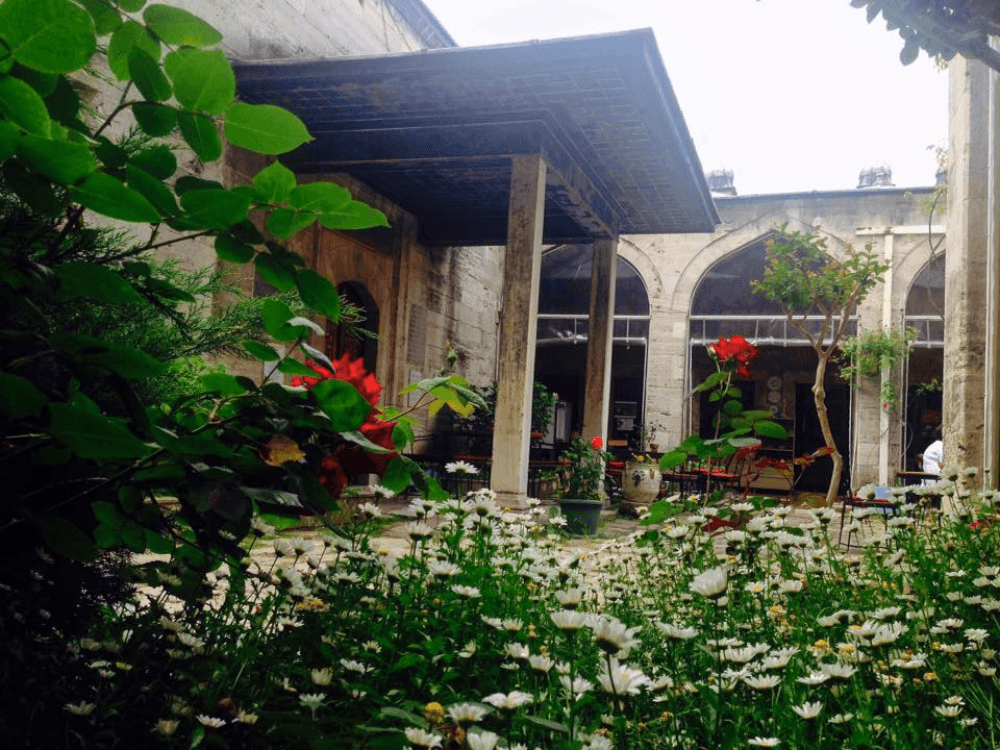
Caferağa Medresesi follows the classic Ottoman medrese layout centered around an avlu. The central courtyard serves as the main focal point, with classrooms, student cells and other functional spaces arranged around it. The arcades opening onto the courtyard facilitate movement between areas while also providing climatic comfort.
The classroom section occupies a more prominent position within the plan and is typically emphasized by its dome. The building’s restrained architectural style, combined with its materials and spatial organization, clearly illustrates the functional and orderly spatial design characteristic of Ottoman medreses.
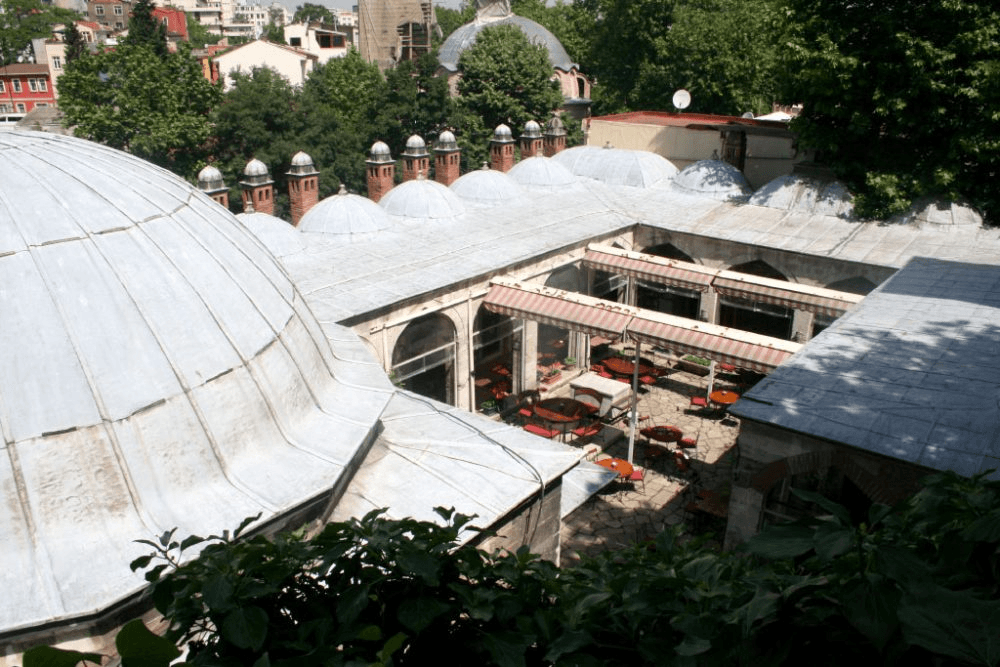
Bird’s-eye view of Caferağa Medresesi
Over time, the medrese underwent various repairs while preserving its original character.
In 1989, it was subjected to a comprehensive restoration by the Turkish Culture Service Foundation and reopened to the public for cultural and artistic activities. 【1】
Following the completion of the restoration, Caferağa Medresesi has been used as a Center for Traditional Turkish Arts Education or an arts center.
The building contains 15 separate workshops, a large hall and a courtyard surrounded by workshops.
These spaces host educational, production and exhibition activities related to traditional Turkish arts.
Caferağa Medresesi
Within Caferağa Medresesi, daily or long-term workshops are regularly organized, particularly in the field of traditional Turkish arts.
These workshops cover disciplines such as ceramics, marbling, calligraphy and miniature painting.
Caferağa Medresesi serves as a center for cultural and artistic events aimed at both local and international visitors.
Short-term workshops allow tourists not only to observe but also to actively participate in traditional art practices.
Accessed November 26, 2025.
Anadolu Ajansı. "Caferağa Medresesi sanatı koşulsuz sevenlerin adresi." Accessed January 23, 2026.
Türk Kültürüne Hizmet Vakfı. "Caferağa Medresesi." Accessed January 23, 2026.
[1]
Turkish Culture Service Foundation. “Caferağa Medresesi.” Access date: 23 January 2026.

Architect(s) | Mimar Sinan | ||||||||
|---|---|---|---|---|---|---|---|---|---|
Construction Date(Number) | 1559 | ||||||||
Patron | Babüssaade Ağası Cafer Ağa | ||||||||
Current Use | Traditional Turkish Arts Education and Application Center | ||||||||
Building Type | Medrese | ||||||||
History
Architectural Features
Restoration Process
Current Use and Function
Cultural Activities
International and Touristic Context