


This article was automatically translated from the original Turkish version.
+1 More
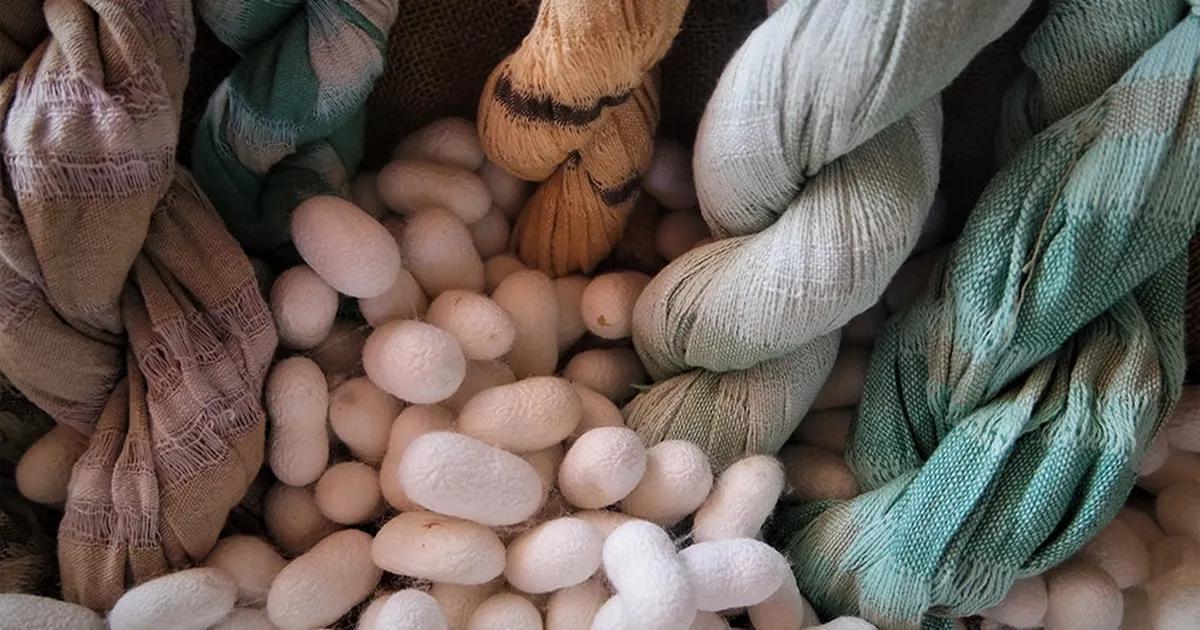
Bursa Silk / Bursa Silk Thread
Registration Number | 425 | ||||||||
|---|---|---|---|---|---|---|---|---|---|
Registration Date | 29.03.2019 | ||||||||
Application Number | C2015/032 | ||||||||
Application Date | 12.08.2015 | ||||||||
Name of the Geographical Indication | Bursa Silk / Bursa Silk Yarn | ||||||||
Name of the Product | Silk | ||||||||
Type of Geographical Indication | Mahreç Mark | ||||||||
Applicant/Registrant | Bursa Metropolitan Municipality | ||||||||
Address of the Registrant | Tayyare Culture Center Atatürk St. Osmangazi / BURSA | ||||||||
Geographical Boundary | Bursa Province | ||||||||
Bursa Silk / Bursa Silk Yarn is a textile raw material unique to Bursa province in Türkiye, derived from the silkworm cocoon and protected under geographical indication. This yarn is produced from silkworms fed on the leaves of mulberry trees that grow in Bursa’s mineral-rich soils and mild, humid climate. For centuries, it has been a fundamental element of the region’s weaving and textile tradition. Bursa Silk is produced through the processing of cocoons from silkworms raised under specific quality and production standards; it is distinguished by its whiteness, luster, and drawability. The feeding and cocoon-spinning stages, which occur within the boundaries of Bursa province, define the product’s geographical character, while the yarn-drawing process may take place outside these boundaries.
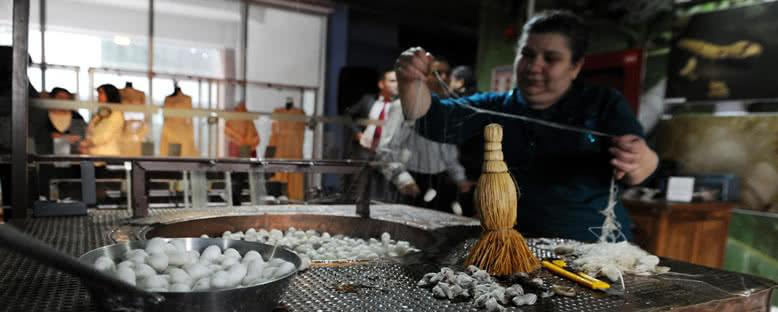
Bursa Silk / Bursa Silk Yarn (Turkish Patent)
Historically, Bursa Silk / Bursa Silk Yarn is linked to the production of silkworm eggs and cocoons in Bursa province. For centuries, Bursa served as a center where silk fabrics and velvet were woven on handlooms and traded widely. The oldest recorded evidence of silkworm rearing for cocoon production is a land sale document from 1587 concerning a mulberry orchard. Bursa’s central role in the silk trade began to develop in the second half of the 14th century and became firmly established in the 15th century. Evliya Çelebi’s travel notes highlight velvet textiles from Bursa as particularly notable. In the 16th century, Bursa textiles held commercial value not only across the Ottoman territories but also in European cities such as Florence, Venice, and Genoa, as well as in distant regions like Iran and China. During the Ottoman period, it was common to refer to these fabrics as “Bursa Cloth.”
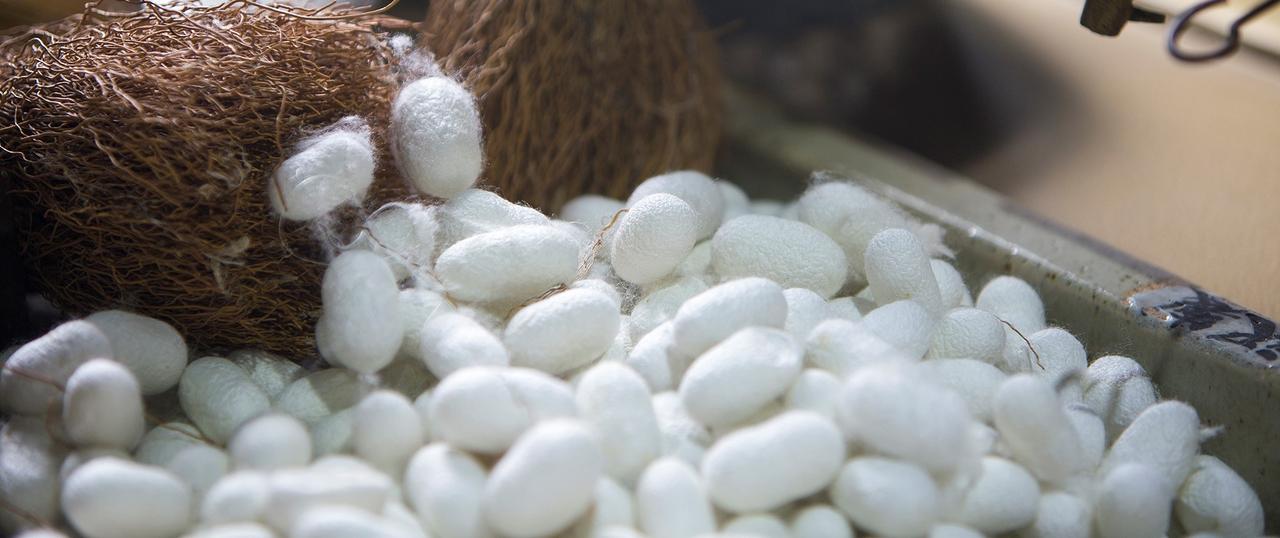
Bursa Silk / Bursa Silk Yarn (Bursa Metropolitan Municipality)
When the Ottoman-Iran wars weakened silk cocoon trade from Iran in the 16th century, local cocoon production in Bursa began to increase. By the mid-17th century, a class of craftsmen known as “mancınıkçı” (raw silk producers) had emerged in Bursa, and by the end of the century, numerous workshops employing primarily female workers had been established. The spread of sericulture boosted raw silk exports to Europe and reinforced the Ottoman territories’ role as a key raw material source. Silk production in Bursa provided long-term employment, factories were established by families such as İpeker, and products were shipped to various cities via the Gemlik Port. Structures such as Kozahan and İpekhan functioned for many years as commercial and trading centers.
The role of mulberry trees is crucial in the development of cocoon and yarn production in Bursa. Due to its geological features and rich underground water sources, Bursa offers ideal conditions for mulberry tree growth, which slows the hardening process associated with aging. Bursa Silk / Bursa Silk Yarn is produced by raising silkworm eggs from mulberry leaves grown in Bursa, allowing the worms to spin cocoons, which are then processed into yarn.
Bursa Silk / Bursa Silk Yarn (gotobursa)
The most important factor determining the quality of Bursa Silk / Bursa Silk Yarn is Bursa’s geographical structure. The leaves of mulberry trees growing on the slopes of Uludağ, in mineral-rich volcanic soils, are used to feed silkworms. Because the hardening of these trees due to aging is slow and minimal, the resulting cocoons exhibit high quality. Bursa’s mild and humid climate plays a decisive role in silkworm development and cocoon quality.
The yield and quality of cocoons derived from silkworms depend on the characteristics of the eggs (eggs) used in the feeding process. In the production of Bursa Silk / Bursa Silk Yarn, hybrid silkworm eggs (polyhybrids), typically imported from the Far East, are commonly used. These eggs are a hybrid resulting from the crossbreeding of Japanese strains with European and Chinese varieties. The type of imported eggs may change over time; additionally, new disease-resistant strains, once developed, may also be incorporated into production. The defining characteristic of Bursa Silk / Bursa Silk Yarn lies in the feeding and cocoon-spinning processes undergone by the caterpillars hatched from these eggs. The role of mulberry trees grown in the Bursa region during these stages is critical. After being fed on these mulberry leaves, silkworms produce cocoons.
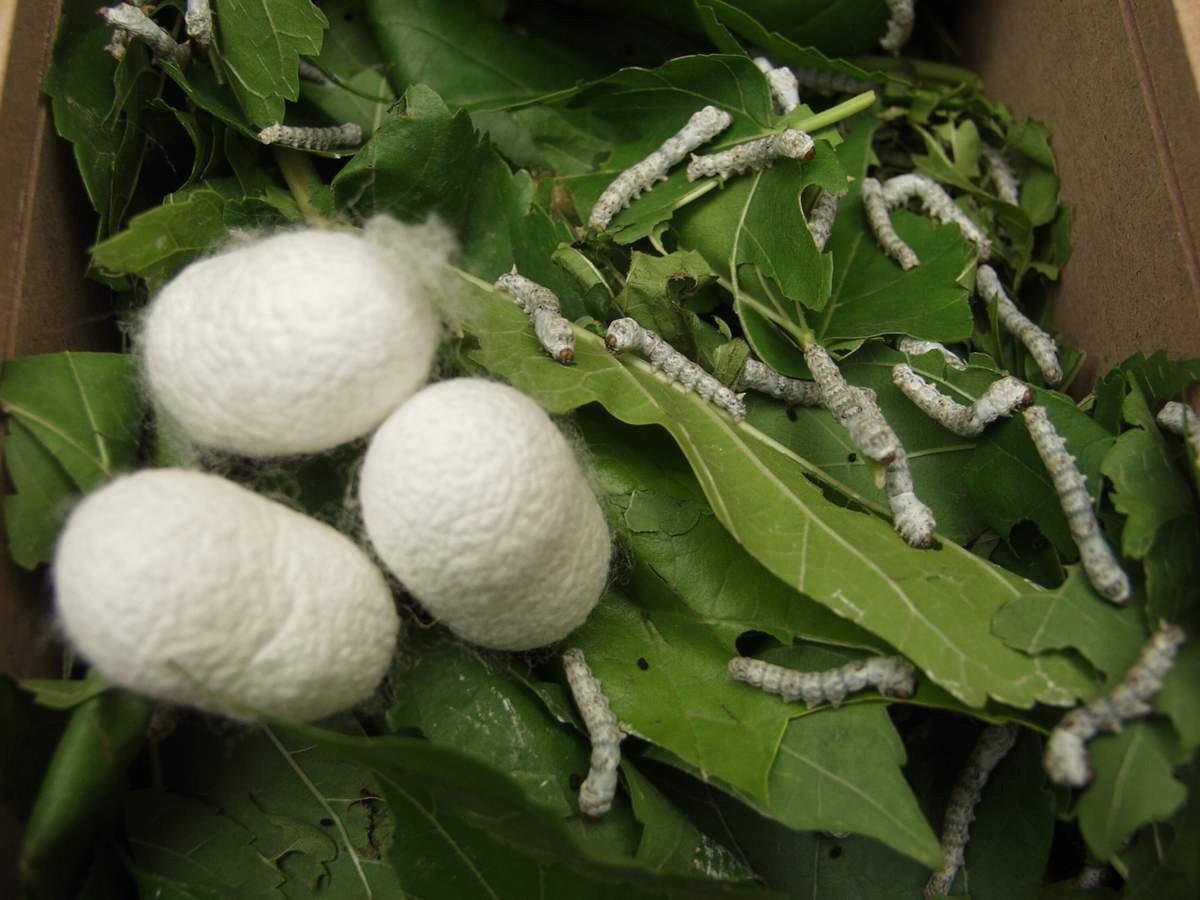
Bursa Silk / Bursa Silk Yarn (Bursa Metropolitan Municipality)
The silkworm is a domesticated insect species belonging to the Bombycidae family and the Bombyx mori species, undergoing four life stages: egg, larva, pupa, and adult moth. The larva that emerges from the egg passes through five instars and four molting periods over a development period of approximately 25–30 days, consuming large quantities of mulberry leaves. Larvae fed on mulberry leaves from trees grown in Bursa begin spinning cocoons using a secretion from their mouths after sufficient nutrition and successful molting. The cocoon-spinning process typically lasts between two and four days, after which the yarn formation is complete.
Silkworm eggs are stored in cold storage for up to one year before development begins under suitable environmental conditions through hatching (inficar). The inficar process is a critical stage that affects larval development and ultimately the yield and quality of cocoons. The approximately 25–30-day period from egg hatching to the start of cocoon spinning constitutes the feeding and care phase of silkworm larvae.
The quality of cocoons, including their silk content, yarn drawability, and general characteristics, is closely related to Bursa’s climatic conditions. Feeding and care activities are primarily conducted during spring and autumn, when mild and humid weather prevails. During this period, disinfecting the feeding area is essential to reduce disease risk. Additionally, silkworms require clean air and must be kept away from enclosed, poorly ventilated environments. Temperature and humidity must remain constant during feeding; ideal conditions are approximately 23–26°C and 70–75% humidity. Bursa’s natural climate provides these conditions. Cocoons raised under these conditions typically produce white and lustrous yarn.
Once the feeding process is complete, silkworms are suspended on racks for cocoon spinning. Racks are typically made from annual plants such as mustard, horsetail, oak branches, pınar, and black alder, and are discarded after use. Alternatively, plastic racks may be used due to their durability, ease of disinfection, labor advantages, and ability to increase silk yield while reducing the incidence of double cocoons.
The production of Bursa Silk Yarn consists of several stages: acquisition of silkworm eggs, feeding of the eggs, suspension of larvae, cocoon spinning, and finally, yarn drawing. Production begins with imported eggs being fed on mulberry leaves in Bursa. After feeding and suspension, silkworms begin spinning cocoons. Approximately 8–10 days after suspension, cocoons are collected. At this stage, weak and stained cocoons are first removed to prevent damage to healthy ones. The filamentous fibers on the surface of the collected cocoons, known as “cotton of the cocoon,” are cleaned.
Cocoon spinning is completed when the silkworm transitions from the larval stage to the pupal stage within the cocoon. This stage lasts 6 to 10 days depending on temperature. In silk yarn production, this development is halted before the pupa transforms into a moth through a process called “cocoon boiling.” The cocoons are then dried, and the yarn-drawing process begins. The silk spun by the silkworm is in its raw form and cannot be used directly; therefore, it must be processed into yarn through the drawing process.
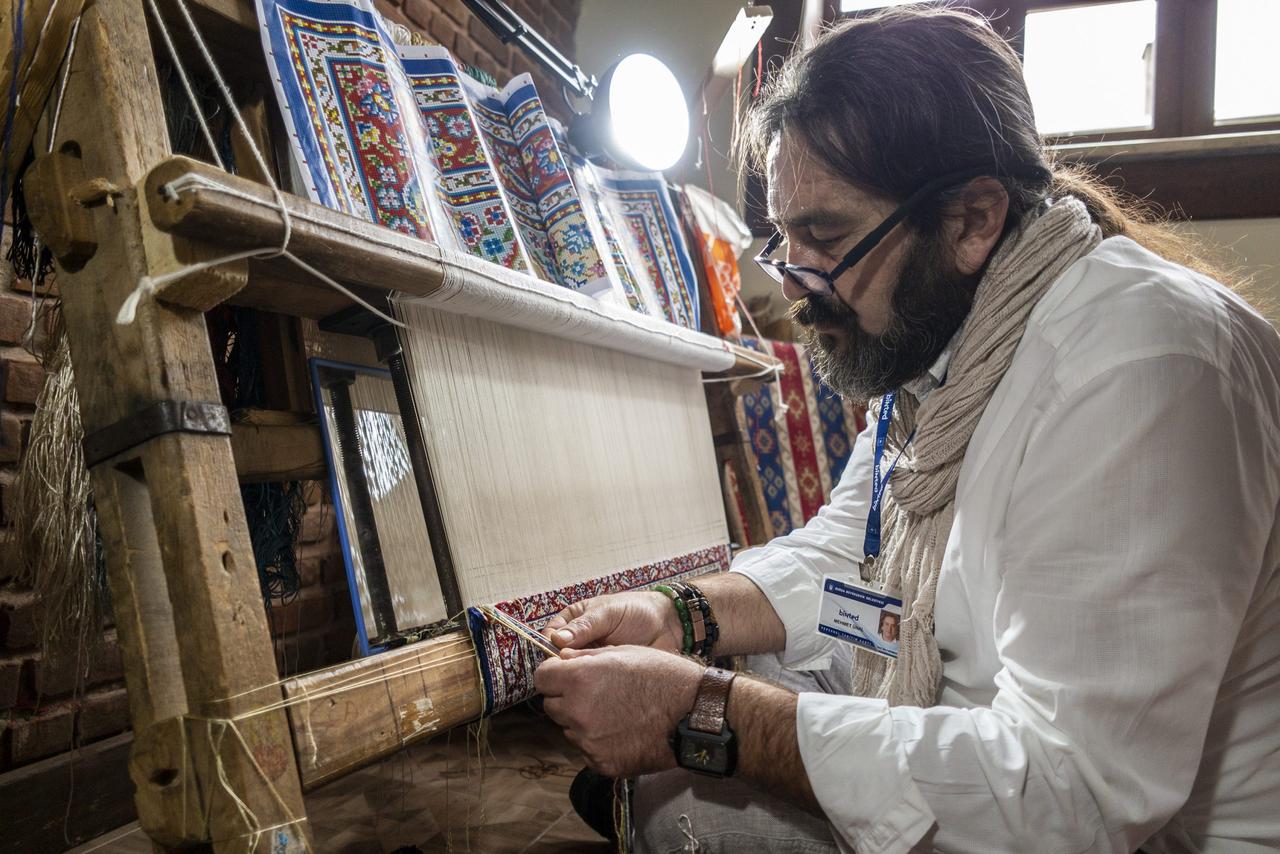
Bursa Silk / Bursa Silk Yarn (Bursa Metropolitan Municipality)
In yarn drawing, filaments from a specified number of cocoons are combined and twisted to produce yarn of the desired thickness. Today, two systems are widely used. In the French system, filaments from two groups of cocoons are twisted twice and drawn through two separate porcelain guides before being wound onto bobbins. In the Italian system, filaments from a single group of cocoons twist around themselves as filaments and are wound directly onto bobbins.
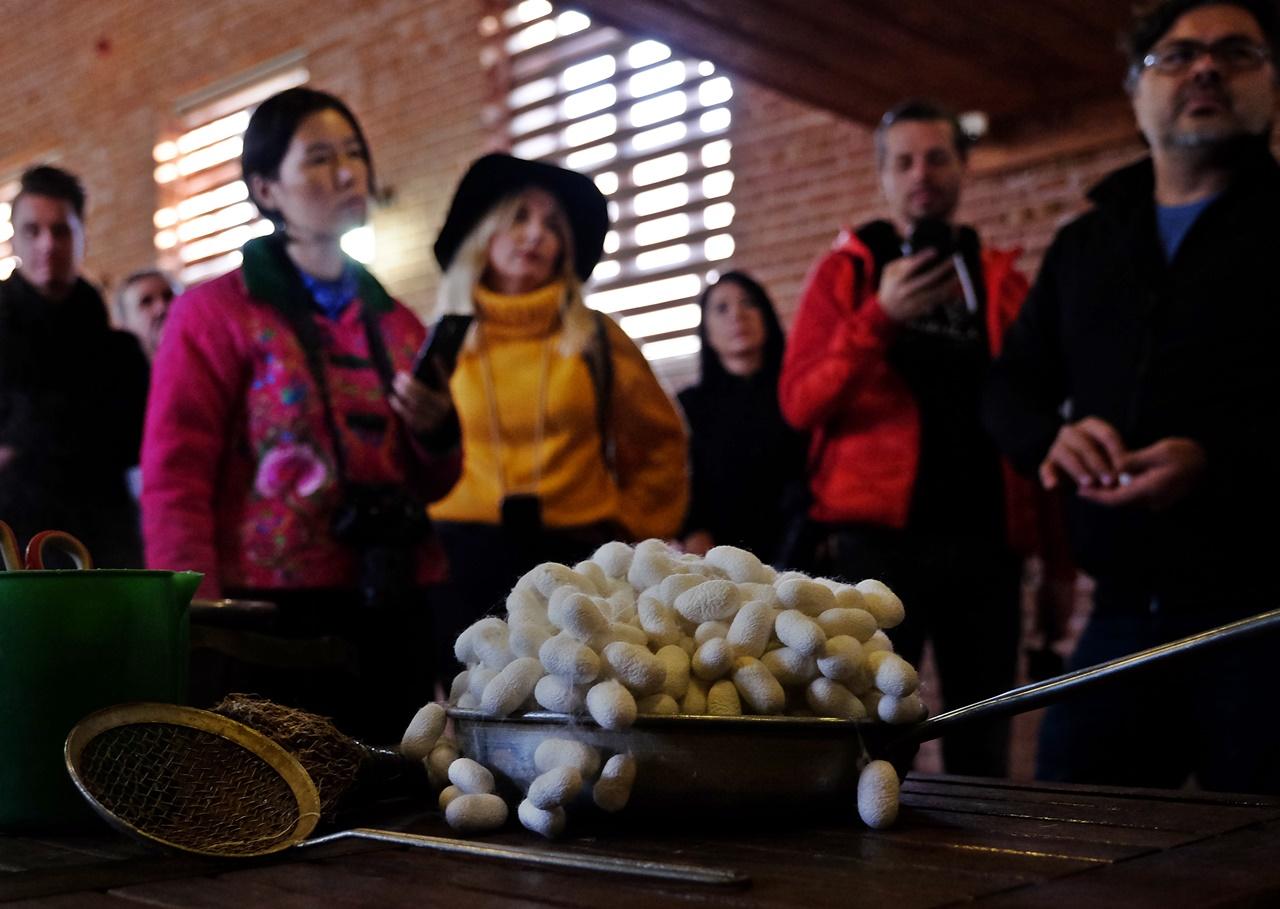
Bursa Silk / Bursa Silk Yarn (Bursa Metropolitan Municipality)
During cocoon boiling and yarn drawing, the ends of the silk filaments must be located. This is done by cleaning the tangled fibers on the cocoon surface, known as “whip ends.” If these whip ends are not properly separated from the cocoon, the quality of the drawing process declines. The search for the filament end can be performed manually or mechanically. Cocoons for end-finding are softened in water at 90–95°C. In manual methods, a stick or broom is used to locate the ends. In mechanical methods, semi-automatic or fully automatic machines are employed. In these machines, a rotating brush moves over the cocoons in the trough, collecting the filament ends. After approximately 20–25 rotations, the brush is raised and the collected filaments are removed by a worker.
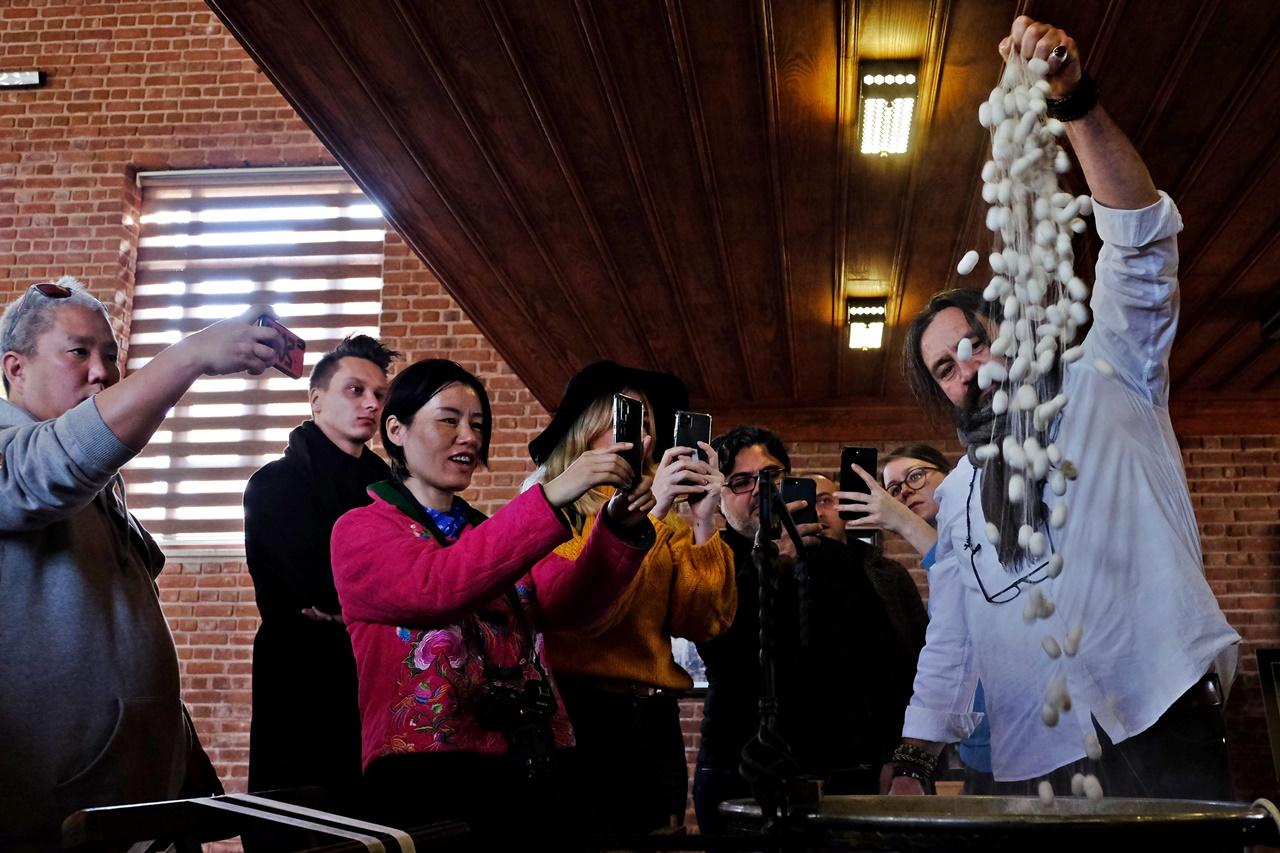
Bursa Silk / Bursa Silk Yarn (Bursa Metropolitan Municipality)
Cocoons with located ends are placed in the drawing bath. The thickness (denier) of the yarn to be drawn is adjusted according to the machine or number of cocoons. The filaments from the cocoons pass through a porcelain guide. This guide consists of two nested tubes and is integrated with a yarn catcher in modern machines. The silk emerging from the guide is twisted and wound onto a bobbin. After passing through the first and second bobbins, the silk is twisted and transferred to the third bobbin and a distributor guide. This twisting process is called “taveleta (tavelletta) twist.” In manual drawing systems, the end of a new cocoon is manually tied to the existing yarn. In machine drawing, the cocoon is mechanically connected using a mechanical catcher.
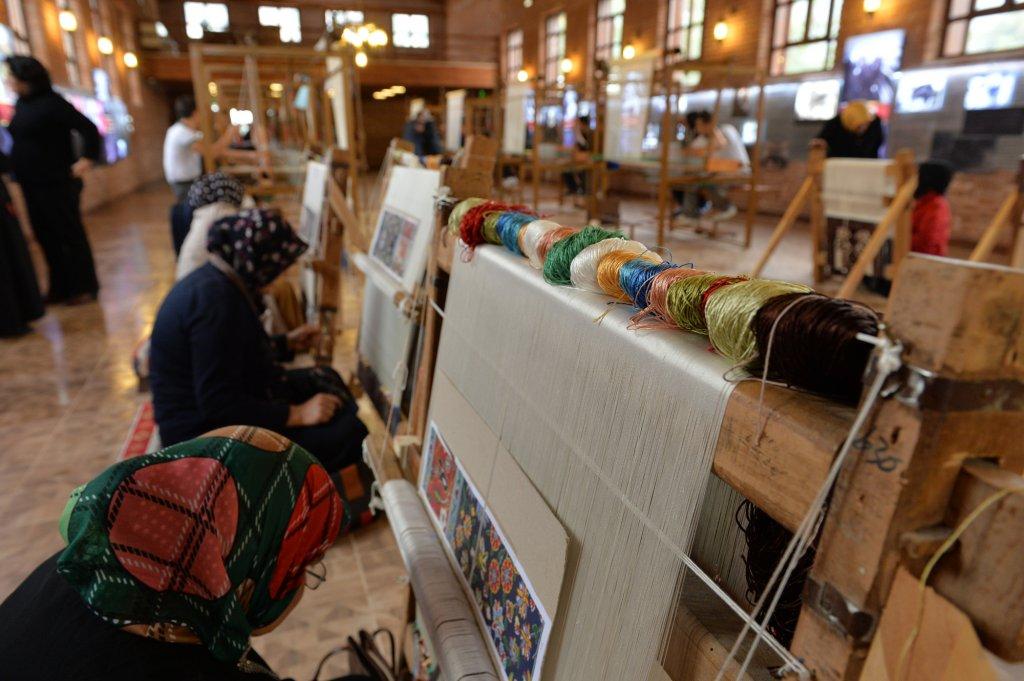
Bursa Silk / Bursa Silk Yarn (Bursa Metropolitan Municipality)
Twisting ensures that the silk filaments remain tightly bound together and that water from the drawing bath is effectively removed from the fibers. Without twisting, loose filaments may break, reducing yarn and fabric quality. Additionally, excess moisture not removed can lead to residue buildup and hard surfaces. The main types of twist used in silk are “chambon” and “taveleta (tavelletta)” twists. The chambon twist is formed by wrapping filaments from two separate guides around each other several times and winding them crosswise onto bobbins; it is commonly used in systems operated by hand and foot power. In modern machines, the taveleta twist is preferred; in this method, the yarn twists around its own axis.
In the final stage of the drawing process, silk passes through the distributor guide and is wound onto bobbins or spindles that move back and forth. The circumference of the bobbins is approximately 148–150 cm in direct-drawing machines and 60–65 cm in other machines. In simpler machines, the bobbin circumference may vary, and materials such as wood, aluminum, or hard plastic may be used. Ultimately, the silk drawing process is completed when the cocoon fibers pass through various stages and are wound onto the bobbin.
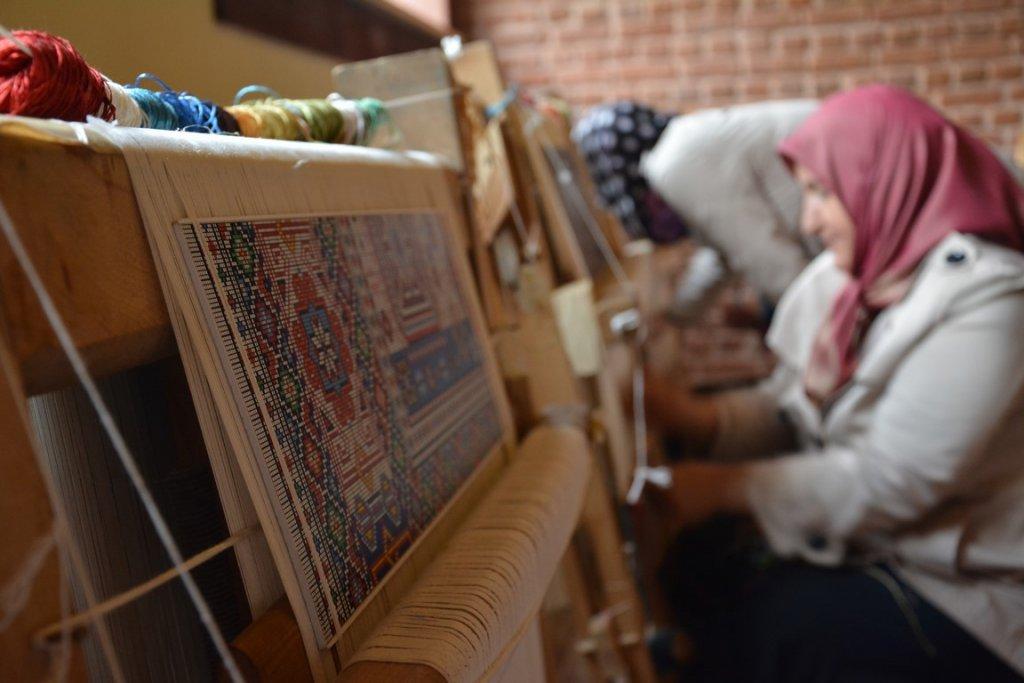
Bursa Silk / Bursa Silk Yarn (Bursa Metropolitan Municipality)
Bursa Silk / Bursa Silk Yarn derives its characteristics from Bursa’s soil structure, climatic conditions, and the quality of mulberry trees grown there. Therefore, the feeding and cocoon-spinning stages of the silkworm must occur strictly within the boundaries of Bursa province. However, since the risk of degradation is low, the subsequent yarn-drawing process may be carried out outside these geographical boundaries.
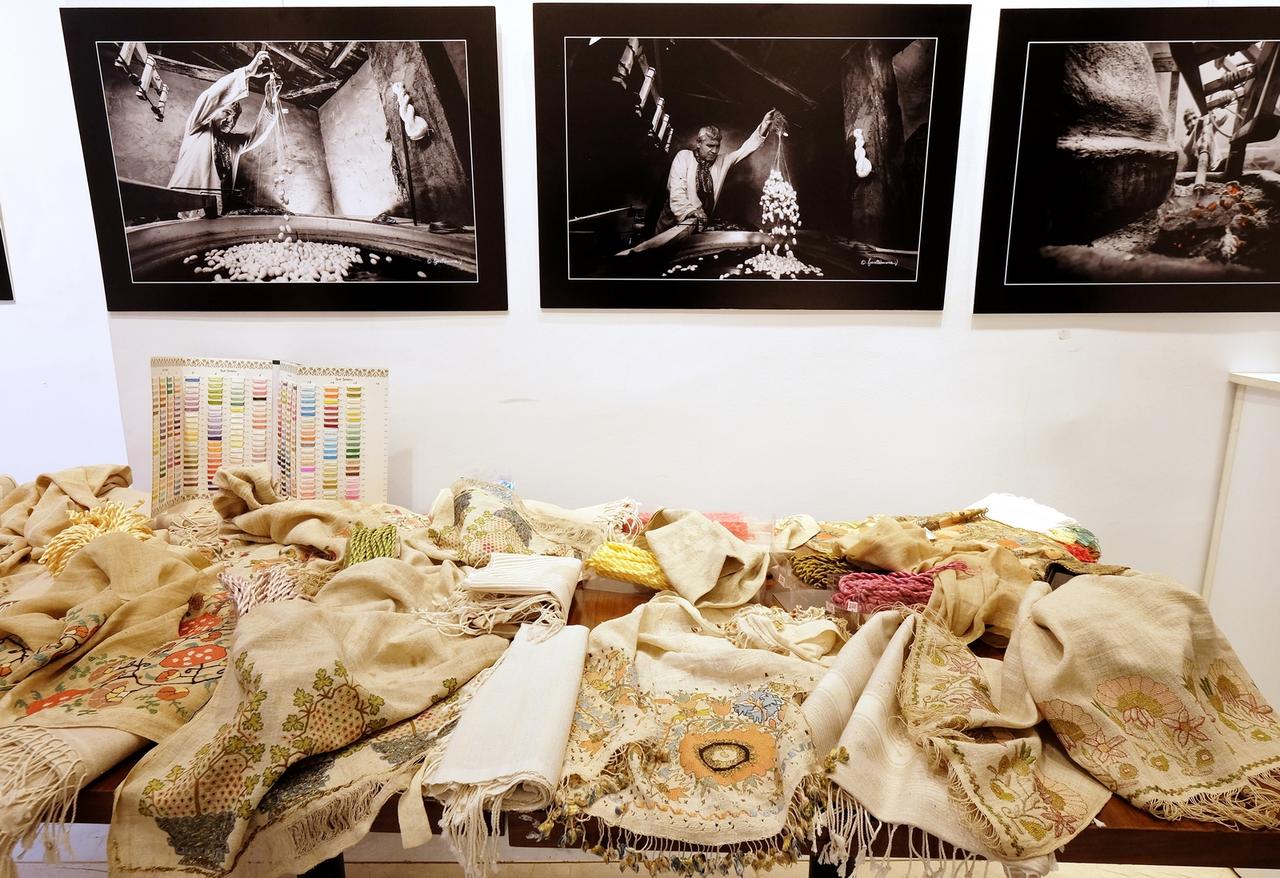
Bursa Silk / Bursa Silk Yarn (Bursa Metropolitan Municipality)
Bursa Silk / Bursa Silk Yarn was registered as a geographical indication on 29 March 2019 under number 425. The application was submitted by the Bursa Metropolitan Municipality, and usage and monitoring processes are conducted under the municipality’s coordination. The monitoring body consists of representatives from Kozabirlik, the Bursa Chamber of Commerce, and the Bursa Chamber of Industry and Commerce. Monitoring is conducted at least once a year, and reports are submitted to the Turkish Patent and Trademark Office.
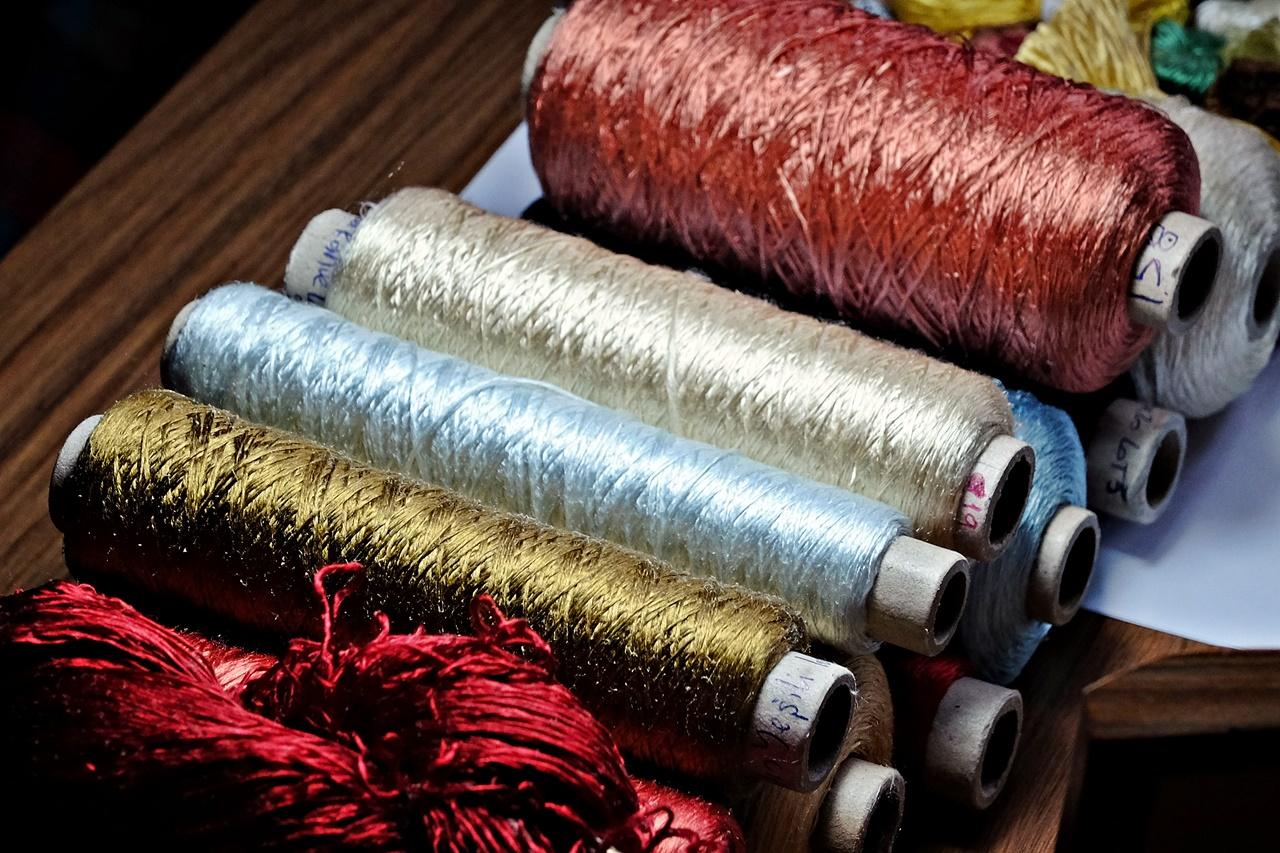
Bursa Silk / Bursa Silk Yarn (Bursa Metropolitan Municipality)
The geographical indication label must be used on product packaging or an appropriate section alongside the terms “Bursa Silk” or “Bursa Silk Yarn” and the geographical indication emblem. The monitoring process covers not only the yarn itself but also fabrics, textile products made from this yarn, and even imported products that are falsely labeled as such.
Producers using the name “Bursa Silk” or “Bursa Silk Yarn” are required to notify the Bursa Metropolitan Municipality of such use. Notification is also required when this silk is used in new products; this is not a licensing process but a mere informational requirement.
Bursa Silk / Bursa Silk Yarn (Generated by artificial intelligence.)
Bursa Büyükşehir Municipality. "Bursa İpeği." Bursa.com.tr. Accessed May 26, 2025.https://www.bursa.com.tr/tr/icerik/bursa-ipegi-194/
Turk Patent and Trademark Office. "Bursa İpeği / Bursa İpek İpliği Coğrafi İşareti (Detay Sayfası)." Ci.turkpatent.gov.tr. Accessed May 26, 2025.https://ci.turkpatent.gov.tr/cografi-isaretler/detay/38165
Turk Patent and Trademark Office. "Bursa İpeği / Bursa İpek İpliği Coğrafi İşareti (PDF Belgesi)." Ci.turkpatent.gov.tr. Accessed May 26, 2025.https://ci.turkpatent.gov.tr/Files/GeographicalSigns/bd792c93-659d-4db8-837f-8973558d9294.pdf
Turk Patent and Trademark Office. "Bursa İpeği / Bursa İpek İpliği Coğrafi İşareti (Resim)." Ci.turkpatent.gov.tr. Accessed May 26, 2025.https://ci.turkpatent.gov.tr/Pictures/GeographicalSigns/dfaf28d3-a0bf-402f-a00b-24bcce3f0d01.jpeg
YouTube. "Bursa İpeği Tanıtım Videosu." Accessed May 26, 2025.https://www.youtube.com/watch?v=bDpu2UEd0P0

Bursa Silk / Bursa Silk Thread
Registration Number | 425 | ||||||||
|---|---|---|---|---|---|---|---|---|---|
Registration Date | 29.03.2019 | ||||||||
Application Number | C2015/032 | ||||||||
Application Date | 12.08.2015 | ||||||||
Name of the Geographical Indication | Bursa Silk / Bursa Silk Yarn | ||||||||
Name of the Product | Silk | ||||||||
Type of Geographical Indication | Mahreç Mark | ||||||||
Applicant/Registrant | Bursa Metropolitan Municipality | ||||||||
Address of the Registrant | Tayyare Culture Center Atatürk St. Osmangazi / BURSA | ||||||||
Geographical Boundary | Bursa Province | ||||||||
No Discussion Added Yet
Start discussion for "Bursa Silk / Bursa Silk Thread" article
History
Geographical Characteristics and Influences
Egg (Silkworm Egg) Characteristics
Cocoon Characteristics
Production Process
Geographical Boundary and Production Conditions
Monitoring and Registration
Usage and Notification Obligations