


This article was automatically translated from the original Turkish version.
Bolivian Elections encompass the democratic processes held in the Plurinational State of Bolivia to determine the president, vice president, and members of the legislative body. Bolivian politics has been shaped for decades by an ideological struggle between left-socialist policies centered on the nationalization of natural resources and right-wing approaches oriented toward free-market principles. In this context, elections constitute structural turning points that determine not only changes in power but also directly shape the country’s macroeconomic model and international diplomatic relations. In particular, the general elections held in 2025 ended approximately twenty years of hegemony by indigenous and socialist movements, ushering the country into a profound political and economic transformation.
The key concepts used to analyze Bolivia’s electoral mechanisms and political dynamics are as follows:
The most significant turning point in Bolivia’s modern electoral history was the 2006 election of Evo Morales as the country’s first indigenous president. Under Morales’s leadership, the MAS government nationalized the natural gas and oil sectors, generating substantial economic resources. These revenues enabled the poverty rate to fall from 38 percent to 15 percent and ushered in a period of sustained growth known as the “economic miracle.”
However, Morales’s attempt to amend the constitutional term limits and mass protests triggered by allegations of fraud in the 2019 presidential election culminated in military pressure. Following Morales’s resignation, a short-lived interim right-wing government under Jeanine Áñez was established. In the 2020 elections, MAS candidate Luis Arce Catacora won, restoring left-wing governance.
In Bolivia, the president and vice president are directly elected by popular vote in the same general election. According to the country’s electoral system, a candidate is elected president in the first round if they receive more than 50 percent of the vote, or at least 40 percent with a lead of at least 10 percentage points over their nearest rival. If no candidate meets these thresholds, a second round is held between the two candidates with the highest vote totals.
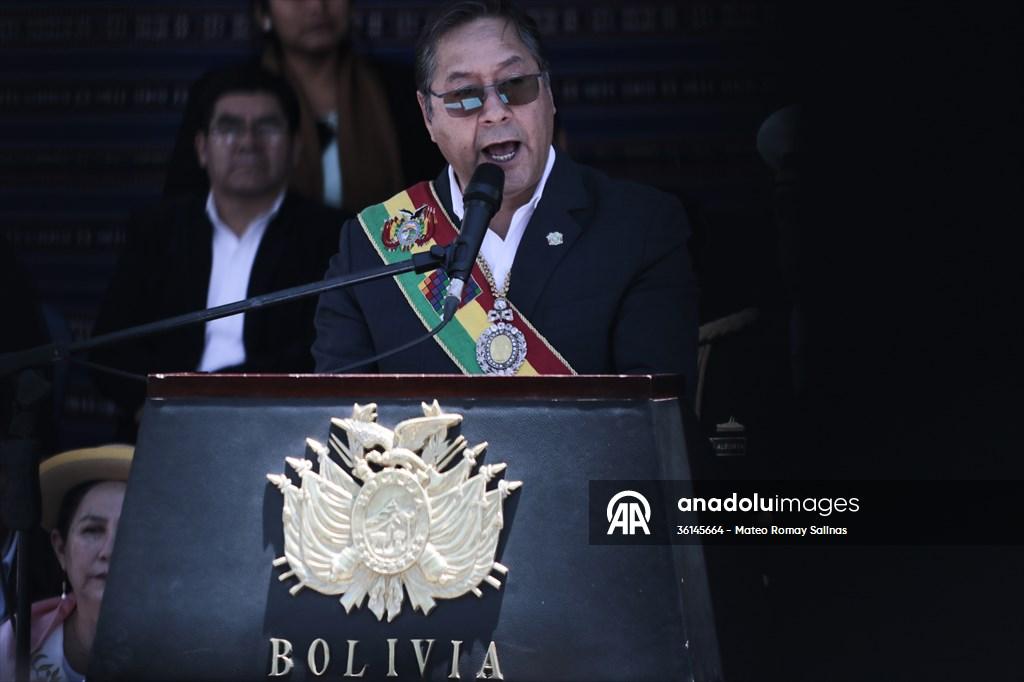
Former Bolivian President Luis Arce Catacora (Anadolu Agency)
The administration of Luis Arce, which took office in 2020, failed to sustain the previous economic successes, leaving Bolivia facing its worst economic crisis in 42 years. The primary causes and indicators of the crisis are as follows:
Parallel to the economic collapse, internal power struggles emerged within the ruling MAS. The leadership contest between former president Evo Morales and incumbent president Luis Arce fractured the party. After courts blocked Morales’s bid for re-election and Arce announced he would not run, the left-wing voter base was left without a viable alternative.
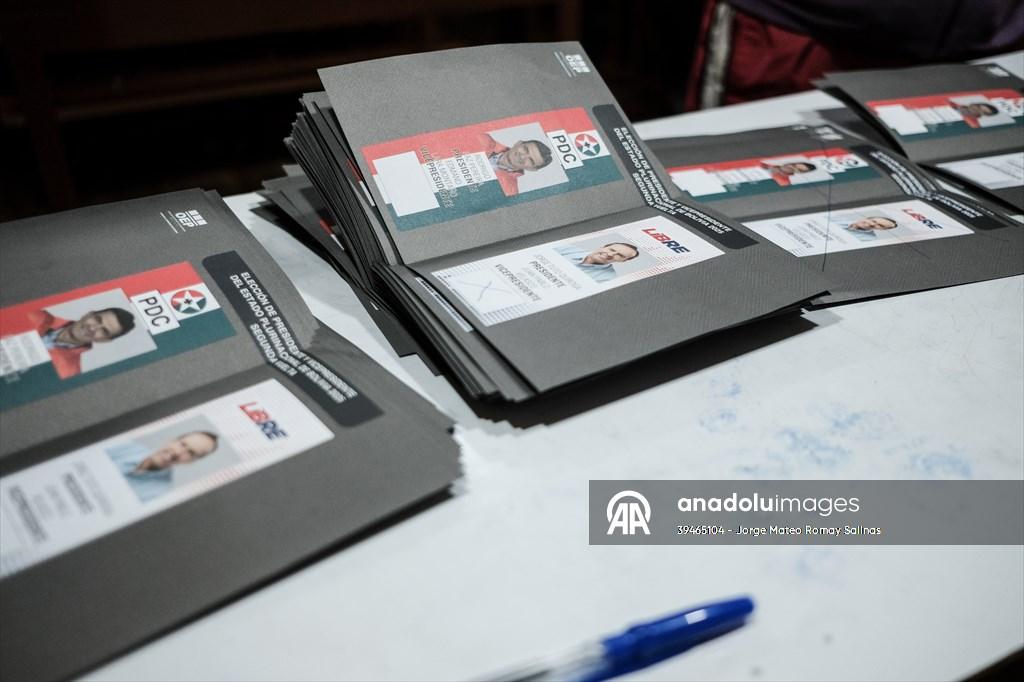
Bolivia 2025 General Elections (Anadolu Agency)
On Sunday, 17 August 2025, Bolivia went to the polls to elect its president, vice president, 26 senators, and 130 members of the Chamber of Deputies. Approximately eight million registered voters participated. To address past allegations of electoral irregularities, the Supreme Electoral Tribunal (TSE) implemented a new digital security system. Under this system, vote-counting records from polling stations were photographed and transmitted directly to a central database. The process was monitored by international bodies including the European Union (EU) and the Organization of American States (OAS). The main contenders in the first round were:
None of the candidates achieved the legally required majority in the first round, marking the first time in Bolivian political history that a presidential election proceeded to a second round.
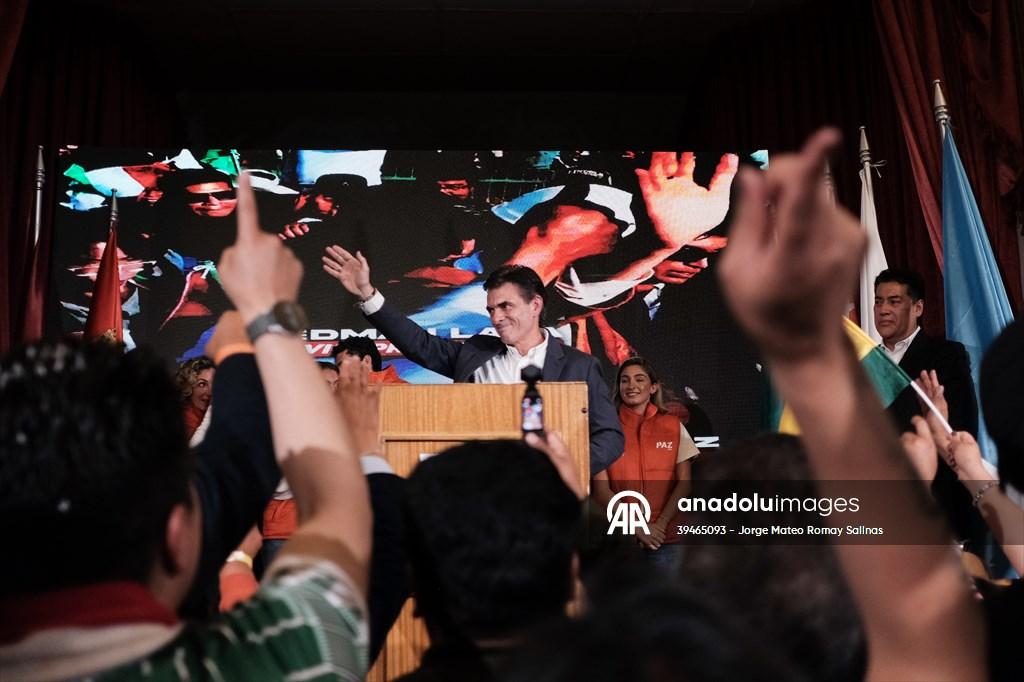
Paz Pereira’s electoral victory (Anadolu Agency)
The second-round presidential election held on 19 October 2025 pitted two right-leaning candidates against each other: center-right Rodrigo Paz Pereira and neoliberal former interim president Jorge “Tuto” Quiroga. This vote, in which left-wing parties were excluded, formally marked the end of the Movement for Socialism’s (MAS) twenty-year political hegemony in the country. According to official data released by the Supreme Electoral Tribunal (TSE), Rodrigo Paz Pereira of the Christian Democratic Party (PDC) won 54.53 percent of valid votes and was elected Bolivia’s new president. His rival, Jorge “Tuto” Quiroga of the Alliance for Freedom and Democracy, received 45.43 percent of the vote, finishing in second place.
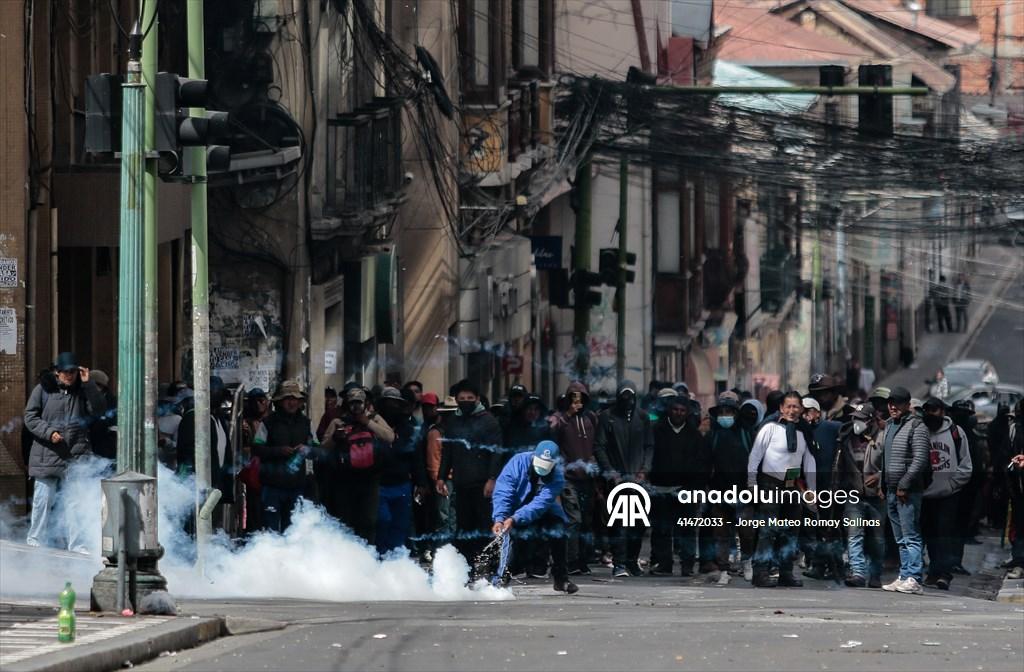
Anti-government protest in Bolivia (Anadolu Agency)
Following Rodrigo Paz Pereira’s implementation of free-market reforms and economic measures, large-scale social movements emerged under the leadership of the left-wing opposition and trade unions. As fuel shortages, high inflation, and economic instability persisted, opposition groups and indigenous organizations took to the streets. During this period, protesters blocked strategic highways, particularly around the capital La Paz, severely disrupting transportation and logistics. Demonstrators argued that the economic crisis had deepened and demanded the resignation of the Paz government and early elections.
In response to escalating social unrest and street protests, President Rodrigo Paz Pereira undertook a radical cabinet reshuffle to resolve the executive crisis and alleviate pressure on his government. President Paz dismissed six cabinet members, including the Ministers of Economy and Public Finance, Hydrocarbons, and Interior, and appointed new officials to these positions.
Speaking at the swearing-in ceremony of the new ministers, President Paz stated that the changes were made “to preserve national peace, remove road blockades, and build a foundation for dialogue.” However, trade unions and opposition movements announced they would continue nationwide protests and road blockades until their structural demands were met and lasting economic stability was achieved.
Al Jazeera. "A Political Shift Ahead: What to Know About Bolivia’s Presidential Election." Accessed June 2, 2026. https://www.aljazeera.com/news/2025/8/15/a-political-shift-ahead-what-to-know-about-bolivias-presidential-election
Al Jazeera. "Bolivia Elects Centre-Right Rodrigo Paz as President." Accessed June 2, 2026. https://www.aljazeera.com/news/2025/10/20/bolivia-elects-centre-right-rodrigo-paz-as-president
Al Jazeera. "Crisis-Hit Bolivia to Vote in Run-Off Election, Ending Decades of Socialism." Accessed June 2, 2026. https://www.aljazeera.com/news/2025/10/19/crisis-hit-bolivia-to-vote-in-run-off-election-ending-decades-of-socialism
Anadolu Ajansı. "Bolivya'da Hükümetin İstifası Talebiyle Başlayan Protestolar Sürüyor." Accessed June 2, 2026. https://www.aa.com.tr/tr/dunya/bolivyada-hukumetin-istifasi-talebiyle-baslayan-protestolar-suruyor/3947704
Anadolu Ajansı. "Bolivya'da Seçimleri Kazanan Yeni Devlet Başkanı Paz Yemin Etti." Accessed June 2, 2026. https://www.aa.com.tr/tr/dunya/bolivyada-secimleri-kazanan-yeni-devlet-baskani-paz-yemin-etti/3738782
Anadolu Ajansı. "Hükümet Karşıtı Protestoların Sürdüğü Bolivya'da Devlet Başkanı Kabinede Değişikliğe Gitti." Accessed June 2, 2026. https://www.aa.com.tr/tr/dunya/hukumet-karsiti-protestolarin-surdugu-bolivyada-devlet-baskani-kabinede-degisiklige-gitti/3945366
BBC News. "Bolivia’s Right-Wing Turn: New Government Faces Immediate Protests." Accessed June 2, 2026. https://www.bbc.com/news/articles/crmx7nw24d1o
Politika Akademisi. "2025 Bolivya Seçimleri." Accessed June 2, 2026. https://politikaakademisi.org/2025/08/17/2025-bolivya-secimleri/

Conceptual Framework
Historical Background
Electoral System
Before the 2025 Elections
The 2025 General Elections
Second Round of the Election
Post-Election Period