


This article was automatically translated from the original Turkish version.
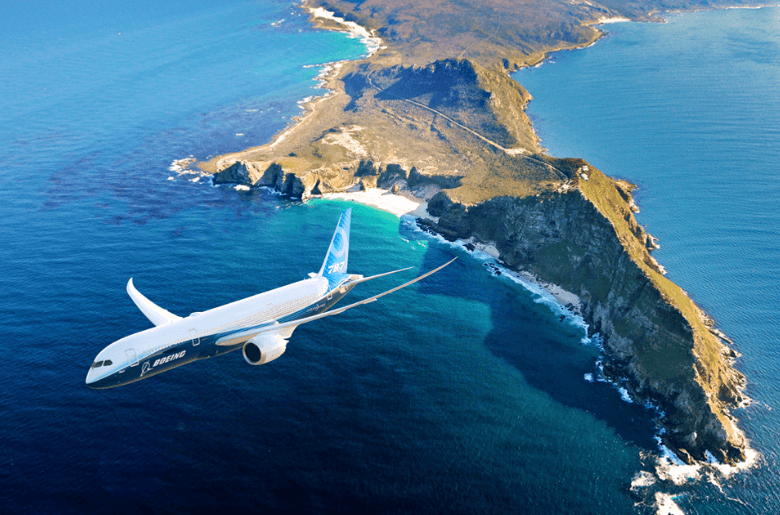
Boeing 787
Producer | Boeing Commercial Airplanes | ||||||||
|---|---|---|---|---|---|---|---|---|---|
First Flight | December 15, 2009 | ||||||||
Entry into Service | October 26, 2011 (All Nippon Airways – ANA) | ||||||||
Aircraft Type | Wide-body, twin-engine, long-range passenger aircraft | ||||||||
Models | 787-8, 787-9, 787-10 | ||||||||
Airframe Structure | 50 percent composite (carbon fiber), 20 percent aluminum, 15 percent titanium | ||||||||
Future Plans | Production increase until 2026, sustainable biofuel compatibility, digital systems | ||||||||
Quality Developments | Production inspections and FAA investigations in 2024, quality improvement efforts | ||||||||
Competitors | Airbus A350 XWB | ||||||||
Sustainability | 20 percent less fuel consumption, carbon emission reduction target | ||||||||
Boeing 787 Dreamliner is a twin-engine long-range wide-body passenger aircraft developed by American aircraft manufacturer Boeing and introduced into service in 2011. Since its entry into service in 2011 the 787 Dreamliner family has operated more than 2,000 routes and enabled the opening of over 370 new point-to-point routes.
The technical specifications of the Boeing 787’s main variants the 787-8 787-9 and 787-10 are as follows:

Boeing 787 (pixabay)
The Boeing 787 achieves approximately 20 percent lower fuel consumption due to its extensive use of advanced composite materials. The aircrafts fuselage is composed of 50 percent carbon fiber reinforced plastic and other composite materials. This reduces maintenance intervals increasing aircraft availability and cost efficiency for airlines.
The cockpit is equipped with digital technologies featuring large flat-panel displays and integrated systems that enhance pilot situational awareness. The Electronic Flight Bag (EFB) reduces paper usage and improves operational efficiency. The 787s noise footprint is up to 60 percent smaller than that of the aircraft it replaces and acoustically treated aerodynamic surfaces make it quieter for surrounding communities.
While maintaining a high degree of commonality with other Boeing aircraft new technologies have been integrated. All familiar Boeing controls displays and procedures support shorter transition times for pilots moving from other members of the Boeing family to the 787 enabling efficient Mixed Fleet Operations.

Another view of the Boeing 787 (pixabay)
The aircrafts production process relies on a global supply chain. This structure involves specialized component manufacturing by high-tech firms in different countries with final assembly taking place in the United States.
Major components such as the fuselage wings and engine parts are manufactured in countries including Japan Italy South Korea the United Kingdom and Australia. These components are transported to Boeing’s facilities in Everett Washington and North Charleston South Carolina for final assembly. To facilitate this process Boeing uses a specially designed wide-body cargo aircraft called the Boeing Dreamlifter.
At the final assembly line components are joined using robotic systems and digital manufacturing technologies. Boeing employs assembly processes that enable faster production with fewer parts compared to traditional manufacturing methods. This improves efficiency both in terms of cost and time.
Boeing 787. Accessed April 16, 2025.
Boeing 787. Accessed April 16, 2025.
Boeing. "#Dreamliner." Boeing.com. Accessed April 16, 2025.
Boeing. "787 Dreamliner By Design." Boeing.com. Accessed April 16, 2025.
Boeing. "787 Dreamliner." Boeing.com. Accessed April 16, 2025.
Boeing. "Quality Information." Boeing.com. Accessed April 16, 2025.
Boeing. *Innovation Quarterly – Q3 2024*. "787 Dreamliner Difference." Accessed April 16, 2025.https://www.boeing.com/content/dam/boeing/boeingdotcom/features/innovation-quarterly/2024/IQ-2024-Q3-full.pdf
Yahya, Youssef. "Boeing 787 Dreamliner Üretimini Genişletmek İçin 1 Milyar Dolar Yatırım Yapacak." *Aviation For Aviators.com*, December 14, 2024. Accessed April 16, 2025.https://aviationforaviators.com/2024/12/14/boeing-to-invest-1-billion-to-expand-its-787-dreamliner-production/

Boeing 787
Producer | Boeing Commercial Airplanes | ||||||||
|---|---|---|---|---|---|---|---|---|---|
First Flight | December 15, 2009 | ||||||||
Entry into Service | October 26, 2011 (All Nippon Airways – ANA) | ||||||||
Aircraft Type | Wide-body, twin-engine, long-range passenger aircraft | ||||||||
Models | 787-8, 787-9, 787-10 | ||||||||
Airframe Structure | 50 percent composite (carbon fiber), 20 percent aluminum, 15 percent titanium | ||||||||
Future Plans | Production increase until 2026, sustainable biofuel compatibility, digital systems | ||||||||
Quality Developments | Production inspections and FAA investigations in 2024, quality improvement efforts | ||||||||
Competitors | Airbus A350 XWB | ||||||||
Sustainability | 20 percent less fuel consumption, carbon emission reduction target | ||||||||
No Discussion Added Yet
Start discussion for "Boeing 787 Dreamliner" article
Technical Specifications
Design and Innovations
Manufacturing Process