

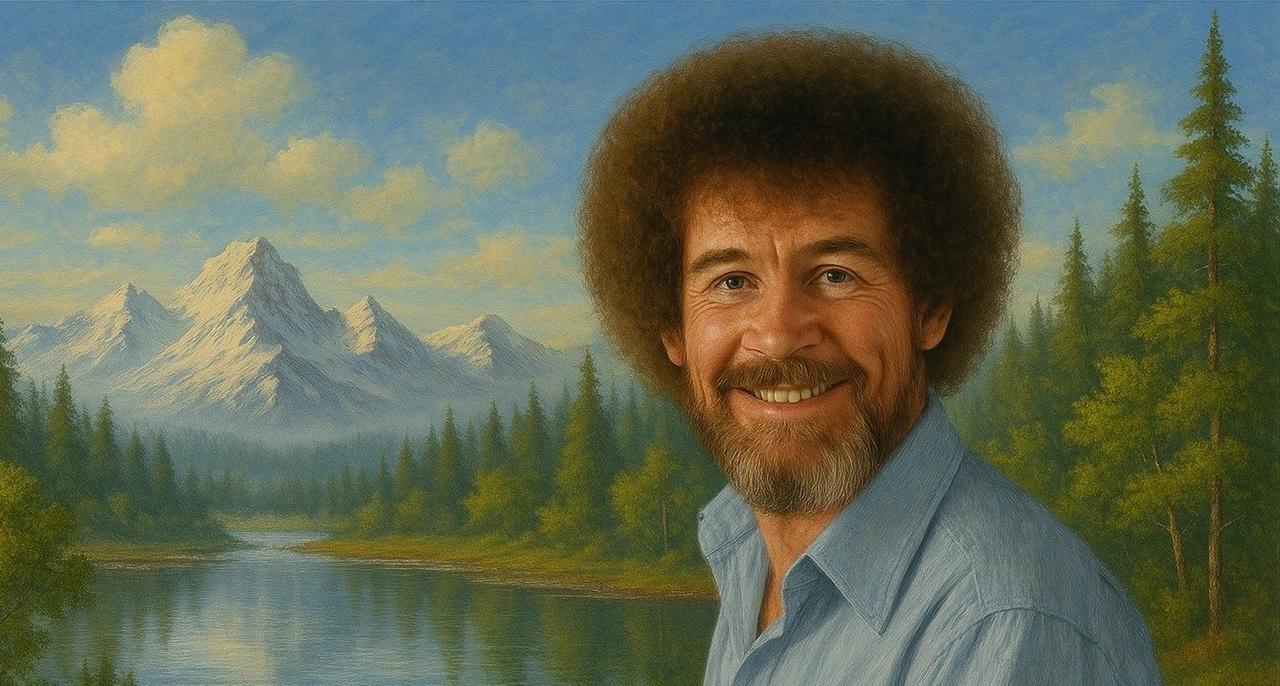
+1 More

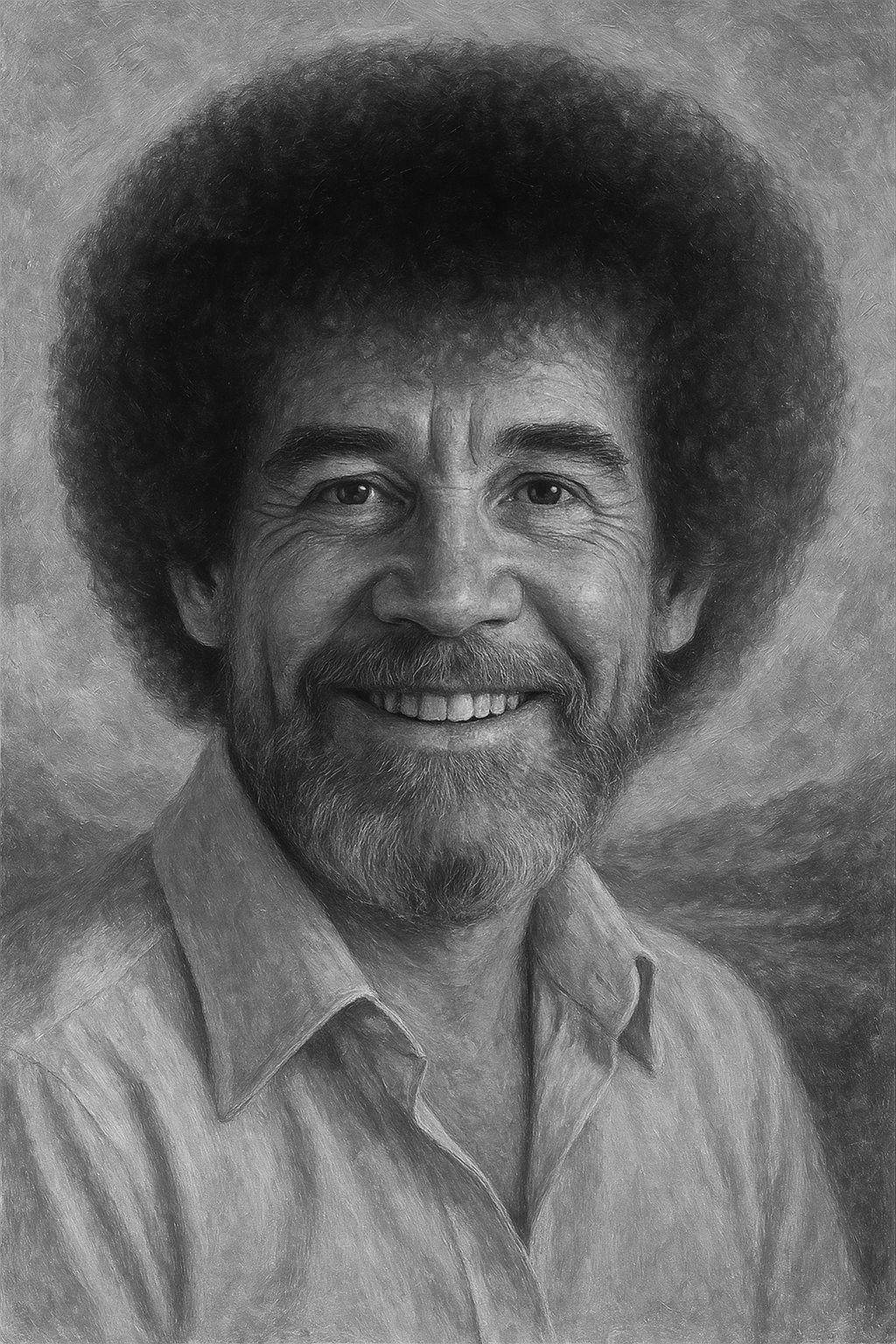
Bob Ross
Profession | American Painter Television Host and Art Educator | ||||||||
|---|---|---|---|---|---|---|---|---|---|
Full Name | Robert Norman Ross | ||||||||
Birth | 29 October 1942 Daytona Beach, Florida/USA | ||||||||
Death | 4 July 1995 New Smyrna Beach, Florida/USA | ||||||||
Child | Steven Ross | ||||||||
Bob Ross was an American painter and educator. His program landscape paintings using the wet-on-wet technique. The program supported the practical and widespread use of painting techniques by presenting methods that could be applied in a short time.
Robert Norman Ross, better known as Bob Ross, was born on 29 October 1942 in Daytona Beach, Florida. His father Jack Ross was a carpenter and his mother Ollie Ross worked as a waitress. Ross spent his childhood in Orlando, Florida and showed an early interest in injured animals. Animal lover that he was, he cared for various creatures such as armadillos, snakes, alligators and squirrels. One of these animals, a squirrel named Peapod, later appeared in his television programs. After dropping out of high school in the ninth grade, he worked as a carpenter with his father; however, he lost part of the index finger on his left hand due to an accident. At age 18, he joined the US Air Force and served as a medical records technician.
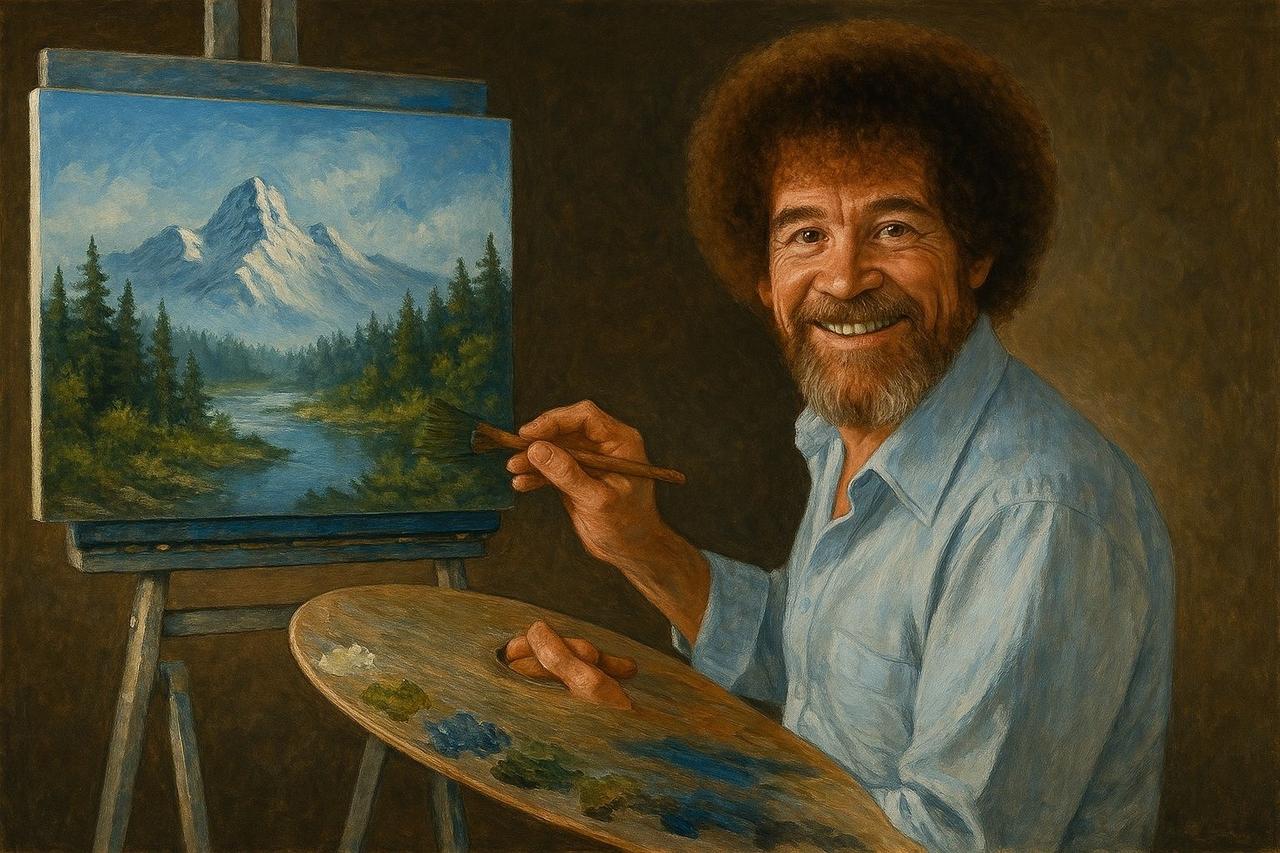
Bob Ross (Generated by Artificial Intelligence.)
During his service in the US Air Force, Ross became acquainted with the natural beauty of Alaska at the Eielson Air Force Base. His first painting lessons at the USO Club in Anchorage laid the foundation for his interest in art. In Alaska, he earned extra income by painting Alaskan landscapes on gold panning pans. During his 20-year military service in Alaska, he strengthened his bond with nature. The snow-covered mountains and lakes around Fairbanks became the primary source of landscape elements frequently featured in his art. During this period, his interest in the wet-on-wet (alla prima) technique deepened. In his artistic development, he was influenced by the teachings of painter William Alexander, whom he regarded as an inspiration, and he refined the technique with his own interpretation.
After retiring from the Air Force in 1981, Ross focused on his painting career. In 1982, he co-founded Bob Ross Inc. with Annette and Walt Kowalski and began offering painting lessons. In 1983, his television program half an hour, Ross taught viewers how to create landscape paintings. He used his own distinctive expressions such as “happy little trees” and “happy little accidents” to make art accessible to everyone. The phrase “We don't make mistakes, just happy little accidents.” conveyed the idea that so-called “mistakes” could become creative opportunities. He used this language to make the painting process less intimidating and more free. As a result, this phrase became a symbol of his teaching style and philosophy. Ross’s calm and encouraging manner inspired many people who wanted to learn painting. Thanks to the program’s success, he created a broad range of educational materials including painting supplies, books and instructional videos.
Ross’s art is notable not only for its technique but also for its pedagogical approach. According to Walt Hickey’s study A Statistical Analysis of the Work of Bob Ross, Ross’s works were structurally and thematically highly consistent. In 91 percent of the 381 paintings across his episodes, a tree was always followed by another “friend” tree. Similarly, at least one “almighty mountain” appeared in 39 percent of the paintings, “happy clouds” in 44 percent, a lake in 34 percent, and a river or stream in 33 percent. Eighteen percent of the paintings included a cabin, 35 percent of which were located beside a lake and 40 percent on snow-covered ground.
Diagnosed with lymphoma in the early 1990s, Ross died on 4 July 1995 in New Smyrna Beach, Florida at the age of 52. In accordance with his will, the majority of his artworks were donated to PBS stations and used in their fundraising events.
Bob Ross’s art and teaching methods continued to influence audiences after his death. Re-runs of his program on PBS stations, as well as internet and social media platforms, introduced his work to new generations. Bob Ross Inc. continued producing painting supplies and educational products. Moreover, through experiences such as museums and experiences like “The Bob Ross Experience,” the atmosphere created by his brushstrokes was brought to life. The 2021 documentary day light to different aspects of the artist’s life. At the same time, Ross’s goal of making art accessible to everyone remains one of the important factors sustaining admiration for his art. These influences form the foundation of Ross’s impression on society and have ensured the continuity of his legacy to the present day.
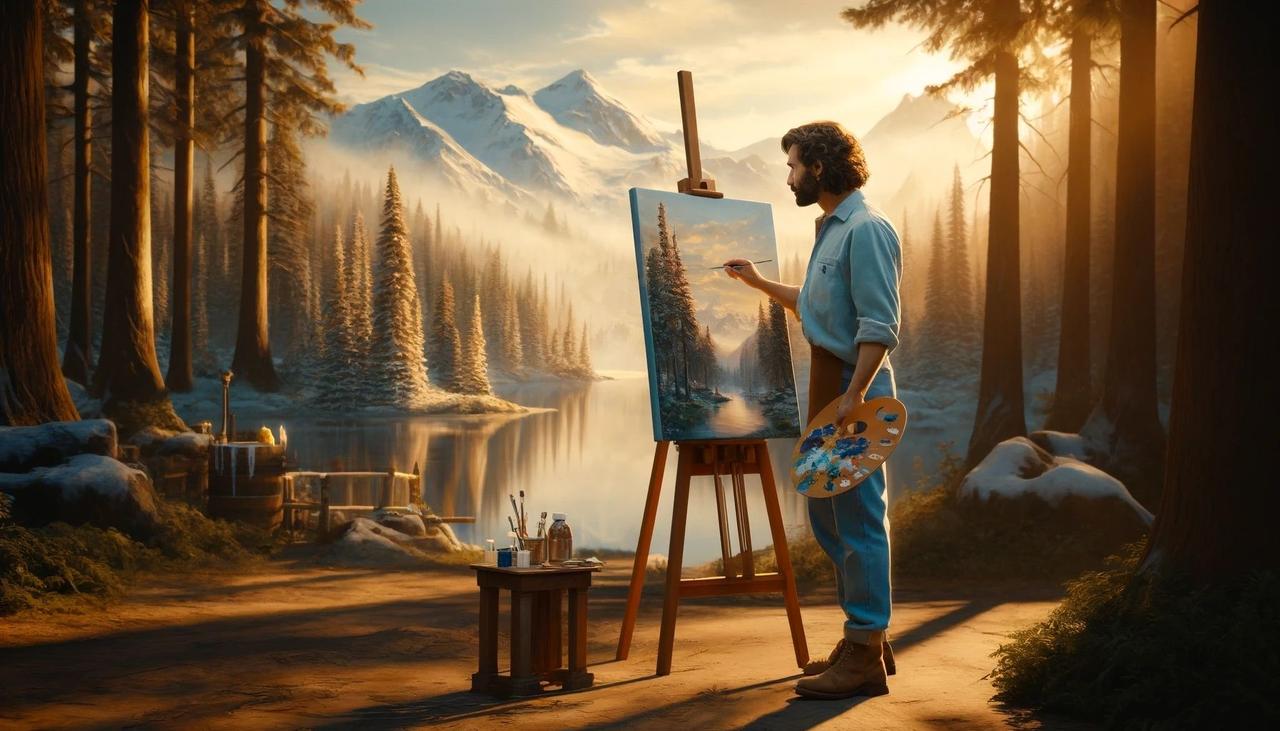
Bob Ross (Generated by Artificial Intelligence.)
Bob Ross. "The Bob Ross Story." Experience Bob Ross Inc. Accessed April 6, 2025.https://experience.bobross.com/the-bob-ross-experience/
EBSCO. "Bob Ross." Accessed April 6, 2025.https://www.ebsco.com/research-starters/history/bob-ross
Hickey, Walt. "A Statistical Analysis of the Work of Bob Ross." FiveThirtyEight. Accessed April 6, 2025.https://fivethirtyeight.com/features/a-statistical-analysis-of-the-work-of-bob-ross/
PBS. Bob Ross: The Happy Painter documentary. Accessed April 7.
PBS. The Joy of Painting (program archive). 1983–1994. Accessed April 7.

Bob Ross
Profession | American Painter Television Host and Art Educator | ||||||||
|---|---|---|---|---|---|---|---|---|---|
Full Name | Robert Norman Ross | ||||||||
Birth | 29 October 1942 Daytona Beach, Florida/USA | ||||||||
Death | 4 July 1995 New Smyrna Beach, Florida/USA | ||||||||
Child | Steven Ross | ||||||||
Early Life
Artistic Development
Television Career
Teaching Methods
Legacy and Influence