


This article was automatically translated from the original Turkish version.
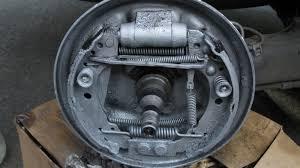
Bell Brake
System Type | Closed-Type Friction Brake | ||||||||
|---|---|---|---|---|---|---|---|---|---|
Main Component(s) | Drum Springs Cylinder Shoe | ||||||||
Working Mechanism | Shoes Actuated by Hydraulic Pressure | ||||||||
Heat Resistance | Low-Medium | ||||||||
Application Area(s) | Parking Brake Systems Agricultural Machinery Rear Axles | ||||||||
The drum brake system is a mechanical system that generates friction by pushing brake shoes against the rotating inner surface of a drum attached to the wheel, thereby slowing or stopping the vehicle. It is commonly used on the rear wheels of vehicles, integrated with the parking brake mechanism, to provide safe parking functionality.
In this system, a hollow, cylindrical component called the drum rotates with the wheel hub. When braking is applied, the hydraulic wheel cylinder expands the brake shoes outward against the inner surface of the drum, creating friction that slows or stops the vehicle. In this process, kinetic energy is converted into thermal energy.
In a single drum brake, components such as the drum, brake shoes, wheel cylinder, and parking brake lever function together as a unified assembly. Pressure from the hydraulic brake system actuates the wheel cylinder pistons to move the shoes; when the parking brake lever is engaged, a manual mechanical mechanism activates.
The following signs indicate the need for maintenance of a drum brake system:
During regular maintenance, the drum should be removed to measure shoe thickness, the wheel cylinder pistons should be inspected, and the brake fluid level and quality should be checked. If corrosion is present, cleaning or component replacement should be performed.
Milli Eğitim Bakanlığı (MEGEP). *Fren Sistemleri*. Ankara: MEB Yayınları, 2013. Accessed June 17, 2025. https://megep.meb.gov.tr/mte_program_modul/moduller_pdf/Fren%20Sistemleri.pdf.

Bell Brake
System Type | Closed-Type Friction Brake | ||||||||
|---|---|---|---|---|---|---|---|---|---|
Main Component(s) | Drum Springs Cylinder Shoe | ||||||||
Working Mechanism | Shoes Actuated by Hydraulic Pressure | ||||||||
Heat Resistance | Low-Medium | ||||||||
Application Area(s) | Parking Brake Systems Agricultural Machinery Rear Axles | ||||||||
Structure and Operating Principle
Characteristics and Applications
Maintenance and Failure Indicators