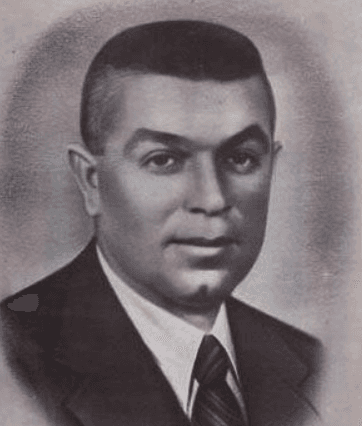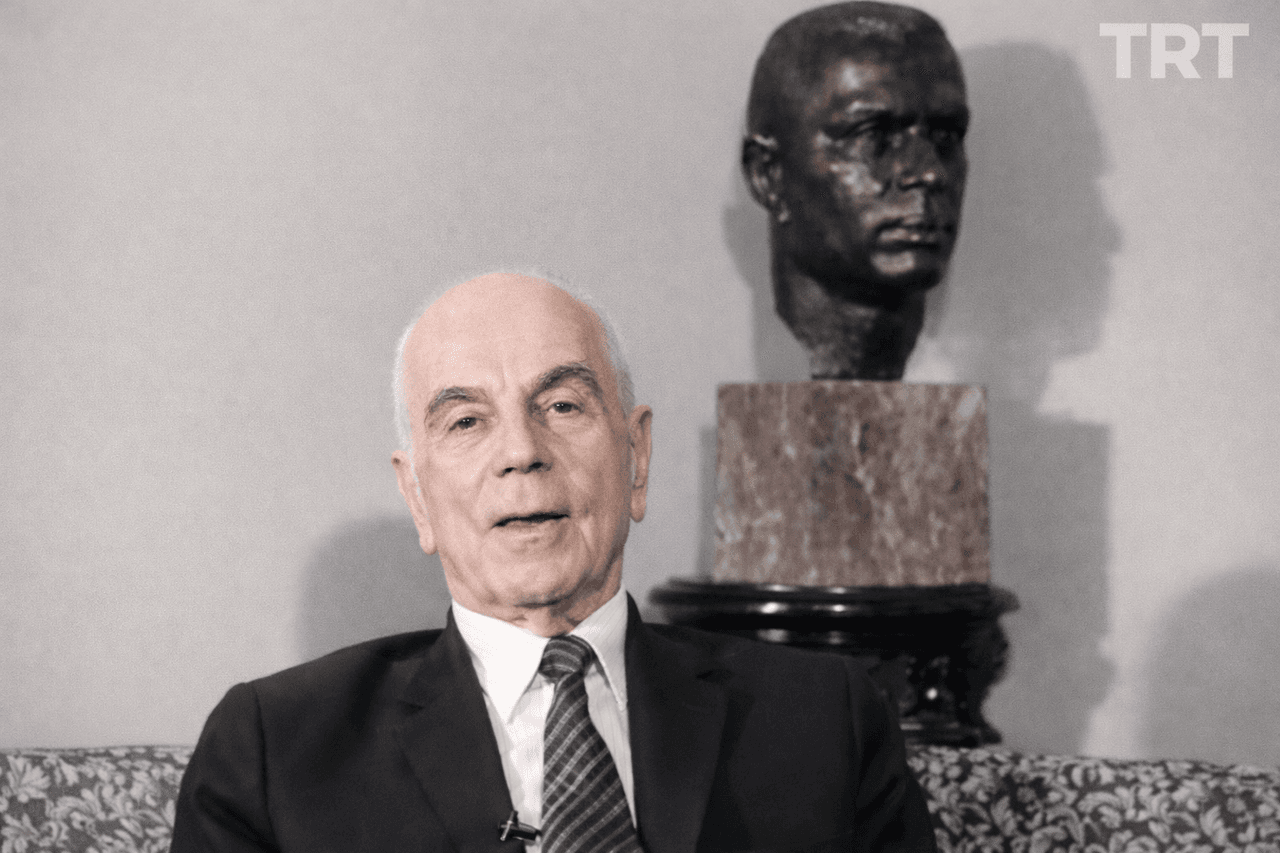
+1 More

Death | 19 May 1986, İzmir | ||||||||
|---|---|---|---|---|---|---|---|---|---|
Birth | 16 January 1893, Buldan (Denizli) | ||||||||
Profession(s) | Politician Physician | ||||||||
Known Works | Dr. Behçet Uz Children's Hospital First Five-Year National Health Plan | ||||||||
Field | Child health, Public health | ||||||||
Dr. Behçet Uz (1893–1986) holds a prominent place in Turkish medical history as a physician, politician, and local administrator who played a key role in shaping Turkey’s early republican health policies. He is recognized for his work in pediatric medicine, public health initiatives, and the development of health organization programs. During his medical practice in İzmir, he focused particularly on tuberculosis control and child health; he also served for many years as Mayor of İzmir, significantly contributing to the city’s urban and social infrastructure development. In his political career, Uz held positions as a member of parliament, Minister of Trade, and twice as Minister of Health. He formulated the National Health Plan, which laid out a comprehensive program for organizing health services in Türkiye.
Behçet Uz was born on 16 January 1893 in the Buldan district of Denizli. His father, Salih Efendi, was the mufti of Buldan, and his mother was Ayşe Hanım. His family belonged to a long-established local lineage, and his grandfather had also served as a teacher in Buldan. His father, Salih Efendi, received a medrese education and held the position of mufti for many years.
Uz spent his childhood in Buldan. His family environment and educational atmosphere strongly influenced his early commitment to learning. Thanks to his family’s emphasis on education, he began a regular academic life from a young age.
Behçet Uz began his primary education in Buldan. In his early years, he attended the neighborhood school preferred by his family; however, he later chose to transfer to a school implementing modern educational methods, where he continued his studies. This decision is regarded as an early indication of his orientation toward modern educational ideals.
After completing primary education, he finished his secondary education in Buldan. He was then admitted as a scholarship student to İzmir İdadisi. The years he spent in İzmir were formative for both his personal development and his choice of profession. During this period, he closely followed the political and social developments of the time.
After completing high school, Uz enrolled at Mekteb-i Tıbbiye-i Adliye-i Şahane in Istanbul to pursue medical education. There, he studied under prominent physicians and academics of the era, including Besim Ömer, Akil Muhtar, Adnan Adıvar, and Kadri Reşit. The scientific approaches and social perspectives of these instructors significantly shaped Uz’s intellectual worldview.
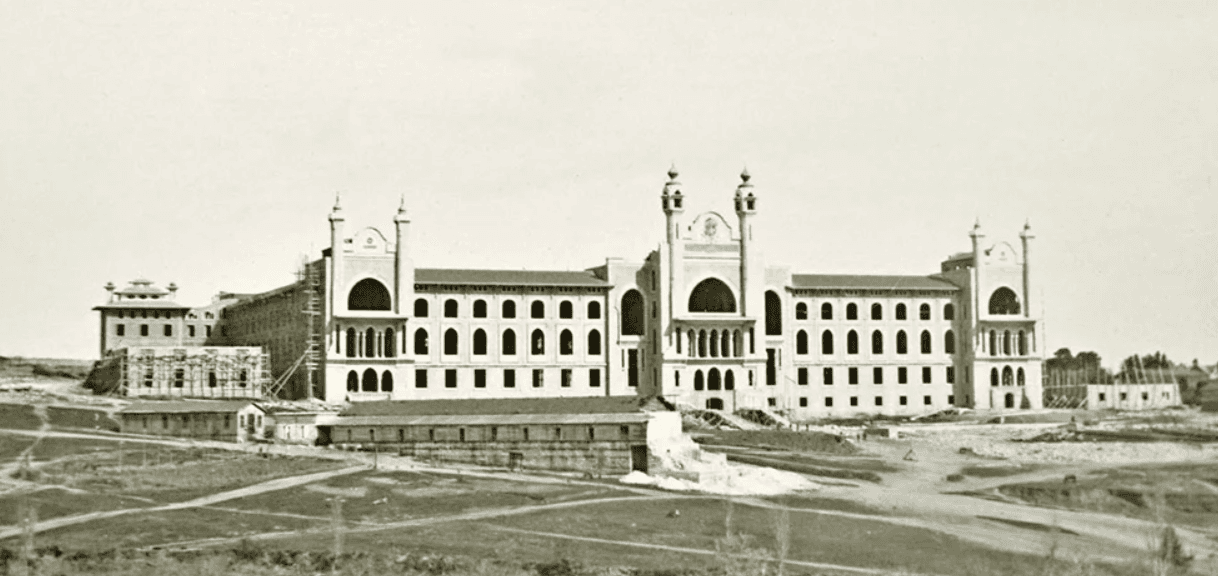
Mekteb-i Tıbbiye-yi-Şâhâne(Türk Maarif Ansiklopedisi)
His years at medical school coincided with the Balkan Wars and the First World War. Due to wartime conditions, students were required to serve in various health services, which enabled Uz to gain practical experience at a young age. Upon completing his medical education, Behçet Uz graduated on 18 November 1918 and began his career as a physician.
After graduating from medical school, Behçet Uz began academic and clinical work in Istanbul. In 1919, he served as assistant lecturer in the pediatric clinic of the medical faculty under Kadri Reşit Paşa. During the same period, he worked at Şişli Etfal Hospital, gaining experience in child health.
These years laid the foundation for his specialization in pediatric medicine. As a young physician, he focused particularly on clinical work in pediatrics and quickly gained recognition within professional circles.
After working in Istanbul for a period, Behçet Uz settled in İzmir and began practicing as a pediatrician. He worked in the pediatric department of İzmir Memleket Hospital and soon assumed leadership of the department. During the same period, he also provided medical services at institutions such as the French Hospital, the Child Welfare Organization, and the Aydın Şimendifer Company.
During this phase of his career, Uz did not limit himself to clinical work; he also participated in social assistance initiatives. He contributed to health programs offering free or low-cost services to financially disadvantaged patients, thereby improving access to healthcare for underprivileged communities.
In the early years of the Republic, tuberculosis was a major public health issue in Türkiye, and combating it became a central part of Behçet Uz’s work. In the early 1920s, he joined efforts to fight tuberculosis in İzmir and played a key role in founding the İzmir Society for the Fight Against Tuberculosis alongside colleagues.
Through this society, the goals were to raise public awareness about tuberculosis, treat patients, and promote preventive health measures. Uz served in leadership roles within the society for many years and contributed significantly to the development of tuberculosis control programs.
During the same period, he wrote articles on public health issues to promote health awareness through publications.
Behçet Uz’s medical and social activities in İzmir quickly earned him recognition in the city. During this period, he also became involved in local governance and was elected to the İzmir Municipal Council in 1930. Due to his close attention to the city’s problems and his solution-oriented approach, he was soon appointed mayor.
Behçet Uz became Mayor of İzmir in 1931 and held this position for approximately ten years. During his mayoralty, he initiated significant projects in urban planning, infrastructure, and public health. Various programs were launched to reorganize İzmir, which still bore the effects of war and occupation in the early years of the Republic, and to transform it into a modern city.
During Behçet Uz’s tenure as mayor, a comprehensive urban development process was initiated in İzmir. The main objectives of these efforts were to resolve the city’s infrastructure problems, open new roads, and modernize urban planning.
During this period, wide avenues and boulevards were constructed, and parks, children’s playgrounds, and markets were established in various neighborhoods. Efforts were also made to drain swamps and improve sanitary conditions. These measures were important not only for urban development but also for safeguarding public health.
One notable aspect of Behçet Uz’s municipal administration was his practice of examining urban problems on-site to develop practical solutions. Various projects were prepared to ensure the systematic implementation of municipal services, and a structured approach to city management was adopted.
One of the significant projects undertaken during Behçet Uz’s mayoralty was the establishment of the İzmir International Fair. The area known as Kültürpark, built on land largely destroyed by the 1922 İzmir fire, became the center for hosting the fair.
Opened in 1936, the İzmir International Fair rapidly became one of Türkiye’s most important commercial and cultural events. It contributed to the revitalization of economic activity and helped establish İzmir as an internationally recognized city.
This initiative is also regarded as consistent with the economic and cultural policies of the Republican era.
One of the most important health projects undertaken during Behçet Uz’s mayoralty was the establishment of a children’s hospital in İzmir. Due to the inadequacy of healthcare services for children in the city, he initiated efforts to create such an institution.
Hastane Tarihi(Dr. Behçet Uz Children’s Hospital)
The foundation of the hospital was laid on 23 April 1938, using donations and local support. Despite the economic conditions of the time, construction continued and the hospital was completed and opened to the public on 2 April 1947.
Initially with a capacity of 150 beds, the hospital was later expanded and became one of the most important children’s hospitals in the region. The institution eventually came to be known by his name and has continued to operate as one of Türkiye’s key healthcare institutions in child health.
Behçet Uz’s work in local administration paved the way for his entry into national politics. In the 1941 by-elections, he was elected as a member of parliament for Denizli to the Grand National Assembly of Türkiye, marking the beginning of his political career. During his parliamentary term, he held various positions in successive governments. In the government led by Şükrü Saraçoğlu, he served as Minister of Trade from 9 July 1942 to 9 March 1943. During this tenure, he carried out various initiatives related to economic and commercial affairs. Re-elected as a member of parliament in the 1946 elections, Behçet Uz continued his political activities. During this period, he worked on both health policy and public administration.
Behçet Uz assumed office as Minister of Health and Social Assistance on 7 August 1946. He held this position for approximately two years in the governments of Recep Peker and Hasan Saka.
During his ministry, efforts were made to develop health services in a planned and systematic manner across Türkiye. Various programs were prepared to expand health services nationwide and increase the number of health institutions. The goal was to extend healthcare access to broader segments of the population and strengthen the health infrastructure.
In 1953, Behçet Uz left the Republican People’s Party and joined the Democrat Party. He was re-elected to the Grand National Assembly of Türkiye as a deputy from İzmir in the general elections of 1954 and 1957. In the government of Adnan Menderes, formed on 17 May 1954, he was appointed Minister of Health and Social Assistance for the second time. He held this position until 9 December 1955.
During this period, new initiatives were launched to improve health services, and various plans and programs were developed to increase the number of health institutions and strengthen the health organization.
One of the most important issues addressed during Behçet Uz’s tenure as Minister of Health was the need to implement health services through a planned and comprehensive system. The First Ten-Year National Health Plan, prepared for this purpose, was a comprehensive program aimed at organizing health services in Türkiye. The plan sought to ensure balanced distribution of health services nationwide and the establishment of health institutions according to a defined framework. It proposed dividing Türkiye into health regions, establishing modern health facilities in each region, and increasing the number of health personnel.
The program included goals such as establishing a medical faculty in each health region, opening 500-bed fully equipped hospitals, and creating specialized hospitals for obstetrics and pediatrics. Additionally, psychiatric hospitals and other health institutions were planned as key components. The plan also encompassed not only curative services but also preventive healthcare. To this end, it proposed establishing health centers in rural areas and assigning teams of physicians, midwives, and health officers to operate them.
Although this comprehensive health plan was prepared, it was never enacted into law or fully implemented due to the political and administrative conditions of the time. Nevertheless, many of the ideas and recommendations it proposed had a lasting influence on the development of health services in Türkiye in subsequent years.
During his second term as Minister of Health, work continued on reforms to the health system. A new study titled Studies on the National Health Program and the Health Bank was prepared, proposing recommendations on the financing and organization of health services.
This program aimed to extend health services to broader segments of the population and to unify health institutions under a single administrative structure. It also proposed establishing a health bank to finance health expenditures and developing health insurance schemes.
The program further proposed regulations for the production and distribution of medical products such as drugs, sera, and vaccines; incentives for food production targeting child nutrition; and improvements in the equipment of health institutions. The program and plans prepared by Behçet Uz are recognized as among the earliest initiatives in Türkiye aimed at managing health services through a planned system.
Behçet Uz is also known for his writings and publications on health issues, beyond his roles as a physician and administrator. He published various works on public health and tuberculosis control, contributing to public awareness on health matters.
One of his notable works is “How Does Tuberculosis Begin? What Are the Paths to Recovery?” In this book, he provided information on the causes of tuberculosis, its modes of transmission, and preventive methods. The book served as a public health guide aimed at raising awareness about tuberculosis control.
His other significant publications include the First Ten-Year National Health Plan and Studies on the National Health Program and the Health Bank, both of which remain important contributions to the field of health policy.
After the military intervention of 1960, Turkish political life underwent significant changes. Following this period, Behçet Uz withdrew from active political roles and spent most of his remaining years in İzmir.
After his political career, he led a quieter life but remained recognized as a distinguished figure known for his decades of experience in medicine and public health. During his years in İzmir, he continued to be remembered in public life for his health initiatives and the projects he implemented during his municipal administration.
Behçet Uz passed away in İzmir in 1986. His long-standing contributions in the fields of health, local administration, and politics significantly advanced the development of health services in Türkiye.
The Dr. Behçet Uz Children’s Diseases and Surgery Hospital, established through his initiatives, continues to operate as one of Türkiye’s key healthcare institutions in child health. Additionally, his health plans and policy recommendations are regarded as among the earliest efforts in Türkiye to develop health services through systematic planning. In these respects, Behçet Uz is recognized as one of the physicians and statesmen who contributed significantly to shaping health policy during the Republican era.
Ada, Turhan. “Tıp Tarihimizden Portreler: Dr. Behçet Uz (1893-1986).” *J Pediatr Inf* 18, no. 4 (2024): 263–268. Accessed March 9, 2026. https://www.tr.cocukenfeksiyondergisi.org/upload/documents/2024-04/2024-18-4-263-268.pdf
Demirel, Hüseyin. “Dr. Behçet Uz.” *SD (Sağlık Düşüncesi ve Tıp Kültürü Dergisi)*, no. 8 (2008): 100–101. Accessed March 9, 2026. https://www.medipol.edu.tr/sites/default/files/document/SD_Dergi_Sayi8-101-102.sayfalar_Huseyin_Demirel.pdf
Dr. Behçet Uz Children's Hospital. “İzmir Dr. Behçet Uz Children's Diseases and Surgery Education and Research Hospital History.” YouTube. Accessed March 9, 2026. https://youtu.be/tKI2KGs6Oi4?si=XivNEEtikuVqXhQ1
Öztürk, Hülya. “Dr. Behçet Uz, İlk Çocuk Hastanesi ve ‘Verem Nasıl Başlar? Kurtuluş Yolları Nelerdir?’ Eseri Üzerine.” *Turkiye Klinikleri Journal of Medical Ethics, Law and History* 28, no. 3 (2020): 315–329. Accessed March 9, 2026. https://www.turkiyeklinikleri.com/article/tr-dr-behcet-uz-ilk-cocuk-hastanesi-ve-verem-nasil-baslar-kurtulus-yollari-nelerdir-eseri-uzerine-87666.html
Death | 19 May 1986, İzmir | ||||||||
|---|---|---|---|---|---|---|---|---|---|
Birth | 16 January 1893, Buldan (Denizli) | ||||||||
Profession(s) | Politician Physician | ||||||||
Known Works | Dr. Behçet Uz Children's Hospital First Five-Year National Health Plan | ||||||||
Field | Child health, Public health | ||||||||
Family, Childhood, and Education
Family and Childhood Years
Primary and Secondary Education
Medical Education at Mekteb-i Tıbbiye-i Adliye-i Şahane
Medical Career and Public Health Work
Beginning of Professional Life
Medical Activities in İzmir
Tuberculosis Control and Societal Activities
Mayorship of İzmir and Urban Development Activities
Term as Mayor of İzmir
Urban Development and Planning in İzmir
İzmir International Fair and Kültürpark
Establishment of Dr. Behçet Uz Children’s Hospital
Political Career and Ministerial Positions
Parliamentary Service and Ministry of Trade
First Term as Minister of Health
Second Term as Minister of Health
Health Policies and the National Health Plan
First Ten-Year National Health Plan
National Health Program and Health Reform Initiatives
Works, Later Years, and Death
Works and Publication Activities
Life After 1960
Death and Legacy