This article was automatically translated from the original Turkish version.
Registration Number | 507 | ||||||||
|---|---|---|---|---|---|---|---|---|---|
Registration Date | 20.07.2020 | ||||||||
Application Number | C2019/145 | ||||||||
Application Date | 10.10.2019 | ||||||||
Name of the Geographical Indication | Bayburt Honey | ||||||||
Product / Product Group(s) | Flower honey / Honey | ||||||||
Type of Geographical Indication | Certification mark | ||||||||
Applicant/Registrant(s) | Bayburt University | ||||||||
Address of the Registrant | Bayburt University Rectorate 69000 BAYBURT | ||||||||
Geographical Boundary | Bayburt Province | ||||||||
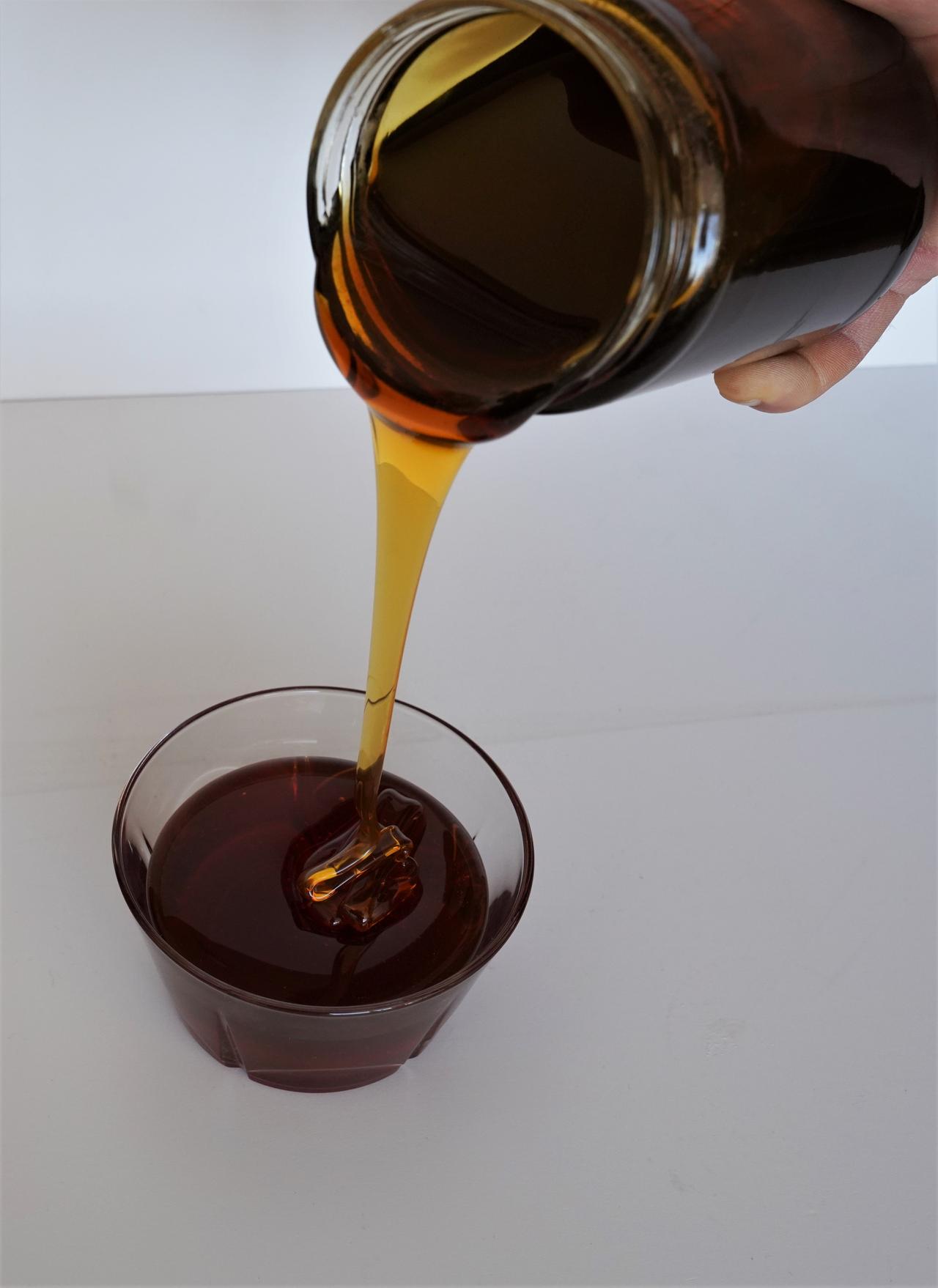
Bayburt honey is a floral honey variety unique to Bayburt Province in Türkiye and has been registered with a geographical indication mark. This honey typically appears pale yellow or greenish in color and has a clear, glossy appearance. It is distinguished by a mild burning sensation in the throat and a characteristic aroma derived from plants native to the region’s flora. Bayburt honey is produced by the Caucasian bee (Apis mellifera caucasica) and its hybrids, and is obtained from nectar-rich plants commonly found in the area, including geven, thyme, vetch, korunga, ballıbaba, and sage.
Bayburt honey may vary in color between pale yellow and greenish depending on seasonal conditions and the flower colors of the plants from which bees collect nectar. It generally has a clear and glossy appearance. This liquid honey tends to crystallize within two months at room temperature; this process can occur more rapidly under lower temperatures. Although the honey has a pleasant taste, it leaves a mild burning sensation in the throat. The tendency to crystallize is related to the honey’s moisture content and degree of ripening; its moisture level must be below 18%.
Bayburt honey is produced by the Caucasian bee (Apis mellifera caucasica) and its hybrids. These bees possess long tongues that enable them to extract nectar from deep-flowered plants. Due to their low tolerance for cold winter conditions, Caucasian bees are moved to warmer regions during winter months and returned to Bayburt Province in spring.
Bayburt Province has an average elevation of 1750 meters and features a transitional climate with a rich flora, making it highly suitable for beekeeping. The main nectar sources for bees in the region include clover, korunga, vetch, geven, thyme, sage, ballıbaba, acacia, and cowslip. Common pollen sources in production encompass numerous plant families such as Boraginaceae, Fabaceae, Asteraceae, Cannabaceae, Rosaceae, and Lamiaceae.
Beekeeping activities are conducted using a migratory method. Colonies are transported to warmer regions during winter and returned to Bayburt in spring. The number of colonies is increased through natural swarming; aging queen bees are replaced with newly acquired Caucasian or hybrid queens. The hives used are typically Langstroth-type hives made from pine wood.
Bees are fed dark syrup in early spring and late autumn, and bee bread during winter months. Spring feeding is carried out using dark and regular syrups made from a mixture of crystallized white sugar and water. Nectar flow begins at the beginning of July, at which point supers must be added to the hives. Honey harvesting takes place from mid-July onward from sealed combs and continues throughout August. Harvesting must be performed only from combs that are at least two-thirds sealed.
During harvesting, combs are placed in clean containers, covered, and transported to a filtration area. Sealed and uniform combs are processed as comb honey; other combs are extracted using centrifugal extractors and collected in stainless steel tanks. The honey is then stored to allow removal of pollen particles and air bubbles. In the final stage, it is packaged in glass jars or tin containers made of materials suitable for food contact.
Bayburt honey may only be exported outside the geographical region in specified quantities and packaging types. The product is typically sold in 500 ml and 1000 ml glass jars or 1–2 kg tin containers. Larger packages of 15–20 kg are not permitted for use outside the geographical boundary. On labeling, the term “Bayburt Balı” must be accompanied by the geographical indication emblem; if this is not present on the label, the term must be visibly displayed within the production facility.
The production of Bayburt honey is monitored by a six-member oversight body coordinated by Bayburt University. This body includes representatives from the Bayburt Provincial Directorate of Agriculture and Forestry, the Bayburt Beekeepers Union, Bayburt Municipality, Bayburt Chamber of Commerce and Industry, and Bayburt Chamber of Agriculture. Inspections are conducted at least three times per year and as needed.
Inspections occur in three phases: the first between March and June, the second between June and August, and the third during July and August. Criteria evaluated during inspections include the number of hives, bee breed, colony development, harvesting method, and physical properties of the honey. Additionally, producers are required to provide information to the Bayburt Beekeepers Union at the beginning of each season.
Turk Patent and Trademark Office. *Bayburt Balı*. Turk Patent and Trademark Office. Accessed July 17, 2025. https://ci.turkpatent.gov.tr/Files/GeographicalSigns/0369ee95-ea0d-4cc0-98cb-25379441f64d.pdf.
Turkish Patent and Trademark Office. "Bayburt Balı." Turkish Patent and Trademark Office. Accessed July 17, 2025. https://ci.turkpatent.gov.tr/cografi-isaretler/detay/1026.

Registration Number | 507 | ||||||||
|---|---|---|---|---|---|---|---|---|---|
Registration Date | 20.07.2020 | ||||||||
Application Number | C2019/145 | ||||||||
Application Date | 10.10.2019 | ||||||||
Name of the Geographical Indication | Bayburt Honey | ||||||||
Product / Product Group(s) | Flower honey / Honey | ||||||||
Type of Geographical Indication | Certification mark | ||||||||
Applicant/Registrant(s) | Bayburt University | ||||||||
Address of the Registrant | Bayburt University Rectorate 69000 BAYBURT | ||||||||
Geographical Boundary | Bayburt Province | ||||||||
Physical and Chemical Properties
Bee Breed and Floristic Characteristics
Production Process
Packaging and Market Distribution
Monitoring Process