


This article was automatically translated from the original Turkish version.
+2 More
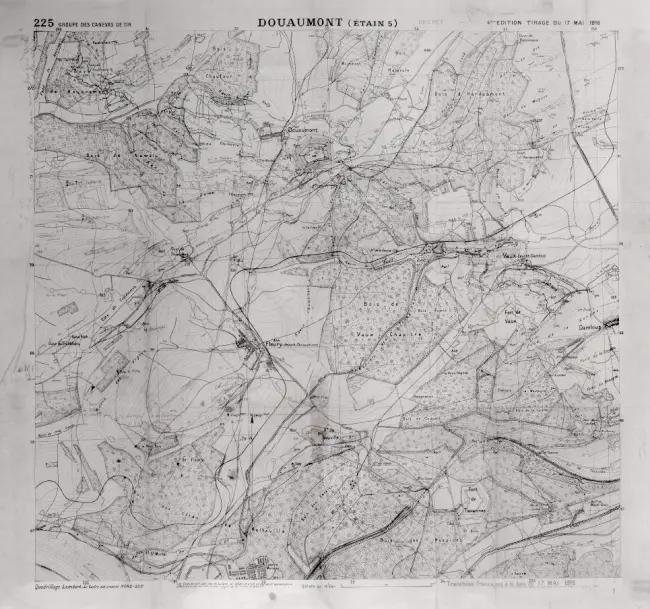
Battle of Verdun (21 February - 18 December 1916)
History | Start: 21 February 1916 End: 18 December 1916 | ||||||||
|---|---|---|---|---|---|---|---|---|---|
Side | France: Commanders: Joseph Joffre Max von Gallwitz Robert Nivelle Germany: Commanders: Erich von Falkenhayn Philippe Pétain Prince Wilhelm | ||||||||
Causes | The strategy of German Chief of the General Staff Erich von Falkenhayn to win the war by wearing down the French army. The strategic importance of Verdun: the key point and moral source of French defense. The aim was to weaken France against Germany and detach Britain from its allies. | ||||||||
Battle of Verdun was a prolonged and intense series of clashes between French and German forces that took place around the town of Verdun in northeastern France from 21 February 1916 to 18 December 1916 during the First World War. This battle is recorded as one of the longest and most devastating engagements of the war. Throughout the approximately ten months of fighting both sides deployed massive human and logistical resources. The battle evolved into a war of attrition centered on control of strategic positions, resulting in hundreds of thousands of soldiers killed wounded or missing. The Battle of Verdun exemplifies the characteristic nature of combat on the Western Front during the First World War.
The Battle of Verdun is remembered in history as one of the longest most destructive and deadliest engagements of the First World War. Fought between 21 February and 18 December 1916 in the Verdun region of eastern France this battle held immense significance not only militarily but also psychologically culturally and strategically. The brutal conflict between French and German forces significantly influenced the course of the war and laid the foundations for its transformation into a war of attrition.
The German high command viewed Verdun as a critical area capable of wearing down the French and altering the outcome of the war. Their objective was to force the French into defending this strategic region and to exhaust weaken and demoralize the French army through intense combat. In this context Verdun carried both military and symbolic weight. For the French Verdun was not merely a town or region but a symbol of national resistance. The French public believed that defending Verdun was not only a military necessity but also vital to preserving national honor.
By 1916 the German Empire hoped to end its war against France on the Western Front and shift the overall course of the conflict in its favor. Thus the attack on Verdun became a pivotal moment in the war. It is also recorded as a conflict that clearly revealed the nature of attrition warfare and the merciless reality of modern combat. The fighting at Verdun marked a turning point not only militarily but also in terms of civilian war psychology morale and national identity.
The French demonstrated their immense commitment to Verdun through the strategies they employed throughout the war. French commander Philippe Pétain declared that defending Verdun was not only a military duty but a national one stating We will not abandon Verdun. This resolve became a source of morale for both the French public and the troops yet it also raised deep concerns about how long the battle would last and how fierce the struggle would be under such harsh conditions. Verdun became an area that would define the war and affect the lives of millions.
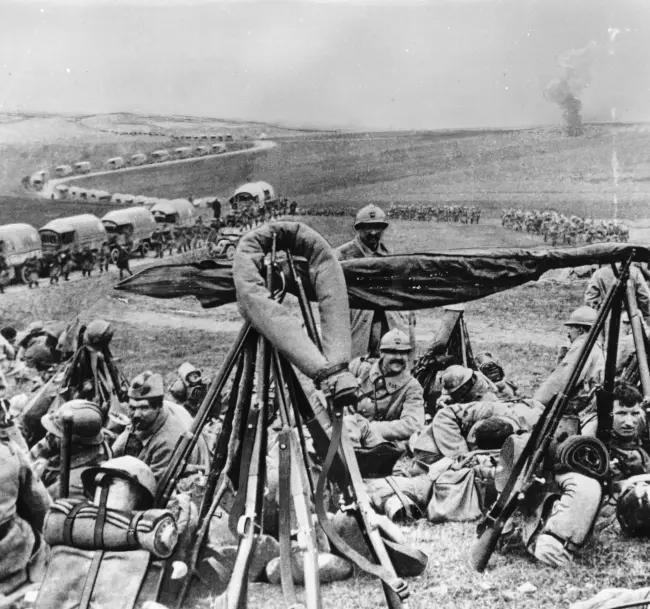
Verdun Muharebesi (Memorial Verdun)
The German Empire aimed to weaken France and achieve a strategic victory that would determine the outcome of the First World War. In this context General Erich von Falkenhayn developed a strategy based on attrition. Falkenhayn sought to draw all French attention to Verdun forcing them to defend it and to exhaust the French army through relentless combat.
Verdun held great symbolic value for the French as a source of morale and a historically significant defensive position. The Germans hoped that capturing the city would severely damage the morale of the French people and army and inflict such heavy losses that France would be forced out of the war.
On 21 February 1916 the Germans launched a massive artillery bombardment against Verdun. This bombardment targeted French defensive lines causing extensive destruction. German infantry launched their assault in the early morning hours to break through these defenses. In the first days the Germans advanced significantly capturing several villages and strategic positions. Key locations such as Boiss d'Haumont and Samogneux were taken by German forces.
However the French quickly responded by sending reinforcements to the region. This development made the battle at Verdun critically important not only from a defensive standpoint but also strategically.
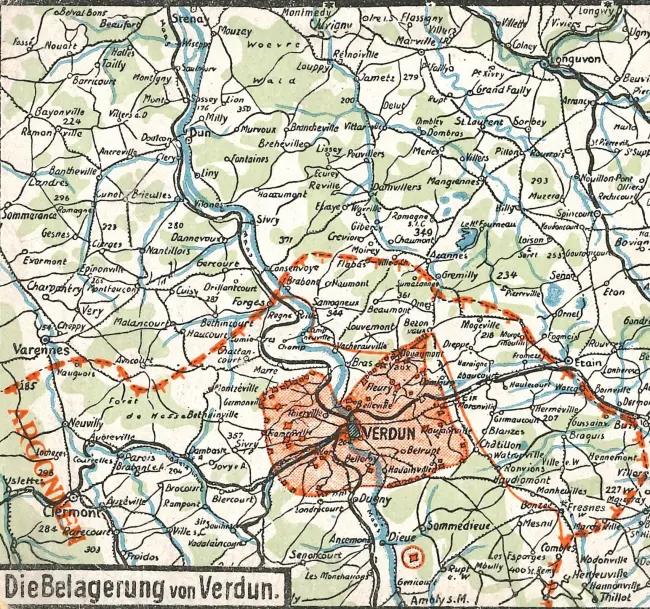
Verdun Muharebesi(Memorial Verdun)
The French made great efforts to strengthen their defenses at Verdun. French commander Philippe Pétain was determined to hold the city and his declaration We will not abandon Verdun became a source of morale for the French people and military. Reinforcements to Verdun were delivered through heavy logistical support via rail. Pétain reorganized the French defense and effectively used artillery and air power to halt the German advance.
In the following months both sides continued to suffer heavy losses. While the Germans pressed on aiming to inflict even greater casualties on the French the French mounted continuous resistance and launched counterattacks. Particularly during the summer months the failure of the Germans to capture several key objectives enabled the French to launch offensive operations.
The French recaptured important positions such as Fort Douaumont and successfully halted further German advances in the region. However both sides suffered massive casualties. These losses were especially devastating for the Germans because the Verdun offensive had also affected their operational flexibility on other fronts.
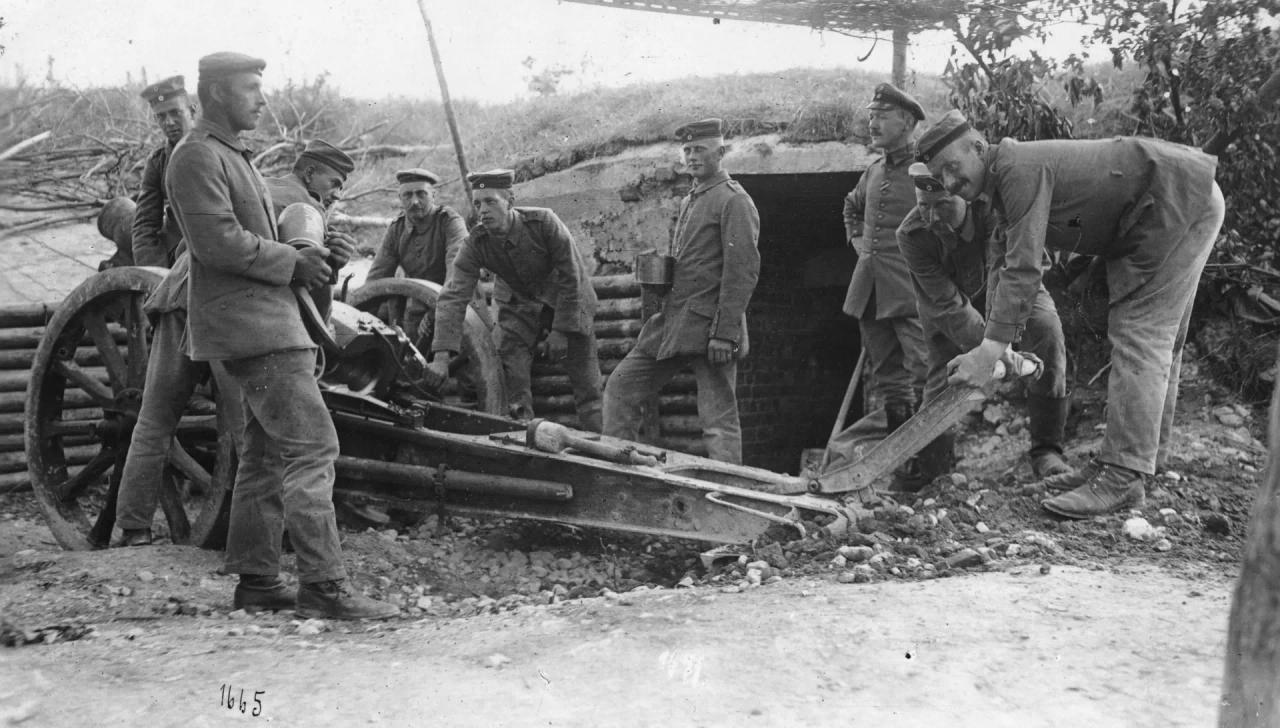
Verdun Muharebesi (Memorial Verdun)
Throughout the battle the intense fighting at Verdun affected not only Germany’s position against France but also its situation on the Russian Front. The offensive launched in the summer of 1916 by Russian General Aleksey Brusilov weakened Austria-Hungary and forced German command to divert resources to that region. This development slowed the German advance at Verdun and strengthened the French defensive position.
Battle of Verdun(The Great War)
The Battle of Verdun was a major turning point in the First World War both militarily and psychologically. During the battle in 1916 the French suffered approximately 163000 killed and 216000 wounded while the Germans suffered approximately 143000 killed and 190000 wounded. The total number of killed and wounded reached about 700000. The intensity of the fighting led to the complete destruction of nine villages around Verdun Fleury Bezonvaux Haumont Beaumont Cumières Vaux Ornes Louvemont and Douaumont. These villages were later declared villages dead for France. Approximately 130000 soldiers' remains are interred in the Douaumont Ossuary and over 16000 individual graves are located in the adjacent cemetery. The village of Fleury-devant-Douaumont is recorded as one of the most prominent examples reflecting the devastating impact of heavy artillery and other destructive weapons used during the First World War.
"The Battle of Verdun." Imperial War Museums. Accessed May 13, 2025.https://www.iwm.org.uk/history/what-was-the-battle-of-verdun
Ardouin-Dumazet, M. *The Battle of Verdun: An Authoritative French Account Based on Official Records.* Temps ve Figaro Askerî Editörü. Accessed May 13, 2025.https://www.jstor.org/stable/45327540
Bartels, Knud. The Battle of Verdun 1916, Why and How? Volume II. Accessed May 13, 2025.
Bruce, Robert B. “To the Last Limits of Their Strength: The French Army and the Logistics of Attrition at the Battle of Verdun 21 February – 18 December 1916.” *Army History*, no. 45 (Summer 1998): 9–21. U.S. Army Center of Military History. Accessed May 13, 2025.https://www.jstor.org/stable/26304799
“La Bataille de Verdun.” Mémorial de Verdun. Accessed May 13, 2025.https://memorial-verdun.fr/fr/ressources/la-bataille-de-verdun
“The Battle of Verdun, 1916.” Imperial War Museums. Accessed May 13, 2025.https://www.iwm.org.uk/collections/item/object/205195462
“The Battle of Verdun: PDF Versiyonu.” Accessed May 13, 2025.https://www.jstor.org/stable/pdf/45327540.pdf.
“Verdun Savaşı Belgeseli.” YouTube. Accessed May 13, 2025.https://www.youtube.com/watch?v=n4aX3bwwPHc&t=990s

Battle of Verdun (21 February - 18 December 1916)
History | Start: 21 February 1916 End: 18 December 1916 | ||||||||
|---|---|---|---|---|---|---|---|---|---|
Side | France: Commanders: Joseph Joffre Max von Gallwitz Robert Nivelle Germany: Commanders: Erich von Falkenhayn Philippe Pétain Prince Wilhelm | ||||||||
Causes | The strategy of German Chief of the General Staff Erich von Falkenhayn to win the war by wearing down the French army. The strategic importance of Verdun: the key point and moral source of French defense. The aim was to weaken France against Germany and detach Britain from its allies. | ||||||||
History
German Strategy and Objectives
Battle Start and Initial Attacks
Strengthening the French Defense
Attrition Warfare and Resistance
Weakening of German Forces and the Impact of the Russian Front
Outcomes and Historical Significance