


This article was automatically translated from the original Turkish version.
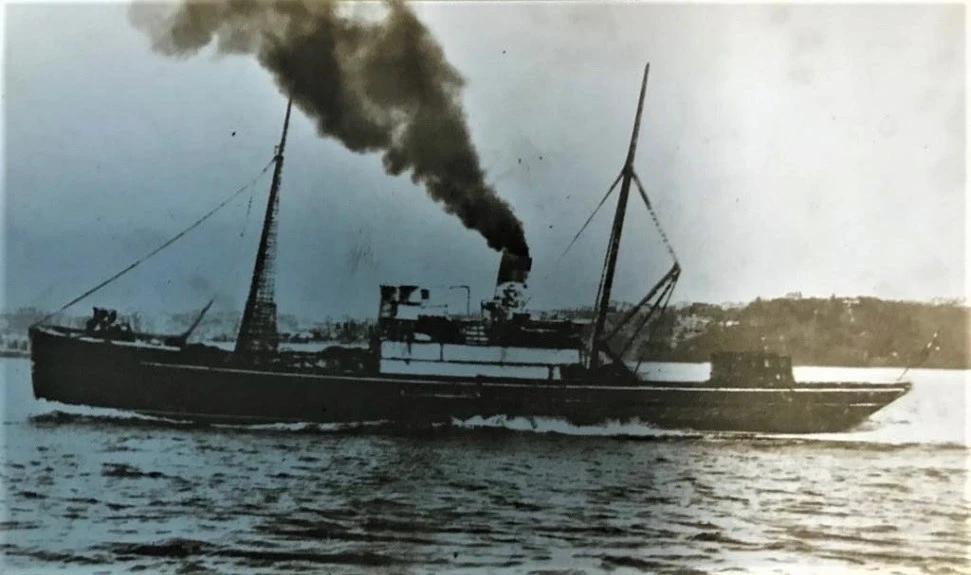
Bandırma Steamship
Construction Year | 1878 | ||||||||
|---|---|---|---|---|---|---|---|---|---|
Construction Site | Glasgow, Scotland | ||||||||
Length Overall | 47.7 metres | ||||||||
Width | 6.9 metres | ||||||||
Depth | 4.2 metres | ||||||||
Gross Tonnage | 192 tonnes | ||||||||
Engine Type | Steam, Twin Cylinder | ||||||||
Significance | First Step in the Establishment Process of the Republic of Türkiye | ||||||||
Bandırma Steamship is a maritime vessel used during the Ottoman Empire for postal and passenger transport. Its significance in the history of the Republic of Türkiye stems from its role in transporting Mustafa Kemal Paşa, appointed as Inspector of the 9th Army, along with his military and civilian delegation, from Istanbul to Samsun on 19 May 1919. This journey marks a historic turning point recognized as the beginning of the Turkish War of Independence and the initiation of the process leading to the foundation of the Republic of Türkiye.
Bandırma Steamship is an iron-hulled, steam-powered, propeller-driven general cargo and passenger vessel built in 1878 at the Phoenix Works Shipyard of McIntyre & Co. Shipbuilding Company in Glasgow/Paisley, England, on slipway number 21. Launched in July 1878 under the name “Trocadero,” the vessel measured 328 gross register tons, with a total length of 150.1 feet, a beam of 22.4 feet, and a depth of 11.4 feet. Its power came from two reciprocating steam engines manufactured in Glasgow with a combined output of 60 horsepower.
The ship’s first owner was the London-based firm Dansey & Robinson, and it was registered at the Port of London on 14 August 1876. In 1880 it was purchased by W. H. Solas, and in 1883 by H. Psicha of Piraeus, at which time it was renamed “Kymi.” In 1888 it was acquired by E. Arvaniti and ran aground on rocks during a voyage to Erdek on 16 December 1891, but was salvaged through the efforts of Captain Andreadis and repaired in the Golden Horn in Istanbul.
In 1892 the vessel was purchased by the Piraeus-based firm G. & P. Dandelo and operated under the name “Panderma.” In 1894 it was bought in Istanbul by the Italian broker Rama P. D’Erasmo and transferred the same year to the Ottoman Special Administration (İdare-i Mahsusa), where it was renamed “Bandırma.” In 1910 the Bandırma Steamship joined the Ottoman Directorate of Navigation’s fleet and served as a transport vessel throughout World War I. In August 1915 it narrowly avoided sinking after a torpedo fired by the British submarine HMS E-14 in the Sea of Marmara missed its target.
On 16 May 1919, the Bandırma Steamship departed from the Galata Pier in Istanbul with Mustafa Kemal Paşa and his companions and arrived at the Samsun Tobacco Wharf on 19 May 1919, thereby spearheading the beginning of the Turkish National Struggle.
In 1923 the steamship was transferred to the Directorate of Navigation of Türkiye and was decommissioned in 1924. In 1925 it was sold to Hüseyin İlhami Söker, a scrap dealer located on the shore of Balat Köprübaşı Bereket Street in the Golden Horn, and was subsequently dismantled, ending its service life.
Following the Armistice of Mudros, Mustafa Kemal Paşa was appointed Inspector of the 9th Army on 30 April 1919 to restore order in Anatolia and organize the Turkish national resistance. Due to the fact that some of the available maritime vessels had been sent to Germany for maintenance, the Bandırma Steamship, which operated in the Sea of Marmara and was deemed unsuitable for the harsh conditions of the Black Sea, was selected for this critical mission.
On 16 May 1919, the 41-year-old Bandırma Steamship departed Istanbul carrying Mustafa Kemal Paşa, 22 staff officers, and 25 non-commissioned officers bound for Samsun. After a challenging three-day voyage, the vessel reached Samsun on Monday morning, 19 May 1919. This journey is recognized as the actual beginning of the Turkish War of Independence and a pivotal moment in the Turkish nation’s struggle for independence.
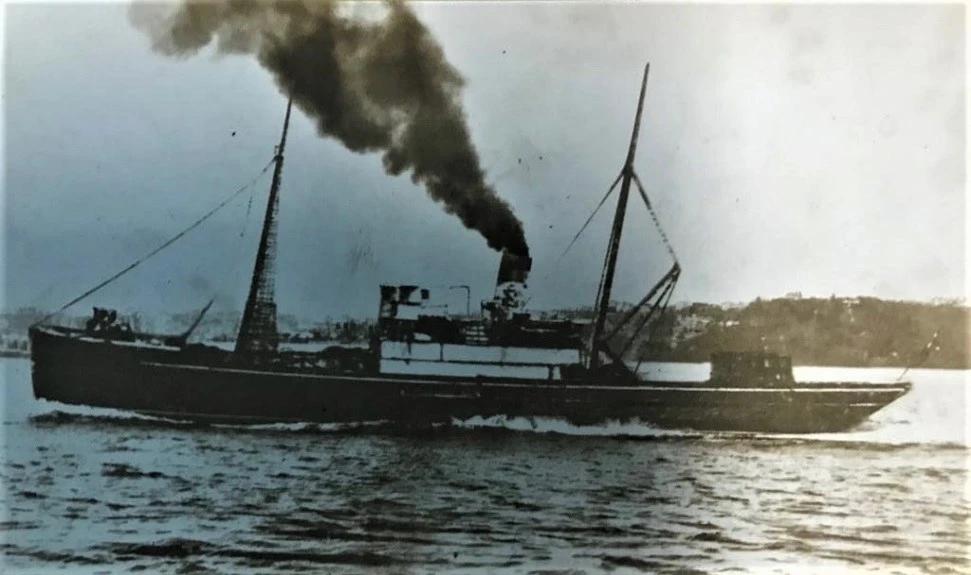
Bandırma Vapuru. (Samsun Valiliği)
Alongside Mustafa Kemal Paşa, the steamship carried staff officers and state officials, several of whom would later hold senior positions during the Republic era. The 18-member delegation consisted of the following:
Confusion and Name Disputes
The Bandırma Steamship was decommissioned in 1924 and dismantled in 1925. Another vessel built in 1886, originally named Medway, was renamed Bandırma in 1926 and was frequently confused with the historic Bandırma Steamship. This similarity in names led to debates in some sources regarding the size and technical specifications of the original vessel; until the proposal to establish a museum in 1933 during the 10th anniversary celebrations of the Republic, the historical identity of the steamship was insufficiently preserved.
In 1957, during the presidency of Celal Bayar, efforts were made to preserve the steamship as a museum, but it was then discovered that the vessel then known as “Ülgen” was not the historic Bandırma Steamship. Consequently, it was officially confirmed that the original vessel had long been dismantled and lost.
Today, a faithful replica of the Bandırma Steamship, constructed according to original plans and photographs by the Samsun Metropolitan Municipality, was opened to the public on 19 May 2006 under the name Bandırma Steamship and National Struggle Park Open-Air Museum. Inside the museum, wax figures of Mustafa Kemal and his comrades, along with artifacts depicting the journey, are exhibited.
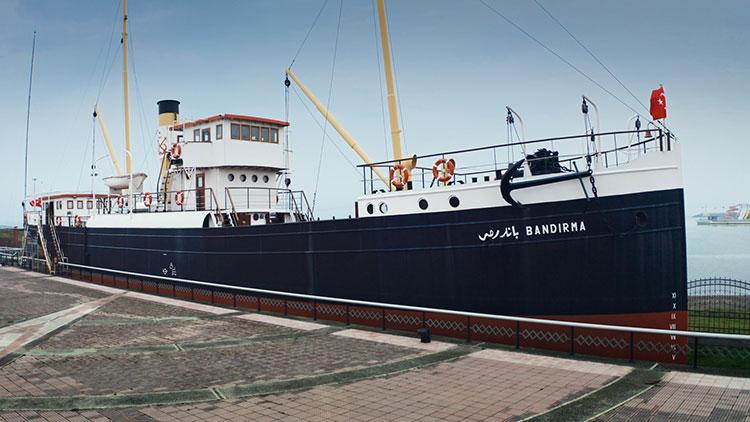
Günümüzde Aslına Uygun Olarak Yeniden İnşa Edilen Bandırma Vapuru. (AA)
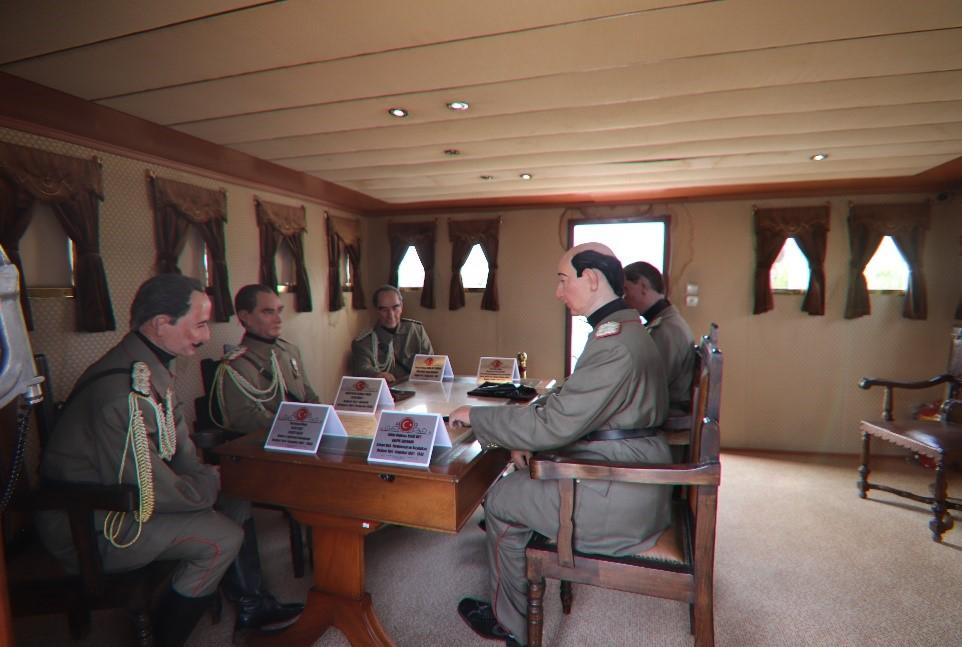
Bandırma Gemi Müzesi. (Samsun Valiliği)
Anadolu Ajansı. "19 Mayıs Atatürk’ü Anma, Gençlik ve Spor Bayramı Kutlanıyor." Accessed May 10, 2025.https://www.aa.com.tr/tr/pg/foto-galeri/202351811524_19-mayis-ataturku-anma-genclik-ve-spor-bayrami-kutlaniyor/2.
Anadolu Ajansı. “‘Kurtuluşun ve Umudun Vapuru’ Bandırma.” Accessed May 10, 2025.https://www.aa.com.tr/tr/kultur/-kurtulusun-ve-umudun-vapuru-bandirma/3223145.
Atatürk Ansiklopedisi. "Bandırma Vapuru." Accessed May 10, 2025.https://ataturkansiklopedisi.gov.tr/detay/684/Band%C4%B1rma-Vapuru.
T.C. Samsun Valiliği. “Bandırma Vapuru Tarihçesi ve Bandırma Gemi Müze.” Accessed May 10, 2025.http://www.samsun.gov.tr/bandirma-vapuru-tarihcesi-ve-bandirma-gemi-muze.

Bandırma Steamship
Construction Year | 1878 | ||||||||
|---|---|---|---|---|---|---|---|---|---|
Construction Site | Glasgow, Scotland | ||||||||
Length Overall | 47.7 metres | ||||||||
Width | 6.9 metres | ||||||||
Depth | 4.2 metres | ||||||||
Gross Tonnage | 192 tonnes | ||||||||
Engine Type | Steam, Twin Cylinder | ||||||||
Significance | First Step in the Establishment Process of the Republic of Türkiye | ||||||||
History
The Journey of 19 May 1919
The Delegation on the Bandırma Steamship
The Bandırma Steamship in the Modern Era