


This article was automatically translated from the original Turkish version.
+1 More
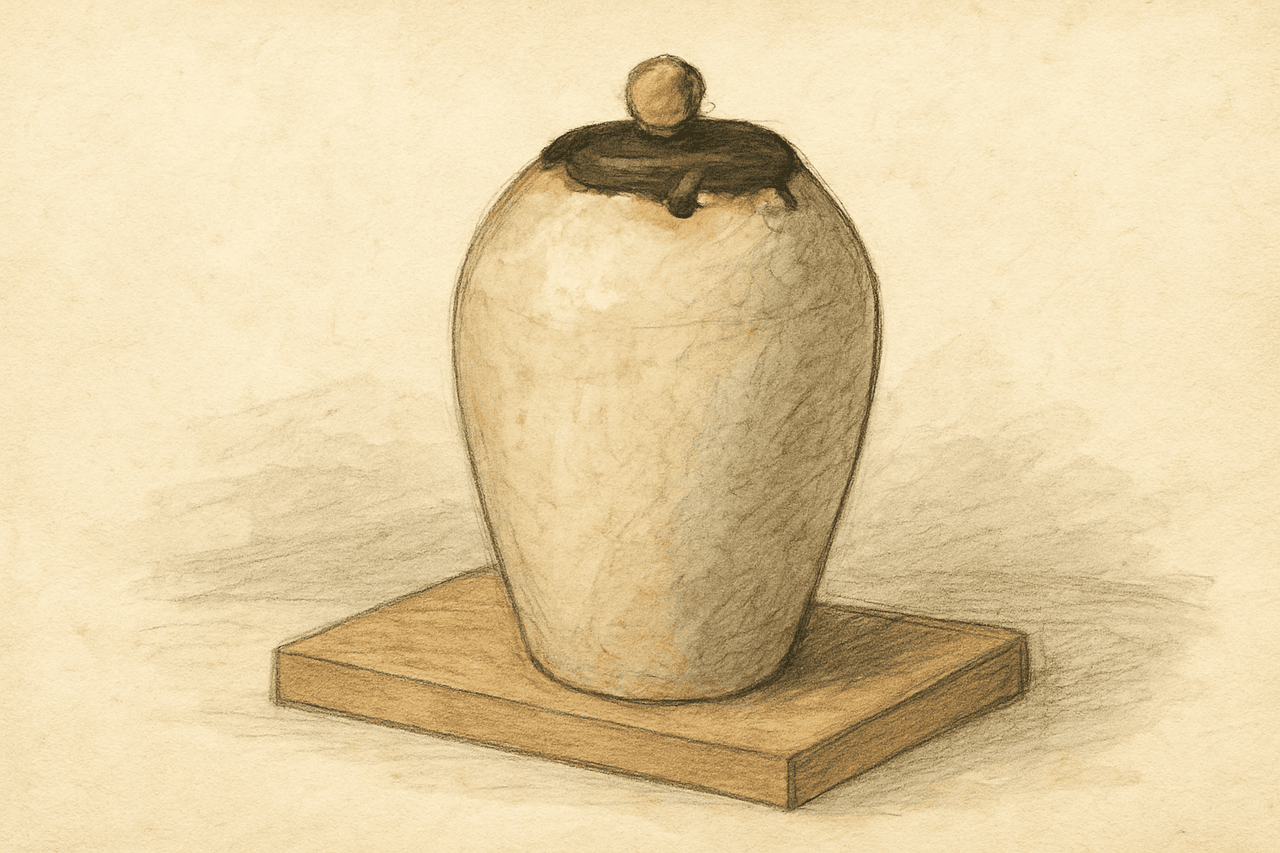
Bağdat Pili (Yapay Zeka ile Oluşturulmuştur.)
Year of Discovery(ies)(Text) | 1936 | ||||||||
|---|---|---|---|---|---|---|---|---|---|
Date(s)(Text) | Parthian Period (248 BC – 226 AD) | ||||||||
Material and Construction | Bitumen Plug Iron Nail Copper Cylinder Pottery Jar without Handle | ||||||||
Describer | Wilhelm König | ||||||||
Discovery Site | Baghdad Surroundings, Iraq | ||||||||
Baghdad Battery is a grave find dating to the Parthian period, discovered near Baghdad in 1938. It consists of a roughly 14 cm tall and 8 cm diameter unglazed ceramic vessel. Inside the vessel’s opening, a copper cylinder with a soldered base has been placed. An iron nail suspended from the top is inserted into the cylinder, and both the copper and iron components are fixed in place by a tar-like sealant. In some examples, remnants of papyrus have been detected inside the copper cylinder, while other vessels contain only the copper cylinder or only the iron nail. This arrangement appears to be designed to allow contact between two different metals within a liquid medium.
Different interpretations have been proposed regarding the purpose of the Baghdad Battery. Wilhelm König’s initial proposal in 1938 suggested that these devices functioned as simple electrochemical cells. Based on this view, some researchers have argued that the vessels may have been used for electroplating.
Kanani’s experiments demonstrated that such devices can generate approximately 0.5 volts of voltage and are capable of producing thin coatings when used with a gold cyanide solution. In contrast, researchers such as Oddy and Peck have noted that in the ancient world, coatings were typically applied using foil, leaf, or mercury amalgam techniques, and that the Baghdad Battery provides no evidence of having been used for this purpose.
An alternative hypothesis suggests that the devices may have had medical applications. Paul T. Keyser pointed to ancient sources that describe electric fish being used as analgesics for treating headaches and gout, and proposed that the Baghdad Battery could have been developed to produce a similar electrical effect. This interpretation is consistent with the device’s low voltage output.
Another perspective holds that the devices carried ritual and symbolic meanings. Kurzmann and Peck argue that due to the magical associations of copper and iron, these objects may have served protective or symbolic functions within a funerary context. The presence of papyrus fragments inside some vessels suggests they may have been used to hold written messages or amulets.
Overall, since existing archaeological and chemical evidence does not confirm any definitive function, whether the Baghdad Battery was used for electrotechnical, medical, or ritual purposes remains controversial.
The objects are part of the collection at the Iraq Museum in Baghdad, but researchers have not been granted direct access to examine them due to political and security conditions. As a result, the Baghdad Battery continues to be regarded in archaeological and history of science literature as a controversial and unresolved find.
Handorf, D.E. Von. “The Baghdad Battery—Myth or Reality?”. *Plating & Surface Finishing*, (2022): 84–87. Accessed September 23, 2025. https://www.nmfrc.org/pdf/psf2002/050284.pdf
Keyser, Paul T. “The Purpose of the Parthian Galvanic Cells: A First-Century A. D. Electric Battery Used for Analgesia”. Journal of Near Eastern Studies 52, no. 2 (1993): 81–98. Accessed September 23, 2025. http://www.jstor.org/stable/545563

Bağdat Pili (Yapay Zeka ile Oluşturulmuştur.)
Year of Discovery(ies)(Text) | 1936 | ||||||||
|---|---|---|---|---|---|---|---|---|---|
Date(s)(Text) | Parthian Period (248 BC – 226 AD) | ||||||||
Material and Construction | Bitumen Plug Iron Nail Copper Cylinder Pottery Jar without Handle | ||||||||
Describer | Wilhelm König | ||||||||
Discovery Site | Baghdad Surroundings, Iraq | ||||||||
Functional Debates
Current Status