This article was automatically translated from the original Turkish version.
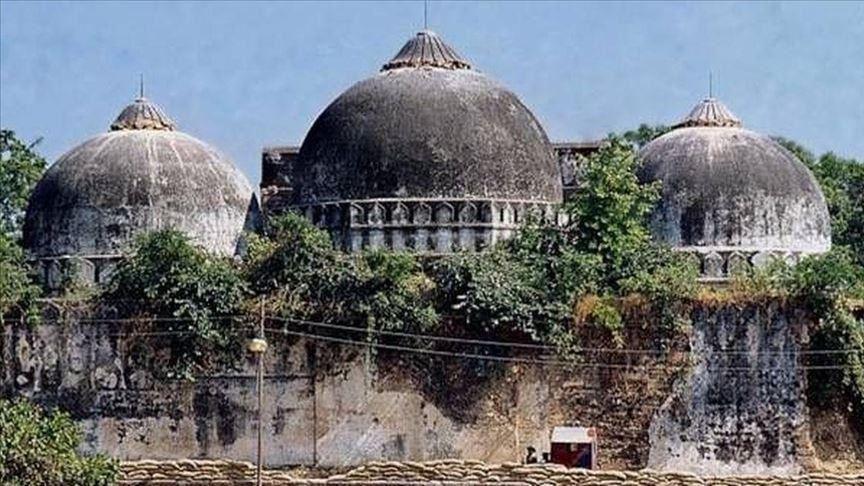
Location | Ayodhya Faizabad (present-day Ayodhya) region Uttar Pradesh India | ||||||||
|---|---|---|---|---|---|---|---|---|---|
Coordinates (Approximate) | 26°47′N, 82°12′E | ||||||||
Historical Period | Mughal Empire | ||||||||
Construction Date | 1528–1529 | ||||||||
Founder / Patron | Babur (founder of the Mughal Empire) | ||||||||
Architectural Style | Mughal period mosque architecture influences of the Jaunpur architectural school three-dome plan large courtyard | ||||||||
Worship Status (Historical) | central mosque for the Muslim community of the region from the 16th century to the mid-20th century | ||||||||
Demolition Date | 1992 - by various Hindu nationalist groups | ||||||||
Babri Mosque is an Islamic place of worship located in the city of Ayodhya, in the northern Indian state of Uttar Pradesh, which for centuries has been at the center of religious and political debates. Built during the Mughal Empire period, the mosque became one of the central symbols of Hindu nationalist movements from the second half of the 20th century onward; disputes over ownership and sanctity of the mosque’s land triggered prolonged legal proceedings, waves of social violence and deep political fractures in the country. The structure, demolished by Hindu nationalist groups on 6 December 1992, was subsequently replaced by a Ram temple following court cases and judicial rulings; it was decided that a new mosque would be constructed for Muslims in another location.
The Babri Mosque was constructed in 1528 by Mir Baki, a commander of Emperor Babur of the Mughal Empire. Ayodhya is regarded in Hindu tradition as the birthplace of the god Rama and is therefore considered sacred by Hindus. Within this context, the area where the mosque stood long served as both a place of worship for the Muslim community and a geographically significant site imbued with symbolic meaning in Hindu belief.
After India gained independence, the conflict surrounding the Babri Mosque took shape within a new political framework. Organizations and political parties centered on Hindu nationalism kept Ayodhya and the mosque’s land on their agenda under the claim of restoring historical justice. Groups such as the Rashtriya Swayamsevak Sangh (RSS) and the Vishva Hindu Parishad (VHP) organized rallies, marches and campaigns targeting the Babri Mosque from the second half of the 20th century onward; the demand for the “reconstruction” of a temple dedicated to Rama became a widely resonant political slogan.
During this period, disputes over the mosque’s land were brought before the courts; lawsuits filed in various courts focused on which community held ownership and the right to worship. While legal proceedings continued, local tensions and incidents of violence occasionally erupted.
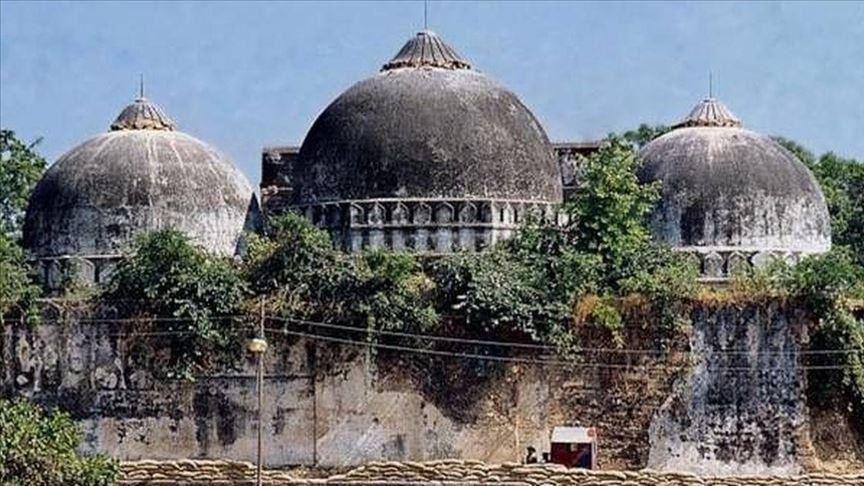
Babri Camii. (Anadolu Ajansı)
The most critical turning point in the history of the Babri Mosque was its demolition on 6 December 1992. On that day, a large number of Hindu nationalist activists gathered in Ayodhya, breached security measures, entered the area where the mosque stood and began demolishing the structure, targeting its domes. Thousands of people participated in the events and the mosque was completely reduced to rubble within a short time.
Immediately after the demolition, serious social conflicts erupted across various Indian states, with violent incidents occurring between Muslim and Hindu communities. It is reported that approximately two thousand people lost their lives in these events, with significant loss of life and property occurring both in Ayodhya and across the country.
Narratives later revealed by some individuals involved in the demolition indicate that the event left deep personal scars. For example, a participant named Balbir Singh later converted to Islam and adopted the name Muhammad Amir. He stated that he had led the demolition of the mosque’s dome and, overcome by remorse afterward, contributed to the construction or restoration of dozens of mosques as a means of “atoning for his sin.”
The demolition of the Babri Mosque sparked prolonged debates not only in the social and political spheres but also within the judiciary and media. Journalists and photographers present in the region during the event recorded images of the demolition and later testified in court cases. Some witnesses reported being threatened, subjected to pressure and coerced into altering their statements during the judicial process.
These allegations demonstrate that the Babri case was not merely about property rights and religious freedom; it became entangled in broader debates concerning the rule of law, judicial independence and freedom of expression. Witness testimonies became one of the key factors influencing the course of the trials and received extensive coverage in the media.
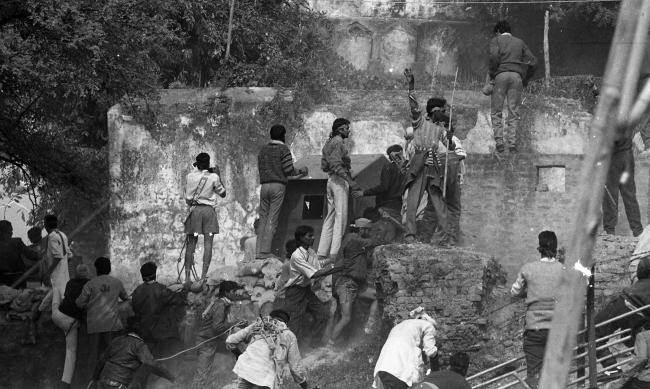
A visual regarding the events at the Babri Mosque. (Anadolu Ajansı)
The legal dispute over the Babri Mosque land has been a multi-layered process spanning decades. Lawsuits filed in different periods have primarily revolved around these questions: “To which community does the land belong, what structures existed there in the past and which place of worship should be legally recognized today?”
By the 2000s, the dispute had intensified before the Allahabad High Court and the Supreme Court of India. In 2010, the Allahabad High Court ruled that the land should be divided into three parts and allocated between Hindu and Muslim parties; however, the verdict sparked legal and political controversy. Both sides appealed to the Supreme Court, demanding that the final judgment be issued by that court.
In 2019, the Supreme Court of India issued its comprehensive ruling on the Babri Mosque land. While the court recognized the demolition of the mosque in 1992 and the placement of Hindu icons inside the mosque in 1949 as unlawful acts, it ruled, based on historical and archaeological assessments, that the land should be allocated to Hindus. The same ruling also mandated that the state allocate five acres of land in Ayodhya for the construction of a new mosque for Muslims.
Prior to its ruling, the Supreme Court appointed a mediation panel to facilitate consensus between the parties; the three-member panel was tasked with conducting negotiations with both sides within a specified timeframe. No lasting agreement emerged from the mediation process, and the case ultimately concluded with a judicial verdict.
In the criminal cases related to the demolition, a significant development occurred in 2020 when all 32 defendants charged in connection with the 1992 events were acquitted. The judgment noted that the demolition was not viewed as a premeditated conspiracy but as an uncontrolled act by a mob.
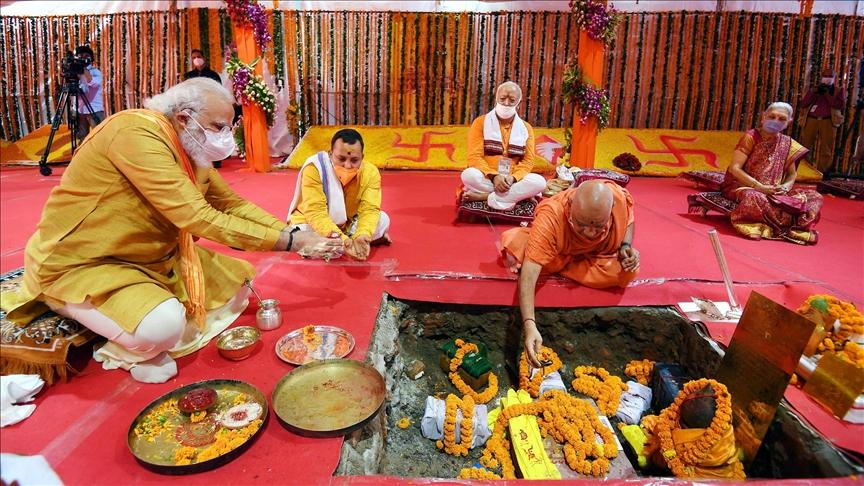
Hindular açılış için hazırlık yapıyor. (Anadolu Ajansı)
Following the Supreme Court ruling, official steps to construct the Ram Temple on the site of the Babri Mosque were rapidly initiated. The central government established a trust to oversee the temple’s construction, and ceremonial ground-breaking activities took place at the Ayodhya site.
On 5 August 2020, Indian Prime Minister Narendra Modi laid the foundation stone of the temple during a ceremony held in Ayodhya. This event, attended by a limited number of guests, received extensive coverage in national and international media. It was stated that the temple would be designed as a three-story structure with multiple domes and architectural elements in the “nagara” style, and that thousands of bricks inscribed with “Shri Ram” as well as gold and silver donated from various regions of the country would be used in its construction.
The completion of the temple is widely regarded as a major milestone in the Hindu nationalist agenda, both politically and symbolically. Some analyses have assessed the project as the realization of a long-term objective for the Bharatiya Janata Party (BJP) and the organizations within its ideological framework.
AVİM (Avrasya İncelemeleri Merkezi). "Babri Cami arazisine Hindu tapınağı çağrısı." Accessed December 1, 2025.https://avim.org.tr/tr/Bulten/BABRI-CAMI-ARAZISINE-HINDU-TAPINAGI-CAGRISI
Al Jazeera. “Babri Mosque to Ram Temple: A Timeline from 1528 to 2024.” Accessed December 1, 2025.https://www.aljazeera.com/news/2024/1/22/babri-mosque-to-ram-temple-a-timeline-from-1528-to-2024
Anadolu Ajansı. "Babri camisinin yıkımına katılan Hindu Müslüman oldu, 90 cami inşa etti." Accessed December 1, 2025.https://www.aa.com.tr/tr/yasam/babri-camisinin-yikimina-katilan-hindu-musluman-oldu-90-cami-insa-etti/1664427
Anadolu Ajansı. "Babri camisinin yıkımının baş tanığı, davalarda yaşadığı tacizleri anlattı." Accessed December 1, 2025.https://www.aa.com.tr/tr/dunya/babri-camisinin-yikiminin-bas-tanigi-davalarda-yasadigi-tacizleri-anlatti/1667206
Anadolu Ajansı. "Güney Asya’nın Ayasofyası: Babri Camisi." Accessed December 1, 2025.https://www.aa.com.tr/tr/dunya/guney-asyanin-ayasofyasi-babri-camisi/1665715
Anadolu Ajansı. "Hindistan’da 1992’de milliyetçilerce yıkılan Babri camisinin yerine yapılan tapınak ocakta açılacak." Accessed December 1, 2025.https://www.aa.com.tr/tr/dunya/hindistanda-1992de-milliyetcilerce-yikilan-babri-camisinin-yerine-yapilan-tapinak-ocakta-acilacak/2993340
Anadolu Ajansı. "Hindistan’da Babri camisinin yıkılışının üzerinden 27 yıl geçti." Accessed December 1, 2025.https://www.aa.com.tr/tr/dunya/hindistanda-babri-camisinin-yikilisinin-uzerinden-27-yil-gecti/1664436
Arkeolojik Haber. "Müslümanların ve Hinduların mahkemelik olduğu Babri Camisi davası." Accessed December 1, 2025.https://www.arkeolojikhaber.com/haber-muslumanlarin-ve-hindularin-mahkemelik-oldugu-babri-camisi-davasi-20110/
BBC News. "Babri mosque: India’s top court gives site to Hindus." Accessed December 1, 2025.
BBC Türkçe. “Babri Camii: Hindistan’da Müslümanlar ile Hindular arasında yıllardır süren anlaşmazlık.” Accessed December 1, 2025.https://www.bbc.com/turkce/haberler-dunya-53664171
Baran Dergisi. "Hindistan’da yıkılan Babri Camiinin yerine Rama Tapınağı yapıldı." Accessed December 1, 2025.https://www.barandergisi.net/hindistanda-yikilan-babri-camiinin-yerine-rama-tapinagi-yapildi
Daily Ummah. "Hinduların Babri Camii’ni yıkmasının üzerinden 30 yıl geçti." Accessed December 1, 2025.https://www.dailyummah.com/hindularin-babri-camini-yikmasinin-uzerinden-30-yil-gecti
GASAM (Güney Asya Stratejik Araştırmalar Merkezi). “Güney Asya’nın Ayasofyası: Babri Camisi.” Accessed December 1, 2025.https://gasam.org.tr/guney-asyanin-ayasofyasi-babri-camisi/
GZT Mecra. "Babri Camii’nden Hindu tapınağına." Accessed December 1, 2025.
Independent Türkçe. “Hindistan’ın Babri Camisi’nin yerini alacak camiye Hz. Muhammed’in (S.A.S.) ismi verildi.” Accessed December 1, 2025.https://www.indyturk.com/node/667281/t%C3%BCrki%CC%87yeden-sesler/hindistan%C4%B1n-babri-camisinin-yerini-alacak-camiye-hz-muhammedin-sas
Independent Türkçe. “‘Dünyanın en büyük arkeolojik tartışması’ diye nitelendirilen Hindu ırkçıların Babri Camii iddiası.” Accessed December 1, 2025.https://www.indyturk.com/node/80701/d%C3%BCnya/%E2%80%9Cd%C3%BCnyan%C4%B1n-en-b%C3%BCy%C3%BCk-arkeolojik-tart%C4%B1%C5%9Fmas%C4%B1%E2%80%9D-diye-nitelendirilen-hindu-%C4%B1rk%C3%A7%C4%B1lar%C4%B1n
Justice For All. "Cami yıktı, Müslüman oldu; 90 cami inşa etti." Accessed December 1, 2025.
Justice For All. “Hindistan’da 1992’de milliyetçilerce yıkılan Babri camisinin yerine yapılan tapınak ocakta açılacak.” Accessed December 1, 2025.https://www.justiceforall.org/turkiye/hindistanda-1992de-milliyetcilerce-yikilan-babri-camisinin-yerine-yapilan-tapinak-ocakta-acilacak/
TRT Haber. "Babri Camii’nin yıkımının baş tanığı, davalarda yaşadığı tacizleri anlattı." Accessed December 1, 2025.https://www.trthaber.com/haber/dunya/babri-camiinin-yikiminin-bas-tanigi-davalarda-yasadigi-tacizleri-anlatti-445285.html
eha Medya. "Hindistan’da Babri Camisi’nin yıkılmasıyla ilgili çeşitli suçlardan yargılanan 32 kişi beraat etti." Accessed December 1, 2025.https://ehamedya.com/dunya/hindistan-da-babri-camisi-nin-yikilmasiyla-ilgili-cesitli-suclardan-yargilanan-32-kisi-beraat-etti

Location | Ayodhya Faizabad (present-day Ayodhya) region Uttar Pradesh India | ||||||||
|---|---|---|---|---|---|---|---|---|---|
Coordinates (Approximate) | 26°47′N, 82°12′E | ||||||||
Historical Period | Mughal Empire | ||||||||
Construction Date | 1528–1529 | ||||||||
Founder / Patron | Babur (founder of the Mughal Empire) | ||||||||
Architectural Style | Mughal period mosque architecture influences of the Jaunpur architectural school three-dome plan large courtyard | ||||||||
Worship Status (Historical) | central mosque for the Muslim community of the region from the 16th century to the mid-20th century | ||||||||
Demolition Date | 1992 - by various Hindu nationalist groups | ||||||||
Historical Background: Construction and Ayodhya’s Religious Significance
Post-Independence Period and Rising Tensions
Demolition on 6 December 1992 and the Subsequent Wave of Violence
Testimonies, Media and Allegations of Pressure in Judicial Proceedings
Legal Proceedings: From the Allahabad High Court to the Supreme Court of India
The Ram Temple Project and Ayodhya in the 21st Century