This article was automatically translated from the original Turkish version.
Registration Number | 638 | ||||||||
|---|---|---|---|---|---|---|---|---|---|
Registration Date | 23.12.2020 | ||||||||
Application Number | C2019/032 | ||||||||
Application Date | 13.03.2019 | ||||||||
Name of the Geographical Indication | Babadağ Thyme Honey | ||||||||
Product / Product Group(s) | Flower Honey / Honey | ||||||||
Type of Geographical Indication | Place of origin | ||||||||
Applicant/Registrant(s) | Denizli Province Beekeepers Union | ||||||||
Address of the Registrant | Saraylar Mah. Dörtçeşme Locality No:85 Merkezefendi DENİZLİ | ||||||||
Geographical Boundary | Babadağ district of Denizli province | ||||||||
Babadağ Thyme Honey is a floral honey produced within the boundaries of the Babadağ district of Denizli Province and registered under its place of origin name. The primary botanical source of the product consists of thyme plants belonging to the genera Origanum, Thymus, Coridothymus, and Satureja. These thyme species play a decisive role in shaping the sensory characteristics of the honey including its taste, aroma, and color. Babadağ Thyme Honey is produced using various bee breeds, primarily the Anatolian Bee (Apis mellifera anatoliaca), and is typically marketed as strained honey, distinguished by its unique reddish hue and thyme aroma.
The distinguishing feature of Babadağ Thyme Honey is the high representation of thyme species naturally occurring in the region’s flora, particularly Thymus serpyllum L. and Thymus vulgaris L. In addition, other species from the same family such as Origanum onites L., Origanum vulgare L., Thymus capitatus L., and Thymbrae spicata L. (karabaş thyme) are also present in the regional vegetation. Thyme species are fundamental to both the naming of the product and the formation of its taste, aroma, and color characteristics. Furthermore, other plant species in the Babadağ vegetation—such as those from the Lamiaceae, Fabaceae, Liliaceae, Rosaceae, Asphodelaceae, and Campanulaceae families—contribute to the regional biodiversity.
The production of Babadağ Thyme Honey primarily utilizes the Anatolian Bee (Apis mellifera anatoliaca). This bee breed is characterized by high adaptability to Anatolian climatic conditions, low honey consumption, and strong nectar collection ability. In addition, production is also carried out using the Italian bee (Apis mellifera ligustica) and the Carniolan bee (Apis mellifera carnica).
Production activities are generally conducted using migratory beekeeping methods. Thyme plants in the Babadağ region begin flowering around August 15 and this flowering period lasts approximately one month. Honey harvesting typically takes place at the end of September. Honey production follows the convective method, and producers obtain both strained honey and comb honey. Langstroth-type hives with an average of 15 frames are used. Harvesting occurs when approximately two-thirds of the frames are capped, and the strained honey is processed in honey strainers and stored in settling tanks.
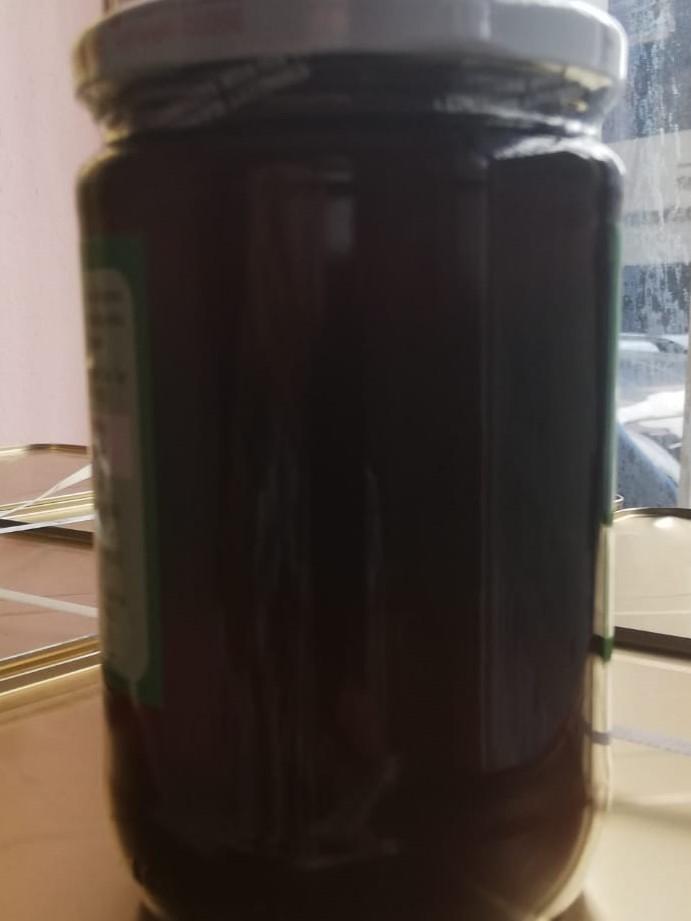
Babadağ Thyme Honey has a clear and glossy appearance; its color varies in shades of red. Its characteristic aroma originates from the local thyme species. In terms of taste, it contains a thyme flavor that may produce a mild burning sensation in the throat. It has a viscous structure and may crystallize into a creamy consistency within two months at room temperature, or more quickly at lower temperatures. The crystallization process occurs homogeneously and stably due to the natural composition of the product.
Chemically, the total proportion of thyme pollen in Babadağ Thyme Honey is at least 10%. This threshold is established to verify the botanical origin of the honey. The proline content of the product is a minimum of 800 mg/kg, providing information regarding its natural protein content and maturity level.
Babadağ Thyme Honey is stored in clean, dry, and odor-free environments throughout the process from production to consumption. The product must not be exposed to direct sunlight and should be stored at temperatures not exceeding 25 °C. Honey packaged in food-grade glass jars is marketed with labeling information compliant with relevant regulations. The packaging must bear the designation “Babadağ Thyme Honey” and the geographical indication emblem. When this information cannot be displayed on the packaging, it must be clearly visible at the production facility.
The production, distribution, and labeling of Babadağ Thyme Honey are subject to inspection at least once annually. Inspection activities are carried out by a team of at least three members appointed by relevant public institutions—the Directorate of Agriculture and Forestry of Denizli Province, Babadağ Municipality, and the Regional Forestry Directorate—under the coordination of the Denizli Province Beekeepers Association. During the inspection process, beekeepers and food businesses are registered in lists, and data on hive numbers, accommodation locations, and flora information are documented for traceability purposes.
The inspection authority verifies compliance with geographical indication usage, production methods, packaging and storage conditions, and sensory qualities. When necessary, honey samples are collected and analyzed according to regulatory requirements. Inspection reports are submitted annually to the Turkish Patent and Trademark Office.
Turk Patent and Trademark Office. 2020. “No: 638 – Origin Name:Babadağ Kekik Honey.” Accessed July 20, 2025. https://ci.turkpatent.gov.tr/cografi-isaretler/detay/383.
Turkish Patent and Trademark Office. 2020. “No: 638 – Geographic IndicationBabadağ Kekik Honey” (PDF). December 23, 2020. Accessed July 20, 2025. https://ci.turkpatent.gov.tr/Files/GeographicalSigns/bbc98829-6636-471e-8088-08aa2cf34941.pdf.

Registration Number | 638 | ||||||||
|---|---|---|---|---|---|---|---|---|---|
Registration Date | 23.12.2020 | ||||||||
Application Number | C2019/032 | ||||||||
Application Date | 13.03.2019 | ||||||||
Name of the Geographical Indication | Babadağ Thyme Honey | ||||||||
Product / Product Group(s) | Flower Honey / Honey | ||||||||
Type of Geographical Indication | Place of origin | ||||||||
Applicant/Registrant(s) | Denizli Province Beekeepers Union | ||||||||
Address of the Registrant | Saraylar Mah. Dörtçeşme Locality No:85 Merkezefendi DENİZLİ | ||||||||
Geographical Boundary | Babadağ district of Denizli province | ||||||||
No Discussion Added Yet
Start discussion for "Babadağ Thyme Honey" article
Botanical Origin and Floristic Characteristics
Bee Breed and Production Activities
Physical, Chemical, and Sensory Properties
Packaging and Storage
Inspection and Traceability