


This article was automatically translated from the original Turkish version.
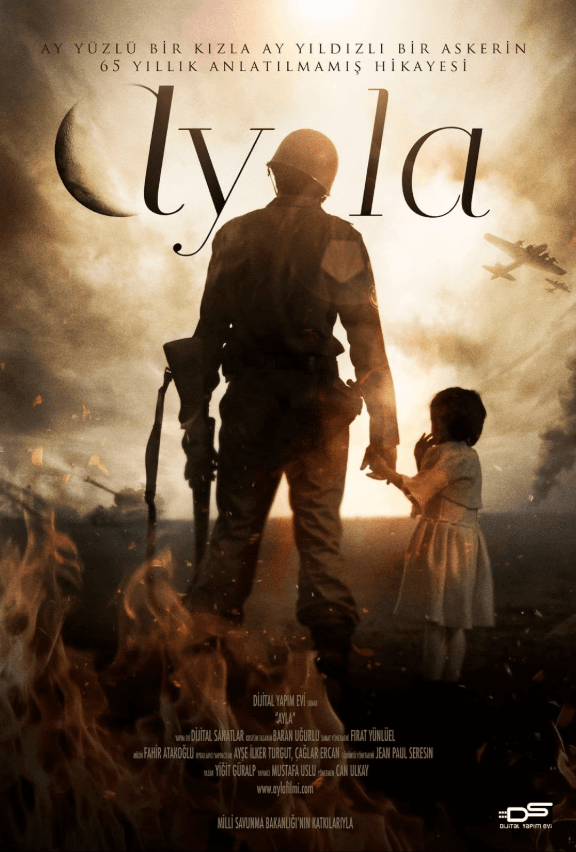
Director | Can Ulkay | ||||||||
|---|---|---|---|---|---|---|---|---|---|
Producer | Mustafa Uslu | ||||||||
Screenwriter | Yiğit Güralp | ||||||||
Subject | The Life Story of Turkish Soldier Süleyman Dilbirliği of the Korean War | ||||||||
Actor | İsmail Hacıoğlu Kim Seol Çetin Tekindor Lee Kyung-Jin Ali Atay Murat Yıldırım | ||||||||
Production Company | Digital Arts Production House | ||||||||
Genre | War Drama | ||||||||
Production Year | 2016-2017 | ||||||||
Release Dates | 21 June 2018 (South Korea) 27 October 2017 (Türkiye) | ||||||||
Duration | 125 minutes | ||||||||
Country | South Korea Turkish | ||||||||
Language | Korean English Turkish | ||||||||
Ayla is a Turkish dramatic feature film inspired by a real event that occurred during theKorean War(1950–1953). The film focuses on the protective, parent-child bond that develops between two individuals from different nations amid the devastating effects of war. It explores the personal manifestation of the historically recognized solidarity between Türkiye and South Korea.
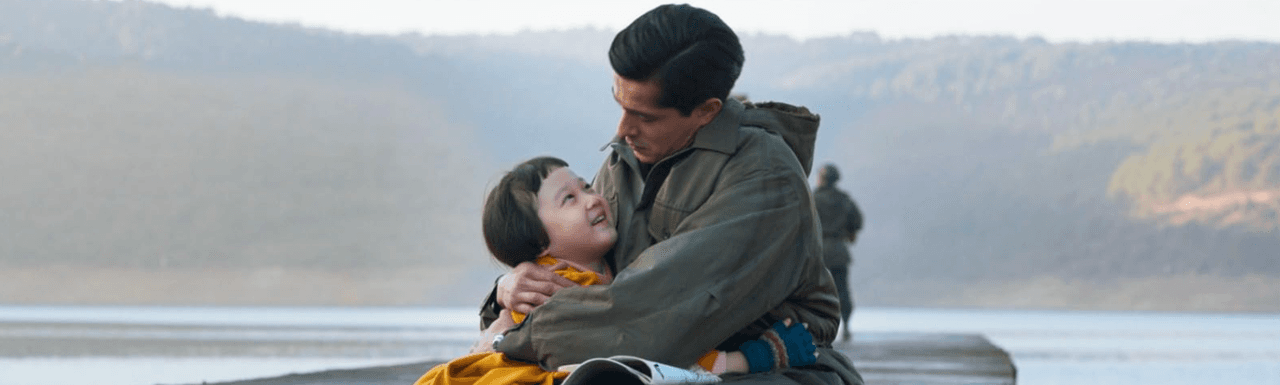
Ayla and Staff Sergeant Süleyman (IMDb)
The film begins with Staff Sergeant Süleyman Dilbirliği, a Turkish soldier deployed to Korea as part of a Turkish brigade during the Korean War, encountering a young orphaned girl. Since her face resembles the moon, the soldiers give her the name “Ayla.” Süleyman takes her under his protection and assumes a paternal role. However, as the war ends and troops are ordered to return home, Süleyman’s efforts to bring Ayla to Türkiye are obstructed by bureaucratic hurdles. Ayla is placed in an orphanage, and the two are separated for many years. The film conveys the enduring nature of this bond and the refusal of the two individuals to forget each other through temporal shifts.
The film reveals that the impact of war extends beyond soldiers on the front lines to civilians, particularly children. The character of Ayla is positioned within the narrative as a symbol of civilian victims of conflict.
The relationship between Süleyman and Ayla is grounded not in legal adoption but in protection, care, and a sense of belonging. The concept of family is redefined through emotional connections that transcend biological ties.
The film explores enduring commitment and the refusal to forget. Süleyman’s unwavering memory of Ayla and his persistent desire to find her exemplify the theme of emotional continuity.
The historical bond between Türkiye and South Korea is represented through this personal story. Ayla’s relationship with the Turkish soldier serves as a symbolic reflection of the solidarity between the two nations during wartime.
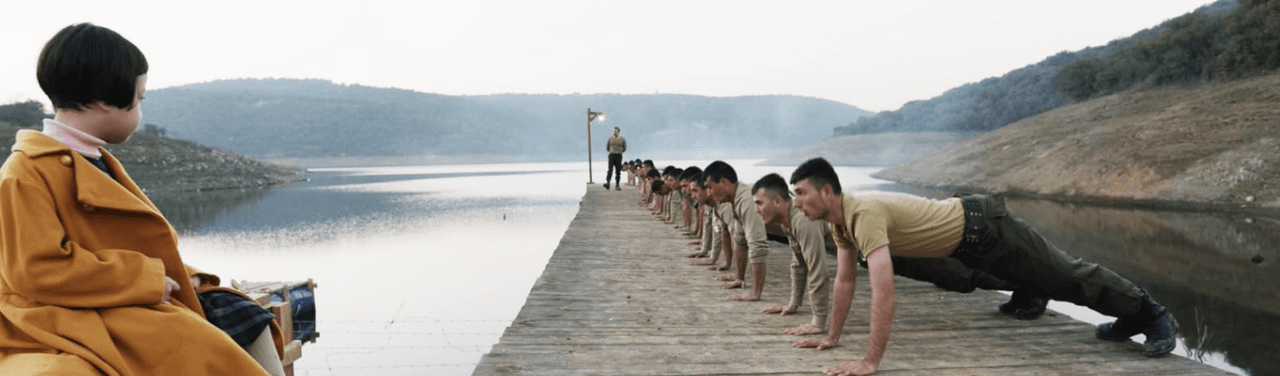
The character of Süleyman is portrayed by two actors across two different life stages. İsmail Hacıoğlu plays the younger Süleyman, while Çetin Tekindor portrays the older version. Süleyman, a disciplined and conscientious soldier, assumes fatherhood toward a young girl he meets in the midst of war. Forced to separate from Ayla when the war ends, his lifelong quest to find her becomes the defining aspect of his character.
Ayla is a young Korean girl who loses her family during the war. She temporarily loses her ability to speak and expresses her emotions through facial expressions. Her bond with Süleyman is pivotal to her development. Symbolically, Ayla represents civilians in need of protection during wartime.
Nimet is Süleyman’s fiancée in Türkiye, who later becomes his wife. With her patient and understanding nature, she supports Süleyman’s devotion to Ayla. The character embodies the emotional stability and life left behind in Türkiye.
One of the Turkish soldiers in the unit, Ali provides moments of humor that balance the film’s dramatic tone. His closeness to Süleyman brings him to the forefront of the narrative.
A military authority figure who leads Süleyman’s unit. The character stands out through decisions that navigate between institutional discipline and personal conscience.
Mesut plays a brief but impactful role. He is one of the emotionally burdened characters within the film’s depiction of military camaraderie.
Actors such as Altan Erkekli, Meral Çetinkaya, and Mehmet Esen appear in various supporting roles, ensuring narrative continuity across both past and present scenes.
Ayla was produced by Dijital Sanatlar Yapımevi under the leadership of Mustafa Uslu. The film was directed by Can Ulkay, with a screenplay written by Yiğit Güralp. It was made with the support of the Ministry of Culture and Tourism of Türkiye. During production, cooperation was maintained with the Ministry of National Defense of the Republic of Türkiye and authorities from the Republic of Korea.
Filming took place in both Türkiye and South Korea. Turkish locations included Istanbul and Ankara, while scenes depicting the Korean War were shot in various regions of South Korea. To accurately reflect the period atmosphere, the production underwent a detailed process involving period-specific military uniforms, vehicles, and architectural elements.
Ayla was submitted by Türkiye as its official entry for the Academy Award for Best Foreign Language Film in 2018. However, it did not make the shortlist. Upon release, the film attracted a large domestic audience and participated in several national film festivals.
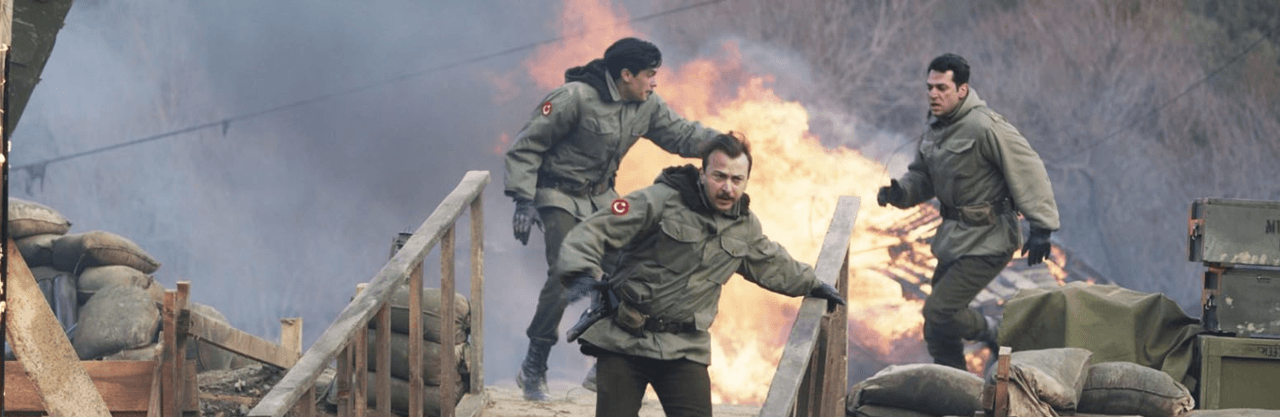
Ayla uses the Korean War (1950–1953) as its backdrop. The war began between North Korea and South Korea, prompting numerous countries to respond to a United Nations call for support by sending troops to aid South Korea. Türkiye answered this call in 1950 by deploying nearly 5,000 soldiers in a brigade that participated in some of the war’s fiercest battles and suffered heavy casualties. The film uses this historical framework both to highlight the human dimension of the war and to emphasize Türkiye’s connection with Korea.
Ayla is not merely a cinematic fiction but is based on a true story documented in historical records. Staff Sergeant Süleyman Dilbirliği was among the Turkish soldiers sent to Korea in 1950. During the war, he found a young Korean girl who had lost her family and named her “Ayla.” He spent time with her behind the front lines, forming a father-daughter-like bond.
After the war ended and Turkish troops began their return, Süleyman Dilbirliği sought to bring Ayla to Türkiye. However, the military and diplomatic regulations of the time did not permit this, and the child was placed in an orphanage in Seoul. At this point, Ayla and Süleyman’s paths diverged for many years.
Years later, during the 2000s, archival research and documentary projects focused on Korean War veterans brought Süleyman Dilbirliği’s story to public attention. With assistance from diplomatic channels between Korea and Türkiye, Ayla’s identity was investigated and confirmed to be Kim Eun-ja.
In the early 2010s, Ayla and Süleyman were reunited in Ankara. The meeting received widespread public attention in both Türkiye and South Korea. For both parties, it was an emotional encounter; they communicated through an interpreter and shared memories of the time they spent together.
Following the reunion, Kim Eun-ja was hosted briefly in Türkiye before returning to her home country. Süleyman Dilbirliği passed away in 2017. This reunion exemplifies how an individual’s enduring memory, supported by international relations and civil society efforts, can transform into a tangible, historic meeting.
Ayla. Dir. Can Ulkay. Türkiye: Dijital Sanatlar, 2017. IMDb. Accessed April 6, 2025.https://www.imdb.com/title/tt6316138/?ref_=mv_close
“Ayla Filmini Yaklaşık 2 Milyon Kişi Seyretti.” Anadolu Ajansı. Accessed April 6, 2025.https://www.aa.com.tr/tr/kultur-sanat/ayla-filmini-yaklasik-2-milyon-kisi-seyretti/964553.
“Ayla, Manevi Babasına Özlemini Anlattı.” Anadolu Ajansı. Accessed April 6, 2025.https://www.aa.com.tr/tr/kultur-sanat/ayla-manevi-babasina-ozlemini-anlatti/969498.
“Ayla’nın Ön Gösterimi Yapıldı.” Anadolu Ajansı. Accessed April 6, 2025.https://www.aa.com.tr/tr/kultur-sanat/aylanin-on-gosterimi-yapildi/939483.
“Ayla’ya Büyük İlgi.” Anadolu Ajansı. Accessed April 6, 2025.https://www.aa.com.tr/tr/kultur-sanat/aylaya-buyuk-ilgi/958037.
“Oscar’ı Al da Gel Ayla.” Anadolu Ajansı. Accessed April 6, 2025.https://www.aa.com.tr/tr/kultur-sanat/oscari-al-da-gel-ayla/923439.

Director | Can Ulkay | ||||||||
|---|---|---|---|---|---|---|---|---|---|
Producer | Mustafa Uslu | ||||||||
Screenwriter | Yiğit Güralp | ||||||||
Subject | The Life Story of Turkish Soldier Süleyman Dilbirliği of the Korean War | ||||||||
Actor | İsmail Hacıoğlu Kim Seol Çetin Tekindor Lee Kyung-Jin Ali Atay Murat Yıldırım | ||||||||
Production Company | Digital Arts Production House | ||||||||
Genre | War Drama | ||||||||
Production Year | 2016-2017 | ||||||||
Release Dates | 21 June 2018 (South Korea) 27 October 2017 (Türkiye) | ||||||||
Duration | 125 minutes | ||||||||
Country | South Korea Turkish | ||||||||
Language | Korean English Turkish | ||||||||
Plot
Themes
War and the Plight of Civilians
Protective and Familial Bonds and Adoption
Loyalty and Fidelity
International Solidarity
Main Characters and Actors
Staff Sergeant Süleyman (İsmail Hacıoğlu / Çetin Tekindor)
Ayla (Kim Seol)
Nimet (Damla Sönmez)
Staff Sergeant Ali (Ali Atay)
Commander (Taner Birsel)
Mesut (Murat Yıldırım)
Supporting Characters
Production and Filming Process
Historical Context
The Reunion of Süleyman Dilbirliği and Ayla