This article was automatically translated from the original Turkish version.
Scientific Name(s) | Fratercula arctica | ||||||||
|---|---|---|---|---|---|---|---|---|---|
IUCN Status | Sensitive / Vulnerable | ||||||||
Sexual Maturity | Between 3 and 6 years | ||||||||
Incubation Period | Between 36 and 45 days | ||||||||
Number of Eggs | One per year | ||||||||
Feeding Behavior | Carnivorous and piscivorous | ||||||||
Average Wingspan | Between 47 and 63 centimeters | ||||||||
Average Body Length | Between 18 and 33 centimeters | ||||||||
Known Nicknames in the Ocean | Atlantic Puffin or Ocean Puffin | ||||||||
Worldwide Population | Approximately 12,000,000 to 14,000,000 adult individuals | ||||||||
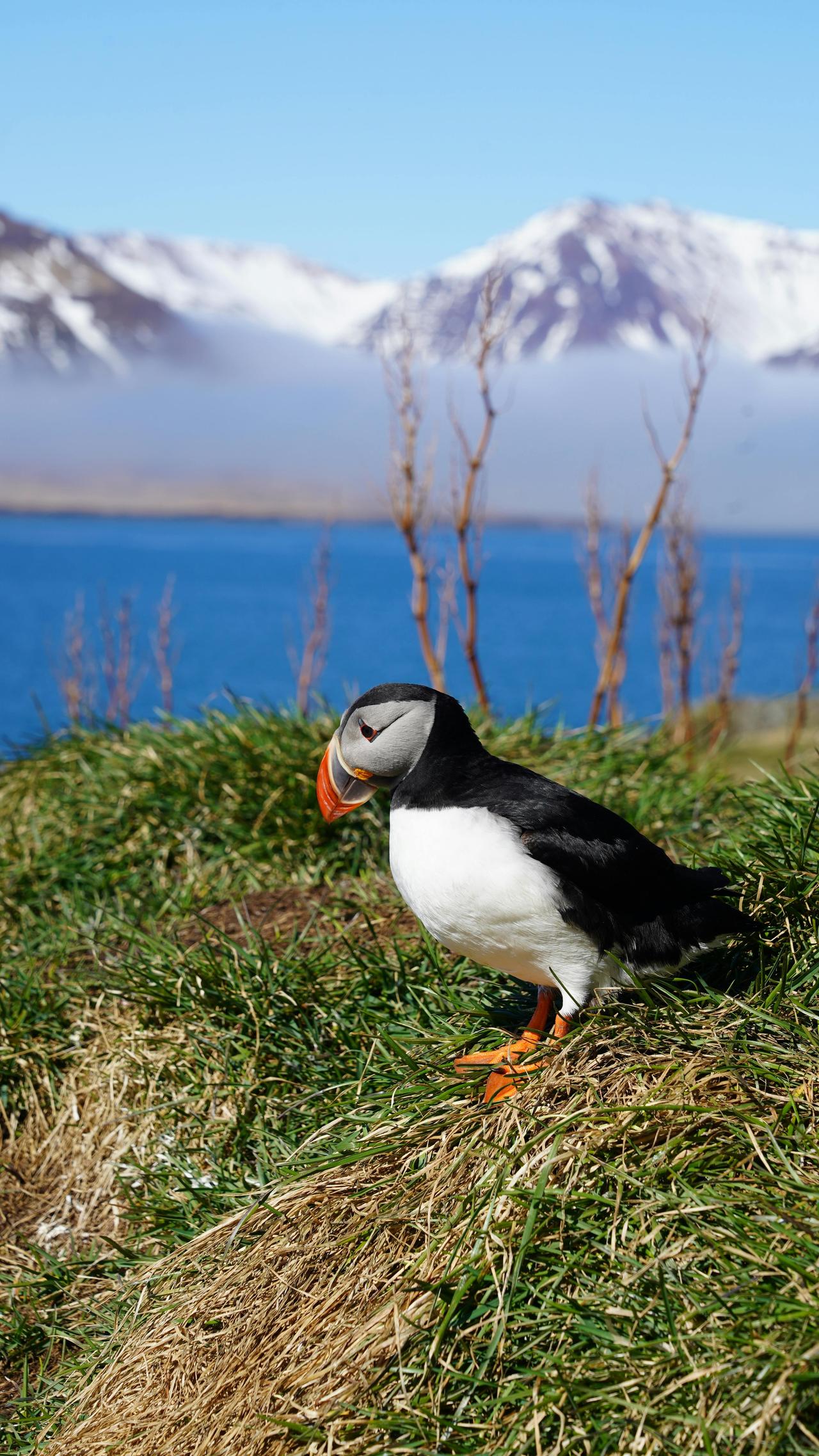
Atlantic puffin (Fratercula arctica) is a pelagic seabird species belonging to the family Alcidae (auk family) within the order Charadriiformes (shorebirds). It is one of three living species of puffin, the others being the horned puffin (Fratercula corniculata), endemic to the Pacific region, and the tufted puffin (Fratercula cirrhata). Due to its colorful beak structure, this species is frequently referred to in scientific literature and popular culture as the “clown of the ocean” or “penguin of the sea.” It spends the majority of its life at sea, coming ashore only during the breeding season to nest on rocky cliffs and islands.
Atlantic puffins have an upright posture similar to penguins and are covered in black plumage on the back and white plumage on the belly, providing camouflage. Adult individuals range in height from 20 to 33 centimeters, with a wingspan of 47 to 63 centimeters and a weight between 310 and 550 grams. Although there is no pronounced anatomical difference between the sexes, males have been found to possess slightly greater body mass than females. A gland located at the base of the tail secretes an oil that the bird spreads over its feathers to create a waterproof insulating layer, helping to maintain body heat in cold waters. Capable of flight, the puffin beats its wings 300 to 400 times per minute, reaching speeds of approximately 64 kilometers per hour. During the breeding season, the bird’s beak takes on a bright combination of yellow, red, and orange hues; during winter months, the keratin layers shed, resulting in a duller, grayer beak and facial area.
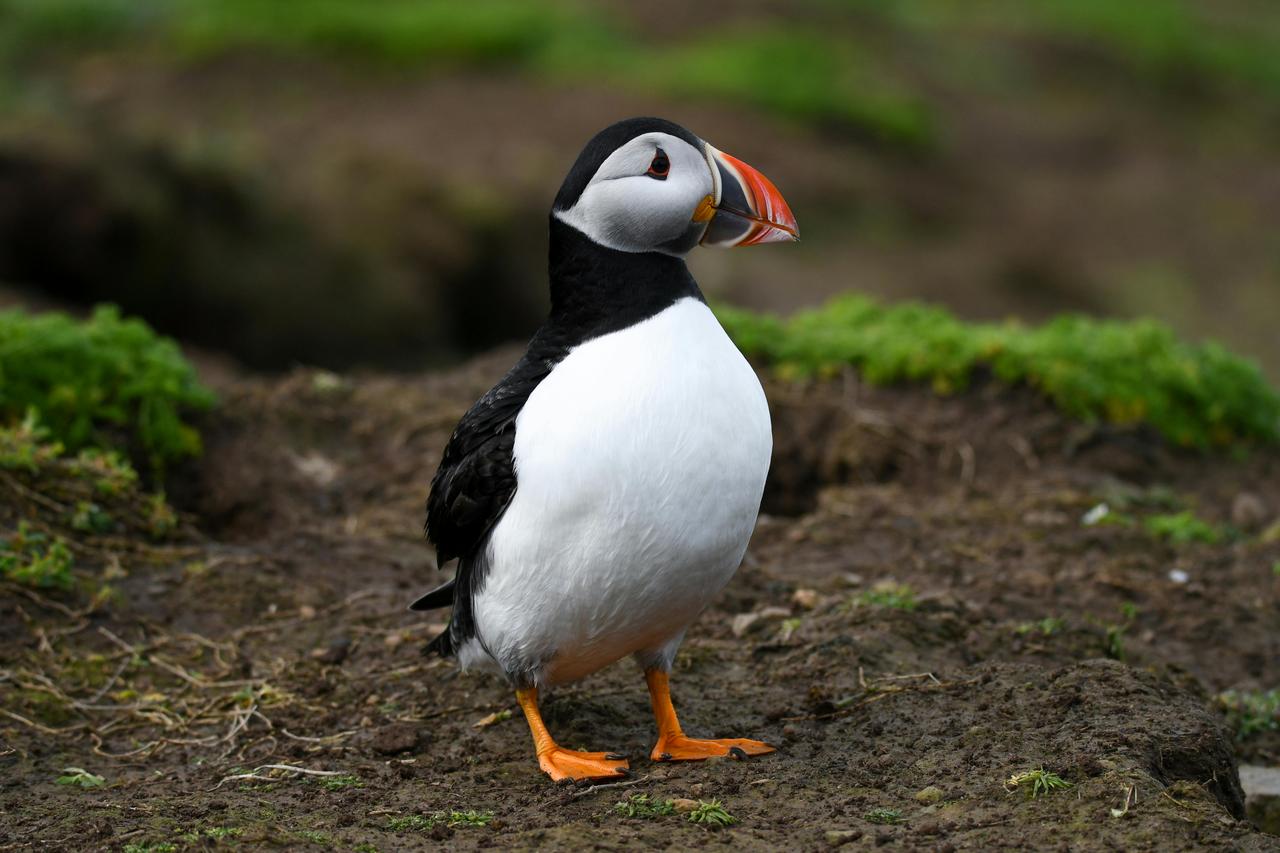
Atlantic puffin (Fratercula arctica) (pexels)
Endemic to the North Atlantic Ocean ecosystem, the species has a wide distribution. Approximately 80 percent of the global population breeds along the coasts of Iceland and Norway; the remainder is observed along the coasts of the United Kingdom, Ireland, France, Greenland, Canada (particularly Newfoundland), and the eastern United States (Maine). During the summer breeding season, puffins nest in colonies in burrows dug into soil on rocky cliffs and coastal islands to avoid predators. Outside the breeding season, they completely leave land and lead a pelagic life in the open waters of the Atlantic Ocean. During this winter migration, European populations reach as far south as Spain and even the western Mediterranean, while North American populations migrate as far south as the coasts of Maryland.
Puffins have a carnivorous (piscivorous) diet, primarily consisting of small fish species found in the oceans. Their prey includes sand eels, herring, capelin, haddock, and pollock, as well as some crustaceans and mollusks. Their hunting strategy involves diving from the air into the water and using their wings like flippers to swim underwater. While they typically forage at depths of around 15 meters, recorded maximum diving depths reach 60 meters. The upper beak contains backward-facing spiny ridges that allow the bird to hold onto slippery fish without dropping them, enabling it to carry multiple fish simultaneously to its nest; scientific records report a single individual holding up to 83 small sand eels in its beak at once. Additionally, puffins have physiological adaptations that allow them to drink seawater to meet their hydration needs in the open ocean.
Puffins follow a monogamous breeding model, typically mating with the same partner for life and returning annually to the same nesting site. Sexual maturity is reached between three and six years of age. During the breeding season, pairs reinforce their bond through beak rubbing and both partners participate in nest construction. The female lays a single egg per year in a burrow dug 70 to 110 centimeters into the soil. After an incubation period of 39 to 45 days, during which both parents take turns sitting on the egg, the chick (puffling) hatches. For the next 38 to 50 days, the chick is fed by both parents with fish until it becomes fully independent. It then leaves the nest at night to avoid predators and heads out to sea. In the wild, the average lifespan is around 20 years; however, individuals have been documented to live up to 41 years in the wild and 36 years in captivity through banding studies.
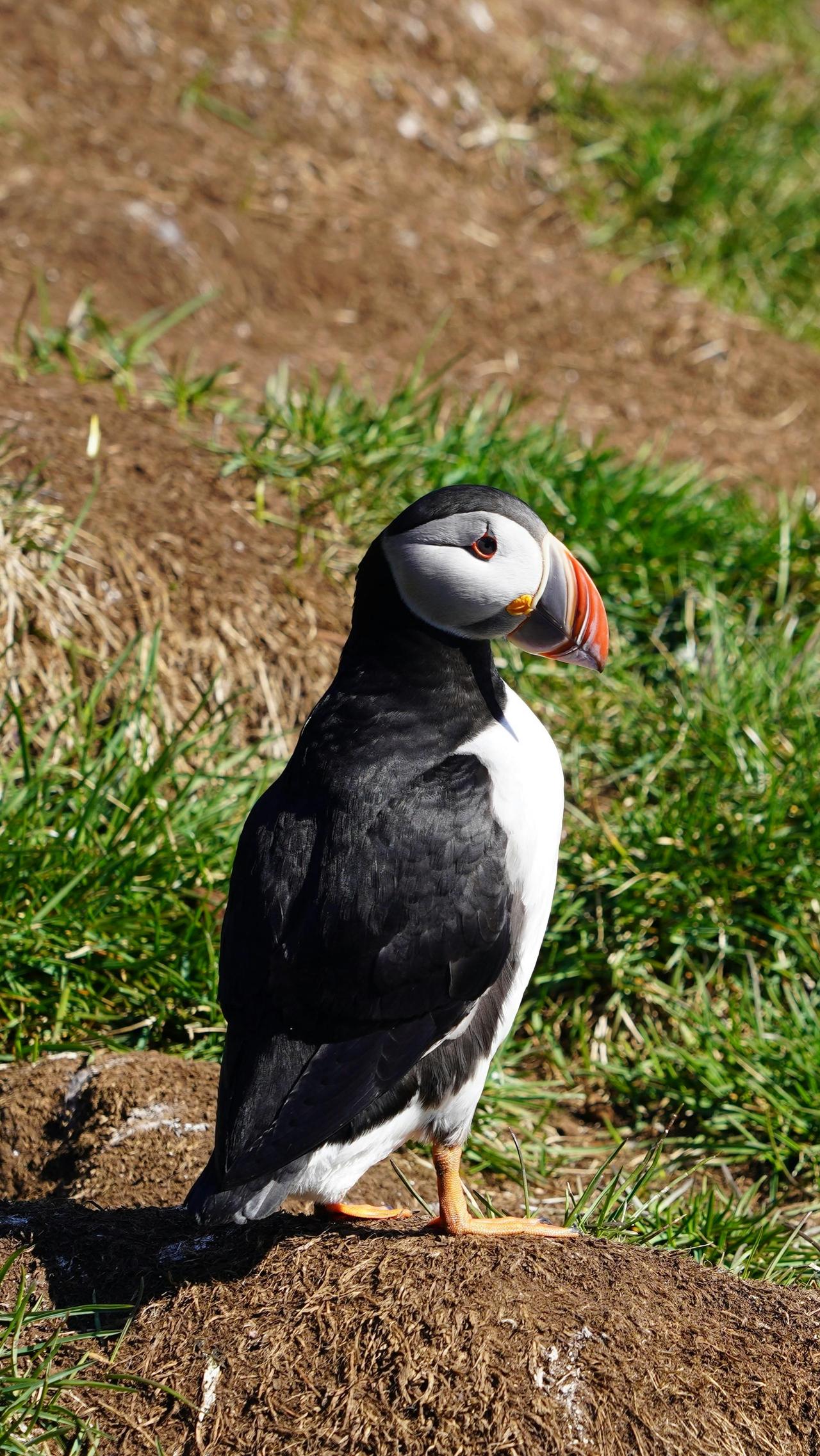
Atlantic puffin (Fratercula arctica) (pexels)
The Atlantic puffin is listed as “Vulnerable” on the International Union for Conservation of Nature (IUCN) Red List. Historically, this species was heavily hunted by humans for its feathers, meat, and eggs, leading to critical population declines. Today, it is protected under national and international legislation such as the Migratory Bird Treaty Act of 1918. Contemporary threats to the global population include climate change and ocean warming, which cause shifts in fish distributions and can lead to chick starvation due to food scarcity. In addition, ingestion of marine plastic debris, accidental entanglement in fishing gear, and bioaccumulation of heavy metals such as mercury and arsenic due to ocean pollution constitute significant ecological stressors. Finally, invasive predators introduced by humans—including cats, dogs, rats, weasels, and red foxes—as well as natural predators like the great black-backed gull, significantly reduce the survival rates of eggs and chicks.
Audubon. "Atlantic Puffin." Accessed May 10, 2026. https://www.audubon.org/field-guide/bird/atlantic-puffin
Cornell Lab of Ornithology. "Atlantic Puffin Overview, All About Birds." Accessed May 10, 2026. https://www.allaboutbirds.org/guide/Atlantic_Puffin/overview
Painter, Jessica. "Fratercula arctica (Atlantic puffin)." Animal Diversity Web. Accessed May 10, 2026. https://animaldiversity.org/accounts/Fratercula_arctica/
Pexels. "Deniz Doğa Kuş Ayakta." Accessed May 10, 2026. https://www.pexels.com/tr-tr/fotograf/deniz-doga-kus-ayakta-27028487/
Pexels. "Kayalık Arazide Tüneyen Atlantik Papağanı." Accessed May 10, 2026. https://www.pexels.com/tr-tr/fotograf/kayalik-arazide-tuneyen-atlantik-papagani-31879568/
Pexels. "Puffin on Rock." Accessed May 10, 2026. https://www.pexels.com/tr-tr/fotograf/32221599/
United Parks & Resorts. "Puffins Facts and Information." SeaWorld Parks & Entertainment. Accessed May 10, 2026. https://seaworld.org/animals/facts/birds/puffin
WWF. "Top 10 facts about Puffins." Accessed May 10, 2026. https://www.wwf.org.uk/learn/fascinating-facts/puffins

Scientific Name(s) | Fratercula arctica | ||||||||
|---|---|---|---|---|---|---|---|---|---|
IUCN Status | Sensitive / Vulnerable | ||||||||
Sexual Maturity | Between 3 and 6 years | ||||||||
Incubation Period | Between 36 and 45 days | ||||||||
Number of Eggs | One per year | ||||||||
Feeding Behavior | Carnivorous and piscivorous | ||||||||
Average Wingspan | Between 47 and 63 centimeters | ||||||||
Average Body Length | Between 18 and 33 centimeters | ||||||||
Known Nicknames in the Ocean | Atlantic Puffin or Ocean Puffin | ||||||||
Worldwide Population | Approximately 12,000,000 to 14,000,000 adult individuals | ||||||||
No Discussion Added Yet
Start discussion for "Atlantic puffin (Fratercula arctica)" article
Physical Characteristics
Habitat and Geographic Distribution
Feeding Habits
Reproduction and Life Cycle
Conservation Status and Population Threats