


This article was automatically translated from the original Turkish version.
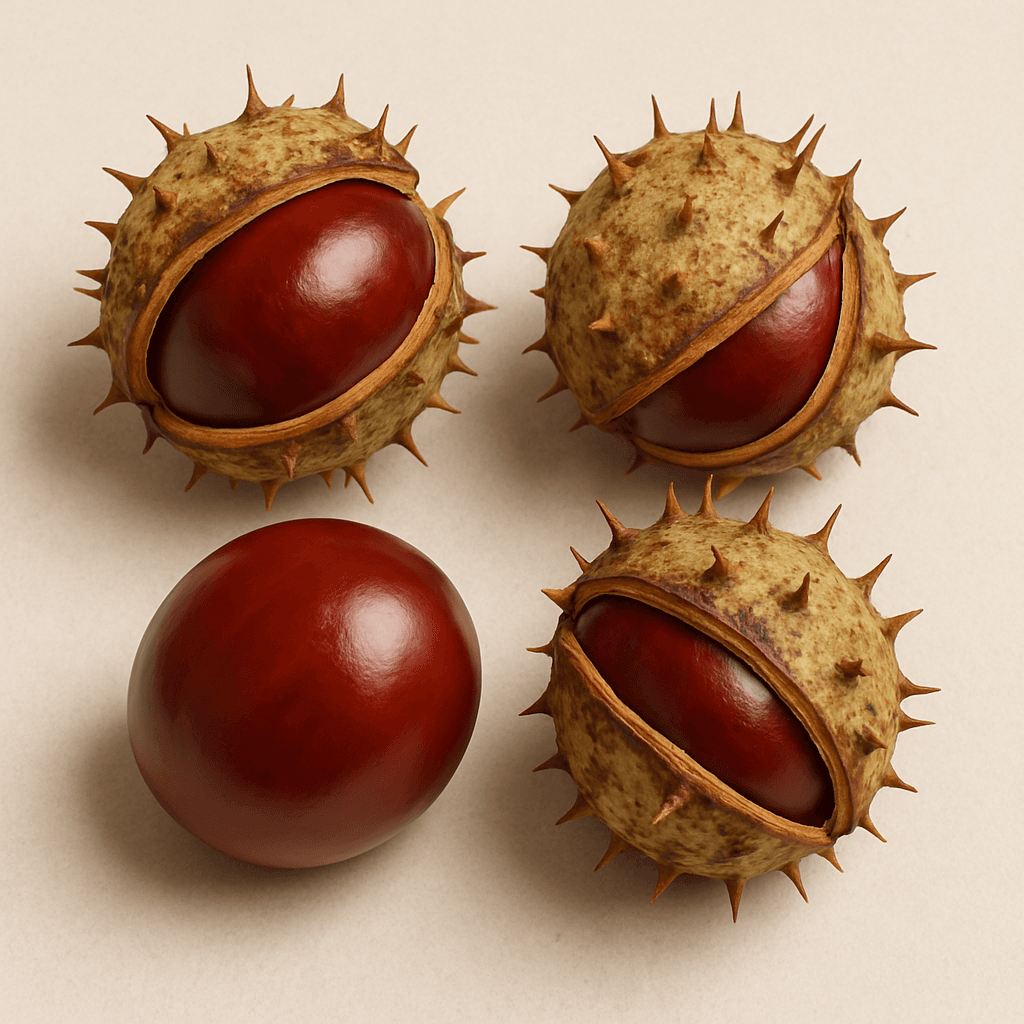
Chestnut Tree
Scientific Name | Aesculus hippocastanum | ||||||||
|---|---|---|---|---|---|---|---|---|---|
Subfamily | Hippocastanoideae | ||||||||
Horse chestnut (Aesculus hippocastanum), a tree species belonging to the Sapindaceae family, commonly found in Europe and Asia. Known for its showy flowers and large seeds, this plant is used as an ornamental plant in parks and gardens and also holds an important place in traditional medicine.
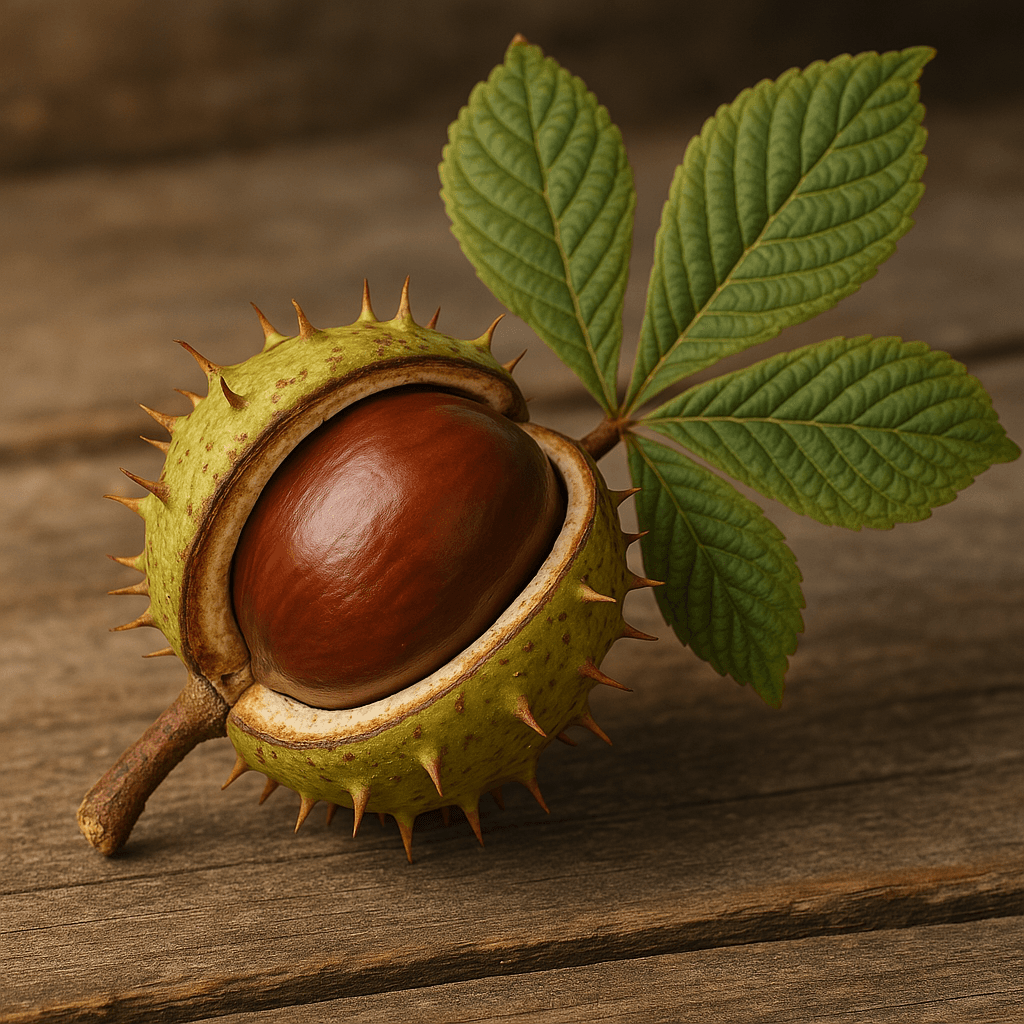
Horse chestnut. (Generated by artificial intelligence.)
Horse chestnut’s most well-known component is the triterpene saponin called “aescin.” Aescin is used particularly in the treatment of chronic venous insufficiency and hemorrhoids due to its anti-inflammatory and venotonic effects. A study conducted at the Faculty of Pharmacy, Istanbul University, demonstrated that the extract of Aesculus hippocastanum L. effectively enhances skin permeability in a new gel formulation. Additionally, phenolic compounds found in the leaves, bark, and fruit exhibit antibacterial and antifungal activities.
Horse chestnut thrives particularly in temperate climates and is frequently used as an ornamental plant in urban landscaping.
Horse chestnut offers various benefits primarily through its seeds, bark, and leaves:
Horse chestnut seeds contain a compound called aescin (escin). This substance possesses anti-inflammatory and venotonic (vein-strengthening) properties.
Horse chestnut extract is effective in reducing swelling, pain, and symptoms associated with varicose veins caused by weakened leg veins. Clinical studies have shown that horse chestnut extract can reduce leg edema by 30–40 percent.
Horse chestnut helps prevent cellular damage caused by free radicals due to its high antioxidant capacity. It is also used to relieve rheumatic pain.
Creams containing horse chestnut are effective in reducing hemorrhoid symptoms. Its vasoconstrictive property helps alleviate bleeding and swelling.
Warning: The content in this section is provided solely for general encyclopedic information purposes. The information presented here should not be used for diagnosis, treatment, or medical advice. Always consult a physician or qualified healthcare professional before making any health-related decisions. Neither the author of this article nor KÜRE Encyclopedia accepts any responsibility for consequences arising from the use of this information for diagnostic or therapeutic purposes.
Atatürk Orman Çiftliği. (2023). *At Kestanesi Bitkisi*. Accessedhttps://www.aoc.gov.tr/Portal/BitkiselUretimler/at-kestanesi/84.
Murathan, A., & Koçyiğit, H. (2012). Sulu çözeltilerden kadmiyum iyonlarının dolgulu yataklarda at kestanesi ve kestane kabuğu kullanılarak giderilmesi. *Kastamonu Üniversitesi Orman Fakültesi Dergisi*, 12(1), 68–75.https://dergipark.org.tr/tr/pub/gazimmfd/issue/6703/89088

Chestnut Tree
Scientific Name | Aesculus hippocastanum | ||||||||
|---|---|---|---|---|---|---|---|---|---|
Subfamily | Hippocastanoideae | ||||||||
Chemical Composition and Pharmacological Properties
Botanical Characteristics
General Characteristics
Benefits of Horse Chestnut
Medical Use
1. Treatment of Chronic Venous Insufficiency and Varicose Veins
2. Antioxidant and Anti-inflammatory Effects
3. Use in Hemorrhoid Treatment