


This article was automatically translated from the original Turkish version.
An asteroid is a small, rocky body that orbits the Sun and is primarily found in the region known as the asteroid belt, located between the orbits of Mars and Jupiter. These celestial bodies are remnants from the early solar system, formed about 4.5 billion years ago during the formation of the planets. Unlike planets, asteroids are much smaller, irregularly shaped, and lack atmospheres. Their sizes range from a few meters to hundreds of kilometers, with the largest asteroid, Ceres, also classified as a dwarf planet.
Because asteroids have remained relatively unchanged since their formation, they are considered the “fossils” of the solar system and provide valuable insights into its composition, structure, and evolution. Most asteroids reside in the asteroid belt, but some have orbits that bring them close to Earth, and are known as Near-Earth Asteroids. These asteroids are of particular interest for defense industries and space research.
The term “asteroid,” meaning “star-like,” was first introduced in 1802 by British astronomer William Herschel. The name was inspired by their appearance in early telescopes as point-like lights resembling stars rather than the disks of planets. The first asteroid, Ceres, was discovered in 1801 by Italian astronomer Giuseppe Piazzi and was initially classified as a planet before being recognized as part of a new category of celestial objects.
Time has seen the discovery of thousands of asteroids due to advancements in telescopes and observation techniques. Today, with ongoing discoveries through specialized missions like NASA’s NEOWISE and ground-based observatories, over a million asteroids are known. The study of asteroids has gained further importance with space missions such as Hayabusa2 and OSIRIS-REx, which aim to collect samples from asteroids and return them to Earth for analysis.
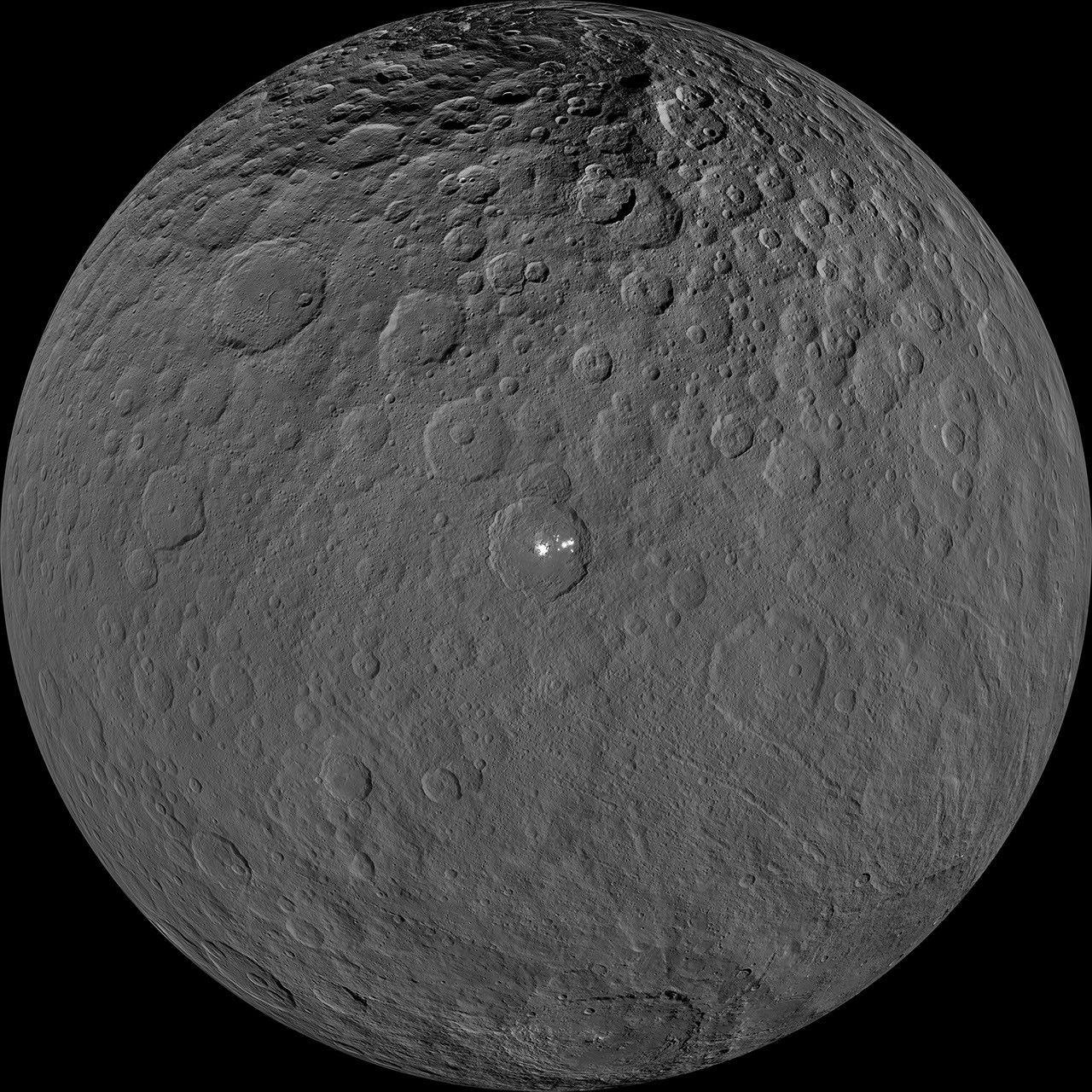
Image of Ceres, also known as a dwarf planet, captured by NASA
Asteroids are classified based on their composition, location, and physical properties. These classifications help scientists understand their origins, behavior, and potential applications in space research.
Asteroids are grouped into three main types based on their chemical structure and reflectivity:
These are the most common type, making up approximately 75% of known asteroids.
They are rich in carbon and appear dark due to their low reflectivity.
C-type asteroids are thought to contain primitive materials from the early solar system, including minerals that carry water.
Example: Bennu (studied by NASA’s OSIRIS-REx mission).
They are composed primarily of silicate (rocky) materials and metallic minerals.
These asteroids are brighter and account for about 17% of known asteroids.
They are more common in the inner regions of the asteroid belt.
Example: Eros (studied by NASA’s NEAR Shoemaker mission).
They consist mostly of metals such as iron and nickel, are less common, but highly reflective.
It is believed that these asteroids are remnants of the cores of larger bodies that were destroyed during the early history of the solar system.
Example: Psyche (target of NASA’s Psyche mission).
Asteroids are also categorized based on their position in the solar system:
This belt, located between the orbits of Mars and Jupiter, contains the largest collection of asteroids.
Examples: Ceres and Vesta.
These have orbits that bring them close to Earth.
Amor Asteroids: They approach Earth’s orbit but do not cross it.
Apollo and Aten Asteroids: They cross Earth’s orbit and pose a potential impact risk.
Trojan Asteroids: These share their orbits with larger planets and are typically located at stable points known as Lagrange points.
The most notable group is the Jupiter Trojans, but similar populations exist around Mars, Neptune, and even Earth.
Example: Hektor (a Jupiter Trojan).
Trans-Neptunian Asteroids: These icy-rocky bodies beyond Neptune are sometimes considered distant asteroids.
Example: Asteroids in the Kuiper Belt.
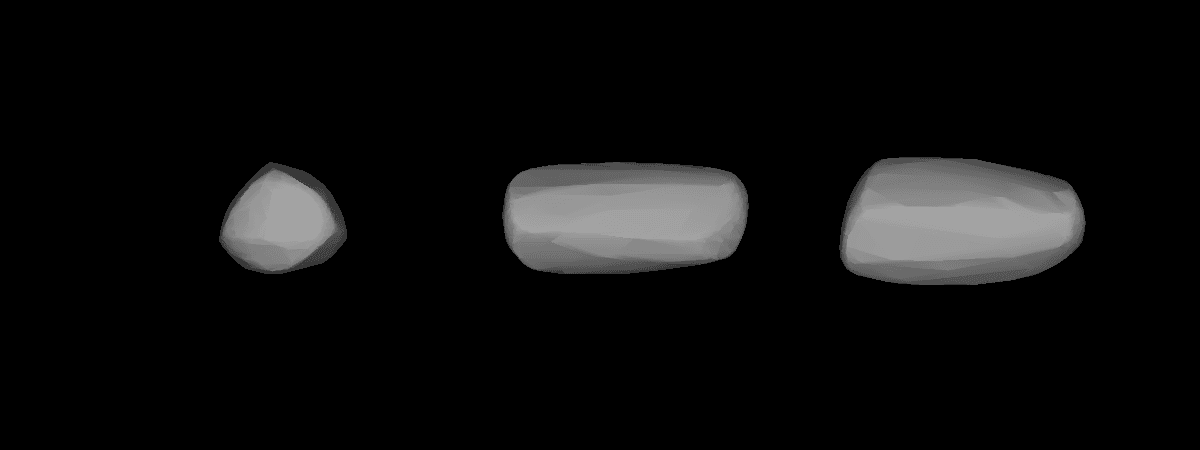
Artist’s rendering of Hektor by Damit
Monolithic Asteroids:
Small asteroids consisting of a single solid rock.
Rubble Pile Asteroids:
These are loose collections of rocks and debris held together by gravity.
Example: Itokawa (studied by JAXA’s Hayabusa mission).
Active Asteroids:
They exhibit comet-like activity such as tails or gas emissions but have asteroidal composition.
Binary and Triple Asteroids:
Systems in which two or more asteroids orbit each other.
Example: Didymos and its moon Dimorphos (target of NASA’s DART mission).
These types and classifications enable scientists to study the diversity of asteroids and shed light on the processes that shaped the solar system and the potential roles asteroids may play in future space endeavors. Would you like to explore a specific type in more detail?
Asteroids are scientifically significant for several reasons:
Clues to the origin of the solar system: Asteroids, as remnants of the solar system’s formation, contain pristine materials that provide insight into conditions that existed billions of years ago.
Resources for future exploration: Many asteroids are rich in metals, water ice, and other resources that could support human activity in space.
Defense: Studying the orbits and characteristics of Near-Earth Asteroids is essential for predicting and preventing potential collisions with Earth.
Origins of life: Some asteroids contain organic compounds and water-bearing minerals that may have played a role in delivering the building blocks of life to Earth.
Astronomy Source. (n.d.). *Different types of asteroids*. Accessed January 10, 2025.https://astronomysource.com/different-types-of-asteroids/NASA Science Solar System Exploration. (n.d.). *Asteroids: Facts*. Accessed January 10, 2025.https://science.nasa.gov/solar-system/asteroids/facts/DAMIT: Database of Asteroid Models from Inversion Techniques. (n.d.). *Asteroid 182*. Accessed January 10, 2025.https://astro.troja.mff.cuni.cz/projects/damit/asteroids/view/182NASA Science Solar System Exploration. (n.d.). *High-resolution view of Ceres*. Accessed January 10, 2025.https://science.nasa.gov/resource/high-resolution-ceres-view/

Historical Background and Discovery
Types of Asteroids
Classification by Composition
C-Type (Carbonaceous Asteroids):
S-Type (Silicate Asteroids):
M-Type (Metallic Asteroids):
Classification by Location
Asteroid Belt Asteroids:
Near-Earth Asteroids:
Classification by Physical Properties
Importance of Asteroids