


This article was automatically translated from the original Turkish version.
Asparagus is a plant belonging to the Asparagaceae family, consumed for its fresh shoots. The species Asparagus officinalis is commonly used as a vegetable, while Asparagus plumosus is known as an ornamental plant. This plant is recognized by its slender, long stems and small leaf-like structures.
Asparagus has been known since ancient times, with evidence of its use for medicinal purposes in Ancient Egypt. Cultivated in Egypt as early as 2000 BCE, it was used both as food and medicine during the Roman Empire. In the Middle Ages, asparagus became widespread in Europe and in the modern era it has been primarily consumed as a vegetable.
Asparagus is a perennial plant in the Asparagaceae family. The most common species is Asparagus officinalis, consumed as a vegetable. Other species include Asparagus plumosus, used as an ornamental plant, and wild asparagus (Asparagus acutifolius), which grows naturally. These plants are characterized by their fine branches and leaf-like structures.
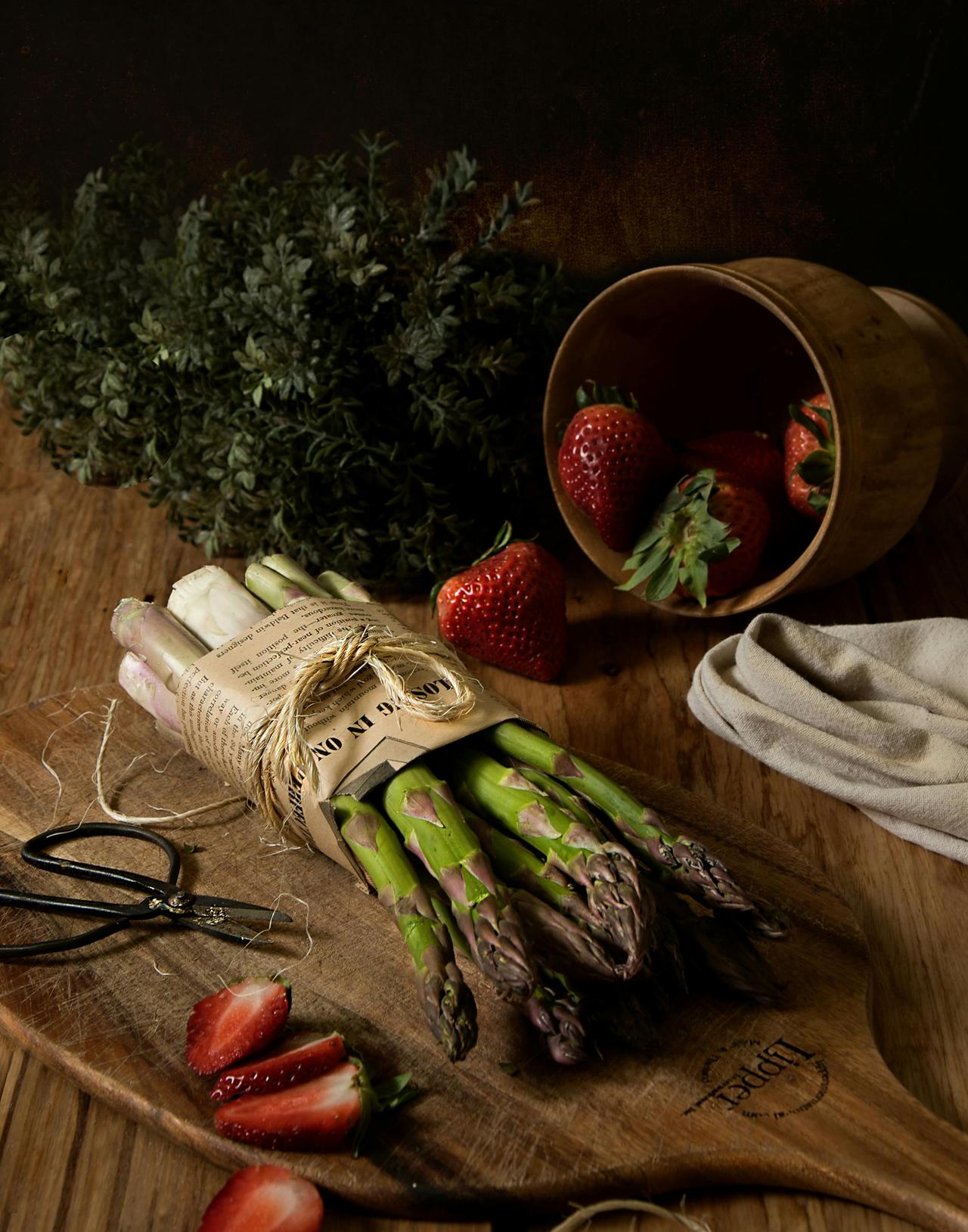
Asparagus plant. (Source: Eneida Nieves)
Asparagus thrives in temperate and subtropical climates. It prefers sunny or partially shaded areas and produces the highest yields in deep, well-drained soils rich in organic matter. An ideal soil pH ranges between 6.5 and 7.5. It is cold-tolerant and enters a dormant phase underground during winter, producing new shoots in spring.
Asparagus cultivation is typically carried out from seeds or by dividing rhizomes. However, in commercial production, planting one- to two-year-old crowns is preferred. Seedlings are planted in prepared fields in spring or autumn at intervals of 30 to 40 cm. New shoots emerge annually from rhizomes near the soil surface, allowing the plant to remain productive for many years.
Harvesting occurs in spring when young shoots reach a length of 15 to 20 cm. In the first years, the harvesting period is kept short, but as the plant matures (at 3 to 4 years old), the harvesting period can extend up to 8 to 10 weeks. Harvested shoots can be consumed fresh or dried for storage. Additionally, asparagus roots are dried and ground for medicinal use. Oil production is generally achieved through distillation of volatile compounds and is used in the cosmetic and pharmaceutical industries.
Asparagus cultivation in Türkiye is limited but commercially practiced especially in the Aegean and Marmara regions. In natural habitats, wild asparagus (Asparagus acutifolius) is abundant along the Mediterranean and Aegean coasts and is consumed locally by people. In recent years, asparagus production in Türkiye has increased due to its high nutritional value and health benefits.
Asparagus has a wide range of uses:
Asparagus has been known and consumed since Ancient Egypt, Greece, and Rome. The Romans cultivated it for its perceived health benefits, using it as both medicine and food. In Ottoman cuisine, asparagus found a place and is traditionally consumed in various regions of Anatolia. In the modern era, its popularity has increased alongside trends in healthy eating.
"Kuşkonmaz." Kubbealtı Lügatı. Accessed April 2, 2025.https://lugatim.com/s/Ku%C5%9Fkonmaz
"Kuşkonmaz." Türk Dil Kurumu (TÜDK). Accessed April 2, 2025.https://sozluk.gov.tr/?ara=Ku%C5%9Fkonmaz
"Yabani Kuşkonmaz Bitkisinin Özellikleri ve Kullanımı." *İstanbul Üniversitesi Orman Fakültesi Dergisi* 29, no. 1 (1999): 112–125. Accessed April 2, 2025.https://dergipark.org.tr/tr/pub/iuoba/issue/1200/14109
Baytop, T. *Bitkilerle Tedavi*. 1996. İstanbul Üniversitesi Yayınları. Accessed April 2, 2025.https://iupress.istanbul.edu.tr/tr/book/turkiyede-bitkiler-ile-tedavi/home
Derin, L. “Kuşkonmazın Botanik Özellikleri ve Kullanımı.” *YYÜ Tarım Bilimleri Dergisi*. Accessed April 2, 2025.https://dergipark.org.tr/en/pub/yyutbd/issue/21995/236147.
Pexels. "Dilimlenmiş Çilek." Accessed April 2, 2025.https://www.pexels.com/tr-tr/fotograf/dilimlenmis-cilek-1101249/.
Pexels. "Sağlıklı Sebzeler, Yeşil, Taze." Accessed April 2, 2025.https://www.pexels.com/tr-tr/fotograf/saglikli-sebzeler-yesil-taze-5791681/

History
Botanical Classification and Species
Growing Conditions
Cultivation Techniques
Harvesting, Drying, and Oil Production
Asparagus Cultivation in Türkiye
Uses
Historical Use