


This article was automatically translated from the original Turkish version.
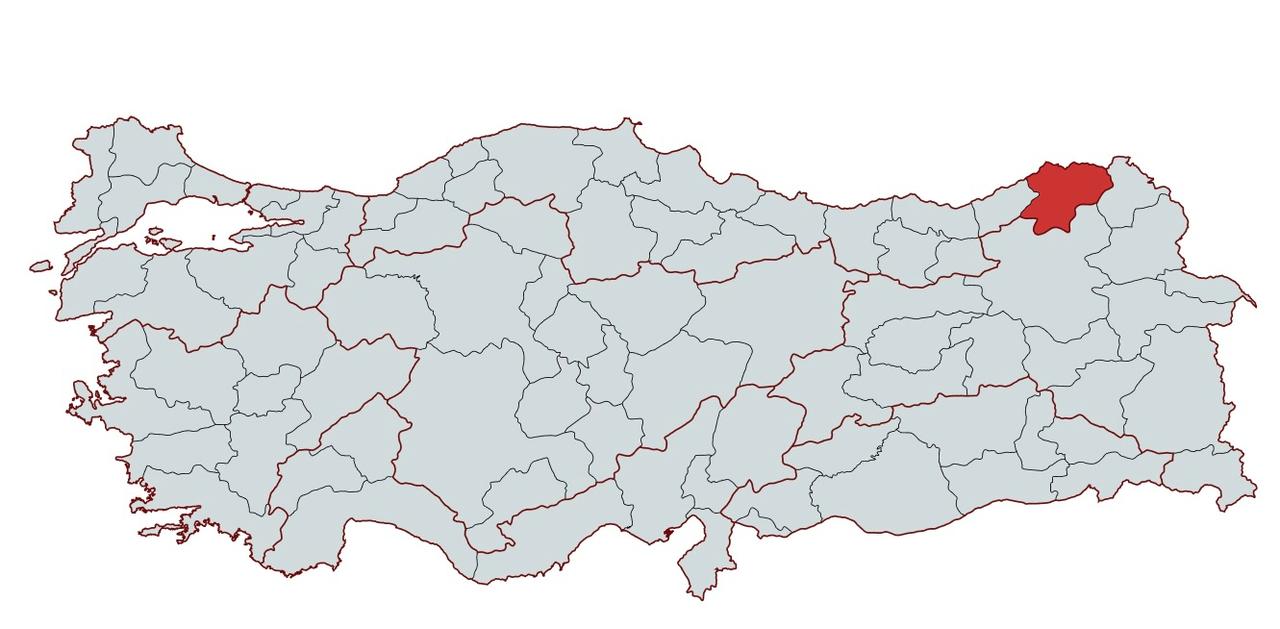
Artvin
Country | Türkiye | ||||||||
|---|---|---|---|---|---|---|---|---|---|
Region | Black Sea Region | ||||||||
Population | 169501 | ||||||||
Area | 7493 km² | ||||||||
Climate | Black Sea Climate | ||||||||
Governor | Dr. Turan Ergün | ||||||||
Mayor | Bilgehan Erdem | ||||||||
Area Code(s) | 466 | ||||||||
License Plate Code | 08 | ||||||||
Artvin is a province located in the northeast of Türkiye, bordering the Black Sea and known for its natural beauty. It shares borders with Ardahan to the east, Rize to the west, Erzurum to the south, and Georgia to the north. Its rugged terrain, rich forests, and rivers attract attention. Throughout history, it has been shaped by the influence of many civilizations including the Hurrians, Urartians, Scythians, Seljuks, Byzantines, and Ottomans.
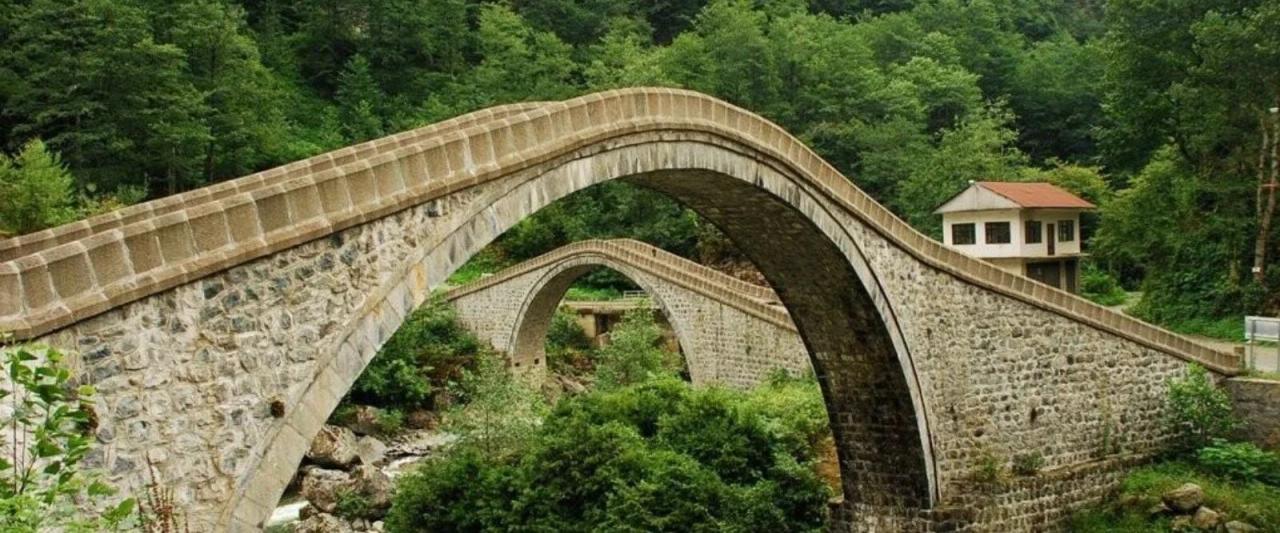
Ortacalar Çifte Köprüler
Artvin and its surroundings have been an important region bearing traces of many civilizations throughout history. The earliest settlements in the area date back to the 2000s BCE. Artvin’s history has been shaped by the influence of various civilizations including Urartu, Colchis, Rome, Byzantium, and the Ottoman Empire.
In the 9th century BCE, the region came under the rule of the Urartian Kingdom and later fell under the influence of different peoples such as the Scythians and Medes. During antiquity, particularly in the 6th century BCE, Artvin came under the administration of the Persian Empire and was governed as part of the satrapy system. After the Persians, the region came under the influence of Hellenistic kingdoms following Alexander the Great’s eastern campaigns.
During the Roman Empire period, the Kingdoms of Colchis and Lazica were the dominant political powers in the region. In the 4th century CE, Artvin came under Byzantine rule and experienced religious and cultural changes influenced by Christianity. During the Byzantine era, Georgian principalities also exerted influence over the region, particularly the Tao-Klarceti Principality which governed the area for a long time.
In the 11th century, after the Battle of Manzikert, Turkic groups began to migrate into the region, and by the 12th century Artvin and its surroundings came under Seljuk influence. From the 13th century onward, the region suffered invasions by the Mongols and later fell under the rule of the Akkoyunlu and Karakoyunlu.
With the rise of the Ottoman Empire, Artvin was incorporated into Ottoman territory during the eastern campaigns of Yavuz Sultan Selim in the 16th century. During the Ottoman period, the region was administratively attached to the Çıldır Eyalet and remained under Ottoman rule for a long time. In the 19th century, during the Ottoman-Russian wars, Artvin became a strategic point and remained under Russian occupation for 40 years following the Russo-Turkish War of 1877–1878. It returned to Ottoman administration in 1918 under the Treaty of Brest-Litovsk but briefly came under Georgian control after World War I. On 23 February 1921, it was incorporated into the territory of the Republic of Türkiye and continues to exist today as one of Türkiye’s important cities.
The origin of the name Artvin is not definitively known, but the region has been known by various names throughout history. In ancient times, it was referred to as Choroksi, Chorok, Colchis, and Livane. These names are believed to be linked to the Çoruh River. During the Ottoman period, the name Livane was commonly used and administratively assigned to the region. Some sources suggest that the name Artvin derives from the Georgian word “Artvani,” meaning “forested area.” Additionally, it is thought that the name Artvin may have originated from an old Turkic word meaning “high and rugged place.”
Artvin is located in the Eastern Black Sea Region and has a rugged and elevated terrain. While the coastal areas experience a typical Black Sea climate with rainfall throughout the year, the inland areas have colder winters and less summer precipitation. These climatic characteristics are particularly evident in the region stretching from the Cankurtaran Mountains to Borçka and Artvin Center.
Artvin is known for its high mountains and extensive highlands. One of its highest points is Mount Kaçkar at 3,932 meters. Other significant peaks include the Karçal Mountains, Yalnızçam Mountains, and Mescit Mountains. Some of Artvin’s most famous highlands include Şavşat Yavuzköy Highland, Borçka Karagöl Highland, and Kafkasör Highland. These highlands attract attention through nature tourism and highland festivals.
Artvin’s most important rivers include the Çoruh River, Murgul Creek, Oltu Creek, and Barhal Creek. The Çoruh River is one of Türkiye’s fastest-flowing rivers and holds great significance for rafting and nature sports. One of the province’s largest flat areas is the Ardanuç Plain. In addition, narrow plains are found along the valleys.
Artvin has numerous natural and artificial lakes. The most well-known is Borçka Karagöl. Şavşat Karagöl, located in the midst of dense forested areas, is another natural beauty. In addition, artificial lakes such as Muratlı Dam Lake and Deriner Dam Lake contribute to the province’s hydroelectric power production.
According to the Turkish Statistical Institute’s (TÜİK) 2024 Address-Based Population Registration System results, the population of Artvin Province is recorded as 169,501. The majority of the population lives in rural areas, and the overall population density of the province is low.
Artvin’s economy is primarily based on the following sectors:
Artvin has great potential for tourism due to its rich natural and cultural heritage. It attracts attention through its highlands, national parks, and historical structures.
Artvin possesses an important cultural heritage rooted in its long history. Traditional crafts, folk dances, and local festivals shape the city’s cultural identity. Events such as the Boğa Güreşleri Festival and the Kafkasör Culture and Tourism Festival are key cultural elements of the region.
Major folk dances include Ata Barı, Deli Horon, Ağır Bar, Hemşin Horonu, Arhavi Canlısı, Borçka Horonu, Deli Kız, Cilveloy, Karabağ, Kobak, Koçari, Livane, Sarı Çiçek, Tavuk Barı, Teşi, and Ondörtlü.
Artvin has great potential in nature tourism, historical tourism, and highland tourism.
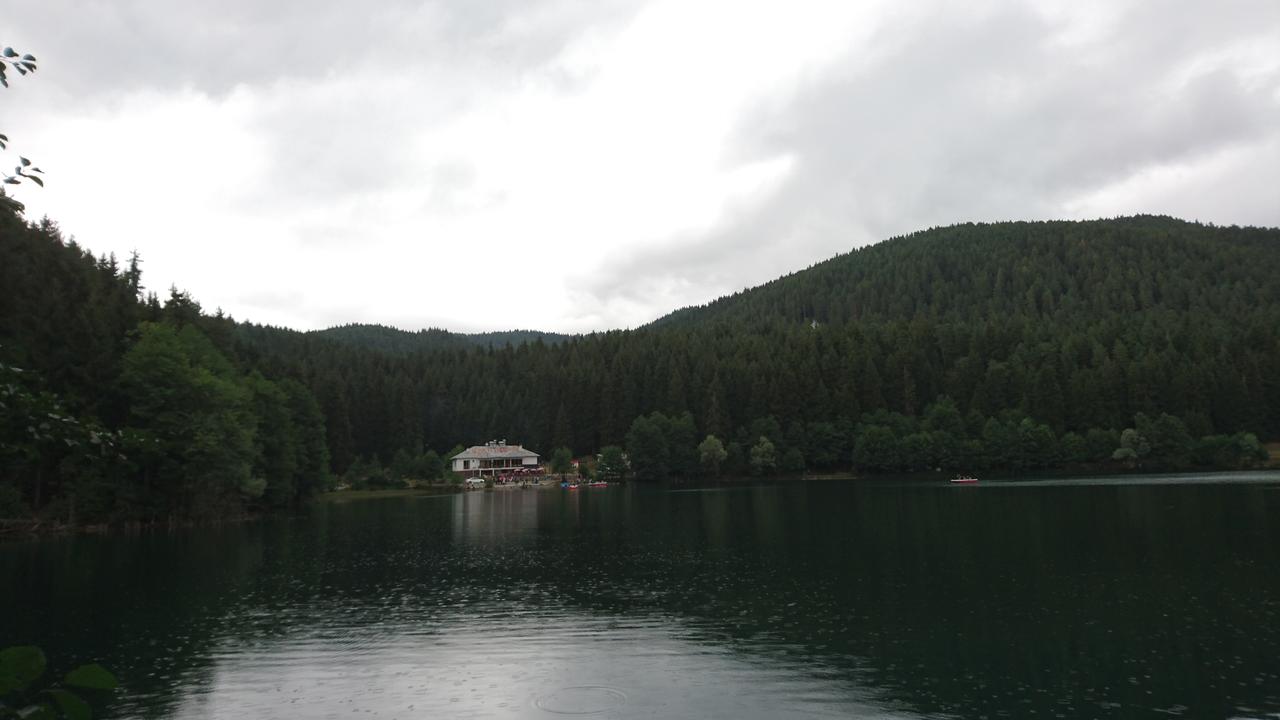
Şavşat Karagöl
Artvin cuisine reflects influences from both Black Sea and Caucasian culinary traditions. Local dishes include yatık döner, puçuko, laz böreği, kuymak, silor, hamsili ekmek, erişte pilav, kete, and kaygana. Additionally, Artvin’s world-famous Macahel honey is one of the region’s most important agricultural products. The cheese spread made from Şavşat’s gorcolo cheese is a daily food item commonly consumed by the local population.
Artvin is a province in the Black Sea Region of Türkiye, with its administrative center in the city of Artvin. The province is divided into nine districts: Center, Ardanuç, Arhavi, Borçka, Hopa, Kemalpaşa, Murgul, Şavşat, and Yusufeli. Local governance is carried out by the Artvin Governorship and municipal administrations. The Provincial Special Administration provides services in rural areas, while municipalities deliver infrastructure and services within urban centers.
According to the 2024 Decree of Governors, Turan Ergün, Governor of Uşak, was appointed as Governor of Artvin. Turan Ergün was born in Sinop in 1967 and graduated from the Public Administration Department of Istanbul University Faculty of Political Sciences in 1989. In the 31 March 2024 local elections, Bilgehan Erdem, candidate of the Republican People’s Party, was elected as Mayor of Artvin.
Artvin Valiliği. "Resmi Web Sitesi." Accessed February 19, 2025.http://www.artvin.gov.tr/.
Ntv Haber. "Artvin'de tarihi 'Çifte Köprüler' turistlerin ilgisini çekiyor." Accessed February 19, 2025.
Türkiye Kültür Portalı. "Artvin Genel Bilgiler." Accessed February 19, 2025.
Artvin
Country | Türkiye | ||||||||
|---|---|---|---|---|---|---|---|---|---|
Region | Black Sea Region | ||||||||
Population | 169501 | ||||||||
Area | 7493 km² | ||||||||
Climate | Black Sea Climate | ||||||||
Governor | Dr. Turan Ergün | ||||||||
Mayor | Bilgehan Erdem | ||||||||
Area Code(s) | 466 | ||||||||
License Plate Code | 08 | ||||||||
History
Etymology
Geography and Climate
Mountains and Highlands
Plains and Rivers
Lakes
Population and Demographics
Artvin Districts and Populations (2024)
Economy
Culture and Tourism
Culture
Tourism
Traditional Cuisine
Administration