


This article was automatically translated from the original Turkish version.
Electrum alloy, one of the first alloys worked by humans, formed naturally where gold and silver ores occurred together. Artificially produced electrum is an alloy of gold (Au) and silver (Ag) and may also contain small amounts of copper (Cu), platinum (Pt), and iron (Fe) etc.. The color tone of electrum varies depending on the ratio of gold to silver within it. It may contain 20% to 80% gold and 20% to 50% silver. When it contains more gold, it appears bright yellow; when it contains more silver, it can appear pale yellow or grayish. It has a structure that can be easily hammered and worked like gold. Its density also varies according to the gold content but generally ranges between 10 and 15 g/cm³. Additionally, due to its gold content, it is highly resistant to corrosion.
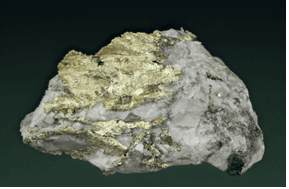
Electrum Ore (Source)
Electrum was the preferred alloy for producing the first coins in antiquity, for several important reasons. First, as a naturally occurring alloy, it could be worked without the need for separation, offering an economical and practical solution. It was harder than soft, easily worn gold and more durable and corrosion-resistant than silver. These properties made it suitable for producing long-lasting coins, providing opportunity for durable currency production.
Electrum also had considerable economic value because it contained both gold and silver. This situation offered trading civilizations a portable and valuable medium of exchange. Moreover, the gold and silver ratios in electrum coins could be controlled to standardize their value. This served as an effective method to facilitate trade and prevent counterfeiting. Electrum, a symbol of wealth and prestige, represented the power of the Kingdom of Lydia and other civilizations. Lydia, in the 7th century BCE, introduced the first electrum coins, establishing standardization in trade. The direct use of electrum as coinage created a revolution in the economy by simplifying commerce.
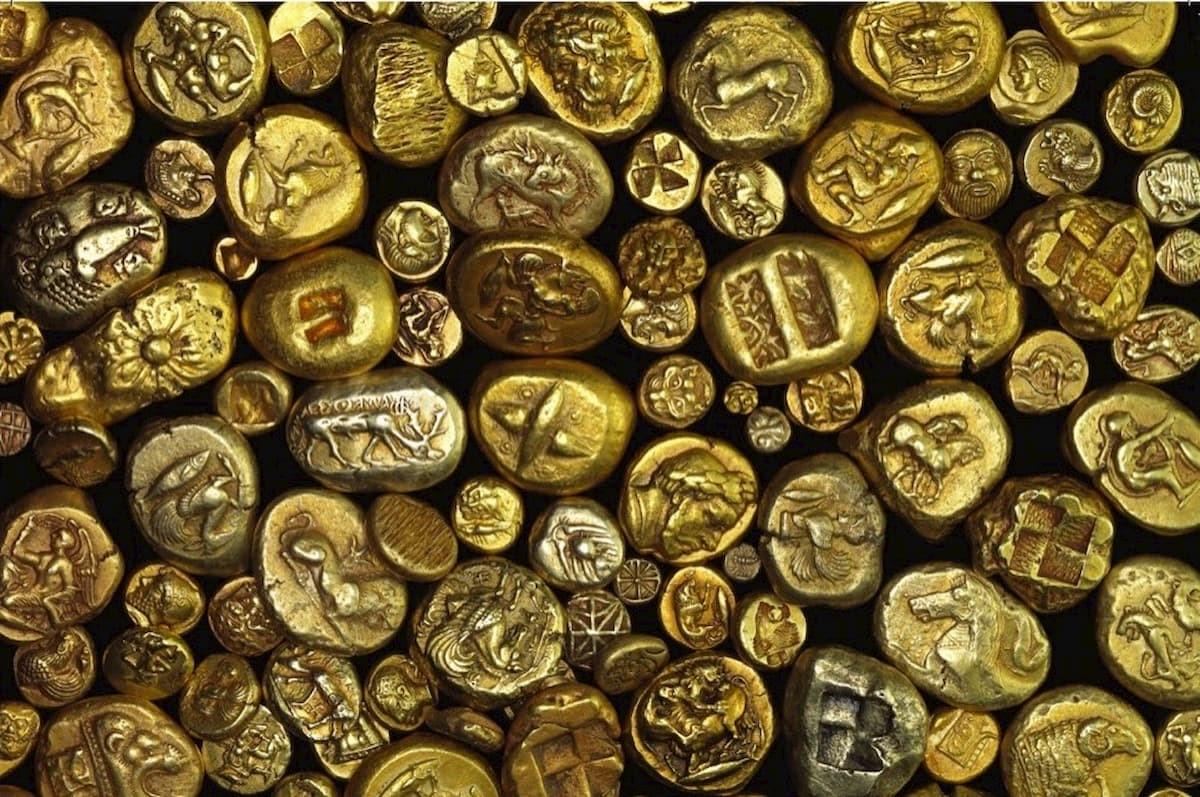
Electrum Coins ()
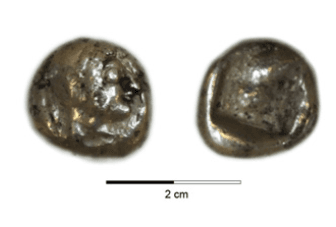
In Lydia, electrum found naturally in the alluvial deposits of the Pactolus River (Sart Çayı) was used as a raw material for coin production. The gold and silver content of natural electrum varied depending on its source. To obtain a standardized alloy, electrum was first refined and then mixed in specific proportions to achieve desired properties.
The prepared standard electrum alloy was initially cast into small bean-shaped pieces, which were later hammered into thin metal sheets. These sheets were then stamped with symbols reflecting the power and prestige of the Kingdom of Lydia, such as lion or bull heads or royal silhouettes. The stamping process was not only crucial for determining the coin’s value but also for guaranteeing its authenticity.
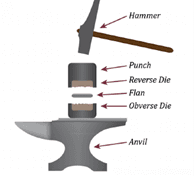
Electrum coin stamping (Source)
After stamping, the coins were carefully cooled and cleaned. These final steps prepared the electrum coins for use in trade. The processing of electrum into standardized coinage introduced uniformity to the economy, facilitated commerce, and enhanced Lydia’s economic power.

XRF instrument ()
XRF: A non-destructive technique that identifies elemental composition by analyzing characteristic X-rays emitted from the surface. In electrum coins, it rapidly determines the proportions of gold, silver, and copper and detects corrosion products. In one study, a PW4025 energy-dispersive spectrometer (bulk analysis) and an Olympus VANTA C portable XRF device (micro-area analysis) were used, with micro-area analyses performed at four different points.
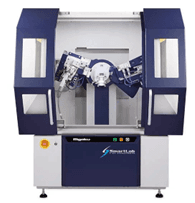
XRD instrument (Source)
XRD: A method used to examine the crystalline structure and corrosion products of materials. In electrum coins, it identifies the alloy structure and corrosion compounds such as chlorargyrite and cuprite. Its advantage lies in detailed analysis of crystal structure, but interpretation of results requires expertise.
Optical Microscopy: Used to examine surface morphology and corrosion products. In electrum coins, it visually assesses the distribution of corrosion products and the condition of preservation. It offers the advantages of speed and ease of use but provides no information on chemical composition and must be supported by other analytical methods to be effective.

Optical microscope ()
Neutron Radiography: A non-destructive technique used to examine the internal structure of metal coins. Neutrons penetrate deeply into metals, providing detailed information about internal structure. As neutron beams pass through the coin, they scatter differently depending on the material’s density. These scattering data are used to generate a 3D model of the coin, enabling detection of details such as pores, cracks, and coating layers.
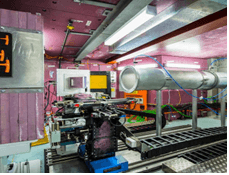
Neutron radiography instrument. ()
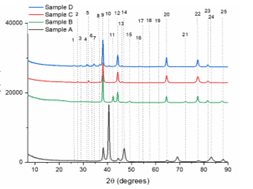
XRF analysis results (Source)
XRF Analysis Results from a Sample Study: Sample A contains 59% gold (Au), 31% copper (Cu), and 7% silver (Ag). This analysis confirms the surface is electrum. Sample B contains 57% silver (Ag), 24% copper (Cu), and 15% zinc (Zn). This composition indicates the object was produced as a silver plating over a brass base. Sample C contains 77% silver (Ag) with minor amounts of copper and zinc. Surface analyses detected corrosion products such as chlorine and sulfur compounds. Sample D has 74% silver (Ag) and 2.8% copper (Cu). The composition and heavy surface corrosion of this sample provide important insights into the preservation conditions of alloys used in antiquity.
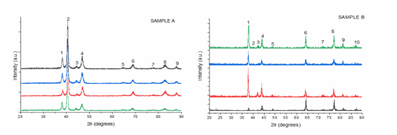
XRD analysis results (Source)
XRD Analysis Results from a Sample Study: Sample A revealed silver-copper (Ag-Cu) and gold (Au) phases on the surface. No corrosion products were detected, indicating excellent surface preservation. Sample B identified alpha-brass (Cu-Zn alloy). Despite minor corrosion traces, the surface remains well preserved. Sample C contains chlorargyrite (AgCl) as a silver corrosion product and cuprite (Cu2O) and tenorite (CuO) as copper corrosion products. Additionally, paratacamite (Cu2(OH)3Cl) was identified. Sample D is dominated by acanthite (Ag2S) as a silver sulfide corrosion product, along with chlorargyrite and copper corrosion products (cuprite, tenorite). The distribution of corrosion products indicates the object was heavily affected by environmental conditions.
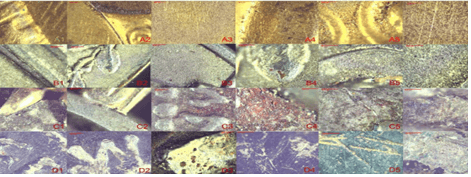
Optical microscope images (Source)
Optical Microscopy Analysis Results from a Sample Study: Silver-copper (Ag-Cu) and gold (Au) phases were identified on the surface. No corrosion products were detected, indicating excellent surface preservation. Alpha-brass (Cu-Zn alloy) was identified. Despite minor corrosion traces, the surface remains well preserved. Chlorargyrite (AgCl) as a silver corrosion product, cuprite (Cu2O) and tenorite (CuO) as copper corrosion products were detected. Additionally, paratacamite (Cu2(OH)3Cl) was identified. Acanthite (Ag2S) as a silver sulfide corrosion product, along with chlorargyrite and copper corrosion products (cuprite, tenorite), were dominant. The distribution of corrosion products indicates the object was heavily affected by environmental conditions.
Neutron Radiography Analysis Results from a Sample Study: Surface and internal structure examinations revealed a homogeneous, high-purity silver core beneath the surface coating of electrum coins. Traces of copper were detected in some samples, showing diffusion between the core and the coating. Coating thicknesses ranged from 50 to 100 μm and were applied using a diffusion bonding method. Limited diffusion of copper between the coating and core was determined. Minor corrosion traces were found on the surface, indicating favorable preservation conditions. Electrum coins were generally well preserved, with only minor surface imperfections observed.
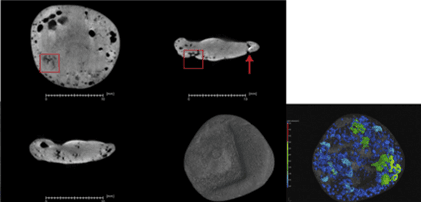
Neutron radiography image (Source)
Several key reasons led to the eventual discontinuation of electrum coinage. First, the relatively low gold content in electrum alloy facilitated counterfeiting and easy dilution of the alloy. This led to inflation and a loss of trust in trade, prompting preference for purer and more controllable metals.
The naturally variable gold and silver content in electrum rendered the intrinsic value of each coin uncertain. This uncertainty caused trust issues in trade and made standardizing the economic value of coins difficult. Pure gold and silver coins, offering a standardized value, provided a more reliable solution for commerce.
Additionally, advances in metal refining technologies enabled the easy separation of gold and silver. Thanks to these technological advances, pure gold and silver began to be preferred for coin production. Finally, states sought to control the composition of metals used in coinage to regulate their monetary systems. Electrum alloys, which complicated value control, were replaced by pure metals.
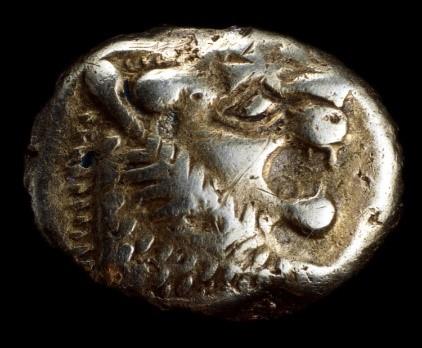
Electrum coin (Source)
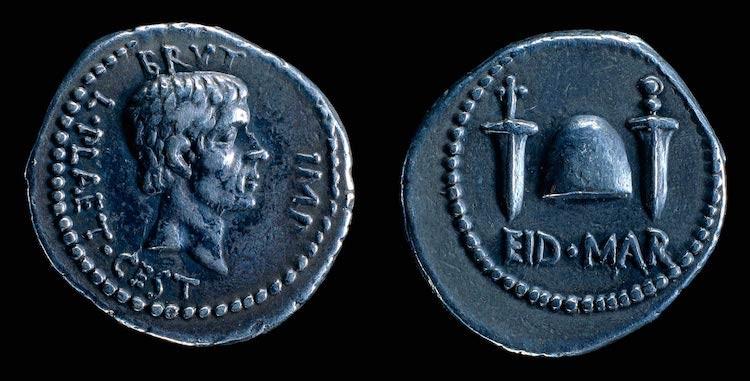
Electrum coin (Source)
Today, electrum is still used in certain fields. Jewelers and artisans seeking to recreate ancient designs favor it for jewelry and decorative arts. Electrum is also used in the restoration of ancient artifacts or the production of replicas, ensuring that modern copies remain faithful to the original structure. Although its use in monetary systems has ceased, electrum continues to maintain its importance in specific sectors due to its aesthetic and historical value.
F. Salvemini et al., “Neutron tomographic analysis: Material characterization of silver and electrum coins from the 6th and 5th centuries BCE,” Mater Charact, vol. 118, pp. 175–185, 2016. Available:https://www.researchgate.net/publication/303537455_Neutron_tomographic_analysis_Material_characterization_of_silver_and_electrum_coins_from_the_6th_and_5th_centuries_BCE
I. Fierascu, R. C. Fierascu, D. A. Mirea, P. Fotea, R. F. Andrei, and A. Ortan, “ARCHAEOMETALLURGICAL EVALUATION OF FINERY USING NONDESTRUCTIVE METHODS,” 2019. Available:https://rrp.nipne.ro/2019/AN71803.pdf
Photographs
Research Works and Encyclopedias
“(a) Illustration of the coin manufacturing process. (b) Three Roman... | Download Scientific Diagram.” Accessed December 20, 2024. [Online]. Available:https://www.researchgate.net/figure/a-Illustration-of-the-coin-manufacturing-process-b-Three-Roman-Republican-coins-of_fig1_261960125
“B-150POL-BR_model.jpg (JPEG image, 600 × 600 pixels).” Accessed December 20, 2024. [Online]. Available:https://www.optikamicroscopes.com/optikamicroscopes/wp-content/uploads/2017/02/B-150POL-BR_model.jpg
“Electrum: Mineral information, data and localities.” Accessed December 21, 2024. [Online]. Available:https://www.mindat.org/min-1365.html
“Olympus-VANTA-handheld-XRF.jpg (JPEG image, 1291 × 969 pixels) — Scaled (72%).” Accessed December 20, 2024. [Online]. Available:https://hotrobotics.co.uk/wp-content/uploads/2021/07/Olympus-VANTA-handheld-XRF.jpg
“Smartlab product photo with door open.jpg (JPEG image, 800 × 610 pixels).” Accessed December 20, 2024. [Online]. Available:https://rigaku.com/products/x-ray-diffraction-and-scattering/xrd/smartlab
“Technical-information-_Dingo-_web_hero-Image.jpg (JPEG image, 600 × 600 pixels).” Accessed December 20, 2024. [Online]. Available:https://www.ansto.gov.au/sites/default/files/styles/card_image/public/hero-images/Technical-information-_Dingo-_web_hero-Image.jpg?h=10d202d3&itok=XG7ljJD3
“white_gold-1.jpg (JPEG image, 1200 × 797 pixels) — Resized (88%).” Accessed December 24, 2024. [Online]. Available:https://labrujulaverde.b-cdn.net/en/wp-content/uploads/2020/05/white_gold-1.jpg

No Discussion Added Yet
Start discussion for "Archaeometallurgical Analysis of Electrum Coins" article
Tools and Methods
Findings from Sample Studies
Decline of Electrum Coins and Their Status Today