This article was automatically translated from the original Turkish version.
+1 More
Registration Number | 1281 | ||||||||
|---|---|---|---|---|---|---|---|---|---|
Registration Date | 09.12.2022 | ||||||||
Application Number | C2021/000528 | ||||||||
Application Date | 20.12.2021 | ||||||||
Name of the Geographical Indication | Arapgir Wooden Nail Shoe | ||||||||
Product / Product Group(s) | Handicraft Products Other Than Shoes Rugs and Textiles Carpets | ||||||||
Type of Geographical Indication | Mark of Origin | ||||||||
Applicant/Registrant(s) | Arapgir Municipality | ||||||||
Address of the Registrant | Köseoğlu Neighborhood, Government Street No:7 Arapgir MALATYA | ||||||||
Geographical Boundary | Arapgir District Malatya Province | ||||||||
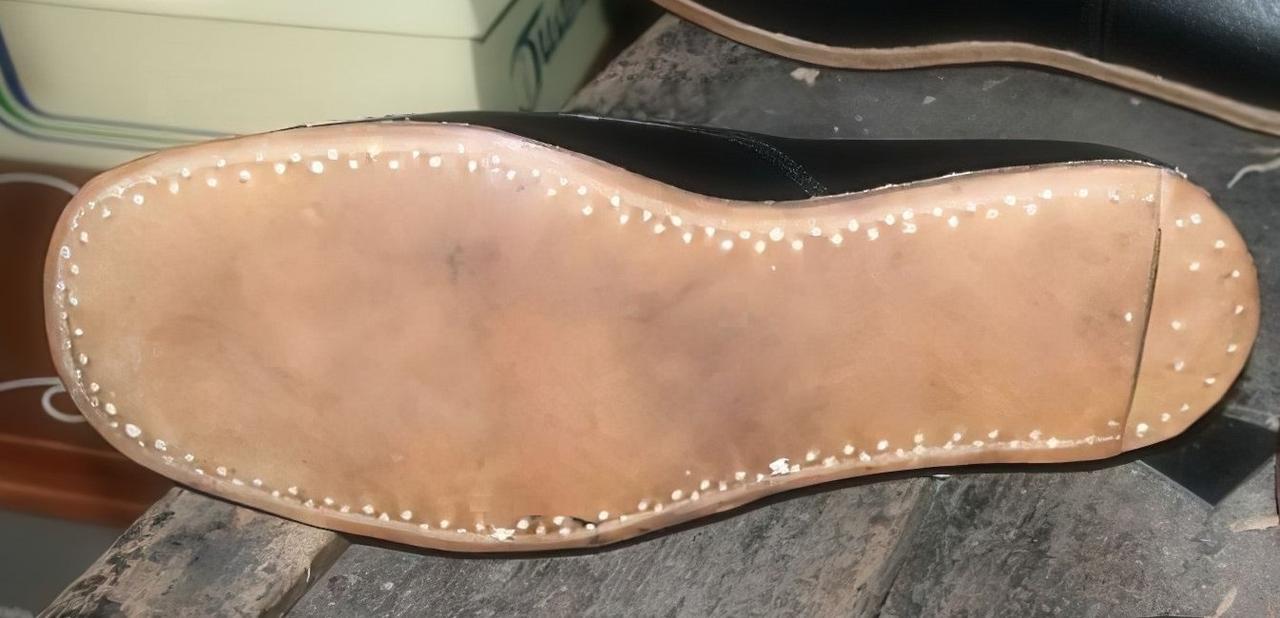
Arapgir Wooden Nail Shoe is a traditional craft registered with a geographical indication, unique to the Arapgir district of Malatya Province. The upper is made from laminated bovine leather, while the sole is crafted from bovine hide. During sole assembly, wooden nails measuring 5 mm in length and 0.5 mm in thickness, made from baked oak, beech, or hornbeam wood, are used. The product is available in various models including masked, standard, yemeni pattern, strap-edged, pool-front, patch-bellied, lace-stapled, bocçikli or bocçiksiz yemeni, sandal-type, and piyantalı.
The Arapgir wooden nail shoe features an upper made from laminated bovine leather and a sole made from bovine hide. Its most distinctive structural feature is the attachment of the upper to the sole using wooden nails. These nails are 5 mm long and 0.5 mm thick, manufactured from baked oak, beech, or hornbeam wood. The use of wooden nails serves both structural durability and prevents perforations in the sole.
The Arapgir wooden nail shoe comes in various models: masked, standard, yemeni pattern, strap-edged, pool-front, patch-bellied, lace-stapled, bocçiksiz and bocçikli (pöçüklü or pöçüksüz) yemeni, sandal-type, and piyantalı. Each model differs in appearance and usage. For instance, in the masked model, a transverse piece is sewn onto the toe area; in the yemeni pattern model, the toe is narrowed. The sandal-type model is distinguished by its resemblance to a sandal.
The materials and tools used in the production of Arapgir wooden nail shoes are detailed. The key elements used in the manufacturing process are:
The production of Arapgir wooden nail shoes is primarily carried out using pre-made lasts. However, in special cases, the length and forefoot width of the wearer’s foot are measured for custom production. First, the model is selected, and a decision is made whether to use reinforcing pieces called “bombe” at the toe or “fort” at the heel. The upper, known as “saya,” is cut using a filo blade with the help of an istampa. If a pattern is to be applied to the front upper, holes are punched using a zımba. Inside the saya machine, the inner lining is sewn and the upper edges are folded and stitched. The insole, cut from hide, is hammered into the lower part of the wooden last. If a flared foot is being produced, a wedge is inserted into the front upper part of the last; this process is called “alça vurmak.”
To add rigidity to the front and rear parts of the shoe, pieces cut from the insole are glued using a solution of çiriş powder. These pieces are named “fort” when placed at the heel and “bombe” when placed at the toe. Çiriş powder is applied to the inner surface of the ready upper, and small fabric patches are adhered to it. This ensures the lining sewn along the upper edge remains securely attached.
In the next stage of production, soap is applied to the front and rear parts of the last to ease removal of the upper, and paper pieces are inserted. The upper is placed over the last and stretched using the danilya tool, then secured with metal nails. Metal nails are hammered at regular intervals along the front and rear sole areas to prevent bulging. These metal nails are temporary and removed before the sole is attached. The upper is gently shaped by tapping various parts of the last with a hammer to ensure proper fit. Excess leather along the edges is trimmed and cleaned using a falçata.
The upper, fixed to the last, is joined to the insole using a hand-sewing technique called “ilinti dikme” or adhesive. The ilinti stitch is applied by inserting the ilinti hook—whose tip is slightly angled inward—into the insole and then driving the needle through that point, creating a double-layered hand stitch. The thread used is two or three-ply flax thread waxed with beeswax. After stitching or gluing is complete, the sole leather is cut and soaked in water for a certain period to facilitate smooth cutting with the blade. This process also allows the wooden nails to swell slightly for a firmer hold. Additionally, as the hide wears over time, the wooden nails also wear down, preventing holes from forming in the sole.
The soaked hide is placed under the stretched upper on the last after the metal nails have been removed following a 20-minute wait. A groove is cut along the sole edge with a blade, and the kasaburuk tool, struck with a hammer, drills holes along this groove. Wooden nails are then hammered into each hole. Excess material along the side edges of the sole is trimmed with a falçata and shaped using the petatir tool; this process is called “piyanta.”
After the piyanta process is completed, the heel is attached using adhesive and 5x22 mm metal nails. The heel edges and underside are planed with cam pieces, smoothed with zımpara, and painted with black resin paint. The edges are polished by applying labunya heated over a fire. The shoe is left on the last for approximately two days to set its shape. In the final stage, the exposed ends of the wooden nails visible on the inner surface of the shoe are broken and smoothed using a hand rasp. The inner lining is glued to the inner sole using çiriş powder. Patterns are created along the heel edges by cutting grooves with a filo blade and the production is completed with polishing. Thus, the Arapgir wooden nail shoe becomes ready for use.
The different models of Arapgir wooden nail shoes vary in shape and function:
The history of the Arapgir wooden nail shoe is rooted in region-specific production techniques and artisanal expertise. All stages of production must be carried out within the boundaries of the Arapgir district of Malatya Province. This requirement is essential due to its registration as a geographical indication and ensures the product maintains its association with its place of origin.
Inspections are conducted under the coordination of the Arapgir Municipality. The inspection board includes one expert representative each from the Arapgir Municipality Directorate of Culture and Social Affairs, the Arapgir Chamber of Tradesmen and Craftsmen, and the Arapgir District Public Education Directorate. Inspections are carried out at least once annually, but may be conducted at any time upon complaint or need.
During inspections:
Inspection results are documented and submitted to the Turkish Patent and Trademark Office. Any identified non-conformities are communicated to the relevant individual, institution, or organization. The inspection authority may, when necessary, seek support from or procure services from public or private institutions. The registrant is responsible for initiating legal proceedings.
Turk Patent and Trademark Office. "Coğrafi İşaret Tescil Belgesi - Arapgir Tahta Çivili Ayakkabı." Accessed July 13, 2025. https://ci.turkpatent.gov.tr/Files/GeographicalSigns/b2ccf97a-4d7a-4972-953b-93ab1359160d.pdf.
Turkish Patent and Trademark Office. "Coğrafi İşaret Detay - Arapgir Tahta Çivili Ayakkabı." Accessed July 13, 2025. https://ci.turkpatent.gov.tr/cografi-isaretler/detay/5724.

Registration Number | 1281 | ||||||||
|---|---|---|---|---|---|---|---|---|---|
Registration Date | 09.12.2022 | ||||||||
Application Number | C2021/000528 | ||||||||
Application Date | 20.12.2021 | ||||||||
Name of the Geographical Indication | Arapgir Wooden Nail Shoe | ||||||||
Product / Product Group(s) | Handicraft Products Other Than Shoes Rugs and Textiles Carpets | ||||||||
Type of Geographical Indication | Mark of Origin | ||||||||
Applicant/Registrant(s) | Arapgir Municipality | ||||||||
Address of the Registrant | Köseoğlu Neighborhood, Government Street No:7 Arapgir MALATYA | ||||||||
Geographical Boundary | Arapgir District Malatya Province | ||||||||
No Discussion Added Yet
Start discussion for "Arapgir Wooden Nail Shoe" article
Distinguishing Features
Materials and Tools Used in Production
Production Process of Arapgir Wooden Nail Shoe
Characteristics of the Models
Geographical Production Requirement
Inspection Process