


This article was automatically translated from the original Turkish version.
+2 More
Hemophilia is a rare, inherited bleeding disorder that directly affects the quality of life of hundreds of thousands of individuals worldwide and can lead to serious complications. Every year, April 17 is observed as World Hemophilia Day, and this special occasion is used to raise global awareness about hemophilia.
Organized under the leadership of the World Federation of Hemophilia (WFH), this day aims to inform not only patients but also families, healthcare professionals, policymakers, and all segments of society.
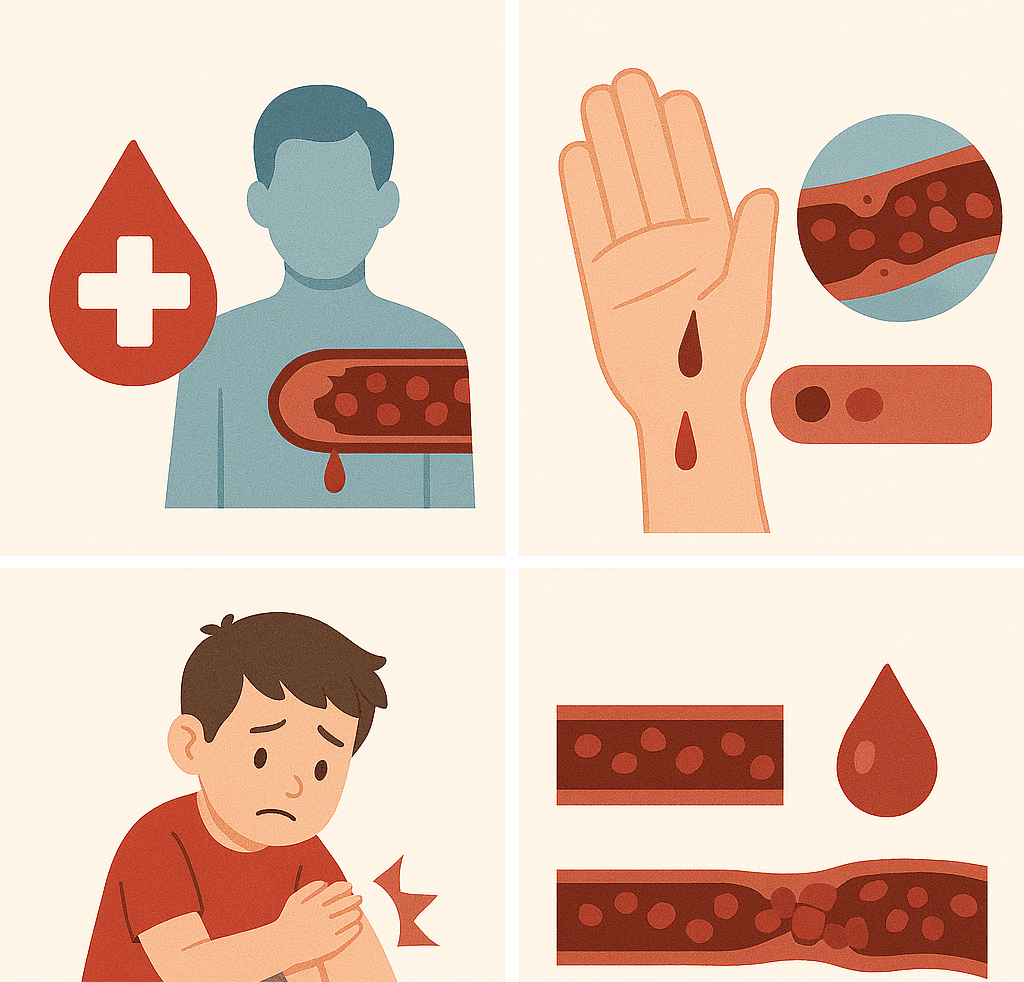
A four-panel illustration visually depicting hemophilia as a bleeding disorder accompanied by joint bleeding and clotting problems (image generated by artificial intelligence).
Hemophilia is an X-linked recessive inherited disorder that primarily affects males and is characterized by the deficiency or insufficiency of clotting factors, leading to impaired ability of the body to stop bleeding. The two most common subtypes are classified as Hemophilia A (Factor VIII deficiency) and Hemophilia B (Factor IX deficiency).
The severity of the disease is categorized as mild, moderate, or severe based on the level of the missing clotting factor. In particular, severe forms commonly present with spontaneous bleeding, especially into joints and muscles. Without appropriate treatment, these bleeds can lead to permanent disabilities, internal organ damage, and even life-threatening complications.
Hemophilia is one of the oldest known inherited diseases in human history, with evidence suggesting it has been passed down through generations for over 10,000 years. In written history, the earliest known reference appears in the Talmud, where it is noted that some male children were exempted from circumcision due to excessive bleeding.
In the 19th century, the disease was more systematically described and gained notoriety as the “Royal Disease” particularly within the British royal family. Queen Victoria, a carrier of Hemophilia B, passed the condition to many male descendants in her lineage.
From the mid-20th century onward, the discovery of clotting factors, along with the definitive identification of Hemophilia B in 1952, clarified the disease’s mechanism and established its prominent place in medicine. Advances in molecular biology have further illuminated the genetic basis of hemophilia and expanded treatment options.
Hemophilia is a recessive genetic disorder linked to the X chromosome. Women, having two X chromosomes, can be carriers, while men, possessing only one X chromosome, express the disease directly. Daughters of carrier mothers have a 50% chance of being carriers, and sons have a 50% chance of being affected.
Approximately one in every 5,000 male newborns has Hemophilia A, and about one in every 30,000 male newborns has Hemophilia B. Although these rates classify hemophilia as a rare disease, its clinical and social consequences demand special attention.
Research has shown that in approximately 30% of hemophilia cases, there is no family history, indicating that the condition arises from new (spontaneous) mutations. This finding underscores that all newborn males, not just those with a familial history, should be considered at potential risk.
As an X-linked recessive disease, hemophilia typically manifests clinically in males. However, women can be carriers. Although most carrier women are asymptomatic, some exhibit factor levels between 30% and 60%, leading to bleeding tendencies similar to mild hemophilia.
Bleeding risk may increase during pregnancy, childbirth, menstruation, or surgical procedures in these women. Therefore, it is recommended that carrier women undergo periodic monitoring of their clotting factor levels and receive prophylactic treatment when necessary.
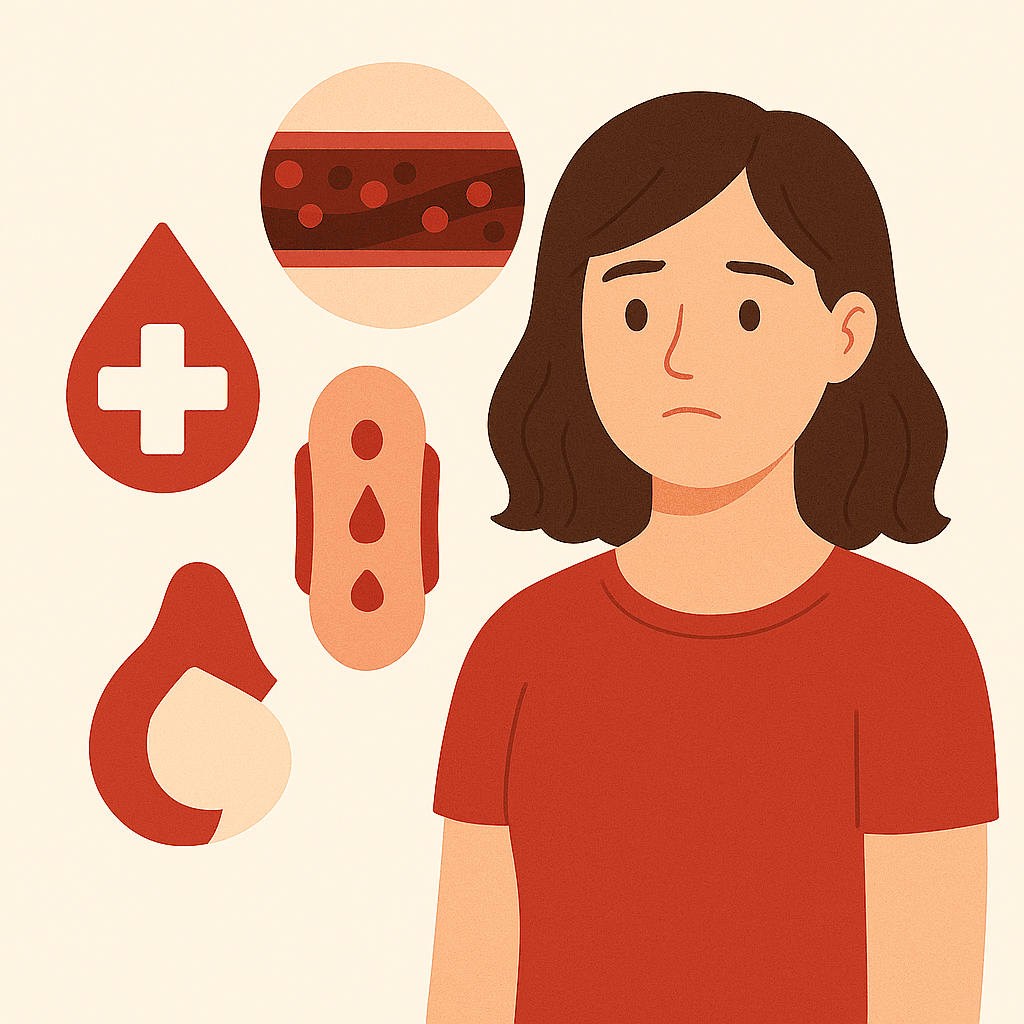
An illustration depicting medical elements surrounding the bleeding risk experienced by a carrier woman during physiological processes (image generated by artificial intelligence).
Hemophilia is a significant health issue not only due to its medical aspects but also because of the psychosocial effects it imposes on patients and their families. In developing countries, difficulties in accessing clotting factors, fear of disability, and lack of public awareness about the disease can lead to social isolation among hemophilia patients.
Frequent hospital visits during childhood, activity restrictions, and falling behind peers can negatively impact an individual’s self-esteem. Additionally, parental overprotection or excessive anxiety about their child’s condition can affect the entire family dynamic. Therefore, psychological counseling and social support are considered essential components of hemophilia management alongside medical treatment.
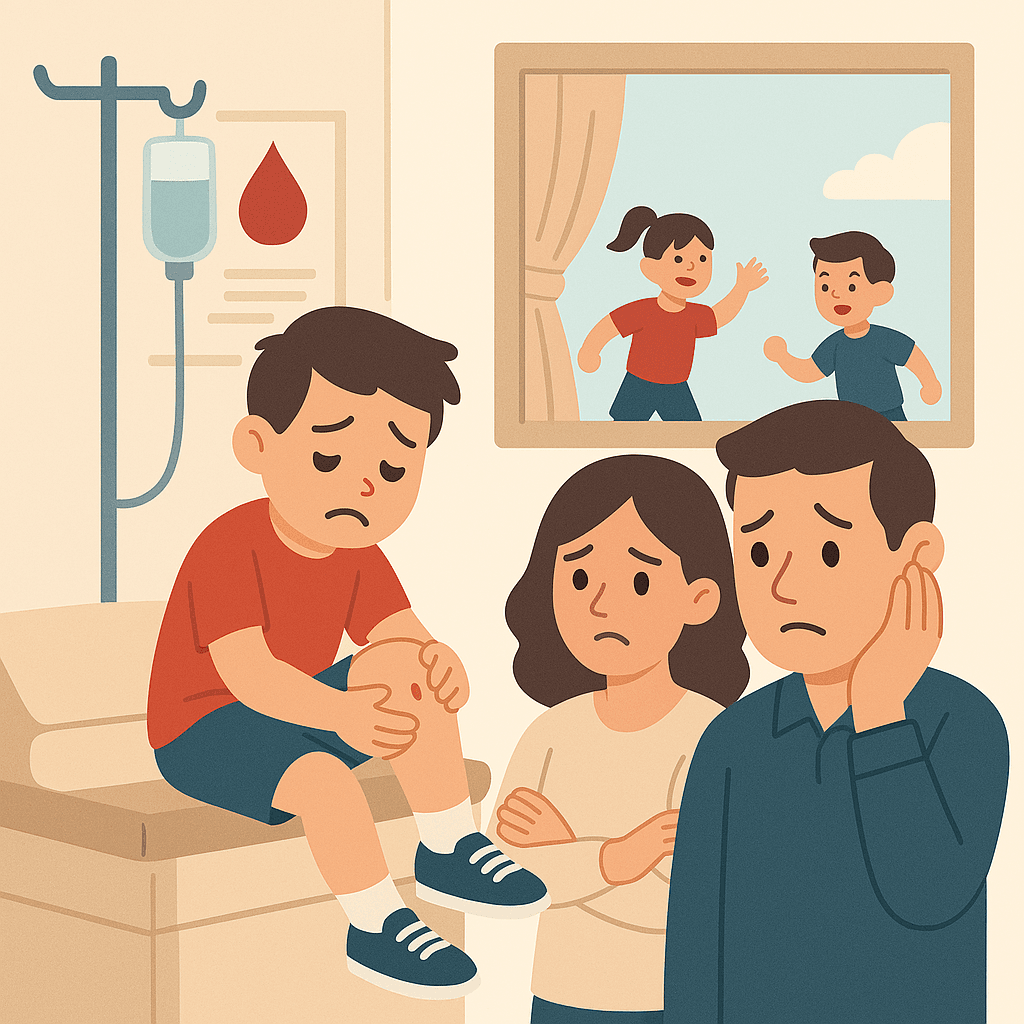
An illustration depicting a child with hemophilia sitting anxiously with their family in a hospital setting while observing other children playing outside (image generated by artificial intelligence).
In the past, physical activity was strictly discouraged for hemophilia patients. Today, with appropriate treatment protocols and factor support, safe participation in certain sports is possible. Low-impact activities such as swimming, walking, and cycling are particularly beneficial, helping to preserve joint health and improve overall fitness.
Conversely, contact sports or those with a high risk of falls—such as football, rugby, and skiing—are not recommended due to the risk of serious internal bleeding or joint damage. Individualized exercise programs developed in collaboration with physical therapists and rehabilitation specialists play a crucial role in improving the quality of life for individuals with hemophilia.
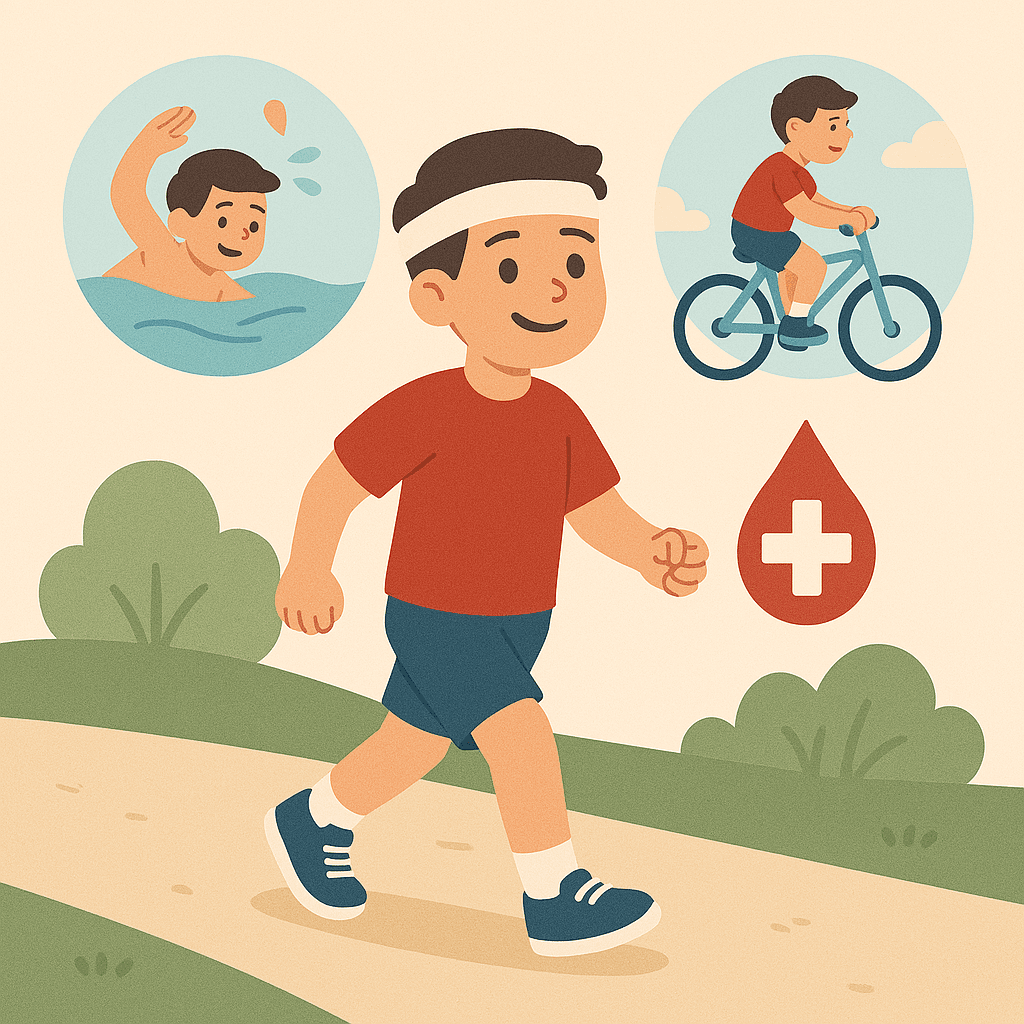
An illustration showing a child with hemophilia joyfully engaging in safe physical activities such as walking, swimming, and cycling (image generated by artificial intelligence).
Children with hemophilia have the potential to receive the same education as their peers. However, certain accommodations may be necessary to support a child with bleeding risks in an educational setting. It is essential that teachers, school nurses, and administrative staff are adequately informed about hemophilia to ensure the child’s safety at school.
Emergency plans must be established, and factor administration should be possible when needed. Physical education classes should be individually adapted based on activity level and risk factors. Such adjustments support the social development of children with hemophilia and help prevent isolation.
It is estimated that approximately 500,000 people worldwide have hemophilia, but the officially registered number of patients, according to World Federation of Hemophilia data, is around 120,000. This discrepancy indicates the presence of many undiagnosed or unregistered patients, particularly in developing countries.
In Türkiye, according to data from the Turkish Hematology Society, more than 2,400 patients have been diagnosed with Hemophilia A and over 600 with Hemophilia B. However, these figures do not reflect the true prevalence due to lack of social security coverage and unregistered cases. In recent years, access to diagnosis and treatment has improved thanks to hemophilia centers established in major hospitals, with a growing shift toward prophylactic therapy and a reduction in complications.
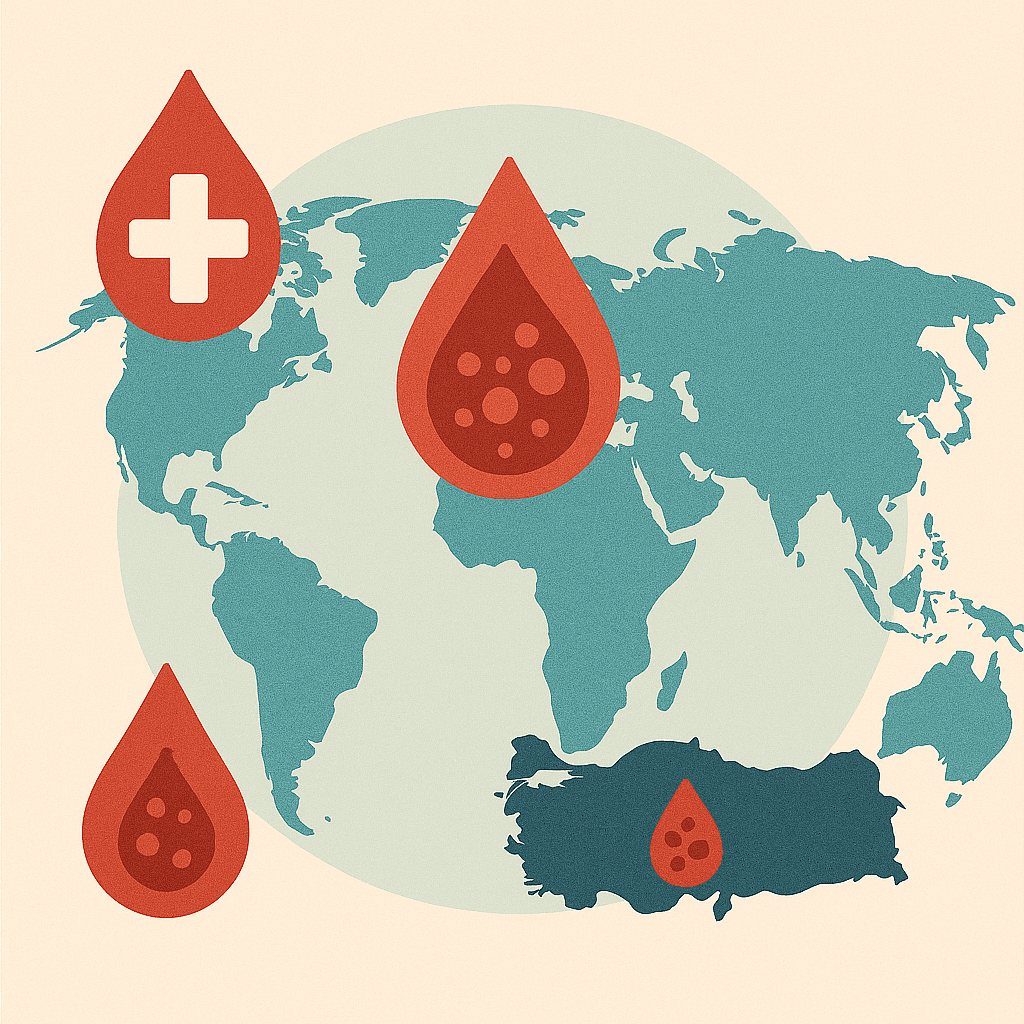
A map-based illustration symbolizing the prevalence of hemophilia worldwide and in Türkiye (image generated by artificial intelligence).
Hemophilia is a complex disorder requiring collaboration among multiple disciplines, not only hematologists but also orthopedists, physical therapy specialists, pediatricians, and nurses experienced in hemophilia care.
The “Hemophilia Treatment Center” model, widely implemented in developed countries, is being promoted in Türkiye. In these centers, patients receive regular monitoring, educational programs, and personalized treatment plans. “Self-infusion” training is provided to enable patients to administer their own treatment at home, thereby improving quality of life and reducing hospital visits.
In the fight against hemophilia, social and psychological support are as vital as medical care. Ensuring that patients and their families feel they are not alone makes the disease more manageable. In Türkiye, civil society organizations such as the Turkish Hemophilia Association and the Hemophilia Association play key roles in patient education and the development of health policies.
Annual symposiums, walks, awareness campaigns, and fundraising events increase public awareness and amplify the voices of hemophilia patients to broader audiences. These awareness initiatives not only enhance the quality of life for current patients but also facilitate early diagnosis and access to effective treatment.
A representative illustration showing individuals from different age groups coming together to raise awareness about hemophilia (image generated by artificial intelligence).
Ankara Hemofili Derneği. "Genetik Geçiş." Accessed April 13, 2025. https://ankarahemofilidernegi.org/hemofili/genetik-gecis/.
Kavaklı, Kaan. Hemofili: Tanı, Takip ve Tedavi Rehberi. İstanbul: Türkiye Hemofili Derneği Yayınları, 2021.
Kırıkkale İl Sağlık Müdürlüğü. "17 Nisan Dünya Hemofili Günü." Accessed April 13, 2025. https://kirikkaleism.saglik.gov.tr/TR-277633/17-nisan-dunya-hemofili-gunu.html.
T.C. Ministry of Health. "Basın Açıklaması." saglik.gov.tr. Accessed April 13, 2025. https://www.saglik.gov.tr/TR-2153/basin-aciklamasi.html.
Türkiye Hemofili Derneği. "Dünya Hemofili Günü." Turkhemoder.org. Accessed April 13, 2025. https://turkhemoder.org/dunya-hemofili-gunu/.
Türkiye Hemofili Derneği. "Hemofili Nedir?" Accessed April 13, 2025. https://turkhemoder.org/hemofili-nedir/.
Türkiye Klinikleri. "Hemofili." Accessed April 13, 2025. https://www.turkiyeklinikleri.com/article/tr-hemofili-36032.html.
World Federation of Hemophilia. "World Hemophilia Day." hemofili.net. Accessed April 13, 2025. https://www.hemofili.net/news---events/world-haemophilia-day.html.

No Discussion Added Yet
Start discussion for "April 17 World Hemophilia Day" article
Definition
History and Discovery
Genetics and Inheritance
Carrier Status and Hemophilia in Women
Psychosocial Impact
Sports and Physical Activity
Hemophilia and Educational Life
Hemophilia Worldwide and in Türkiye
Importance of a Multidisciplinary Approach
Social Awareness and Support