


This article was automatically translated from the original Turkish version.
+2 More
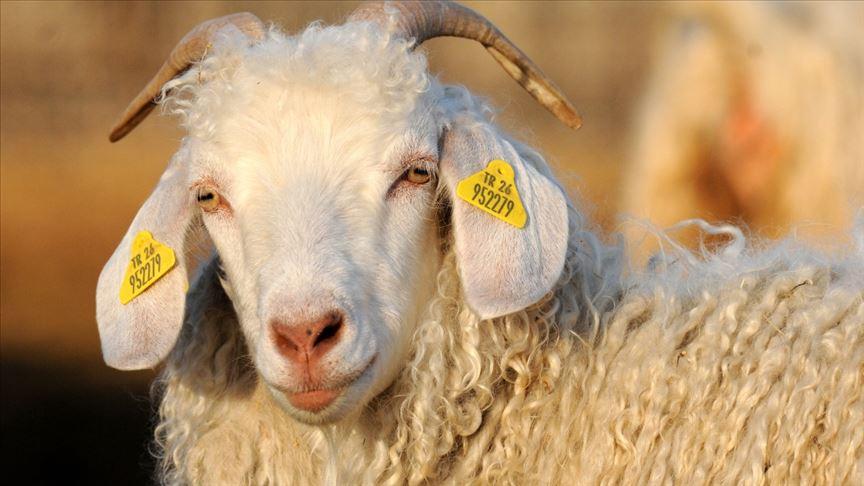
Ankara Goat (Tiftik Goat)
Race Type | Native | ||||||||
|---|---|---|---|---|---|---|---|---|---|
Distribution Area | Central Anatolia (especially Ankara), Siirt, Mardin, Bitlis | ||||||||
Productivity Direction | Tiftik (Mohair), Meat | ||||||||
Status | It is the second most common goat breed in Türkiye. Its numbers are declining due to economic reasons. | ||||||||
Origin | Central Asia (east of the Caspian Sea) Introduced to Anatolia by Turks in the 13th century | ||||||||
Historical Role | From the 5th to the 18th century, tiftik weaving formed the backbone of Ankara's economy; 'Engürü Sofu' was famous in Europe | ||||||||
Outward Expansion | Introduced to South Africa and the United States in the 19th century; Ankara's monopoly on tiftik ended | ||||||||
Size | Small in size | ||||||||
Color | Usually white; black, brown and gray variations in Siirt and Mardin | ||||||||
Horn | Generally horned; males have long, spiral horns, females have short horns; hornless individuals also exist. | ||||||||
Ankara Goat (Tiftik Goat), a native goat breed of Türkiye, is primarily raised in the Central Anatolia region, especially in Ankara and its surroundings, and is renowned for its tiftik production. It is also bred in southeastern and eastern Anatolian provinces such as Siirt, Mardin and Bitlis. Although it is the second most widespread goat breed in Türkiye, its numbers are rapidly declining due to economic factors. Today, efforts are being made through genetic conservation programs to halt this decline.
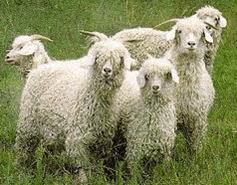
Ankara Goat (Ministry of Culture and Tourism)
The Ankara Goat is considered to have originated in Central Asia. It is believed that the Turks introduced it to Anatolia from the eastern region of the Caspian Sea in the 13th century, and that it adapted to the climate and soil conditions of Central Anatolia, acquiring its present characteristics. The earliest documented information about this goat in Anatolia dates back to the 15th century; no evidence exists of its presence in civilizations predating the Turks. Until 1838, this breed was raised exclusively in Anatolia and was known worldwide as the “Ankara Goat,” with Anatolia recognized as its homeland.
Historically, the Ankara Goat and its tiftik played a significant role in the regional economy. From the 15th century onward, a textile industry based on tiftik developed in Ankara, and fabrics woven from pure tiftik yarn known as “Engürü Sofu” gained great popularity in Europe between the 16th and 18th centuries. For approximately three centuries, tiftik weaving was a primary source of income for Ankara, fostering vibrant commercial and social life in the city. However, from the mid-18th century, advances in England’s textile industry led to a decline in fabric exports, and from the 19th century onward, raw tiftik exports became more prominent. In the late 19th century, the export of Ankara goats to countries such as South Africa and USA ended Türkiye’s monopoly on tiftik production, but even during the Republican era, tiftik production retained an important place in the national economy.
The Ankara Goat is a small, elegant breed. It is typically white, although in regions such as Siirt and Mardin, crossbreeding has resulted in black, brown and gray individuals. Adult males (bucks) weigh between 35 and 55 kg, while females (does) weigh between 30 and 40 kg. Horns are a common trait; in males, they are spiral-shaped, long and curved backward, while in females they are shorter and more slender. Nevertheless, hornless individuals are also observed.
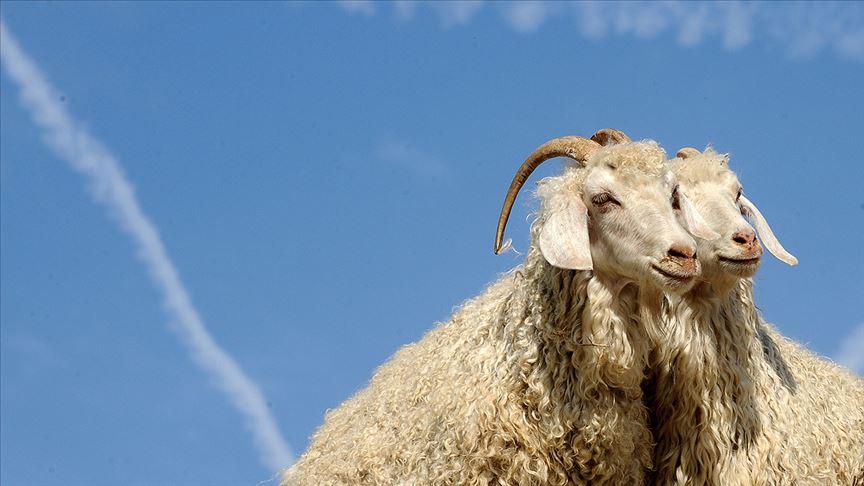
Ankara Goat (Anadolu Agency)
The primary product of the Ankara Goat is tiftik (also known as Angora or Mohair), a fiber highly valued in the textile industry. Tiftik yield averages 3–4 kg per doe and 4–6 kg per buck. Tiftik is a lustrous, durable, elastic, moisture-absorbent, heat-resistant fiber that takes dye easily; due to these properties, it is one of the most widely used raw materials in textile manufacturing after wool. These goats are generally not milked, but when milked, a lactating doe can produce 25–50 kg of milk per lactation period. However, milk production is discouraged as it reduces tiftik quality. Their meat is tender and flavorful, particularly that of tiftik kids, which are in demand on the market. Fertility is low; kidding rate is approximately 80 percent, and twin rate is around 1 percent.
The Ankara Goat is raised at elevations of 800–1000 meters in dry, low-rainfall steppe climates with temperatures ranging from -28 °C to +28 °C. It cannot survive in humid, low-altitude or hot regions; even if it adapts, the quality of its tiftik deteriorates. It thrives easily on steep and rugged terrain and requires no special care or feeding. In winter, it is housed in simple shelters, while in other seasons it is kept in open areas.
For centuries, the Ankara Goat has been a defining element of Anatolia’s economic and cultural life through its tiftik. However, from the 19th century onward, the export of goats abroad—particularly to South Africa and the USA—led to a decline in domestic production. Today, South Africa leads the world in tiftik production. In Türkiye, the goat population, which had dropped to 146,000 head in 2009, increased to 215,645 head by 2017 thanks to conservation programs. Genetic conservation and improvement projects led by the Ministry of Agriculture and Forestry aim to ensure the survival of this breed.
The Ankara Goat is not merely an economic asset but also a symbol of Anatolian Turk culture. Products derived from tiftik continue to hold potential for use in textiles, handicrafts and cultural production, as they did in the past. The sustainability of this breed carries great importance both economically and in terms of genetic heritage.
Ankara İl Kültür ve Turizm Müdürlüğü. "Ankara Keçisi." Ankara.ktb.gov.tr. Accessed April 1, 2025.https://ankara.ktb.gov.tr/TR-153097/ankara-kecisi.html
Ercan Koca and others, "Ankara Keçisi (Tiftik Keçisi) Üretiminde Dünyadaki ve Ülkemizdeki Durum," Türk Tarım ve Doğa Bilimleri Dergisi 1, no. 1 (2014): 84-90, PDF file, Accessed April 1, 2025, chrome-extension://efaidnbmnnnibpcajpcglclefindmkaj/https://dergipark.org.tr/tr/download/article-file/45815.
Et ve Süt Kurumu. "Ankara Keçisi (Tiftik Keçisi)." Esk.gov.tr. Accessed April 1, 2025.https://www.esk.gov.tr/tr/11125/Ankara-Kecisi-Tiftik-Kecisi
Hülya Çakmakçı and Hüseyin Erkul, "Ankara Keçisi," Ankara Ticaret Borsası, PDF file, Accessed April 1, 2025, chrome-extension://efaidnbmnnnibpcajpcglclefindmkaj/
Tarım ve Orman Bakanlığı Hayvancılık Genel Müdürlüğü, "Yerli Keçi Irkları," Tarimorman.gov.tr, PDF file, 2020, Accessed April 1, 2025, chrome-extension://efaidnbmnnnibpcajpcglclefindmkaj/
Turk Tarım. "Ankara Keçisi Kültürel ve Stratejik Varlığımız." Turktarim.gov.tr, April 25, 2018.http://www.turktarim.gov.tr/Haber/258/ankara-kecisi-kulturel-ve-stratejik-varligimiz.

Ankara Goat (Tiftik Goat)
Race Type | Native | ||||||||
|---|---|---|---|---|---|---|---|---|---|
Distribution Area | Central Anatolia (especially Ankara), Siirt, Mardin, Bitlis | ||||||||
Productivity Direction | Tiftik (Mohair), Meat | ||||||||
Status | It is the second most common goat breed in Türkiye. Its numbers are declining due to economic reasons. | ||||||||
Origin | Central Asia (east of the Caspian Sea) Introduced to Anatolia by Turks in the 13th century | ||||||||
Historical Role | From the 5th to the 18th century, tiftik weaving formed the backbone of Ankara's economy; 'Engürü Sofu' was famous in Europe | ||||||||
Outward Expansion | Introduced to South Africa and the United States in the 19th century; Ankara's monopoly on tiftik ended | ||||||||
Size | Small in size | ||||||||
Color | Usually white; black, brown and gray variations in Siirt and Mardin | ||||||||
Horn | Generally horned; males have long, spiral horns, females have short horns; hornless individuals also exist. | ||||||||
No Discussion Added Yet
Start discussion for "Ankara Goat (Tiftik Goat)" article
Origin and History
Physical Characteristics
Productive Traits
Breeding Conditions and Distribution
Economic and Cultural Significance