This article was automatically translated from the original Turkish version.
+1 More
Location | Kars / Türkiye | ||||||||
|---|---|---|---|---|---|---|---|---|---|
Area Size | Approximately 540 hectares | ||||||||
Historical Periods | Continuous settlement from the Chalcolithic Age to the mid-Modern Era Byzantines Bagratids Ottomans Akkoyunlus Karakoyunlus Ilkhanids Georgians Seljuks | ||||||||
Important Structure | City walls Ateşgede Temple Baths Seljuk Palace Saint Prkitch Church Gagik Church Cathedral (Fethiye Camii) Caravanserai Tigran Honents Church Ebu’l Menuçehr Camii | ||||||||
UNESCO Status | Was included in the World Heritage List in 2016 | ||||||||
Ani Archaeological Site, located 42 kilometers east of the city center of Kars on the western bank of the Arpaçay River which forms the border between Türkiye and Armenia, is the largest archaeological area in Eastern Anatolia. Built on a layer of volcanic tuff, the city encompasses approximately 540 hectares including its walled core and surrounding extensive settlement areas.
The settlement history of Ani extends back to the Chalcolithic Age. During the Middle Ages it developed as a major trade and cultural center along the Silk Road and reached its peak between the 10th and 13th centuries. The site, with its numerous monumental structures such as walls, churches, mosques, palaces, caravanserais, baths and bridges, preserves traces of multiple civilizations and was inscribed on the UNESCO World Heritage List on 15 July 2016.
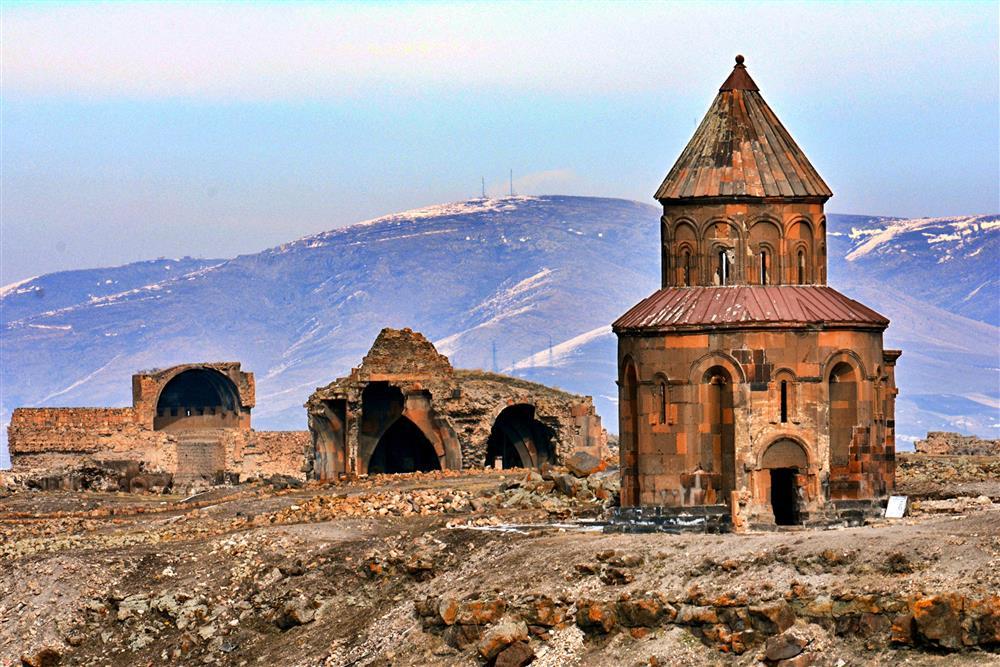
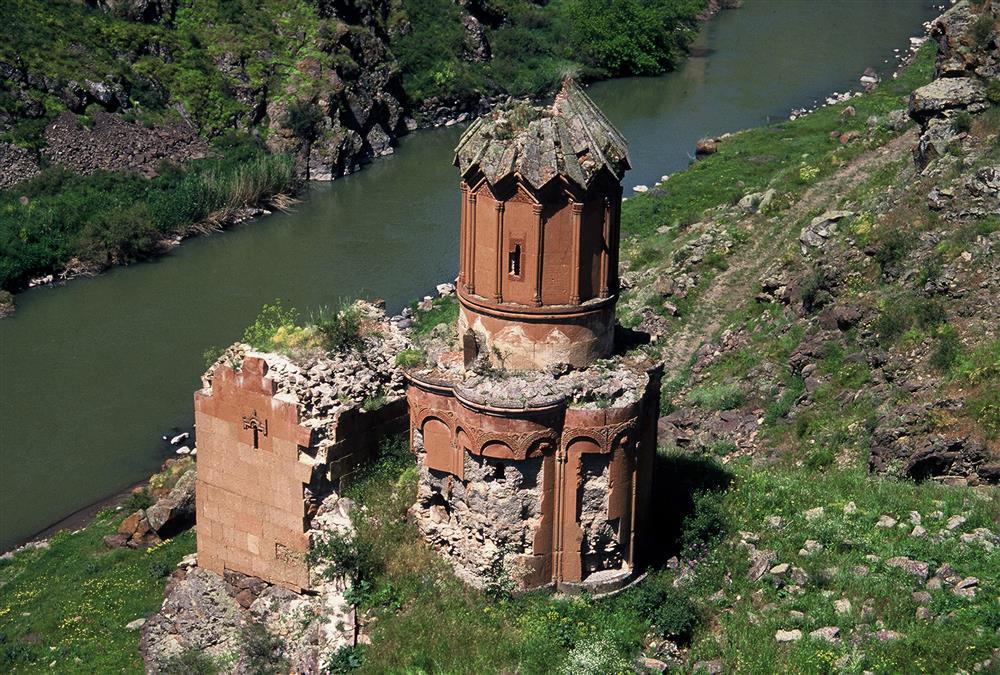
Monastery from the Armenian Bagratid Period (Ministry of Culture and Tourism of the Republic of Türkiye)
The earliest settlements in Ani began in the Chalcolithic Age in areas outside the walls known as Bostanlar Creek and Harmanyeri and continued through the Early Bronze and Iron Ages. Settlement within the walls began in the 4th century AD in the Inner Citadel and persisted uninterrupted for approximately one thousand years.
During the Middle Ages, Ani was a strategic trade center on the Silk Road. Under the Bagratid Kingdom (10th–11th centuries) it rose to the status of capital and experienced its golden age. During this period the city was enclosed by walls and palaces, churches, mosques, baths and caravanserais were constructed. In 1064 the city came under Turkish rule following its conquest by Seljuk Sultan Alp Arslan and remained under the administration of the Georgians, Mongols, Ilkhanids, Kara Koyunlu, Ak Koyunlu and later the Ottomans in subsequent centuries.
The decline of the Silk Road after the discovery of the Cape of Good Hope in 1497 led to a population decline in Ani from the 16th century onward, and by the 17th century the city was completely abandoned.
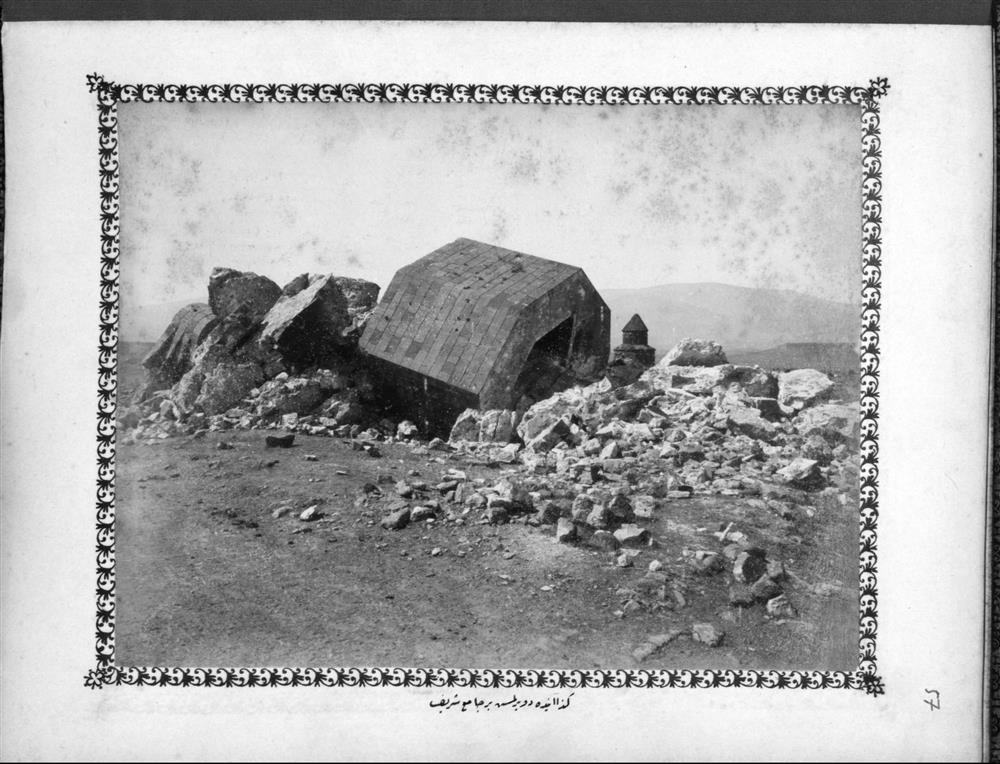
Ebu’l Menuçehr Mosque (Ministry of Culture and Tourism of the Republic of Türkiye)
The first scientific excavations at Ani Archaeological Site were conducted between 1892 and 1916 by the Georgian-Russian archaeologist Nikolai Marr. These studies revealed the city walls, monumental structures and the earliest finds. Between 1940 and 1943 Professor Kılıç Kökten carried out surface surveys and test excavations, and work continued under the leadership of Professor Kemal Balkan in 1965–1966. Excavations initiated in 1989 and continuing until 2005 were directed by Professor Beyhan Karamağaralı, followed by further work between 2007 and 2010 under Professor Yaşar Çoruhlu. Between 2014 and 2018 a team led by Professor Fahriye Bayram conducted comprehensive research at the site.
Since 2019 excavations have been carried out under the coordination of the Kars Museum Directorate and with scientific guidance from Associate Professor Muhammet Arslan of Kafkas University. Recent efforts have focused intensively on eight distinct areas including the Seljuk marketplace, residential quarters, cemetery, large bathhouse, Western Ashot Walls and Divin Gate. Artifacts unearthed during excavations—such as ceramic vessels, metal objects, coins, glass items and stone craftsmanship examples—are cleaned, restored and cataloged for display at the Kars Museum.
The Ani Archaeological Site possesses a rich and diverse architectural fabric resulting from the coexistence of multiple cultures during the Middle Ages. The approximately 4.5 to 5 kilometer-long city walls were constructed from basalt and black volcanic tuff. Among the seven gates, the Aslanlı Gate is the most significant; it bears a Kufic inscription documenting Sultan Alp Arslan’s conquest of the city in 1064.
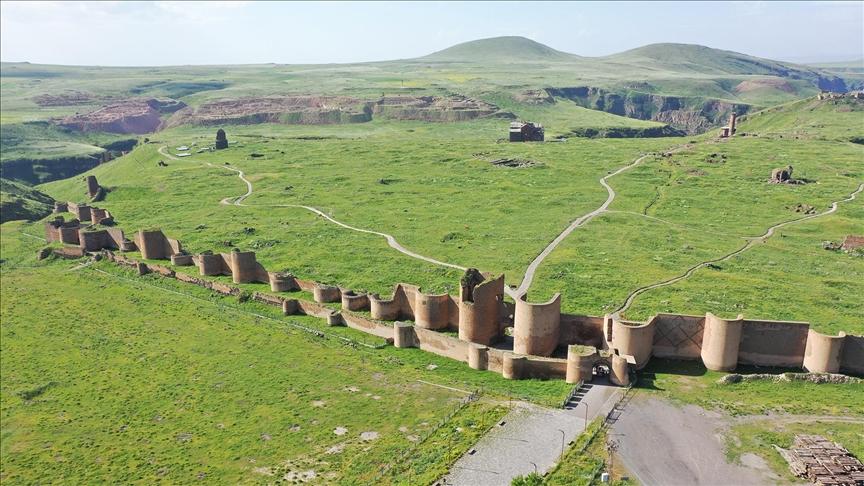
Walls (AA)
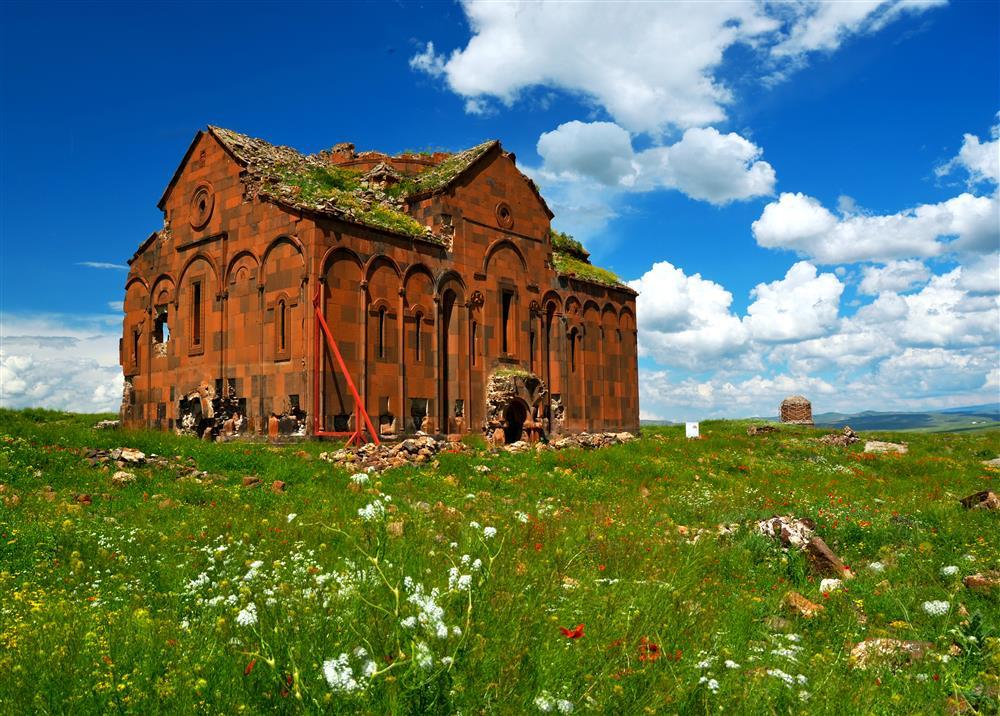
Religious architecture is one of Ani’s most prominent features. The Cathedral, built between 990 and 1010 by the architect Trdat, is an Armenian Bagratid structure that was later converted into a mosque after the Seljuk conquest. Other important churches at the site include the Church of St. Prkitch (1036), the Gagik Church (late 10th century), the Abughamrents Church (980) and the Church of Tigran Honents (1215), renowned for its frescoes.
Islamic architectural elements include the Ebu’l Menuçehr Mosque (1072), recognized as the first Turkish mosque built in Anatolia; alongside the Ebu’l Muammeran Mosque, the Seljuk Caravanserai and the Seljuk Palace, these constitute the principal structures from the Turkish-Islamic period of the city.
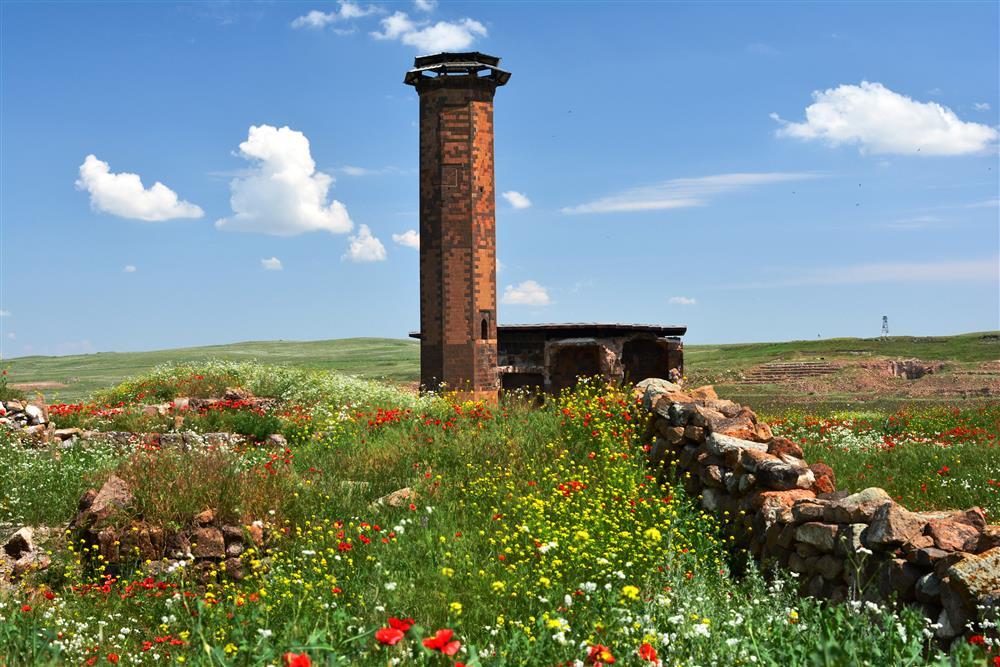
Ebu’l Menuçehr Mosque (Ministry of Culture and Tourism of the Republic of Türkiye)
Examples of secular architecture include small and large bathhouses, a caravanserai, shops and residences built during the Seljuk period. The Silk Road Bridge, one of the structures highlighting the city’s commercial importance, survives today only in its foundations.
Ani Archaeological Site is an important center for cultural, faith-based and natural tourism due to its preservation of traces of diverse religions and cultures within a single location. The Fire Temple, churches and mosques form the core of faith-based tourism; the walls, residences, palaces and caravanserais define cultural tourism; and the Arpaçay Valley, waterfalls and alpine meadows constitute the main elements of natural tourism.
Ani’s position along the Silk Road strengthened its commercial vitality throughout the Middle Ages. Today, the city is regularly connected to the center of Kars and contributes significantly to regional tourism, particularly through increased visitor numbers facilitated by the Eastern Express railway route.
In recognition of its universal value, the Ani Archaeological Site was inscribed on the UNESCO World Heritage List on 15 July 2016. This status supports international-level efforts in excavation, conservation and restoration, and enhances the site’s promotion and sustainable tourism potential.
Anadolu Ajansı. "Ani Ören Yeri'nde yeni sezonun kazı çalışmalarına başlandı." Accessed September 30, 2025.https://www.aa.com.tr/tr/kultur/ani-oren-yerinde-yeni-sezonun-kazi-calismalarina-baslandi/3247522
Anadolu Ajansı. "Ani Ören Yeri'ndeki surlar asırlardır ihtişamıyla ayakta duruyor." Accessed September 30, 2025.https://www.aa.com.tr/tr/kultur/ani-oren-yerindeki-surlar-asirlardir-ihtisamiyla-ayakta-duruyor/3592112
Diken, Hasan Ali. “Ani Ören Yeri’nin Kars’taki Kültür Turizmine Katkıları Bağlamında Bazı Tespitler”. *Journal of Applied Tourism Research* 1, no. 2 (2020): 99–114. Accessed September 30, 2025.https://dergipark.org.tr/tr/pub/jator/issue/58969/818817
T.C. Ministry of Culture and Tourism. "Ani Arkeolojik Site." Türkiye Kültür Portalı. Accessed September 30, 2025.https://www.kulturportali.gov.tr/portal/aniarkeolojikalani
T.C. Ministry of Culture and Tourism. "Dünya Miras Listesinde Ani Örenyeri." Kars İl Kültür veTurizm Müdürlüğü. Accessed September 30, 2025.https://kars.ktb.gov.tr/TR-54868/dunya-miras-listesinde-ani-orenyeri.html
Turkish Museums. "Kars Ani Örenyeri." Accessed September 30, 2025.https://www.turkishmuseums.com/museum/detail/2108-kars-ani-orenyeri/2108/1
Özlü, Tamer, and Cemal Kaleli. “KÜLTÜREL MİRAS TURİZMİ AÇISINDAN BİR DEĞERLENDİRME: ANİ ÖREN YERİ / AN EVALUATION IN TERMS OF CULTURAL HERITAGE TOURISM: ANİ RUINS”. *Amisos* 4, no. 7 (December 2019): 195–218. Accessed September 30, 2025.https://dergipark.org.tr/tr/pub/amisos/issue/51264/667179

Location | Kars / Türkiye | ||||||||
|---|---|---|---|---|---|---|---|---|---|
Area Size | Approximately 540 hectares | ||||||||
Historical Periods | Continuous settlement from the Chalcolithic Age to the mid-Modern Era Byzantines Bagratids Ottomans Akkoyunlus Karakoyunlus Ilkhanids Georgians Seljuks | ||||||||
Important Structure | City walls Ateşgede Temple Baths Seljuk Palace Saint Prkitch Church Gagik Church Cathedral (Fethiye Camii) Caravanserai Tigran Honents Church Ebu’l Menuçehr Camii | ||||||||
UNESCO Status | Was included in the World Heritage List in 2016 | ||||||||
No Discussion Added Yet
Start discussion for "Ani Archaeological Site" article
History
Archaeological Research and Excavations
Architectural Features
Tourism and UNESCO World Heritage Status