


This article was automatically translated from the original Turkish version.
+1 More
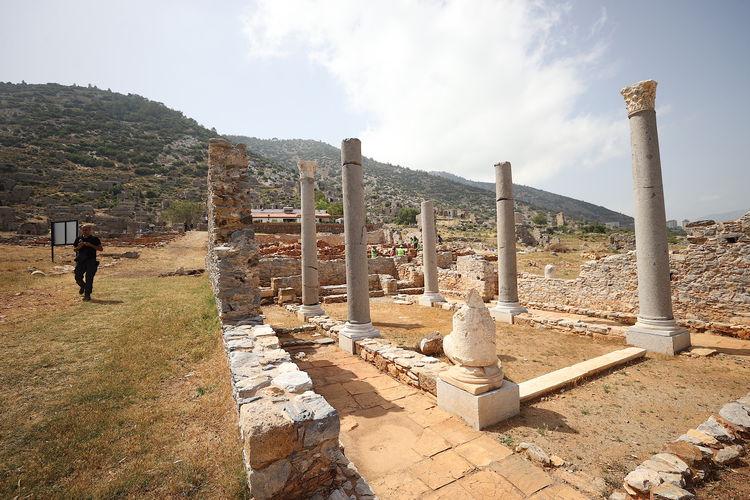
Anemurium Ancient City
Location | Ören Anamur Mersin Türkiye | ||||||||
|---|---|---|---|---|---|---|---|---|---|
Region | Cilicia | ||||||||
Culture | Hellenistic, Roman, Early Byzantine | ||||||||
Archaeologists | Elisabeth Alföldi-James Russel | ||||||||
Ownership | Ministry of Culture and Tourism | ||||||||
Anemurium is an ancient city located on the southern coast of Türkiye, within the boundaries of the Anamur district of Mersin Province. Its name derives from the Greek word anemos (wind), forming the term Anemurion, meaning “windy cape.” Situated in the ancient region of Cilicia, the city is an archaeological site notable for its architectural remains from the Roman and Byzantine periods, its necropolis, and its social life areas.
Interview on Anemurium Ancient City (Mersin Governorship)
Anemurium is situated on the slopes of the Taurus Mountains as they descend perpendicularly toward the Mediterranean coast, immediately northwest of Anamur Cape. As a coastal settlement, it occupies a strategic position for maritime trade. The city lies within the boundaries of the modern Ören neighborhood of Anamur. Due to its proximity to the island of Cyprus, it held significant importance for seafaring in antiquity.
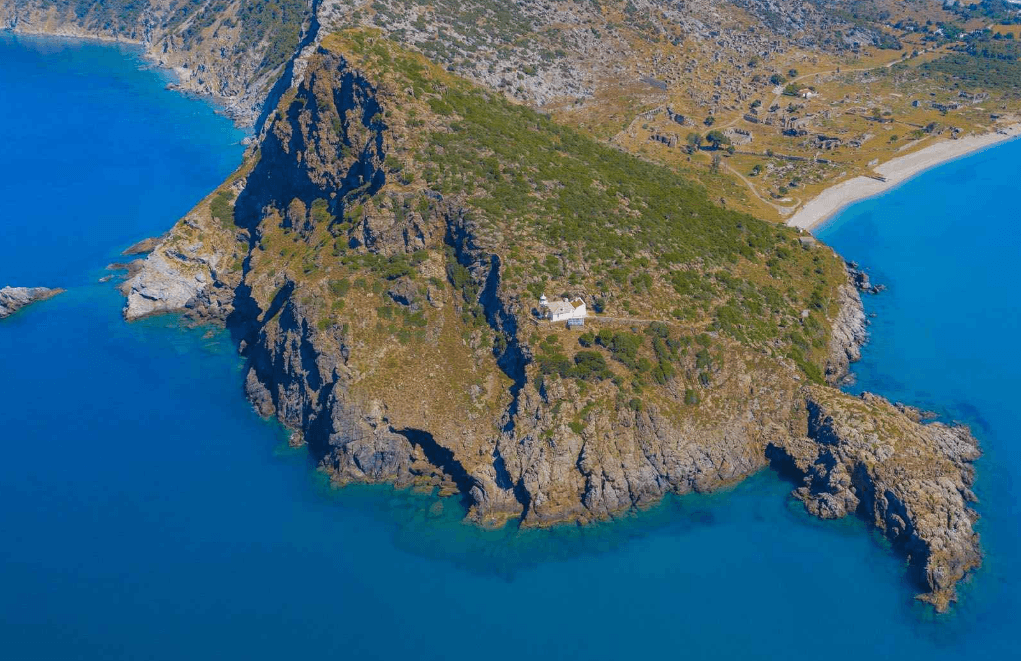
Aerial View of the Ancient City (Turkish Museums - Ministry of Culture and Tourism of the Republic of Türkiye)
The earliest settlement traces at Anemurium date back to the 4th century BCE, with indirect evidence of earlier cultures in the region. The city was located in the ancient region of Cilicia Trachaea (Rugged Cilicia) and throughout its history remained a site of pirate activity, Roman interventions, and crossroads of trade routes.
Following Alexander the Great’s campaigns in Anatolia, the region came under the influence of the Seleucids and became exposed to Hellenistic culture. During this period, Anemurium is believed to have begun developing a systematic urban structure. Before Roman domination, the city changed hands between the Kingdom of Commagene and local principalities.
Anemurium experienced significant development during the Roman Empire. Extensive construction began in the 1st century CE, reaching its peak in the 2nd and 3rd centuries CE. The city’s prosperity during this era is evident from its extensive necropolis, theater, and bathhouse remains. In addition to intense trade, agricultural activities such as banana and citrus cultivation, crafts, and seafaring flourished here.
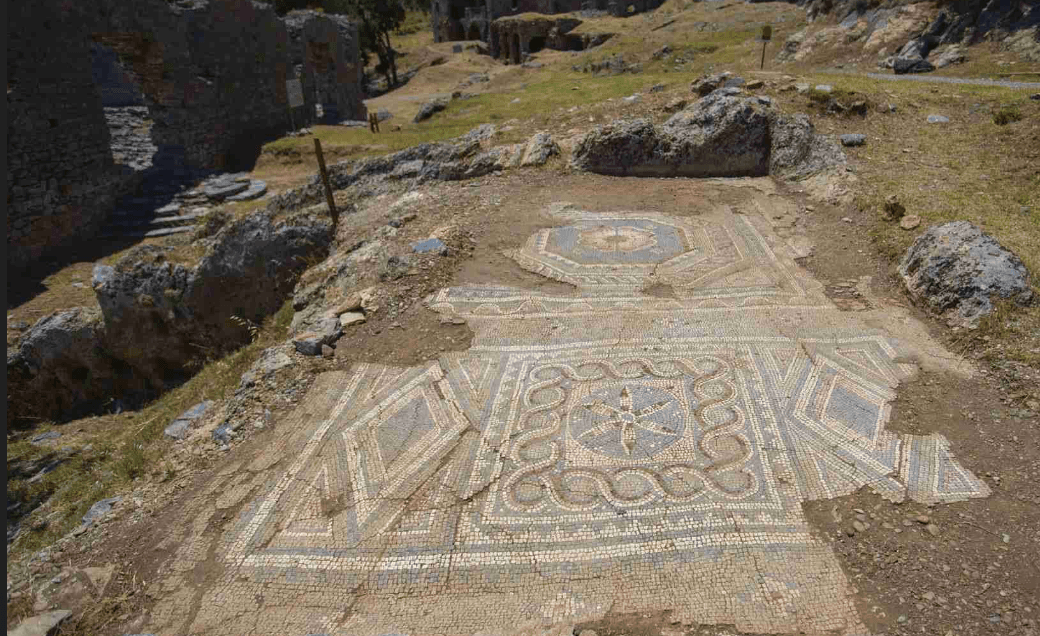
A Mosaic Uncovered in the Ancient City (Turkish Museums - Ministry of Culture and Tourism of the Republic of Türkiye)
From the 4th century CE onward, with the spread of Christianity, churches and basilicas were constructed in the city. During this period, Anemurium became one of the important bishopric centers of Cilicia. However, beginning in the 7th century CE, Arab raids and earthquakes led to the city’s decline and eventual abandonment. Throughout its history, the region came under the control of the Sasanians, Isaurians, and Arabs, and from the 12th century onward, it came under Turkish rule through the Seljuks and the Karamanids.
The most striking feature of Anemurium is its necropolis, spread across the northwestern slope. With approximately 350 burial structures, it is one of the largest necropolis areas in the Eastern Mediterranean. These burial types include:
Many of the tombs contain mosaics, frescoes, and Greek and Latin inscriptions. These inscriptions provide information about the social structure, belief systems, and death rituals of the period.
The theater, built in Roman style, has a capacity of 1,500 spectators. The cavea (seating area), stage building, and much of the orchestra have survived to the present day. The theater was used not only for entertainment but also for public assemblies.
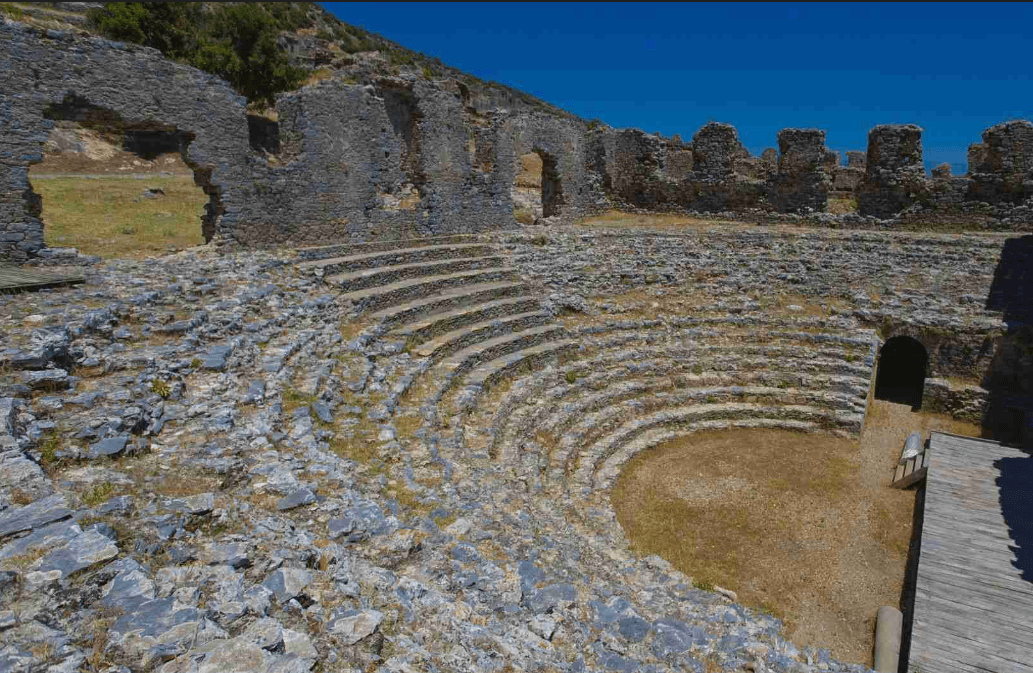
The Ancient City Theater (Turkish Museums - Ministry of Culture and Tourism of the Republic of Türkiye)
Anemurium had a highly developed urban infrastructure, including three bathhouse complexes. The largest is located in the eastern part of the city. These structures exhibit the classic Roman bathhouse design with:
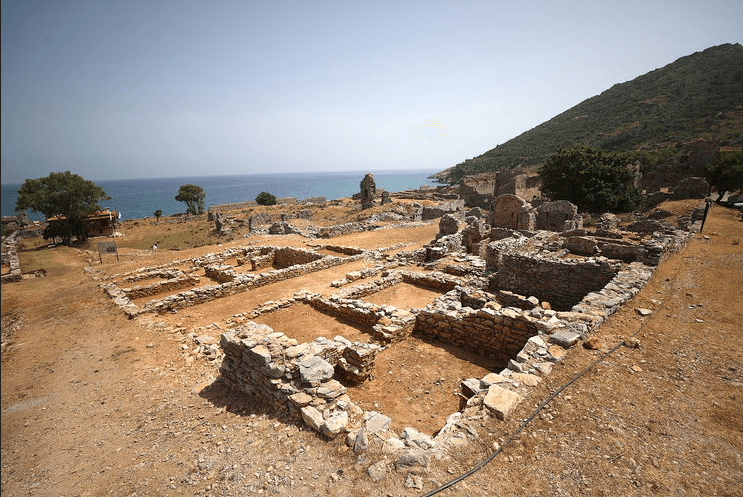
Bathhouse Remains (Anadolu Ajansı)
The city had an advanced water infrastructure. Water transported from the mountains was channeled into the city via aqueducts and stored in cisterns constructed of stone and brick. These systems supplied water to the bathhouses, fountains, and private homes.
Surrounding the agora were shops and administrative buildings. The agora served as the central hub where citizens gathered for commercial and political decision-making.
Three main basilicas from the early Byzantine period have been identified. Wall frescoes, apse structures, and religious artifacts provide insight into the city’s religious life during the Christian era.
Excavations at the site have uncovered numerous inscriptions, seals, and coins. The inscriptions are predominantly in Latin and Greek. Dedicated inscriptions to Roman emperors, records of public building construction dates, and names of local officials are among the findings. Among the coins, examples from the reigns of Hadrian, Antoninus Pius, and Valerianus stand out.
The first surface surveys at Anemurium Ancient City were conducted in the 19th century by European travelers. Systematic archaeological excavations began:
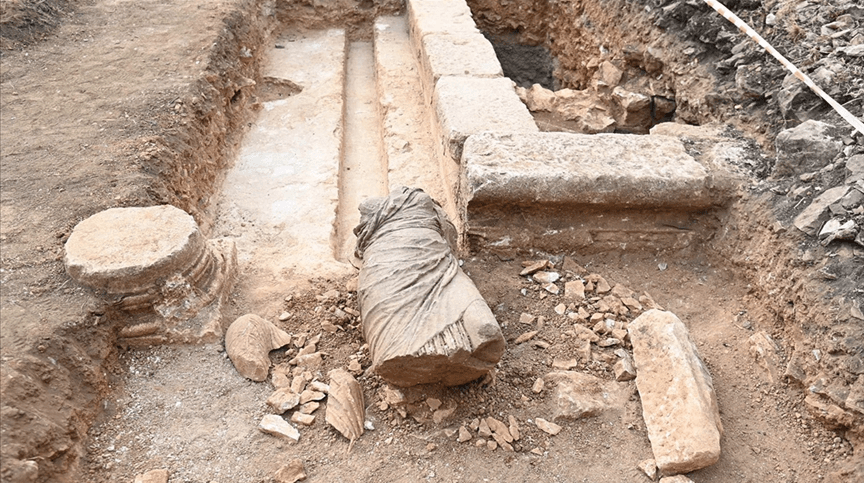
Female Statue (Anadolu Ajansı)
Anemurium Ancient City is today an important archaeological and tourist attraction. The site is protected by the Ministry of Culture and Tourism of the Republic of Türkiye as a first-degree archaeological site. The urban layout and structures have been largely preserved. Entry is charged and the Museum Card is valid. Information boards and walking paths are available within the site, and some restoration work continues.
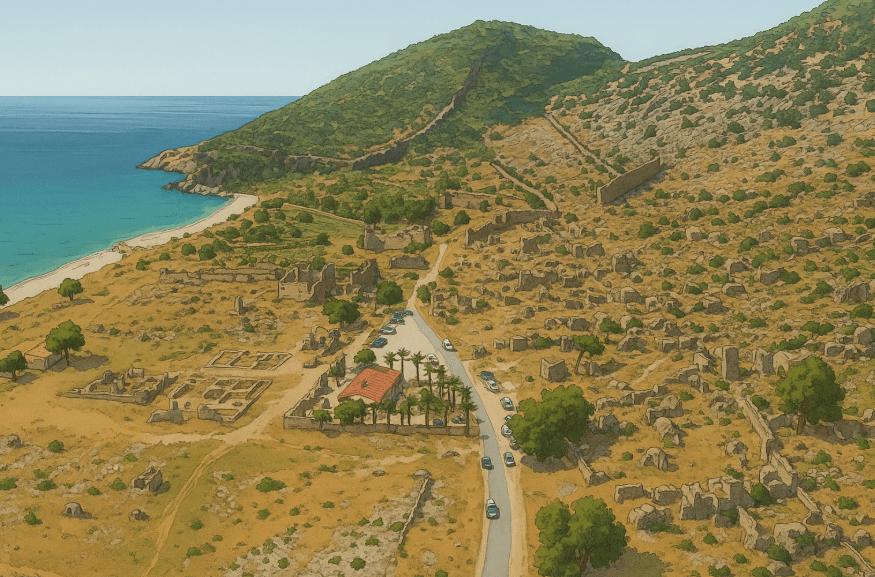
General View of the Ancient City (Generated by Artificial Intelligence)
One distinguishing feature of Anemurium compared to other ancient cities is its natural beach located immediately adjacent to the ancient structures. This coastline, with some of the cleanest and clearest waters in the Mediterranean, offers visitors the opportunity to swim after their archaeological tour. Especially during summer months, the experience of entering the sea just steps away from the theater or bathhouse ruins, beneath the shadow of ancient walls, provides a unique blend of historical and natural atmosphere.
Anadolu Ajansı. “Mersin’deki Anemurium Antik Kentinde Kadın Heykeli Bulundu.” aa.com.tr. Accessed June 11, 2025.https://www.aa.com.tr/tr/kultur/mersindeki-anemurium-antik-kentinde-kadin-heykeli-bulundu/3050844
Anadolu Ajansı. “Mersin’deki Anemurium Antik Kentinde Kazı ve Restorasyon Sürüyor.” aa.com.tr. Accessed June 11, 2025.https://www.aa.com.tr/tr/kultur/mersindeki-anemurium-antik-kentinde-kazi-ve-restorasyon-suruyor/3235993
Anamur Kaymakamlığı. "Anemurium Antik Kenti." Anamur Kaymakamlığı. Accessed June 11, 2025.http://anamur.gov.tr/anamurium-antik-kenti
Mersin Valiliği. "Vali Ali Hamza Pehlivan 2000 Yıllık Anemurium Antik Kentinde Devam Eden Çalışmaları İnceledi, Açıklamalarda Bulundu." Accessed June 11, 2025.http://www.mersin.gov.tr/vali-ali-hamza-pehlivan-2000-yillik-anemurium-antik-kentinde-devam-eden-calismalari-inceledi-aciklamalarda-bulundu
Mersin Valiliği. “Anemurium Antik Kenti – Mersin.” YouTube. Accessed June 11, 2025.https://www.youtube.com/watch?v=wfkGnLqu5Sc&t=42s
T.C. Kültür ve Turizm Bakanlığı. “Mersin Anemurium Örenyeri.” Turkish Museums. Accessed June 11, 2025.https://www.turkishmuseums.com/museum/detail/2158-mersin-anemurium-orenyeri/2158/1

Anemurium Ancient City
Location | Ören Anamur Mersin Türkiye | ||||||||
|---|---|---|---|---|---|---|---|---|---|
Region | Cilicia | ||||||||
Culture | Hellenistic, Roman, Early Byzantine | ||||||||
Archaeologists | Elisabeth Alföldi-James Russel | ||||||||
Ownership | Ministry of Culture and Tourism | ||||||||
No Discussion Added Yet
Start discussion for "Anemurium Ancient City" article
Geographical Location and Physical Structure
History
Archaeological Remains and Urban Planning
Necropolis Area
Theater
Bathhouses
Water Systems and Cisterns
Agora and Market
Basilicas and Churches
Epigraphic and Numismatic Finds
Archaeological Excavations and Research
Tourism and Conservation