


This article was automatically translated from the original Turkish version.
+1 More
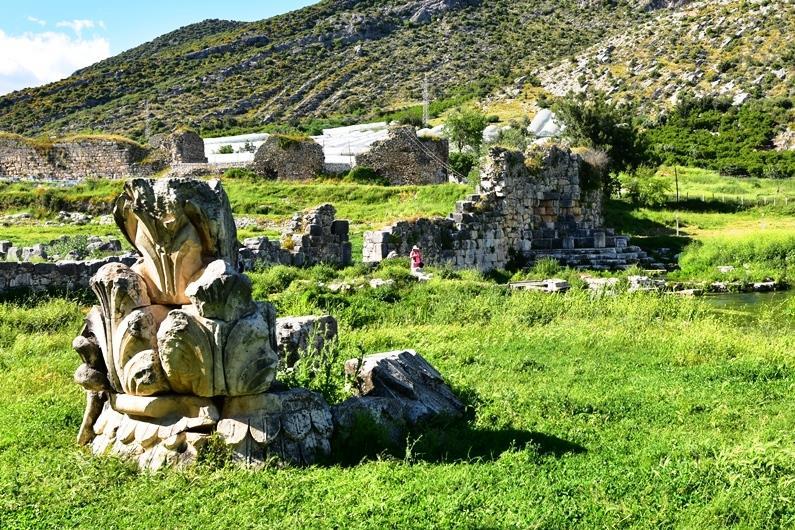
Ancient City of Limyra
Location | Saklısu Neighborhood Finike Antalya | ||||||||
|---|---|---|---|---|---|---|---|---|---|
Foundation | 5th century BCE, known in Lycian as "Zemuri" | ||||||||
Religious Role | Episcopal center during the Byzantine period | ||||||||
Important Structure | Ptolemaion Ancient Theater Monument of Gaius Caesar Perikle Heroon | ||||||||
Works | Displayed at the Antalya Museum | ||||||||
Limyra Ancient City is a historical settlement located approximately 9 kilometers northeast of Finike district within the boundaries of Antalya Province. Situated on the southern slopes of Toçak Mountain, Limyra is one of the cities in the Lycia region with the highest number of rock-cut tombs. The ancient city has served as a settlement for various civilizations since the 4th century BCE and contains numerous significant structures from the Classical, Hellenistic, Roman, and Byzantine periods.
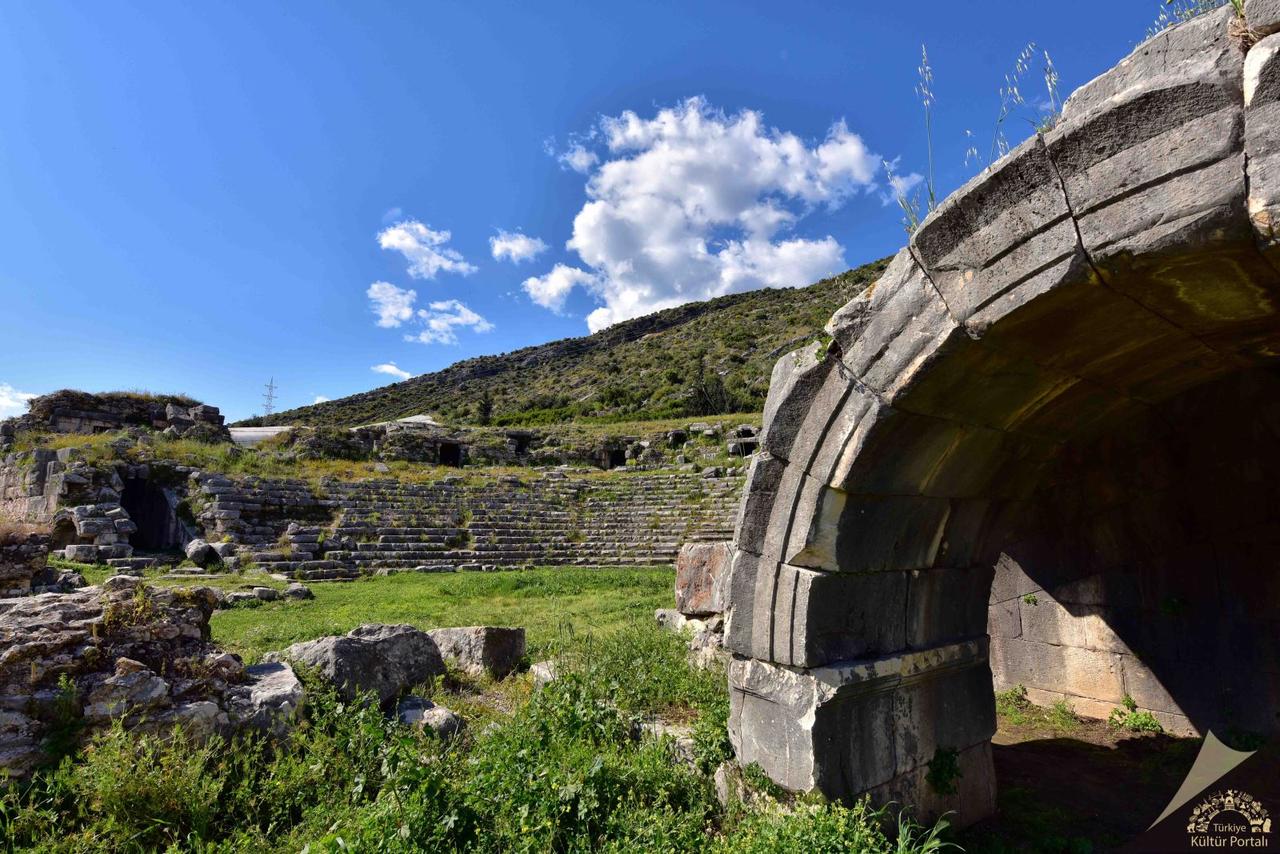
Limyra Antik Kenti (Kültür Portalı)
The history of Limyra extends back to the 5th century BCE, and in Lycian inscriptions the city is referred to as “Zemuri.” Its most prosperous period occurred during the first half of the 4th century BCE under King Pericles of Lycia, when Limyra became the capital of Lycia. Throughout the Roman and Byzantine periods, Limyra remained an important settlement and rose to prominence as a bishopric center during the Byzantine era.
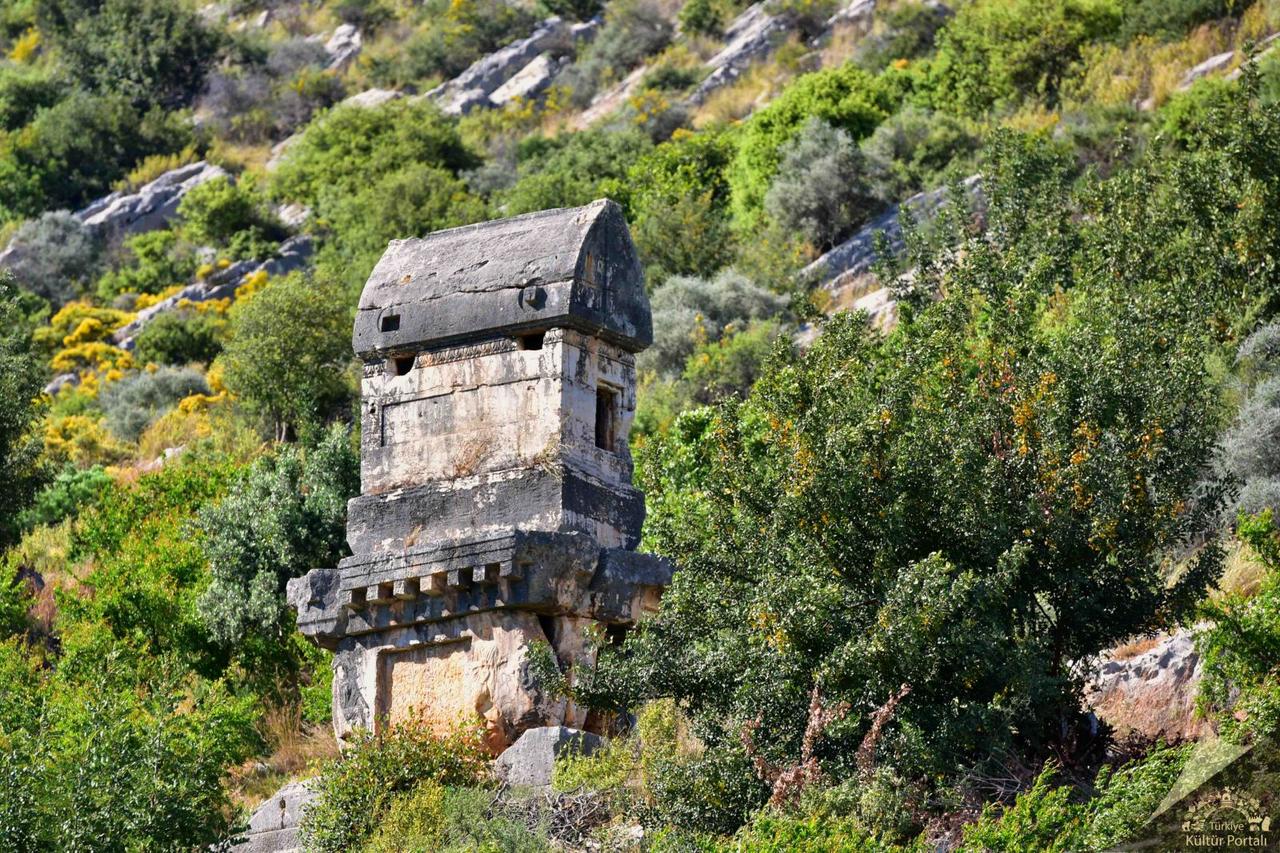
Limyra Antik Kenti. (Kültür Portalı)
The ancient city is distinguished by a large number of historical structures, including city walls, rock-cut tombs, the monumental tomb known as the Perikleion Heroon, a theater capable of seating 6,000 people, a Roman bath, and the Ptolemaion Temple. Additionally, the monumental tomb constructed for Gaius Caesar is particularly striking. This tomb was built following Gaius Caesar’s death in Limyra and is adorned with marble reliefs and carvings from the Roman period.
One of the distinctive features of Limyra Ancient City is the streams flowing through it. Water running through the center of the ancient city inundates the church area and colonnaded streets, with water levels reaching up to approximately 70 centimeters in places. This creates an unusual atmosphere for visitors, who can walk along the water-filled streets and enjoy a cooling experience. The water systems of Limyra date back to the early Roman period and were built upon Roman-era canals and drainage systems. This water network is one of the key features distinguishing Limyra from other ancient settlements.
Excavations at Limyra began in 1969 and are conducted in cooperation between the Austrian Archaeological Institute and the Republic of Türkiye Ministry of Culture and Tourism. The aim of these excavations is to understand the urban development and structure of Limyra. The excavations have uncovered numerous rock-cut tombs, monumental tombs, and unique sarcophagus burials. Additionally, excavations in the western part of the ancient city have revealed significant structures such as a Roman road and monumental gates.
Visitors to the ancient city can experience its unique atmosphere by walking along the Roman streets where water flows. Limyra has become an attractive tourist destination due to its historical structures and water systems. Excavation and restoration efforts are planned to continue in the coming years, aiming to increase visitor numbers and ensure the preservation of the region’s historical heritage.
Anadolu Ajansı. “Antik Kentin İçinden Akan Su, Antik Kentin Ziyaretçilerini Cezbediyor.” Accessed May 1, 2025.https://www.aa.com.tr/tr/kultur/antik-kentin-icinden-akan-su-antik-kentin-ziyaretcilerini-cezbediyor/3349977
T.C. Kültür ve Turizm Bakanlığı. "Limyra." Kültür Portalı. Accessed May 1, 2025.https://www.kulturportali.gov.tr/turkiye/antalya/gezilecekyer/limyra
T.C. Ministry of Culture and Tourism. "Limyra." Antalya İl Kültür veTurizm Müdürlüğü. Accessed May 1, 2025.https://antalya.ktb.gov.tr/TR-67538/limyra.html
T.C.Finike Kaymakamlığı Governorship. “Limyra Antik Kenti.” Accessed May 1, 2025.http://www.finike.gov.tr/limyra

Ancient City of Limyra
Location | Saklısu Neighborhood Finike Antalya | ||||||||
|---|---|---|---|---|---|---|---|---|---|
Foundation | 5th century BCE, known in Lycian as "Zemuri" | ||||||||
Religious Role | Episcopal center during the Byzantine period | ||||||||
Important Structure | Ptolemaion Ancient Theater Monument of Gaius Caesar Perikle Heroon | ||||||||
Works | Displayed at the Antalya Museum | ||||||||
No Discussion Added Yet
Start discussion for "Ancient City of Limyra" article
History
Notable Structures and Features
Water and the Ancient City’s Atmosphere
Excavations and Restoration Efforts
Touristic Appeal and Future Projects