

This article was automatically translated from the original Turkish version.
+1 More
Elevation and Nature | 1450 metres elevation, Karstic terrain, Limestone formations | ||||||||
|---|---|---|---|---|---|---|---|---|---|
Economy(ies) | Seasonal transhumance Limited agriculture and livestock farming | ||||||||
Climate(s) | Cool summer climate Significant day-night temperature difference | ||||||||
Location | Türkiye Anamur Mersin Province | ||||||||
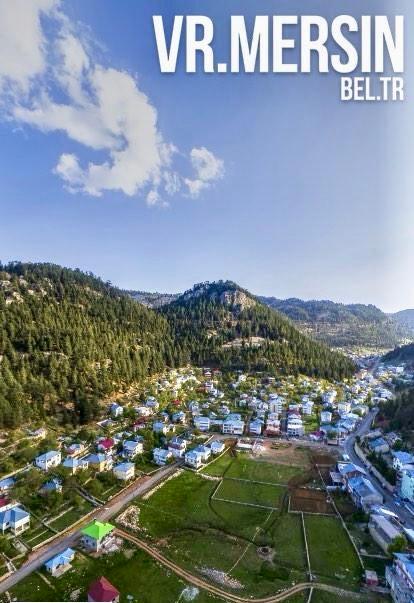
Anamur Abanoz Yaylası is a highland settlement located within the boundaries of Anamur, a district of Mersin in southern Türkiye, situated on the Toros Dağları. Due to its high elevation, natural environment, and seasonal usage patterns, it is one of the areas in the region where transhumance activities are practiced, particularly favored during summer months for its cool climate.
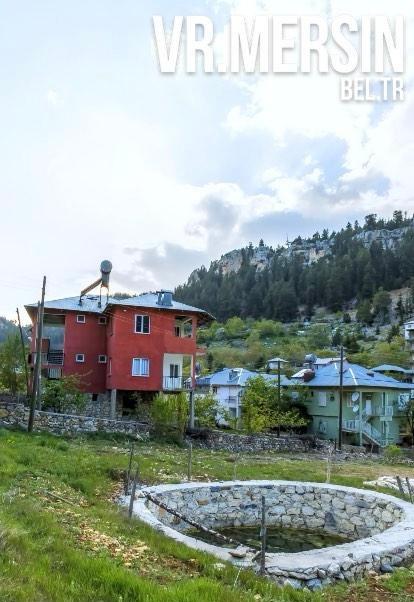
Abanoz Yaylası- Mersin Belediyesi
Anamur Abanoz Yaylası is situated on the mountainous terrain rising from the Mediterranean coastal zone toward inland areas, characterized by sloping landscapes, valleys, and elevations. Located on the southern slopes of the Toros Dağları, the highland is surrounded by forested areas and boasts a rich natural vegetation cover. The region’s physical structure has directly influenced its settlement pattern, with dwellings typically scattered and adapted to the topography.
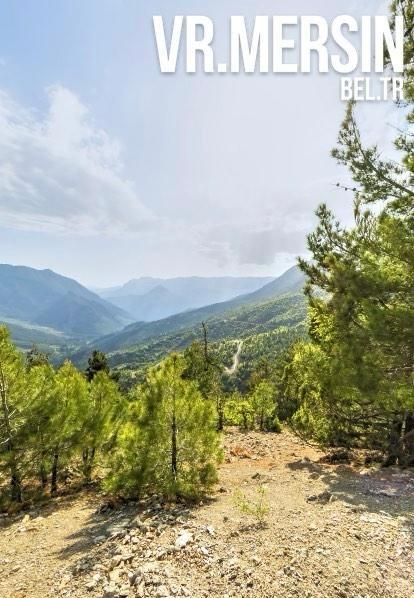
Abanoz Yaylası- Mersin Belediyesi
The highland exhibits a modified version of the Mediterranean climate, influenced by elevation. Temperatures are significantly lower than those along the coast, resulting in cool summers. This condition is one of the primary reasons the area is used as a temporary settlement during the summer months. Pronounced differences between daytime and nighttime temperatures are observed, a typical feature of high-altitude regions.
The area where Anamur Abanoz Yaylası is located displays a geological structure dominated by karstic formations. Predominantly composed of limestone (calcite) strata, the region has developed various landforms through dissolution processes. These processes have also influenced the development of underground cavities and water systems. The area contains rock formations from different geological periods, a feature linked to the tectonic processes responsible for the formation of the Toros Dağları.
Anamur Abanoz Yaylası is recognized as one of the areas where traditional transhumance practices continue. During summer months, part of the population residing along the coast temporarily migrates to this cooler region. The dwellings on the highland are generally constructed to suit seasonal use, and the settlement pattern reflects the characteristics of transhumance culture, demonstrating the continuity of traditional ways of life in the region.
Abanoz Yaylası is considered a tourist destination due to its natural environment, clean air, and cool climate. Visitor numbers increase notably during summer months. Recreational activities such as nature walks, relaxation, and outdoor events are conducted on the highland. Natural landscape elements are among the key factors enhancing the area’s tourist appeal.
Economic activities on the highland are largely seasonal. The increased population during summer stimulates local trade. Transhumance practices play a decisive role in shaping the lifestyle and economic structure of the local community. Agriculture and livestock breeding are carried out to a limited extent on and around the highland, primarily to meet local needs.
Anamur Kaymakamlığı. "Anamur’un Turizmi." Accessed March 24, 2026. https://anamur.gov.tr/anamurun-turizmi
Mersin Büyükşehir Municipality. "Abanoz Yaylası (VR Panorama 1)." Accessed March 24, 2026. https://vr.mersin.bel.tr/mobile/index.html#!/Abanoz-Yaylasi-807/?dil=Tr&ath=-249&atv=5&fov=100
Mersin Büyükşehir Municipality. "Abanoz Yaylası (VR Panorama 2)." Accessed March 24, 2026. https://vr.mersin.bel.tr/mobile/index.html#!/Abanoz-Yaylasi-807/?dil=Tr&ath=-249&atv=5&fov=100
Mersin Büyükşehir Municipality. "Abanoz Yaylası (VR Panorama 3)." Accessed March 24, 2026. https://vr.mersin.bel.tr/mobile/index.html#!/Abanoz-Yaylasi-656/?dil=Tr&ath=-111&atv=14&fov=110
Mersin Büyükşehir Municipality. "Abanoz Yaylası (VR Panorama 4)." Accessed March 24, 2026. https://vr.mersin.bel.tr/mobile/index.html#!/Abanoz-Yaylasi-240/?dil=Tr&ath=275&atv=-6&fov=80.
Mersin Büyükşehir Municipality. “Abanoz Yaylası (VR Panorama 1).” Accessed March 24, 2026. https://vr.mersin.bel.tr/mobile/index.html#!/Abanoz-Yaylasi-807/?dil=Tr&ath=-249&atv=5&fov=100.
Tapur, Tahsin. "Abanoz Yaylası (Mersin)." *Selçuk Üniversitesi Sosyal Bilimler Enstitüsü Dergisi*, no. 21 (2009): 474-487. https://dergipark.org.tr/tr/download/article-file/1724348
İnan, Selim, and Nurdan İnan. "Karst Dünyası: Kaş-Abanoz Yaylaları (Anamur-Mersin) Arasında Bir Jeolojik Rota." *Mavi Gezegen*, no. 27: 27–34. https://www.jmo.org.tr/resimler/ekler/48cd062daa114ec_ek.pdf

Elevation and Nature | 1450 metres elevation, Karstic terrain, Limestone formations | ||||||||
|---|---|---|---|---|---|---|---|---|---|
Economy(ies) | Seasonal transhumance Limited agriculture and livestock farming | ||||||||
Climate(s) | Cool summer climate Significant day-night temperature difference | ||||||||
Location | Türkiye Anamur Mersin Province | ||||||||
No Discussion Added Yet
Start discussion for "Anamur Abanoz Plateau" article
Physical Structure and Location
Climate Characteristics
Geomorphological and Geological Features
Transhumance Activities
Tourism Potential and Use
Socioeconomic Characteristics