


This article was automatically translated from the original Turkish version.
Analog Circuits
Basic Component | Filters Amplifiers Oscillators Converters (ADC DAC) | ||||||||
|---|---|---|---|---|---|---|---|---|---|
Application Area(s) | Communication systems Industrial control Automotive electronics Medical devices | ||||||||
Noise and Optimization | Noise analysis and optimization techniques are used to minimize signal distortion. | ||||||||
Digital-Analog Interfaces | Components such as ADC and DAC enable transitions between analog and digital systems. | ||||||||
Analog circuits are fundamental electronic components that process signals in a continuous manner and relate electrical signals to physical quantities. These circuits are widely used in processing various types of analog data such as sound, temperature, and voltage. The design of analog circuits involves complex processes such as signal processing, noise analysis, and optimization, and their applications in modern technologies span a broad range from communications to machine learning.
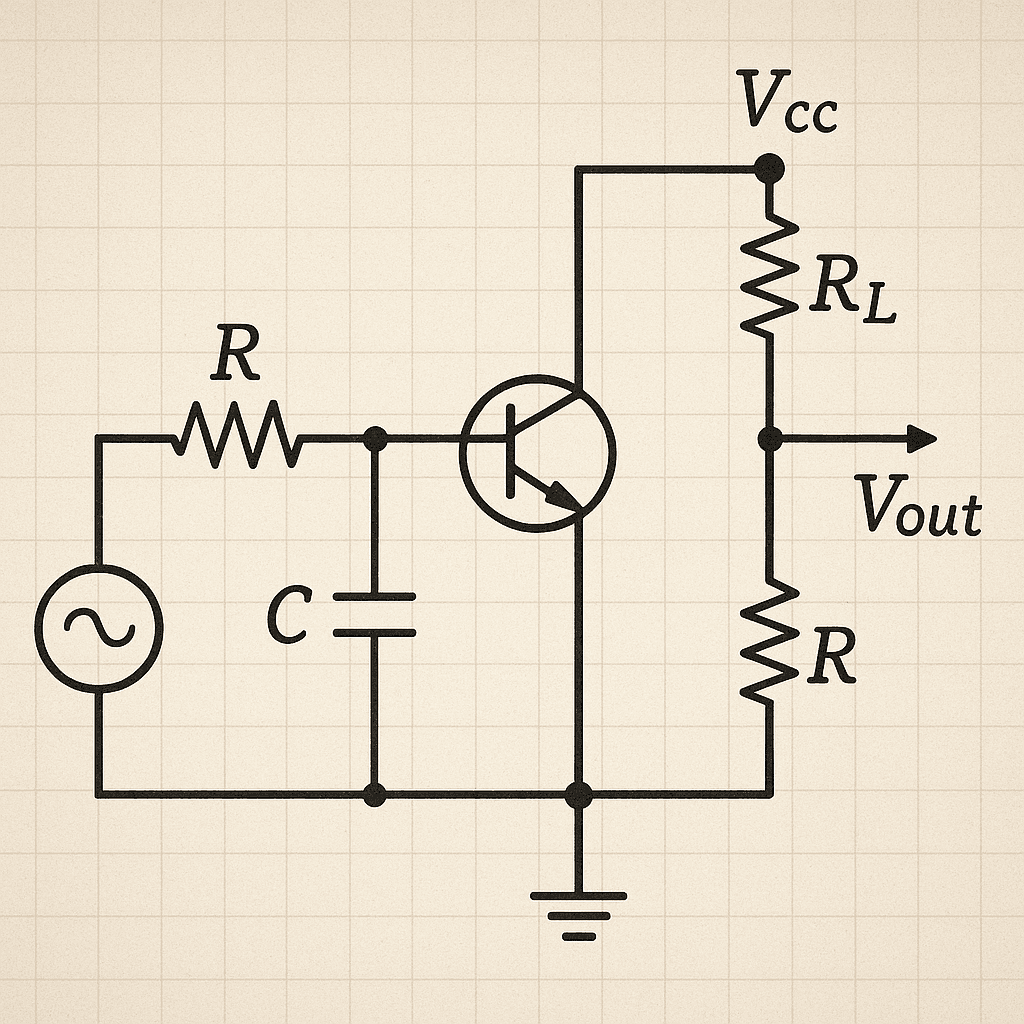
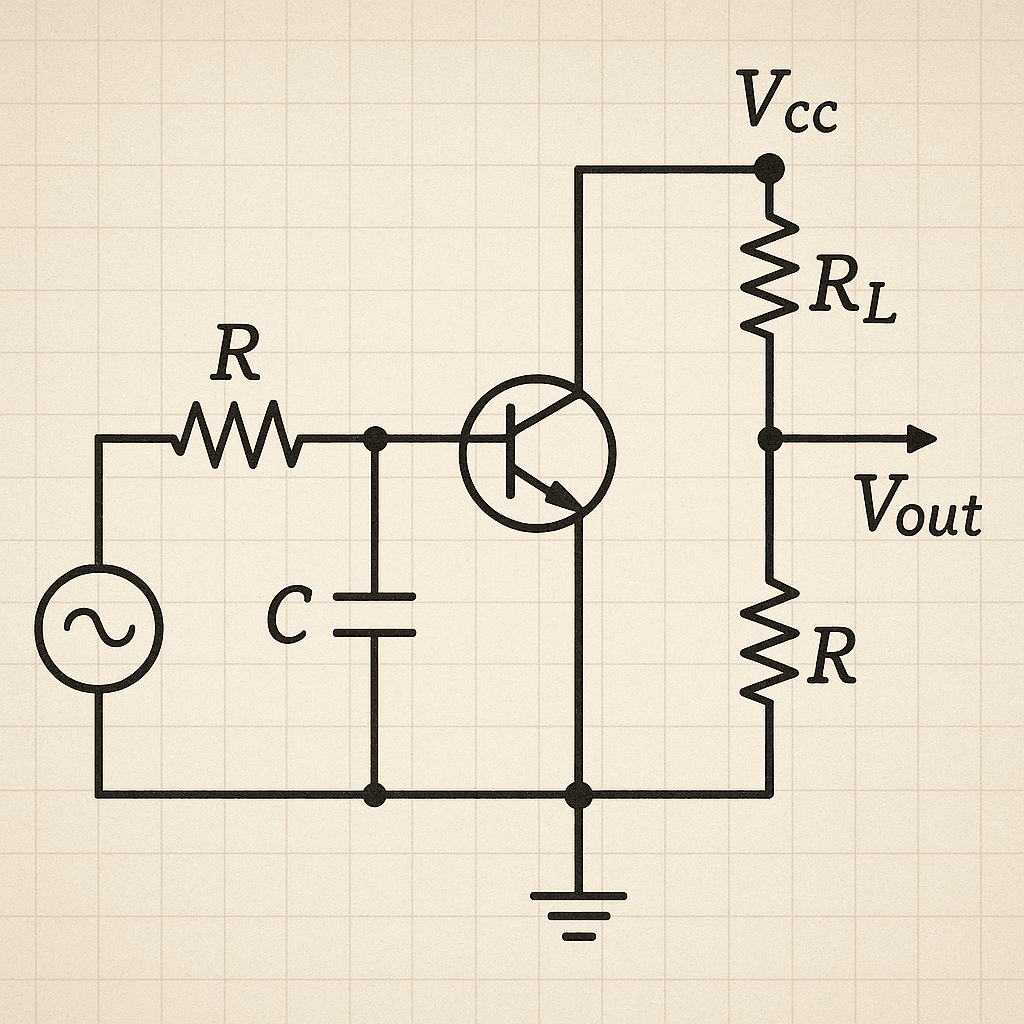
Analog Devre temsili gösterimi ( Yapay zeka tarafından oluşturulmuştur.)
Analog circuits are electronic systems that process signals in a continuous form. These circuits handle analog signals, which are uninterrupted in amplitude and time, and are therefore commonly used to convert physical quantities such as sound, temperature, and light into electrical signals. Unlike digital circuits, in analog circuits the value of the signal at every point carries meaning.
Analog circuits typically consist of subsystems such as amplifiers, filters, oscillators, and converters. Amplifiers increase signal strength, while filters are elements that allow or block specific frequencies. Oscillators generate signals. Analog integrated circuits (ICs) combine these functions to provide more compact and stable solutions.
Analog circuits are used in numerous fields ranging from communication systems to medical devices, automotive electronics to industrial control systems. They can offer advantages over digital technologies especially in high-frequency communication systems and precision measurement instruments.
Analog signals require analog-digital interfaces to be processed by digital systems. These interfaces include fundamental components such as ADC (Analog to Digital Converter), which converts analog signals into digital format, and DAC (Digital to Analog Converter), which performs the reverse operation. Keller and colleagues (2016) note that these interfaces play a central role in modern System-on-Chip (SoC) designs.
One of the key factors affecting analog circuit performance is noise introduced from external or internal sources. Analyzing and reducing noise is critical to enhancing circuit reliability. Singh, Baishnab and Anandini (2019) demonstrated that circuit noise can be analyzed and minimized using techniques such as particle swarm optimization (PSO).
Analog circuit design can be more complex than digital circuit design because component tolerances, temperature variations, and power supply fluctuations directly affect system performance. Consequently, the design process relies on iterative and heuristic techniques as well as optimization algorithms. A 2020 study evaluated numerous optimization techniques for analog and RF circuit design, highlighting the effectiveness of genetic algorithms and differential evolution methods.
Operational Transresistance Amplifiers (OTRAs) are analog building blocks that offer certain advantages over traditional op-amps. Singh, Senani and Gupta (2018) noted that due to advantages such as low power consumption and wide bandwidth, OTRAs can be effectively used in filtering, oscillation, and conversion applications.
In recent years, analog circuits have been increasingly associated with machine learning hardware. It has been reported that analog circuits play a significant role in areas such as sensor interface circuits, temperature/voltage measurement systems, and high-speed communication systems. These developments demonstrate that analog circuit design is no longer limited to classical applications but is also advancing in cutting-edge technological fields.
In modern integrated circuit designs, analog components operate alongside digital systems to form mixed-signal structures. The integration of analog circuits depends on multiple parameters including chip area utilization, energy efficiency, and manufacturing cost. Analog design is still regarded as an indispensable field for the sustainability of the integrated circuit industry.
Analog Circuits for Machine Learning, Current/Voltage/Temperature Sensors, and High-Speed Communication. Advances in Analog Circuit Design. Springer, 2021.https://link.springer.com/book/10.1007/978-3-030-91741-8
Cheng, Yuhua, et al., eds. “Analog Integrated Circuit Design.” *Handbook of Integrated Circuit Industry*, Springer, 2023, pp. 711–725.https://link.springer.com/referenceworkentry/10.1007/978-981-99-2836-1_37
Keller, Matthias, Boris Murmann, and Yiannos Manoli. “Analog-Digital Interfaces—Review and Current Trends.” In *CHIPS 2020*, 85–99. Cham: Springer, 2016.https://link.springer.com/chapter/10.1007/978-3-319-22093-2_4
Singh, Abdhesh K., Raj Senani, and Ashish Gupta. “OTRA, Its Implementations and Applications: A State-of-the-Art Review.” *Analog Integrated Circuits and Signal Processing* 97, no. 2 (2018): 281–311.https://link.springer.com/article/10.1007/s10470-018-1311-5
Singh, Chabungbam Lison, K. L. Baishnab, and Ch. Anandini. “Analysis and Optimization of Noises of an Analog Circuit via PSO Algorithms.” *Microsystem Technologies* 25, no. 5 (2019): 1793–1807.https://link.springer.com/article/10.1007/s00542-017-3573-8.
“Analog Circuit - an Overview.” ScienceDirect Topics. Accessed April 30, 2025.https://www.sciencedirect.com/topics/engineering/analog-circuit.
“Analog Circuits.” IEEE Technology Navigator. Accessed April 30, 2025.https://technav.ieee.org/topic/analog-circuits.
“Analog Integrated Circuits - an Overview.” ScienceDirect Topics. Accessed April 30, 2025.https://www.sciencedirect.com/topics/engineering/analog-integrated-circuits
“Optimization Techniques for Analog and RF Circuit Designs.” *Analog Integrated Circuits and Signal Processing* 105, no. 1 (2020): 1–25.https://link.springer.com/article/10.1007/s10470-020-01733-7.

Analog Circuits
Basic Component | Filters Amplifiers Oscillators Converters (ADC DAC) | ||||||||
|---|---|---|---|---|---|---|---|---|---|
Application Area(s) | Communication systems Industrial control Automotive electronics Medical devices | ||||||||
Noise and Optimization | Noise analysis and optimization techniques are used to minimize signal distortion. | ||||||||
Digital-Analog Interfaces | Components such as ADC and DAC enable transitions between analog and digital systems. | ||||||||
Definition and Fundamental Characteristics
Types and Components of Analog Circuits
Application Areas
Analog-Digital Interfaces
Noise Analysis and Optimization
Design and Optimization Techniques
OTRA-Based Analog Circuits
Machine Learning and Advanced Applications
Role in the Integrated Circuit Industry