


This article was automatically translated from the original Turkish version.
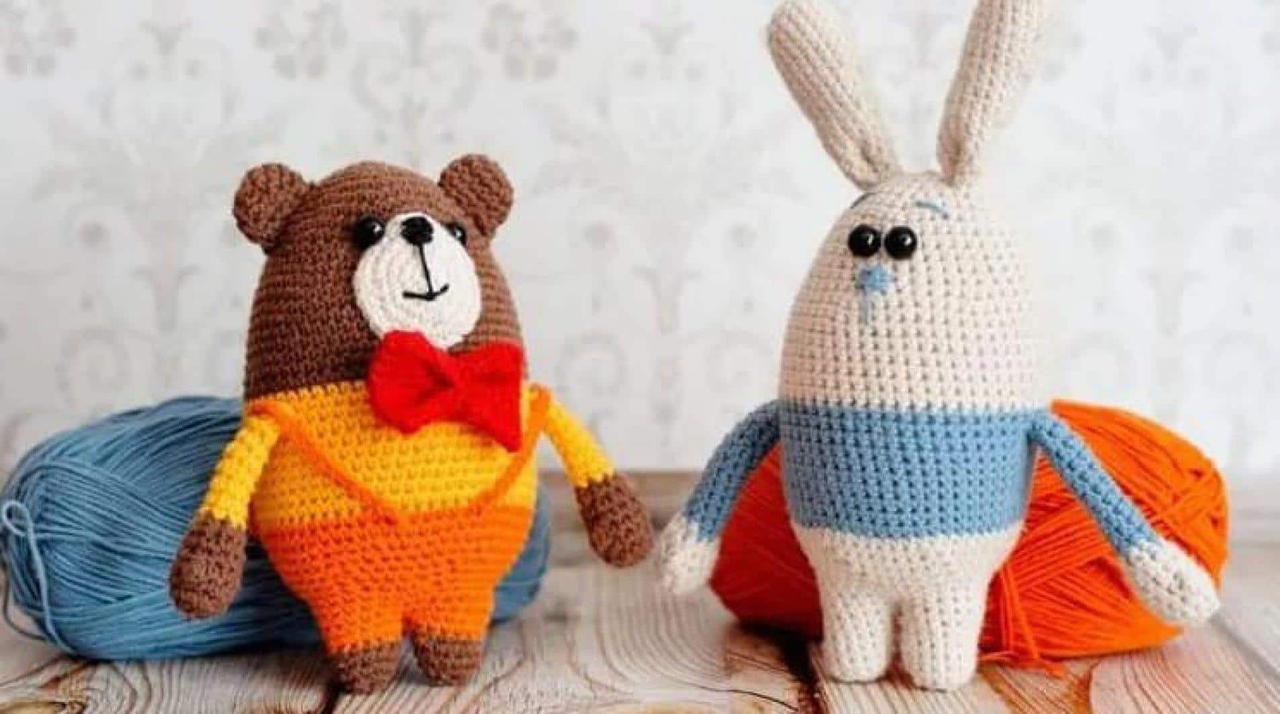
Amigurumi
Fields of Use | Educational Material Accessory Decorative Product Toy Production | ||||||||
|---|---|---|---|---|---|---|---|---|---|
Production Stages | Decoration Assembly Part Knitting Model Determination | ||||||||
Origin(s) | Japan | ||||||||
Amigurumi is the term for stuffed toys made by crocheting or knitting. It originates from Japanese, where the word “ami” means “to crochet” and “nuigurumi” means “stuffed toy.” The primary materials used are yarn, a crochet hook, stuffing material, and sometimes accessories such as eyes and noses. The toys are crafted in separate pieces and then assembled and stuffed. Amigurumi can possess both aesthetic and functional qualities and is commonly used as children’s toys, decorative items, or collectibles.
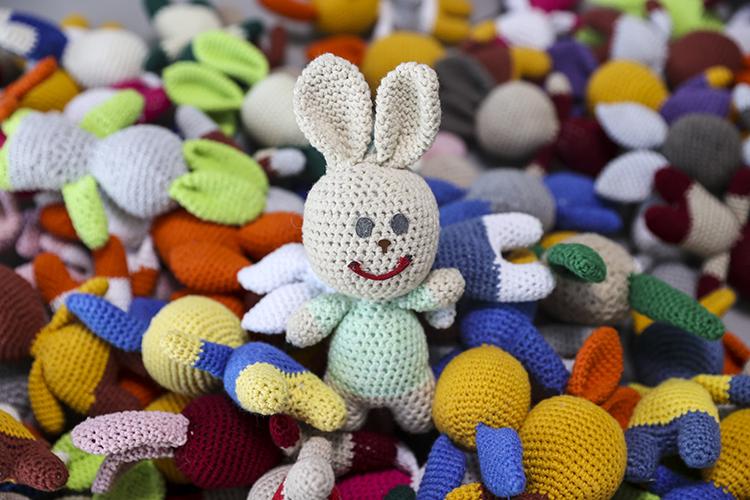
Toy Made with Amigurumi (Anadolu Agency)
The first step in amigurumi production is deciding what to create. This is typically an animal figure, human character, object, or fictional entity. The intended purpose of the figure—as a toy, keychain, decorative item, or educational tool—is determined at this stage.
Based on the chosen design, individual parts such as the head, body, arms, legs, ears, and tail are crocheted separately. Each part usually begins with a magic ring and is shaped through increases. The pieces are worked in continuous spirals, with increases or decreases applied to achieve the desired form.
The parts are sewn together in the correct order while being stuffed with fiberfill or a similar material. Care is taken to match the yarn color during stitching. During assembly, the parts must be positioned evenly and proportionally.
Details such as facial expressions, eyes, nose, mouth, clothing, and accessories are added at this stage. Safety eyes may be used, or these features may be embroidered with yarn.
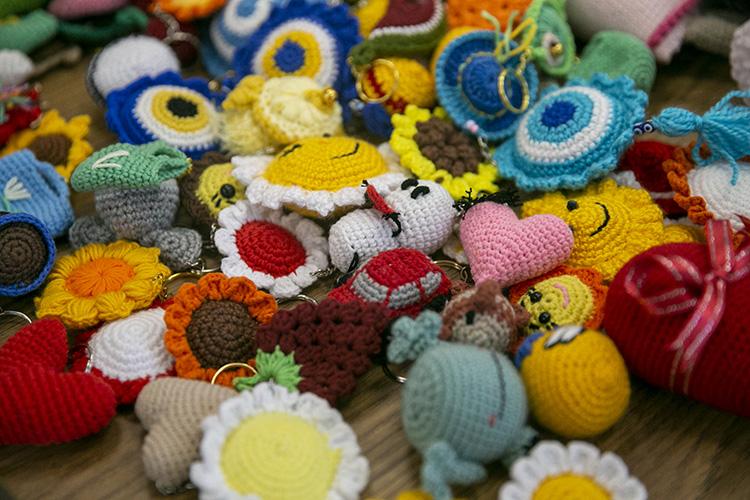
Accessories Made with Amigurumi (Anadolu Agency)
Dağıstanlı, Hüseyin Cem. "Amigurumi tekniğiyle ördükleri bebekler depremzede çocukları sevindirecek." Anadolu Ajansı. Accessed May 30, 2025. https://www.aa.com.tr/tr/asrin-felaketi/amigurumi-teknigiyle-ordukleri-bebekler-depremzede-cocuklari-sevindirecek/2830872
Göder, Zafer. "Bolu'da örgü oyuncak kursunda buluşan kadınlar, üreterek sosyalleşiyor." Anadolu Ajansı. Accessed May 30, 2025. https://www.aa.com.tr/tr/yasam/boluda-orgu-oyuncak-kursunda-bulusan-kadinlar-ureterek-sosyallesiyor/3455118
T.C. Ministry of National Education. "Amigurumi Çalışmaları Dolu Dizgin Gidiyor." *Ordu Aybastı İlçe Milli Eğitim Müdürlüğü Resmi Web Sitesi*. Accessed May 30, 2025. https://aybasti.meb.gov.tr/www/amigurumi-calismalari-dolu-dizgin-gidiyor/icerik/1527
Çetin, Nagihan. "Kültür Aktarım Aracı Olarak Amigurumi: Japon, Rus ve Türk Kültüründen Örneklerle." *Motif Vakfı Uluslararası Sosyal Bilimler Sempozyumu (8–10 Kasım 2018 / Çanakkale) Bildiriler Kitabı* (2018): 112–116. Accessed May 30, 2025. https://www.academia.edu/38007030/MOT%C4%B0F_VAKFI_ULUSLARARASI_SOSYAL_B%C4%B0L%C4%B0MLER_SEMPOZYUMU_8_10_Kas%C4%B1m_2018_%C3%87ANAKKALE_B%C4%B0LD%C4%B0R%C4%B0_K%C4%B0TABI_Edit%C3%B6r_Dr_Mustafa_A%C3%87A#page=120

Amigurumi
Fields of Use | Educational Material Accessory Decorative Product Toy Production | ||||||||
|---|---|---|---|---|---|---|---|---|---|
Production Stages | Decoration Assembly Part Knitting Model Determination | ||||||||
Origin(s) | Japan | ||||||||
Production Process
Design Selection
Creating the Parts
Assembly and Stuffing
Detailing and Embellishment
Technical Features
Materials
Applications of Amigurumi
Safety and Health