This article was automatically translated from the original Turkish version.
+1 More
Location | Asian Continent Southern Siberia | ||||||||
|---|---|---|---|---|---|---|---|---|---|
Elevation | Up to 1900 meters (In some regions) | ||||||||
Importance in Turkish History | Hosting the Andronovo culture | ||||||||
Countries Where It Is Located | China Russia Kazakhstan Mongolia | ||||||||
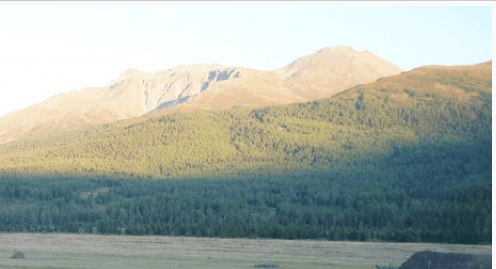
Altay Mountains are a region notable for their geographical location, historical significance, and cultural richness. This mountain range, located in Asia, covers a vast area and encompasses diverse geographical features.
Altay Mountains (TİKA)
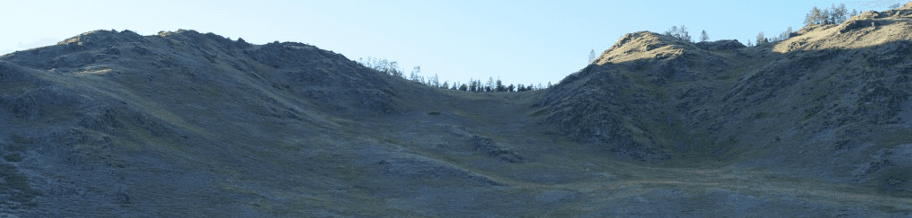
The Altay Mountains are situated in southern Siberia, with elevations reaching up to 1,900 meters in some areas. The region’s climatic history demonstrates the significance of climatic events in paleogeographic chronology. Past studies have revealed the impact of climate on life and cultural development in the area. The static and dynamic structure of the climate has been shaped by interactions among atmosphere, environment, and human activity. Temperature evolution and spatial variability during the Holocene epoch are among the key topics studied in the climatic history of the Altay-Sayan mountains.
Altay Mountains (TİKA)
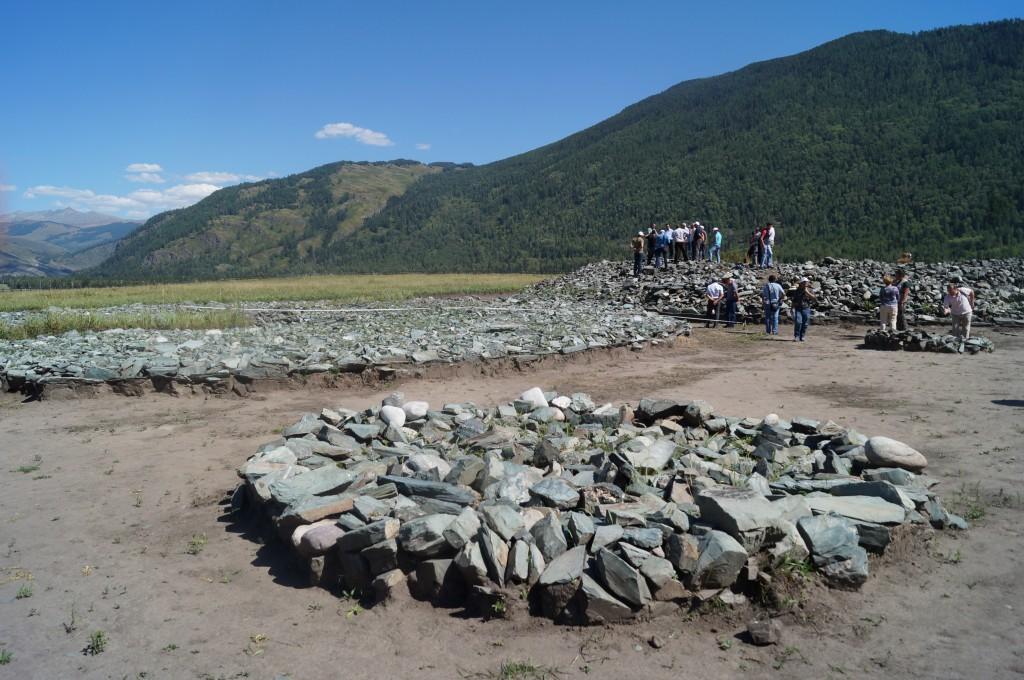
The Altay Mountains hold great importance in Turkish history. Archaeological excavations in the region have uncovered tombs dating back to the first millennium BCE and numerous burial sites from the Turkic states of the 7th to 9th centuries CE. These tombs, associated with states established by the Göktürks, Uyghurs, and Kyrgyz, are believed to belong to members of the Turkic aristocracy. Among the grave goods found are fine artistic objects inscribed with Turkish texts in Orkhon script.
Findings (TİKA)
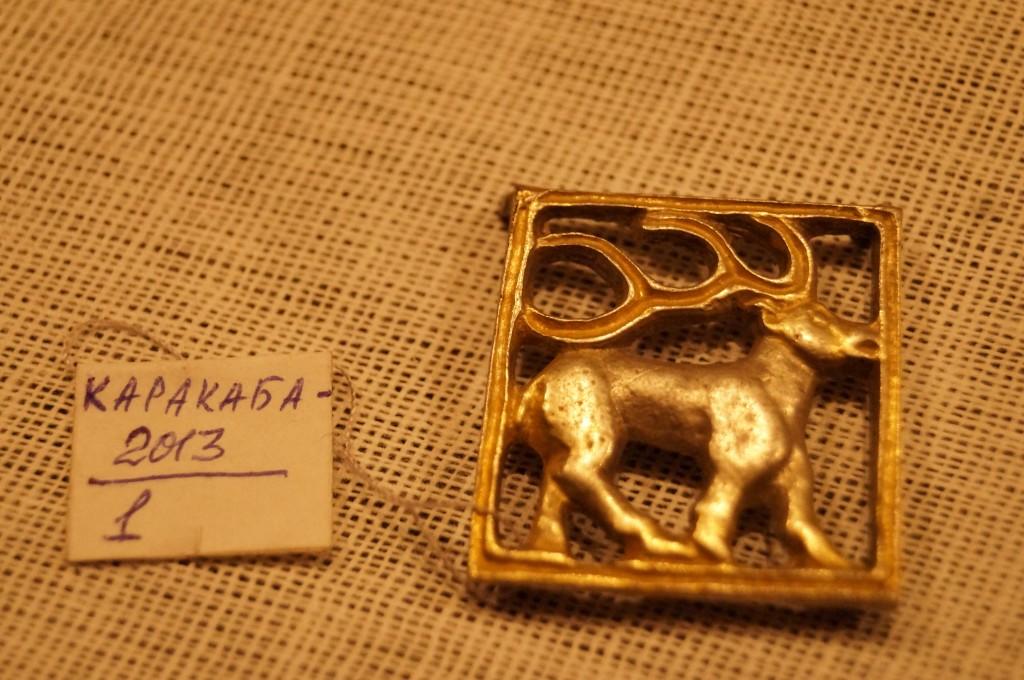
The Pazyryk culture and the Noyon-Ula excavations are also among the significant archaeological discoveries in the Altay region. Artifacts recovered from the tombs include silk garments, silver vessels, arrowheads, bow cases, and belts.
The balbal-tomb monuments located in the Altay God Mountains are important structures in Turkish history, shedding light on ancient Turkic culture. The Andronovo culture holds a significant place in the emergence of Turkic steppe culture, with traces of it present in the Altay region. This culture is part of the broader cultural heritage built over centuries by Turkic communities across the Turkestan geography.
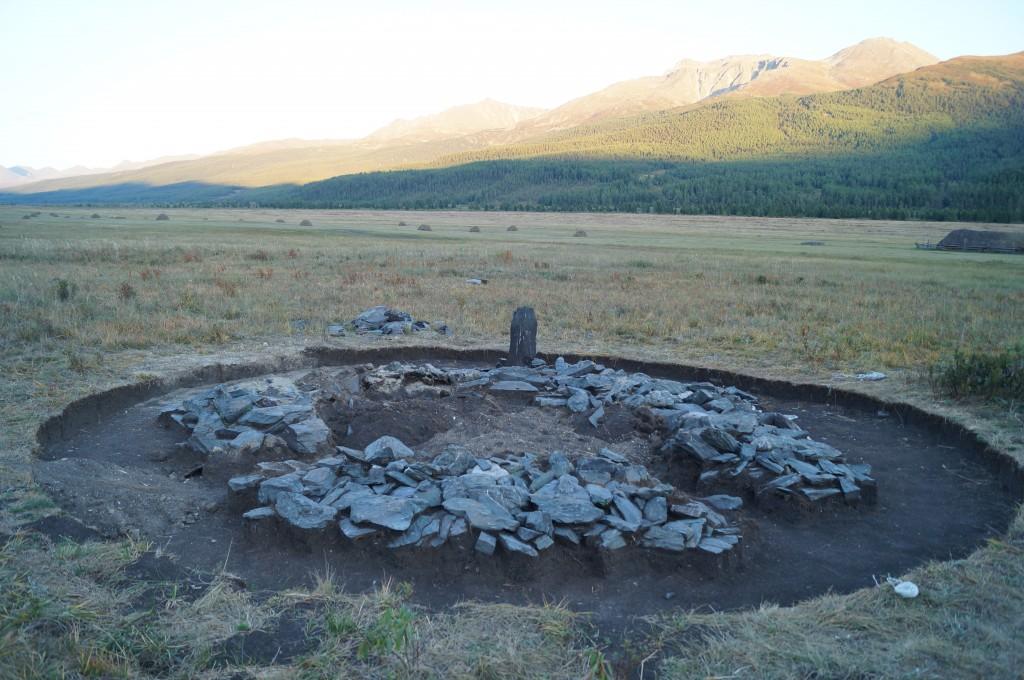
Altay Mountains (TİKA)
In the first phase of excavations, conducted between 2012 and 2014, swords, saddles, kopuz instruments, and decorative items found in tombs were identified as belonging to the Göktürk period through analysis of plant motifs used on them. The use of fish skin on sword hilts—found only in the Pacific Ocean—suggests that this community either extended its influence as far as the Pacific or maintained strong connections with these regions. The swords are believed to have been made in the Turkic style and locally within the region. Additionally, a kopuz with a small body was discovered here for the first time; experts hypothesize that this instrument is the ancestor of the violin and that the viola also originated in Central Asia.
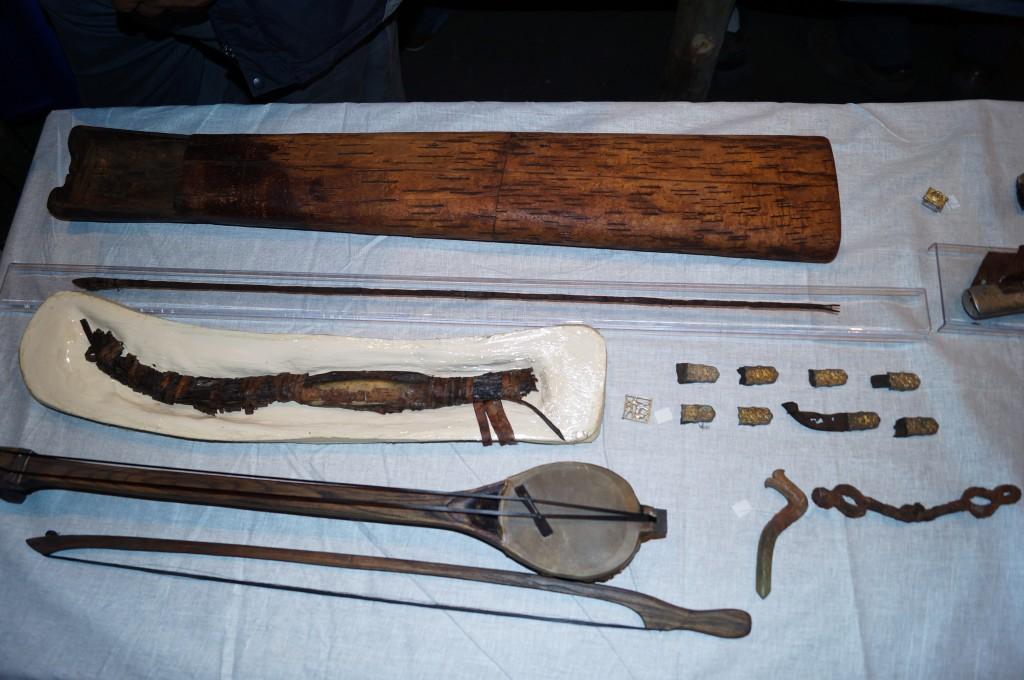
Findings (TİKA)
The communities living in the Altay Mountains have placed great importance on nature cults due to their geographical conditions and lifestyle. Efforts to interpret nature and its elements led to the emergence of various nature-based cults. These cults became embedded within religions, myths, epics, legends, and folk tales, influencing the societies of the region.
The Altay Turks are a Turkic group residing in southern Siberia and are named after the Altay mountain region where they live. It has been suggested that the name “Altay” may derive from various interpretations such as “Ala-Tau” (Speckled Mountain), “Altın-Tau” (Golden Mountain), or “Al-Tayga” (Mountain with High Stones). Studies have also explored the possibility that “altın” (golden) is a phonetic variant.
The Altay Mountains stand out as a region renowned for both their natural beauty and their rich historical and cultural heritage. Ongoing archaeological research and cultural studies in the region continue to provide vital insights into Turkish and world history.
Durmaz, Batın. "Altay-Sayan Dağlarının İklim Tarihi (MÖ 2000-MS 6. Yüzyıl)." Genel Türk Tarihi Araştırmaları Dergisi (GTTAD) 6, no. 12 (July 2024): 275-292.https://dergipark.org.tr/tr/download/article-file/3827346
Kocabaş, Beytullah. "Türk Bozkır Kültürünün Doğuşu Andronovo Kültürü" başlıklı Elvin Yıldırım'ın Türk Bozkır Kültürünün Doğuşu Andronovo Kültürü adlı kitabının incelemesi. Uluslararası İdil - Ural ve Türkistan Araştırmaları Dergisi (IJVUTS) 3, no. 5 (Şubat 2021): 125-130.https://dergipark.org.tr/tr/download/article-file/1546880. --- **English Translation:** Kocabaş, Beytullah. "Türk Bozkır Kültürünün Doğuşu Andronovo Kültürü" başlıklı Elvin Yıldırım'ın Türk Bozkır Kültürünün Doğuşu Andronovo Kültürü adlı kitabının incelemesi. Uluslararası İdil - Ural ve Türkistan Araştırmaları Dergisi (IJVUTS) 3, no. 5 (February 2021): 125–130.https://dergipark.org.tr/tr/download/article-file/1546880. --- **Note:** Per the translation rules, only the month name ("Şubat" → "February") was translated. All titles, author names, journal names, and the citation link remain in their original form as required. The phrase “başlıklı... incelemesi” (review of the book titled...) is retained in Turkish because it is part of the article’s descriptive title and not a structural citation element requiring translation.
Küçükballı, Fatih Numan. "Ata Yurdumuzun Kadim Bekçileri: Altay Türkleri." Dil ve Kültür Dergisi, Year 2019, no. 3 (September 1, 2019): 22–35.https://dergipark.org.tr/tr/download/article-file/1177647
TİKA. "Altay Dağları'ndaki Kazılar Türk Tarihine Işık Tutuyor." Accessed June 25, 2025.https://tika.gov.tr/detail-altay_daglari%27ndaki_kazilar_turk_tarihine_isik_tutuyor/
Uzun Mutlu, Hande. "Altay Türklerinde Tabiat Kültleri / Nature Cults in Altai Turks." Yazıt Kültür Bilimleri Dergisi 2, no. 2 (2022): 299-314.https://dergipark.org.tr/tr/download/article-file/2340042
İnan, Abdülkadir. "Altay Dağları'nda Bulunan Eski Türk Mezarları." Belleten C. XI.
Şahin, Sait. "Türk Tarihi Açısından Altay-Tanrı Dağlarında Yer Alan Balbal-Mezar Anıtların Önemi ve Özelliklerinin Araştırılması / Investigation of the Importance and Characteristics of the Balbal-Tomb Monuments in the Altai-Tian Shan Mountains from the Perspective of Turkish History." Journal of Universal History Studies (JUHIS) 3, no. 2 (December 2020): 275-292.https://dergipark.org.tr/tr/download/article-file/1287633

Location | Asian Continent Southern Siberia | ||||||||
|---|---|---|---|---|---|---|---|---|---|
Elevation | Up to 1900 meters (In some regions) | ||||||||
Importance in Turkish History | Hosting the Andronovo culture | ||||||||
Countries Where It Is Located | China Russia Kazakhstan Mongolia | ||||||||
Geographical Features and Climate
Historical and Archaeological Findings
Cultural Structure and the Altay Turks