

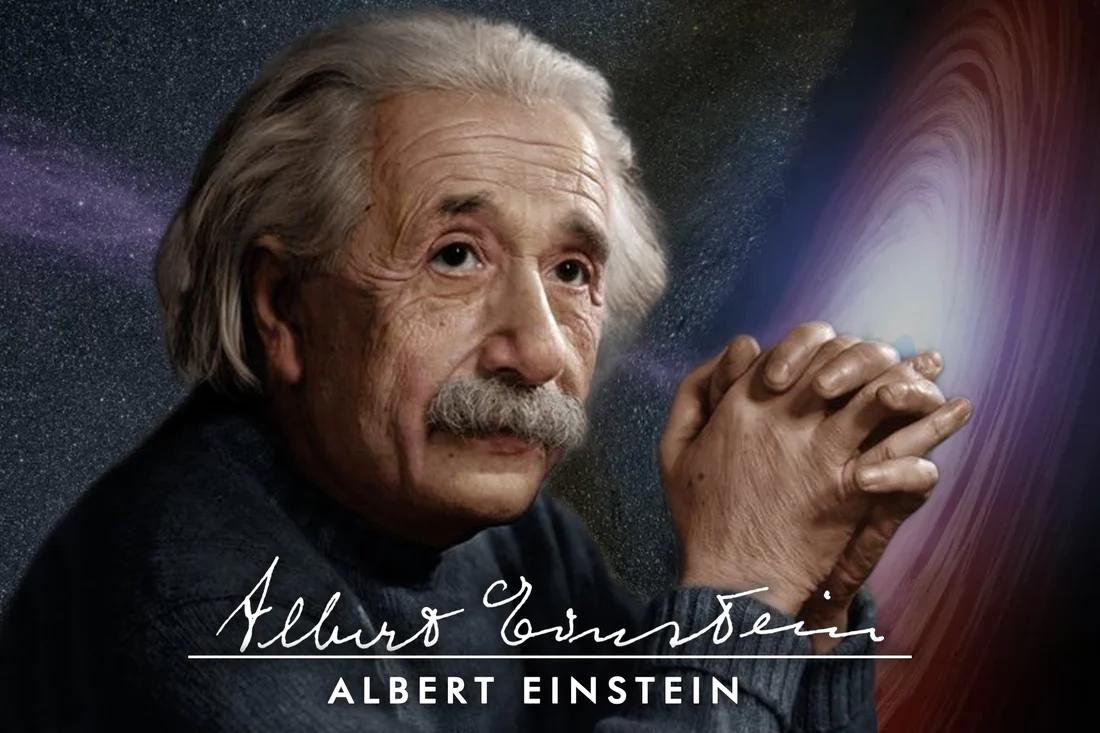

Albert Einstein
Spouse | Elsa Einstein (m. 1919–1936) Mileva Marić (m. 1903–1919) | ||||||||
|---|---|---|---|---|---|---|---|---|---|
Date of birth | 1979-03-14 | ||||||||
Date of death | 1955-04-18 | ||||||||
Child | Lieserl Einstein Hans A. Einstein Eduard Einstein | ||||||||
Education | Luitpold Gymnasium Swiss Federal Polytechnic School (ETH Zurich) | ||||||||
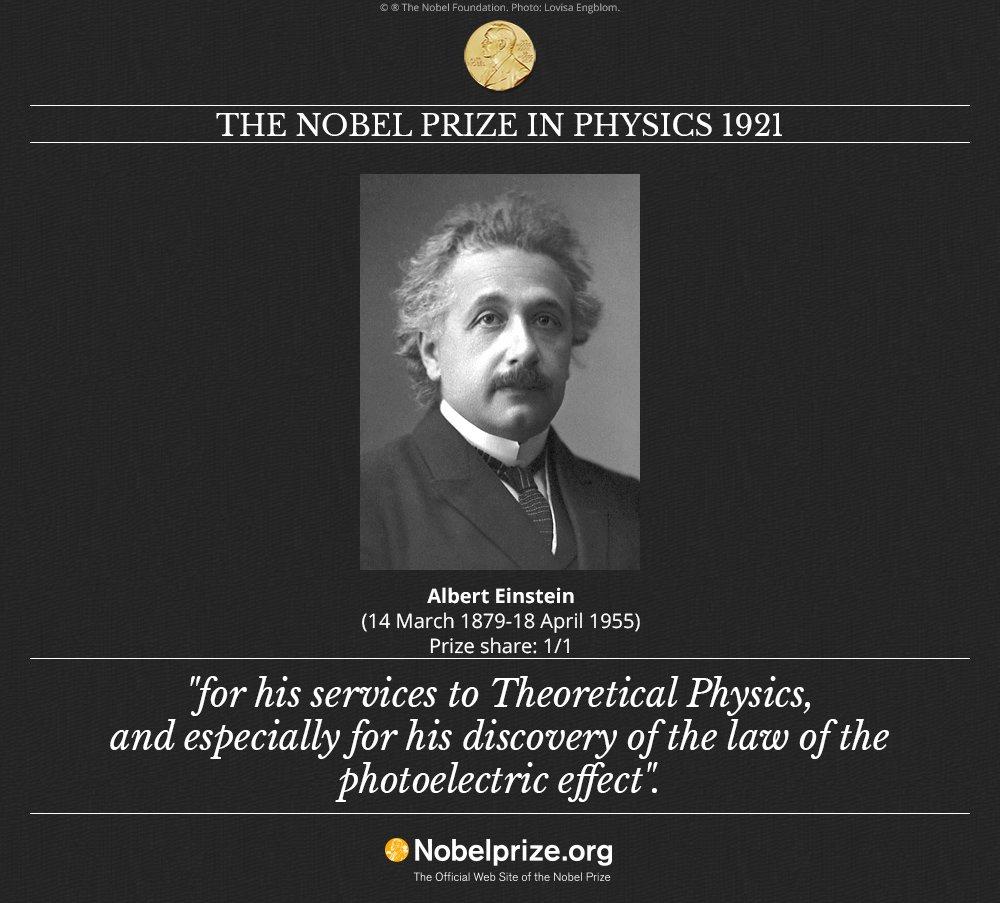
Award | Membership in the National Academy of Sciences (1942) Time Person of the Century (1999) Max Planck Medal (1929) Gold Medal of the Royal Astronomical Society (1926) Copley Medal (1925) Fellowship of the Royal Society of London (1921) Matteucci Medal (1921) Nobel Prize in Physics (1921) Barnard Medal (1920) | ||||||||
Field of science | Mathematics Physics | ||||||||
Albert Einstein was born on 14 March 1879 in Ulm, Germany, and died on 18 April 1955 in Princeton, New Jersey, United States. He is one of the most important figures in physics and made significant contributions to the development of modern physics.
Einstein moved with his family from Ulm, Germany, to Munich. During his childhood he experienced difficulties with speaking and reading but overcame these challenges to continue his education.
class=\
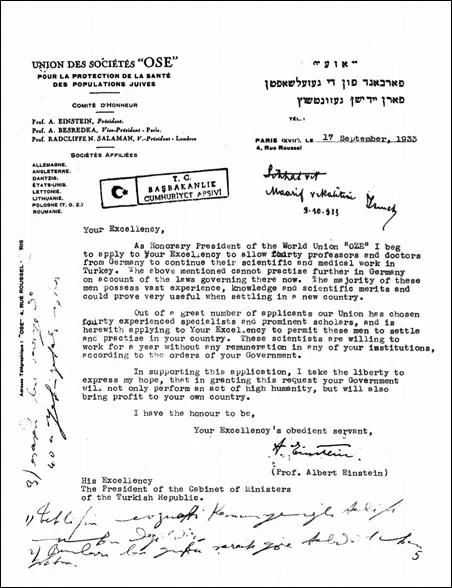
On 17 September 1933, Albert Einstein sent a letter to İsmet İnönü, Prime Minister of the Republic of Türkiye, proposing that around 40 Jewish scientists fleeing Nazi persecution be offered positions in Türkiye. In the letter, Einstein stated that these scientists could serve without receiving any salary and urged Türkiye to accept them. However, the government of the Republic of Türkiye did not accept this proposal.
class=\
Einstein died in Princeton in 1955. After his death, his brain was preserved and subjected to various scientific studies. Today, Einstein is remembered primarily for his theories of relativity, quantum mechanics, and the relationship between energy and mass. Moreover, Einstein’s social and political stance has ensured his status as an important historical figure. He was not only a physicist but also a scientist who voiced opinions on human rights, peace, social justice, and civil liberties.

Albert Einstein
Spouse | Elsa Einstein (m. 1919–1936) Mileva Marić (m. 1903–1919) | ||||||||
|---|---|---|---|---|---|---|---|---|---|
Date of birth | 1979-03-14 | ||||||||
Date of death | 1955-04-18 | ||||||||
Child | Lieserl Einstein Hans A. Einstein Eduard Einstein | ||||||||
Education | Luitpold Gymnasium Swiss Federal Polytechnic School (ETH Zurich) | ||||||||
Award | Membership in the National Academy of Sciences (1942) Time Person of the Century (1999) Max Planck Medal (1929) Gold Medal of the Royal Astronomical Society (1926) Copley Medal (1925) Fellowship of the Royal Society of London (1921) Matteucci Medal (1921) Nobel Prize in Physics (1921) Barnard Medal (1920) | ||||||||
Field of science | Mathematics Physics | ||||||||
Education and Early Career
Major Scientific Contributions
Other Works and the Nobel Prize
Einstein and Türkiye
Legacy and Death